

Tech
The Mysterious Shortwave Radio Station Stoking US-Russia Nuclear Fears


Since early this year, RIA-Novosti has published roughly one story per week on UVB-76, suggesting its coded messages are related to missile strikes on Iran, the war in Ukraine, and negotiations with Trump.
RT, which had once pooh-poohed the idea that UVB-76 was part of Moscow’s nuclear deterrence, began regularly posting its broadcasts on X, writing in April that the station often broadcasts “coded alerts pre-major events”—particularly around phone calls between Trump and Putin—and suggesting that it operates as a “nuke failsafe.”
Chatter about the station grew on Telegram, the messaging app popular in Russia. Channels claimed that UVB-76 grew active “during periods of escalation” of military activity and that it served as a kind of oracle, sending its coded messages “before global events.” Some of these channels, some with millions of subscribers, are themselves close to the Russian Ministry of Defense.
“In the time of tension between Russia and the West,” Goldmanis says, “such articles are ideal for mounting tension and fear.” There is some irony in the fact that Russians seem to be spooking themselves with tales of their own military communications network, but he argues that it speaks to a deeper fear in Russia: “Fear of losing the war, fear of the state collapse, fear of Western nuclear action, fear of their own government and military.”
All of this domestic shadowboxing, in turn, drove international headlines. The British tabloid The Sun proclaimed that Russia’s “doomsday radio station” had transmitted its “cryptic ‘nuke’ code.” Belgium’s Het Laatste Nieuws reported that the radio messages had caused “heightened alertness among military analysts worldwide.” Politika, a Serbian daily newspaper, penned a lengthy article that claimed that UVB-76 “put fear in the hearts of NATO generals and the Pentagon,” which have been powerless to crack its code. (That article was republished in Russian by RT’s foreign translation service.)
Amid this new attention, Moscow’s communications regulator Roskomnadzor—responsible for monitoring, regulating, and censoring all mass media, including both shortwave radio and the internet—commented on UVB-76 for the first time. A spokesperson for the agency didn’t say much, telling RT that information about the frequency and its purpose “is not publicly available.”
As public interest increased, UVB-76 kept churning out messages. On May 23, an operator read out the code “БЕЗЗЛОБИЕ,” roughly translated to “the absence of malice,” and “ХРЮКОСТЯГ,” or “oink,” followed by a series of numbers. This message, in particular, caught the attention of Dmitry Medvedev.
Medvedev has served as both president and prime minister of Russia and now serves on the hawkish Security Council of Russia as deputy chairman. Analysts at the Institute for the Study of War say Medvedev is frequently deployed by the Kremlin to “inflammatory rhetoric, often including nuclear blackmail, into the information space to spread fear among Western decision-makers and discourage future military aid to Ukraine.”
“Doomsday Radio: May’s ‘lack of malice’ has been replaced by a fierce ‘oink,’” Medvedev wrote on his Telegram channel. Invoking a wave of Ukrainian drone attacks that had roiled Moscow, Medvedev levied thematic insults against the Ukrainians and their backers in Europe: “Pigs,” “hogs,” and “boars.” He ended the post: “Password: ‘БЕЗЗЛОБИЕ.’ Answer: ‘ХРЮКОСТЯГ,’” the two UVB-76 codewords.
“Spasms of the Dead Hand”
Coincidental or intentional, Russia’s new fascination with UVB-76 comes just as it attempts to ratchet up fear of nuclear armageddon. To do that, Moscow is turning to that bit of Cold War lore: The Dead Hand.
Throughout the Cold War, there was a pervasive idea that the Soviets had built some kind of doomsday device. Popularized by films like Fail Safe and Dr. Strangelove, the idea went that Moscow had developed the ability to launch its ballistic missiles, even if all the Communist Party leadership were dead. Such a response could effectively end life on Earth.








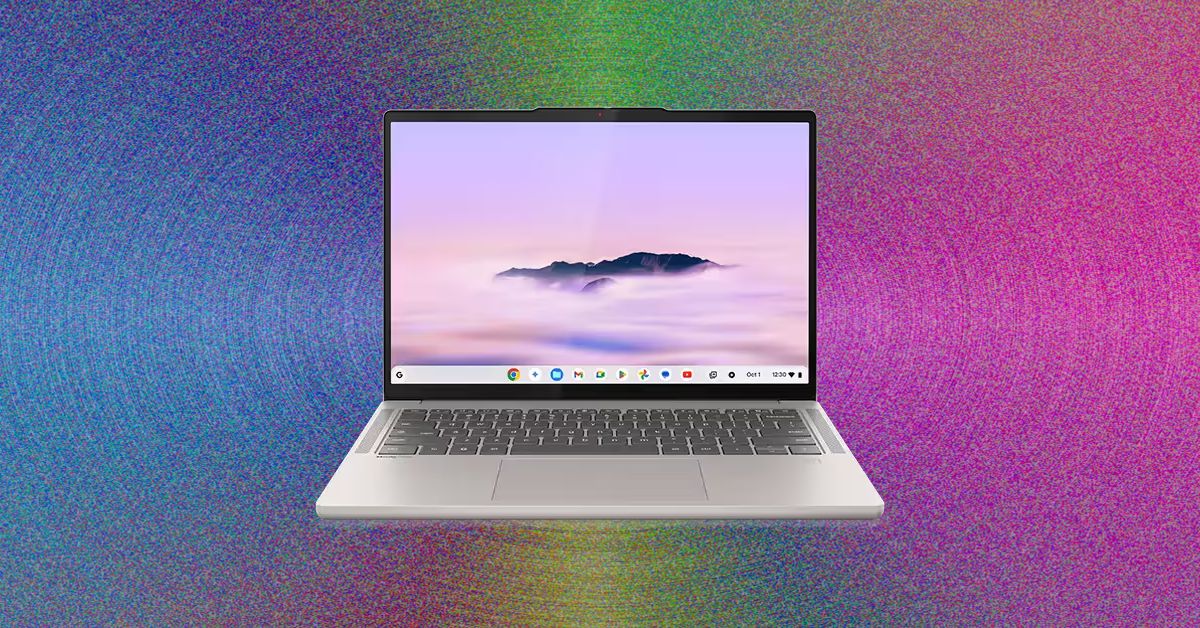
I was delighted to see that the Acer Chromebook Plus 516 didn’t skimp on a crappy touchpad. That goes a long way toward improving the experiencing of actually using the laptop on a moment-by-moment basis. I wasn’t annoyed every time I had to click-and-drag or select a bit of text. This one’s biggest weakness is definitely the screen, which is true of just about every cheap Chromebook I’ve tested. The colors are ugly and desaturated, giving the whole thing a sickly green tint. It’s also not the sharpest in the world, as it’s stretching 1920 x 1200 pixels across a large, 16-inch screen. But in terms of usability and performance, the Acer Chromebook Plus 516 is a great value, combining an Intel Core i3 processor with 8 GB of RAM and a 128 GB of storage. For a Chromebook that’s often on sale for $350, it’s a steal.
While we’re here, let’s go even cheaper, shall we? Asus has two dirt-cheap Chromebooks that I tested last year that I was mildly impressed by. The Asus Chromebook CX14 and CX15. Notice in the name that these are not “Chromebook Plus” models, meaning they can be configured with less RAM and storage, and even use lower-powered processors. That’s exactly what you get on the cheaper configurations of the CX14 and CX15, which is how you sometimes get prices down to as low as $130. I definitely recommend the version with 8 GB of RAM, but regardless of which you choose, the both the CX14 and larger CX15 are mildly attractive laptops. You’d know that’s a big compliment if you’ve seen just how ugly Chromebooks of this price have been in the past.
With these, though, I appreciate the relatively thin bezels and chassis thickness, as well as the larger touchpad and comfortable keyboard. The CX15 even comes in a striking blue color. The touchpad isn’t great, nor is the display. Like the Acer Chromebook Plus 516, it suffers from poor color reproduction and only goes up to 250 nits of brightness. It only has a 720p webcam too, which makes video calls a bit rough. But that’s going to be true of nearly all the competition (and there isn’t much).
Of the two models, I definitely prefer the CX14 though, as it doesn’t have a numberpad and off-center touchpad, which I’ve always found to be awkward to use. Look—no one’s going to love using a computer that costs the less than $200, but if it’s what you can afford, the Asus Chromebook CX14 will at least get you by without too much frustration.
Whatever you do, don’t just head over to Amazon and buy whatever ancient Chromebook is selling for $100 for your kid. It’s worth the extra cash to get something with better battery life, a more modern look, and decent performance.
Other Good Chromebooks We’ve Tested
We’ve tested dozens and dozens of Chromebooks over the past years, having reviewed every major release across the spectrum of price. Unlike Macs and Windows laptops, Chromebooks tends to stick around a bit longer though, and aren’t refreshed as often. I stand by my picks above, but here are a few standouts from our testing that are still worth buying for the right person.
Photograph: Daniel Thorp-Lancaster

Two of Big Tech’s most influential billionaires, Sam Altman and Elon Musk, will go head-to-head in a highly anticipated trial beginning April 27. In Musk v. Altman, a judge, advised by a jury, will ultimately determine whether OpenAI has strayed from its founding mission to ensure that artificial general intelligence (AGI) benefits humanity, and the ruling could influence how the world’s leading AI developer controls and distributes its technology. For now, you can learn more about the trial here.
On the Panel
On May 8, a panel of WIRED experts will go live to answer your questions about this consequential case.
- Zoë Schiffer: WIRED’s director of business and industry, who oversees coverage of business and Silicon Valley.
- Maxwell Zeff: a senior writer at WIRED covering the business of artificial intelligence. He writes the weekly Model Behavior newsletter, which focuses on the people, communities, and companies behind Silicon Valley’s AI scene.
- Paresh Dave: a senior writer at WIRED covering the inner workings of Big Tech companies. He writes about how apps and gadgets are built and about their impacts while giving voice to the stories of the underappreciated and disadvantaged.
Ask a Question
Submit all your burning questions about this historic legal battle at WIRED’s next, subscriber-only livestream scheduled for May 8 at noon ET / 9 PT. To leave questions in advance as the trial unfolds, head to the comment section below.
Become a Subscriber
The event will be streamed right here. For subscribers who are not able to join, a replay of the livestream will be available after the event. Not a subscriber yet? Subscribe now to get access to this livestream, plus full access to WIRED.
In the meantime, check out past livestreams on Big Tech and the military, the future of electric vehicles, and more.

The UK government has declared its intention to modernise payment services regulation, updating it to support innovations in money and payments, according to an HM Treasury statement. It is also set to publish a consultation inviting feedback from the payments sector.
Lucy Rigby, economic secretary to the HM Treasury, said: “Fintech is a true British success story, and we are backing the industry to maintain its competitive edge and go even further and faster in driving growth.
Rigby will attend events during Fintech Week in London to promote the government’s efforts in maintaining the UK as the leading destination for fintechs to start, scale and succeed, said the Treasury.
“Today’s package is our latest stake in the ground as we build a payments ecosystem that is secure, competitive and fully equipped to harness the opportunities created by rapid technological change,” said Rigby.
Britain is a world-leading destination for fintech, second only to the US in global fintech investment rankings. More than 3,000 fintech firms operate in the country, which account for tens of thousands of jobs.
Revolut – a UK-headquartered fintech firm – reported a £23bn value jump last year, bringing the company to £57bn. The digital bank has since been called Britain’s “leading technology company” by The Finanser CEO Chris Skinner. But in 2025, fintech investment in the UK fell to its lowest level since 2020.
Now, during this week’s London Fintech Week, the government is announcing strategies to grow Britain’s fintech industry, keep pace with technological progress and protect consumers. As part of the announced plan, the government has committed to spending a additional £1m to fund the Centre for Finance, Innovation and Technology (CFIT) from April to continue the centre’s work facilitating collaboration across the fintech sector.
The plan includes:
- Bringing the Payment Systems Regulator (PSR) into the Financial Conduct Authority (FCA);
- Laying out a single framework for both traditional and tokenised payment;
- Setting guidelines on how payment service regulation should respond to AI agents conducting purchases for customers and businesses;
- And regulating stablecoins use while cutting administrative burdens for companies who want to provide stablecoins payments.
Alongside this, the government is appointing Chris Woolard CBE as wholesale digital market’s champion to make the country’s financial sector more competitive.
Woolard praised British investment in the sector, claiming the country offers “a thriving startup ecosystem, global banks and insurers, and leading universities”, as well as regulators who keep up with innovation to let firms “test, learn and scale responsibly”.
Ultimately, he called for open dialogue between the private and public sectors to create a tokenised wholesale financial markets ecosystem. To improve communication, the government will publish a consultation, asking the payment sector for feedback.
This isn’t the first step in Britain’s path to fintech leadership. A few months ago, the government decided to establish itself as globally competitive by creating a financial service regulatory regime for crypto assets. Recently, the FCA outlined its open finance plan for 2030, which set out a roadmap to giving consumers and businesses more control over their financial data.
In a press release, stakeholder Philip Belamant, co-founder and CEO of Zilch, said: “The UK has a real opportunity to lead globally in enabling agentic finance, helping consumers benefit from smarter, more efficient ways to manage their money.”


US’ Gap & FIT launch programme to mentor fashion students

Nasa unveils new space telescope to probe mysteries of ‘dark energy’

Dubai to build $9.25bn ‘Golden Line’ metro, completion set for 2032

-

 Fashion6 days ago
France’s LVMH Q1 revenue falls 6%, shows resilience amid Iran war
-

 Entertainment7 days ago
Is Claude down? Here’s why users are seeing errors
-

 Fashion1 week ago
Asia claims largest share of markets on Kearney FDI Confidence Index
-

 Sports1 week ago
PSL 11: Peshawar Zalmi win toss, opt to field first against Quetta Gladiators
-

 Tech1 week ago
The Deepfake Nudes Crisis in Schools Is Much Worse Than You Thought
-

 Tech1 week ago
Bremont Is Sending a Watch to the Moon’s Surface
-

 Tech1 week ago
Human-machine teaming dives underwater
-
 Business1 week ago
BP sees ‘exceptional’ oil trading result as Iran war sends crude costs soaring