

Tech
The Physics Behind the Quadruple Axel, the Most Difficult Jump in Figure Skating


In figure skating, the quadruple axel is generally considered the most difficult jump. Until 2022, when US skater Ilia Malinin—currently riding high as the “Quad God” at the 2026 Winter Olympics—started doing them, they seemed impossible. Landing one, naturally, can give an athlete a higher score. But for skaters who aren’t generational talents like Malinin, grasping exactly how to pull off a quadruple axel can be tricky. But physics can offer some clues.
In 2024, the journal Sports Biomechanics published a study by Toin University researcher Seiji Hirosawa that brought science a little closer to understanding how quad axels work. One of the biggest factors? Getting high. Like 20 inches off the ground high.
In the current scoring system of figure skating competitions, the jury, which in the case of the Milano Cortina Games consists of two technical specialists and a technical controller, assigns a score to each technical element, namely jumps, spins, and steps. However, the scores for the more difficult jumps, such as triple or quadruple jumps, are higher than those for the other technical elements, so skaters must perform them correctly in order to win competitions.
Generally speaking the axel is the most technically complex of the jumps. There are three main types, each distinguished by their takeoffs: toe, blade, or edge. Most are named after the first person to do them; the axel is named after Norwegian skater Axel Paulsen. It is also the only one that involves a forward start, which leads the athlete to perform a half-turn more than other jumps. A simple axel, therefore, requires one and a half rotations to complete, while a quadruple axel requires four and a half rotations in the air.
To shed light on the specific kinematic strategies used by athletes to perform the quadruple axel jump, Hirosawa’s study focused on footage of two skaters who attempted this jump in competition. Using data from what’s known as the Ice Scope tracking system, researchers analyzed several parameters: vertical height, horizontal distance, and skating speed before takeoff and after landing.
Contrary to previous biomechanical studies, which suggested that jump height does not change significantly, Hirosawa’s study found that increasing jump height is crucial to successfully performing a quadruple axel jump. Both skaters, in fact, aimed to achieve significantly greater vertical heights in their attempts to perform this jump than in the triple axel.
“This suggests a strategic shift toward increasing vertical height to master 4A [quadruple axel] jumps, in contrast to previous biomechanical research that did not emphasize vertical height,” the study concluded.
Increased jump height, Hirosawa adds, provides increased flight time by allowing a large number of rotations around the longitudinal axis of the body. Short version: jump higher, turn more. “The results of this study provide valuable insights into the biomechanics of quadruple and triple axel jumps, update existing theories of figure skating research, and provide insights into training strategies for managing complex jumps,” the study concludes.
Easier said than done—unless you’re Ilia Malinin.












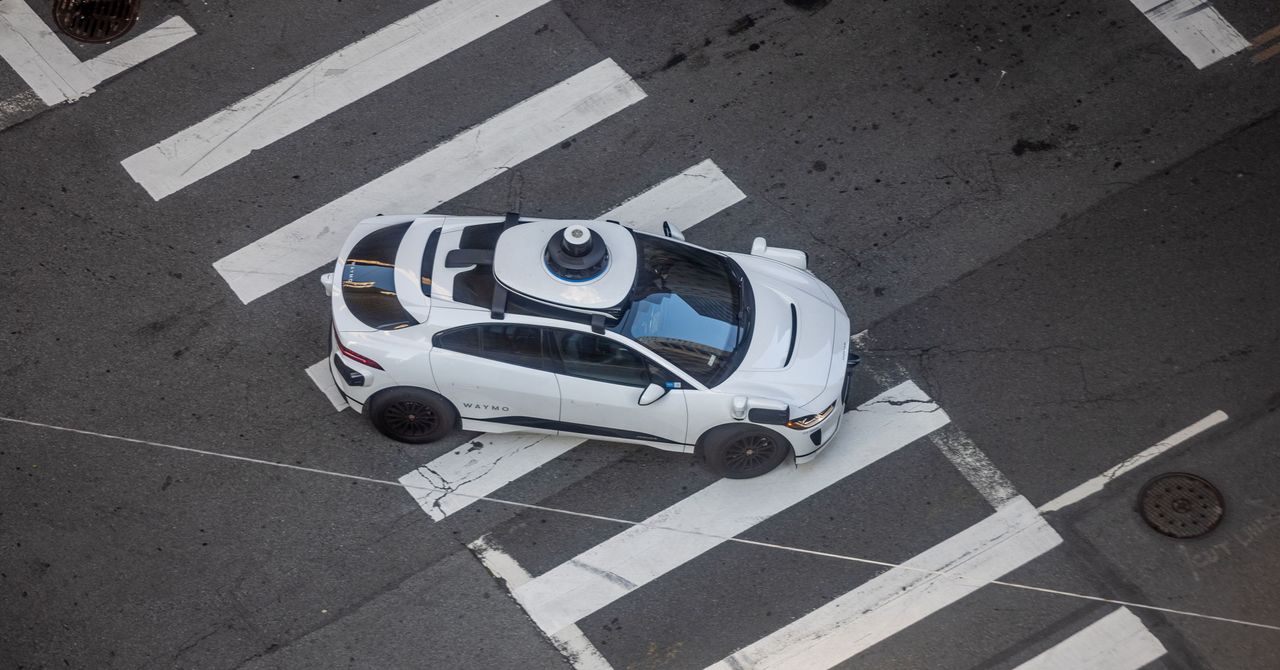
One of the purported advantages of self-driving car tech is that every car can learn from one vehicle’s mistakes. Here’s how Waymo puts it on its website: “The Waymo Driver learns from the collective experiences gathered across our fleet, including previous hardware generations.”
But in Austin, Waymo’s vehicles struggled for months to learn how to stop for school buses as drivers picked up and dropped off children. An official with the Austin Independent School District (AISD) alleged that the vehicles had, in at least 19 instances, “illegally and dangerously” passed the district’s school buses while their red lights were flashing and their stop arms were extended rather than coming to complete stops, as the law requires.
In early December, Waymo even issued a federal recall related to the incidents, acknowledging at least 12 of them to federal regulators at the National Highway Traffic Safety Administration (NHTSA), which oversees road safety. According to federal filings, engineers with the self-driving vehicle company had “developed software changes to address the behavior” weeks before.
But even after the recall, the school-bus-passing incidents continued, according to school officials and a report from the National Transportation Safety Board (NTSB), an independent federal safety watchdog that’s also investigating the situation.
Now, email and text messages between school officials and Waymo representatives, obtained by WIRED through a public records request, show the lengths that the Austin public school district and Waymo went to try to solve the problem. AISD even hosted a half-day “data collection” event in a school parking lot in mid-December, the documents show, with several employees pulling together school buses and stop-arm signals from across the fleet so the self-driving car company could collect information related to vehicles and their flashing lights.
Still, by mid-January, over a month later, the school district reported at least four more school-bus-passing incidents had taken place in Austin. “The data we collected from the beginning of the school year to the end of the semester shows that about 98 percent of people that receive one violation do not receive another,” an official with the school’s police department told the local NBC affiliate that month. “That tells us that the person is learning, but it does not appear the Waymo automated driver system is learning through its software updates, its recall, what have you, because we are still having violations.”
The situation raises questions about the self-driving technologies’ curious blind spots and the industry’s ability to compensate for them even after they’ve been spotted.
Self-driving software has long struggled with recognizing flashing emergency lights and road safety devices with long, thin arms, including gates and stop-arms, says Missy Cummings, who researches autonomous vehicles at George Mason University and served as a safety adviser to the NHTSA during the Biden administration. “If [the company] didn’t fix this a few years ago, the more they drive, the more it’s going to be a problem,” she says. “That’s exactly what’s happening here.”
Waymo did not respond to WIRED’s requests for comment. A spokesperson for the Austin Independent School District referred WIRED to the NTSB while the incidents are under investigation. A spokesperson for the NTSB declined to answer WIRED’s questions while its investigation continues.
Illegal Passing
By midwinter of 2025, AISD officials were frustrated. In one of the 19 incidents alleged by a lawyer for the district in a letter later released by federal road safety regulators, a Waymo passed a school bus letting off children “only moments after a student crossed in front of the vehicle, and while the student was still in the road.”
“Alarmingly,” the lawyer wrote, five of the alleged incidents had occurred after Waymo had assured the district that it had updated its software to fix the problem. Federal regulators with the NHTSA had already launched a probe into the behavior. “Austin ISD is evaluating all potential legal remedies at its disposal and intends to take whatever action is necessary to protect the safety of its students, if required,” the lawyer warned.
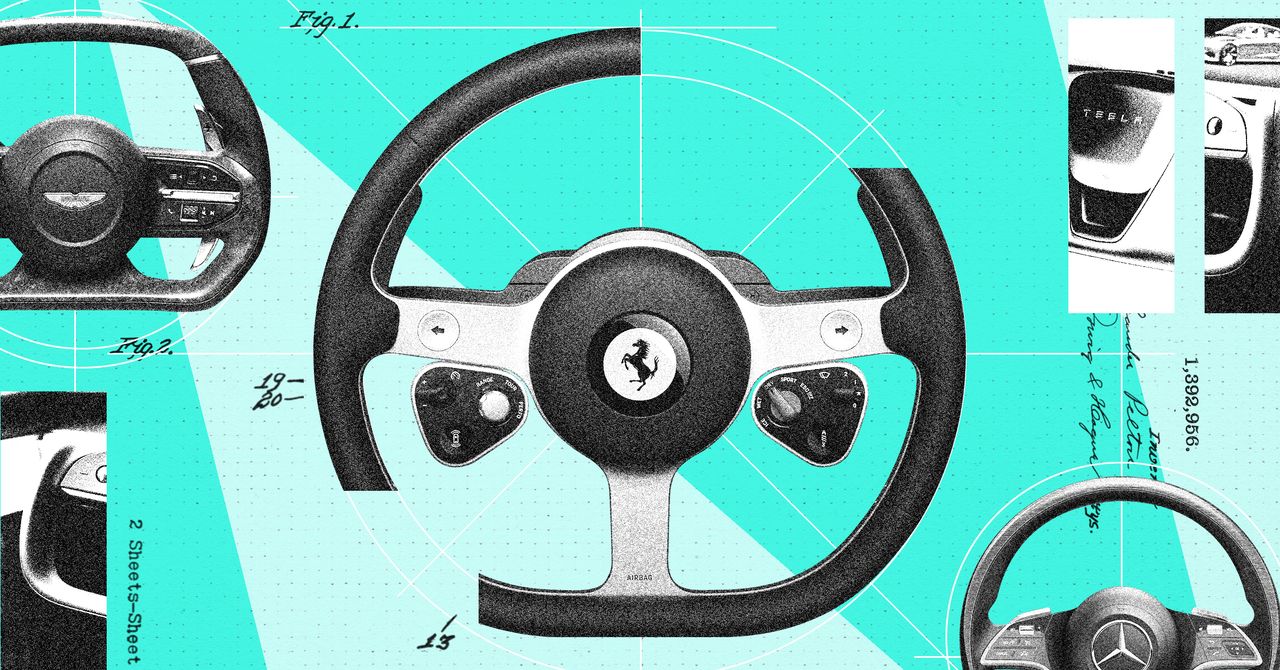
Cars didn’t always have steering wheels. The very first car—the 1885 Benz Patent-Motorwagen, invented by Karl Benz—used a tiller system: a horizontal bar with a handle mounted to a vertical bar. The lever-like handle was similar in many respects to a boat’s rudder. Amazingly, it would be another nine years before French engineer Alfred Vacheron saw sense and fitted the first known steering wheel to his 4-horsepower Panhard for the Paris-Rouen race. Just four years later, in 1898, Panhard made the infinitely preferable and safer steering wheel standard on all its cars. And we’ve been using them ever since.
Hans-Peter Wunderlich is Mercedes’ creative director of interior design. He has been designing steering wheels for 35 years. “I started in 1991 on my first,” he tells me. “A steering wheel is really the most challenging and difficult element to sculpture, to design, to develop in the car.” It is so difficult that Wunderlich has used the wheel as a test on potential recruits.
“When we hire a designer, I have given them the task, after I see a nice portfolio, to draw me a steering wheel,” he says. “The steering wheel is, for me, the proof. Should I hire them or not? If a designer is able to create a perfect steering wheel, even just as a scribble, then they will be a good designer for the total interior of a car.”
It was this challenge, in part, that attracted Ive and his team. “Our starting point was trying to understand the essential nature of the problem to be solved, and that normally means dismissing received wisdom,” Ive tells me. “A car is the aggregation of multiple products, and, in many ways, we’re designing furniture. We’re designing complex and sophisticated input methods. One of the challenges was to try to create cohesion. You don’t get something to be cohesive by a set of rules. That was a wonderful new challenge, and one wrestled with over a number of years.”
For both Ive and Wunderlich, science accompanies the art of design. They talk of the intricacies of the ergonomics, the logic of the switches, factoring in an “exploding element in the center” (the airbag), which is getting more and more complicated, says Wunderlich. “Even the rim is an ergonomic science in itself,” he adds, saying that his team works hand in glove with Mercedes’ in-house ergonomics department on these stages. “It’s almost 50-50. We get requirements data from engineering and ergonomics.”
Spinning Out
Look closely at your steering wheel rim; in cross-section, it won’t be round. Cut it into segments, and each will likely have a different profile, aiming to optimize grip wherever your hands grasp the wheel. Even the padding has to be just right. “It mustn’t be like bone but also not too fat. You need a nice balance,” Wunderlich says. “[It must say] this car is solid, it’s quality, it’s strong, it’s powerful, but it’s not crude.”
“If you hold the wheel on the three and nine o’clock positions, you can carve in with your fingers on the rear of the rim—so you have the hump, the scallop of the rim,” Wunderlich says. “And then we carve into a valley where your fingers could rest. That means your hands can close. You have the feeling you’re holding the car. This is so challenging, because in that area you have such a technical structure to maintain—complex electronics and heating elements. We torture the engineers to keep that area so small so we can sculpt it out.”
Ive tortured Raffaele De Simone, Ferrari’s chief engineer and head development driver. De Simone is sometimes described at the company as “Customer No. 1” because, apparently, no Ferrari road car leaves the factory until he is satisfied with its performance.

After a relatively quiet few months, Amazon is bringing back another of its famously invented shopping holidays. The Amazon Spring Sale is in its third year, running now through March 31. Like during last year’s event, Amazon is promising customers thousands of deals across various daily, themed categories.
Of course, as we’ve seen in the past with Prime Day, Black Friday, and Cyber Monday, the true discounts on good products will likely be buried among junk deals on shoddy wares. The WIRED Reviews team tests gear all year long, and we fact-checked discounts on the products we actively recommend to our friends, family, and readers. We’ve highlighted the best deals from the Amazon Spring Sale below.
Be sure to check out our other deals coverage for vacuum discounts, smart bird feeders, and more.
Updated March 27, 2026: We’ve added additional deals, removed expired discounts, and checked for accuracy throughout.
WIRED Featured Deals:
Our audiophile reviewers test more headphones than anyone would deem sane or necessary. The Sony WH-1000XM6 are the pair they’ve declared the best wireless headphones of all, with “the best noise reduction on Earth.” You’ll also get 30 hours of battery life, multipoint Bluetooth pairing, folding ear cups and a travel case, sparkling and clear sound, and fabulous controls. They’re nearly perfect. When they’re not on sale for this price, they’re selling for the full MSRP. If you’re in the market, now is the time—or, if you’re not ready right now, wait until the next time they’re on sale for this price.


Riyadh opens rail freight route linking eastern ports to Jordan border

Iran deal may be finalized ‘soon’, says Trump

UK consumer inflation remains flat at 3% YoY in Feb

-

 Politics6 days ago
Afghanistan announces release of detained US citizen
-

 Tech6 days ago
Can a Home Appliance Fix the Problem of Soft-Plastic Waste?
-

 Sports1 week ago
Men’s March Madness live tracker: Updates on Saturday’s games
-
 Business6 days ago
Property Play: Home flippers see smallest profits since the Great Recession, real estate data firm says
-

 Entertainment6 days ago
UN warns migratory freshwater fish numbers are spiralling
-

 Sports1 week ago
Arne Slot: Liverpool’s defeat to Brighton ‘hurts a lot’
-

 Sports6 days ago
Broadcast industry CEO says consolidation is ‘essential’ to compete for NFL soaring media rights prices
-
 Business6 days ago
Gold prices soar in Pakistan – SUCH TV