

Entertainment
The power of rationality

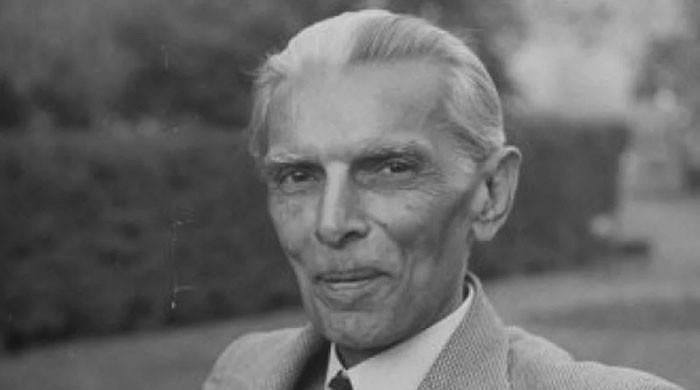
If one were to choose a sequence of essentials for a nation to prosper, I would put rationality of their thought process on top. It is my firm belief that, without exercising this power, a state is left with little credibility to improve its lot, or that of its citizens.
It is also unfortunate that, since gaining independence, the assets that we have continually compromised are the very credentials of that momentous day. In addition to rendering them subservient to some ill-conceived compulsions emanating from foreign countries, we have also compromised them by practising policies aimed at aggrandising personal profits in preference to securing collective national interests. Today, we come across as a captive state banking for sustenance more on support that we can garner from outside than from internal effort embedded in unity and cohesion. Such an outlay makes for a cardinal sign of weakness, not strength.
To reap the fruits of our independence, one should revisit the speech that Quaid made from the floor of the first constituent assembly of the country on August 11, 1947, as also many others including the one where he addressed the civil service officers in Peshawar. He was clear and candid in spelling out the essentials the newborn state should espouse.
He underlined the centrality of freedom as equal citizens of the country beyond the confines of faith, caste, colour or creed. He went on to emphasise the sovereignty of the legislative body and the huge responsibility it places on the shoulders of the leaders to defend it. He dubbed bribery and corruption as curses and stressed the need to eliminate them.
Addressing the civil servants in Peshawar, he exhorted them not to fall victim to any pressure and do their duty as servants of the state and the people, and not the government in power at a particular time.
If one were to conduct an objective analysis of the happenings of the past decades, one would know that these are the very values which have been barbarously bartered for personal gains. Through a sinister process of politicisation of state interests, the concept of freedom, sanctity of the civil and other services and the need to protect the sovereignty of the state have all been compromised at the altar of enhancing personal wealth and power of the ruling elite and their crony cohorts.
While the state has suffered in terms of economic solvency and loss of stature among the comity of nations, it is the people who have borne the brunt of a spate of these misdemeanours by losing their dignity and self-respect on the one hand and the prospect of their growth and progress on the other.
The principal cause of all these belittlements can be traced to the placement of unnecessary curbs on the freedom of thought of the people. Intellectual activity and engagement create the space needed for nations to recognise their true destiny and chart a course to achieve it. By degrading people to be led as brainless lambs by the corrupt ruling elite, the national landscape would be rendered barren of ideas and momentum. Stagnation would automatically set in, which breeds nausea.
It is incumbent that such intellectual activity may cultivate multiple narratives which may be quite dissimilar from one another, but each one of them would carry its own weight. When the objective is clear, this diversity emerges as the essence of the intellectual thought process. We don’t cast stones at those with whom we may differ. We don’t lash them with invective-laden accusations. We don’t hand them a charge sheet, castigate them as traitors and force them into alienation from the societal mainstream. Like everyone else, they deserve to be there to make their contribution and help the state move forward.
While this has been a consistent tradition through the years of our existence, we have recently witnessed a rapid escalation in the scope of these curbs, which have stymied the prospect of our intellectual growth and consequent national salvation. A palpable fear syndrome pervades the environment, forcing people to resort to either staying locked in waiting for some improvement to set in, or plan on leaving the country by raising money through liquidating their paltry assets.
With close to four million people reported to have left in the last three years, this emigration amounts to a mass exodus, manifesting paucity of hope that a majority of citizens attach to living here. No state can prosper amidst such depressing conditions.
In the process, sanity and rationality become the principal victims. As the world becomes increasingly divided, there is a growing need to prioritise pragmatic and wise thinking for building a sustainable platform to deal with the emerging challenges. But the opposite seems to be the pattern where a counter opinion, born out of concern and sincerity, is construed as adverse to national interests and the individual is subjected to the harshest treatment, not excluding the possibility of spending time in jail, using a sequence of vicious legislations which are being adopted with alarming frequency. Already, the institution of an independent judiciary has been dealt a death knell, thus burying the possibility of the provision of justice in the country.
These conditions are not conducive to generating political stability, which imperils the prospect of economic growth. We have been dependent on support from international institutions and dole-outs from friendly countries. Instead of envisaging steps to decrease and ultimately eliminate this embarrassing dependence on outside sources, this scourge is increasing with time. As a matter of fact, every financial support secured from any quarter is touted as a great achievement and celebrated in glowing terms. Such behaviour is not just depressing; it is profoundly humiliating.
We need to get back to the basics. Not only have we forgotten our foundational ideals, but we have built a monstrous structure that rests on borrowed pillars. In the absence of internal cohesion and unity, as well as any genuine effort to address these issues, we are likely to continue declining. The governance approach requires a comprehensive overhaul.
The objective of a stable and self-reliant state cannot be achieved by blocking intellectual space with coercive measures. We should explore the power of rationality to unite people in an environment of peace and security, free from the threat of violence. Equally important is the need to stop insulting them by labelling them terrorists and traitors. They are not. They only exercise their right to differ.
Disclaimer: The viewpoints expressed in this piece are the writer’s own and don’t necessarily reflect Geo.tv’s editorial policy.
The writer is a political and security strategist and the founder of the Regional Peace Institute. He is a former special assistant to former PM Imran Khan and heads the PTI’s policy think-tank. He tweets @RaoofHasan
Originally published in The News
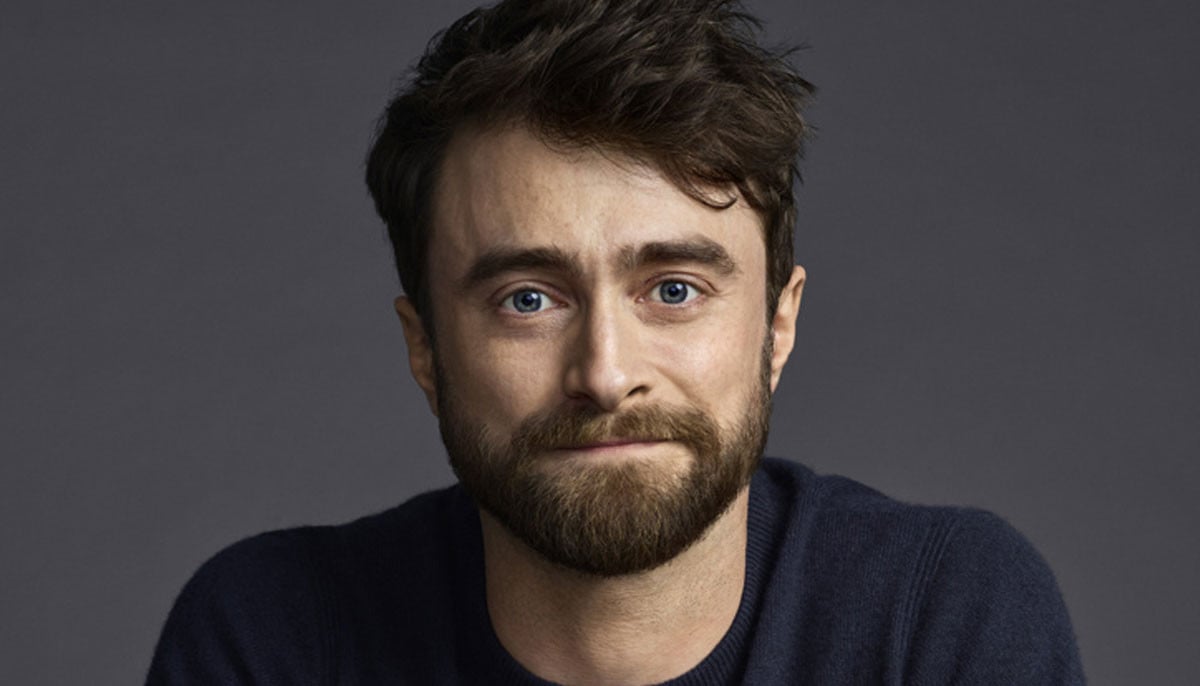
Daniel Radcliffe has weighed in on the great Harry Potter ranking debate, and he’s not afraid to go against the grain.
The 36-year-old actor, who played the boy wizard across all eight films from 2001 to 2011, appeared on the Happy Sad Confused podcast with Josh Horowitz and was challenged to rank the franchise he knows better than almost anyone.
He admitted upfront that he hasn’t actually watched the films in quite some time, and that his relationship with his own performances shifts over time.
“When I was 18, I would cringe watching the earlier films. Now, I think the early films are sweet and now I cringe watching myself when I was 18 or 19,” he said.
“But I assume that those dates will just keep changing as to what I find palatable of my own work.”
When it came to the early instalments, he gave the edge to Chamber of Secrets over Sorcerer’s Stone, purely on the strength of one creature.
“I would take Chamber of Secrets out of those two ’cause I love the Basilisk,” he explained.
His most eyebrow-raising call came when comparing Goblet of Fire with the widely beloved Prisoner of Azkaban, which many fans and critics consider the artistic high point of the series.
Radcliffe went the other way.
“I know everyone wants me to say Azkaban. I know that’s how everyone else feels, but I love the stuff I got to do on the fourth movie; it was awesome. So I’ll say Goblet of Fire.”
At the top of his personal ranking sits Deathly Hallows Part 2, the emotional finale of the series, a choice that feels fitting given the weight of what that film represented for everyone involved.
At the bottom?
Half-Blood Prince. And he was quick to take responsibility for that verdict. “Half-Blood Prince is probably the bottom of the bracket for me. And that’s my own stuff. That’s not the film.”

Jaclyn Smith has revealed she passed on the chance to play a Bond girl in the 1979 film Moonraker, and the reason comes down to her Houston roots and a sense of loyalty that proved stronger than any Hollywood opportunity.
The Charlie’s Angels star, 80, made the disclosure at PaleyFest’s Charlie’s Angels 50th anniversary reunion, explaining that she was under contract at the time and felt honour-bound to see it through.
“I had a contract [for Charlie’s Angels] and, you know, Houston upbringing, you follow your contract,” she said.
“And Aaron [Spelling] was the first to invite me to the party, so I was honoring my contract.”
The role of Dr Holly Goodhead in the Roger Moore Bond film ultimately went to Lois Chiles.
Smith said she harbours no regrets. “I think it wasn’t meant to be. I think things happen for a reason, I really do, so I have no complaints.”
She also revealed that Moonraker was not the only major role that slipped through her fingers.
She was at one point considered for Beetlejuice, though she admitted she simply did not connect with the script.
“You read a script, and it doesn’t always ring true to you, and it’s about what you can bring to it,” she said.
The film’s female leads went to Catherine O’Hara, Geena Davis and a young Winona Ryder. Her husband, she noted with a laugh, has never quite forgiven her for that one.
There was also a near-miss with 9½ Weeks, which she and John Travolta were at one stage set to make together.
“But I wasn’t really right for that one either,” she said. “So, that was Kim Basinger and Mickey Rourke. You know, it happens.”
Looking back across a career that included the full run of Charlie’s Angels, the acclaimed TV movie Jacqueline Bouvier Kennedy and recurring roles on CSI, Becker and All American, Smith was philosophical.
“I think, certainly, I look at my life as what’s meant to be will be, and it’s been a good journey. It’s really been a good journey.”
She also shared a revealing glimpse into how little faith the network originally had in Charlie’s Angels, despite its extraordinary ratings.
The pilot aired as a two-part movie and went through the roof, and the network’s response was to air it again to see if it was a fluke.
It wasn’t.
“They just thought these women in men’s roles, this is not going to work,” Smith recalled. They didn’t even commission a full season. It took a sustained run in the top ten before they finally accepted what they had.
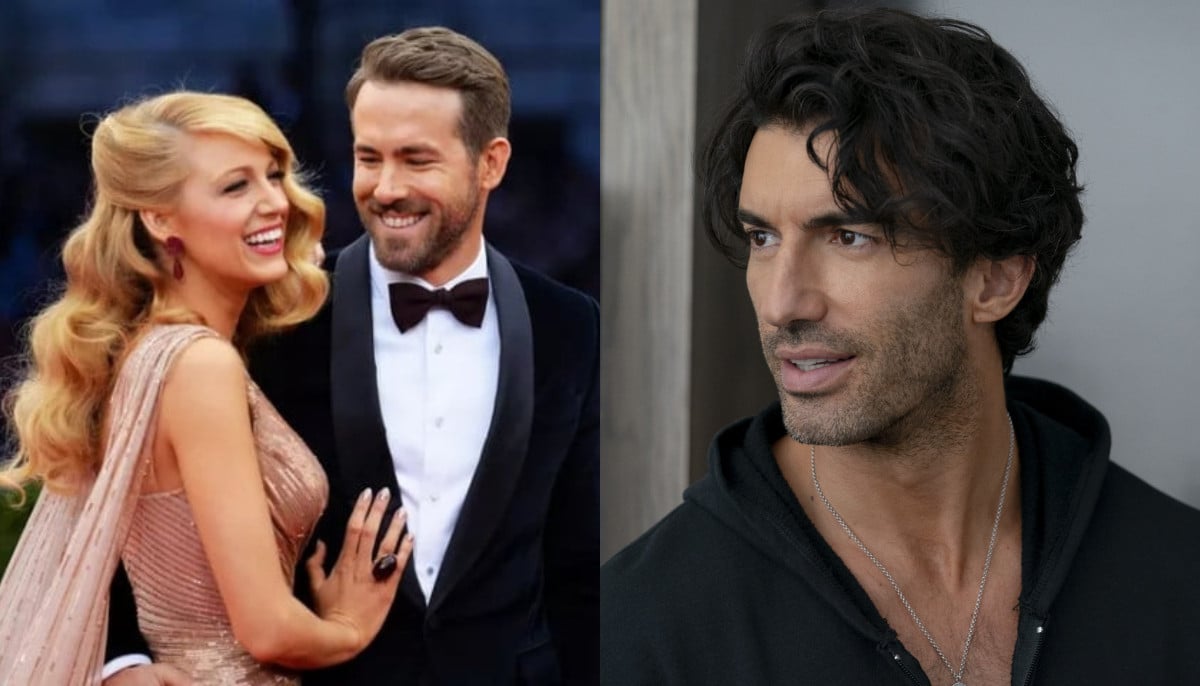
Ryan Reynolds has spoken out in passionate defence of his wife Blake Lively as their high-profile legal battle with Justin Baldoni continues to play out in public, pushing back on reports that the lawsuit has damaged her standing in Hollywood.
The Deadpool star, 49, told Willie Geist during a live taping of Sunday Sitdown that he has never felt prouder of anyone.
“I’ve just never in my life been more proud of someone with that level of integrity that brings that with them and carries that with them in everything that they do,” he said.
When asked how the couple are coping with the fallout, Reynolds was measured but firm.
“People have no idea what’s really going on, you know? You really see kind of the illusion behind so much of this stuff, you know? Digital life versus real life.”
His comments came in direct response to a wave of negative press surrounding Lively, 38, including a report in the Daily Mail in which an anonymous Disney executive claimed the lawsuit had “ruined her in Hollywood,” adding that she “had a reputation for being difficult.”
The same report suggested Reynolds and Lively were considering relocating to the UK so she could rebuild her profile there.
Lively filed a lawsuit against Baldoni in December 2024, alleging sexual harassment and retaliation stemming from their time on the set of It Ends With Us.
Baldoni, 42, denied the allegations and filed a $400 million countersuit, which was thrown out in June.
Earlier this month, a federal judge dismissed ten of Lively’s thirteen claims, including the sexual harassment allegations, on legal and technical grounds, though her retaliation case is proceeding to trial on 18 May.
Lively addressed the ruling on Instagram, making clear she had not wanted to litigate but felt she had no choice.
“The last thing I wanted in my life was a lawsuit, but I brought this case because of the pervasive RETALIATION I faced, and continued to, for privately and professionally asking for a safe working environment for myself and others,” she wrote.
With settlement talks having broken down, the two sides are now on course for a courtroom showdown next month.


Daniel Radcliffe compares ‘Harry Potter’ movies: ‘Which one was better’?

Van Dijk hands Liverpool a UCL boost and reason to believe after more late drama

Did ‘Charlie’s Angels’ star Jaclyn Smith say no to Bond girl role?

-

 Fashion4 days ago
France’s LVMH Q1 revenue falls 6%, shows resilience amid Iran war
-

 Entertainment7 days ago
Palace left in shock as Prince William cancels grand ceremony
-

 Sports7 days ago
The case for Man United’s Fernandes as Premier League’s best
-
 Business1 week ago
100% road tax waiver for electric cars, new rules for 2, 3 and 4 wheelers – what Delhi govt’s draft EV policy says – The Times of India
-
 Business7 days ago
UK could adopt EU single market rules under new legislation
-

 Entertainment1 week ago
Dua Lipa hits major career high ahead of wedding with Callum Turner
-

 Sports1 week ago
Lamar Jackson hits back at critics with faithful message on social media
-

 Entertainment4 days ago
Is Claude down? Here’s why users are seeing errors