

Sports
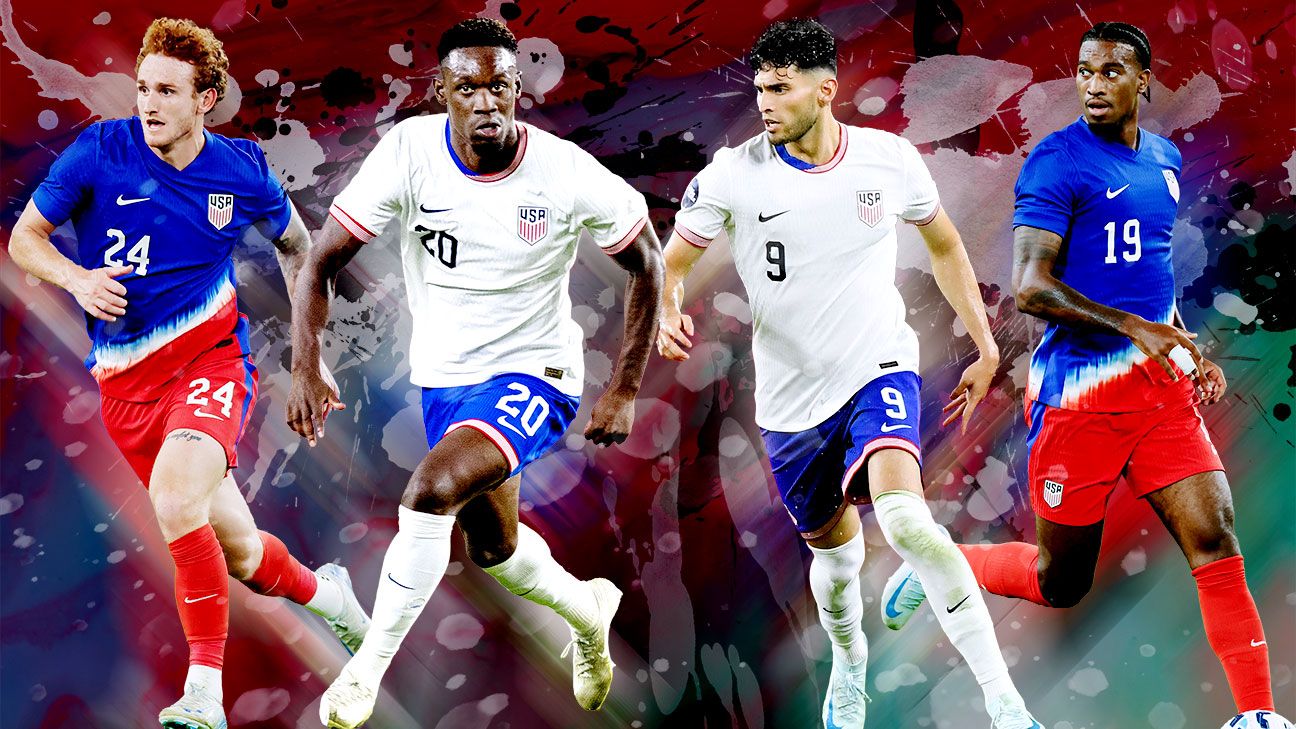
The race to be No. 9: Which strikers will the USMNT take to the World Cup?

-
Jeff Carlisle
-
Bill Connelly
Close
Bill Connelly
ESPN Staff Writer
- Bill Connelly is a writer for ESPN. He covers college football, soccer and tennis. He has been at ESPN since 2019.
For the past two FIFA World Cup cycles, the starting striker spot for the U.S. men’s national team has been a seemingly unsolvable puzzle, with none of the candidates able to grab a firm hold of the spot. It wasn’t always this way.
Eric Wynalda and Brian McBride led the U.S. line during the 1990s and 2000s. Jozy Altidore and Clint Dempsey carried the flag through the 2014 World Cup and slightly beyond, although it’s worth noting that Dempsey spent a significant chunk of his international career in a midfield role. The same was true for Landon Donovan.
Since then, the search for a starting central striker has taken on holy grail-like qualities.
The 2022 World Cup cycle never did reveal a forward who could deliver on a consistent basis. Jesús Ferreira, Jordan Pefok, Ricardo Pepi, Josh Sargent and Gyasi Zardes were all given starts during World Cup qualifying. For a time, it looked like Pepi would emerge, but he faded toward the latter part of the cycle — mostly due to a lack of playing time at club level — and was beaten to the roster selection tape by Haji Wright. An injury to Sargent at the World Cup, combined with ineffectiveness by Ferreira and Wright, meant that the U.S. didn’t get as much out of the position in Qatar as they would have hoped.
This cycle has been even more muddled. Pepi, Sargent and Wright remain in contention, joined by Folarin Balogun and Patrick Agyemang. And while Balogun has gained a bit of daylight between himself and the other potentials thanks to an impressive performance in a recent friendly against Japan, he hasn’t secured the spot just yet.
With the October window featuring friendlies against Ecuador and Australia, here’s where things stand in the race to wear the No. 9 for Mauricio Pochettino’s USMNT at next summer’s World Cup, and a statistical comparable player for the five in contention to start up top come June.

Folarin Balogun | 24 | AS Monaco
When Balogun committed to the USMNT in May of 2023 — he was also eligible to represent England and Nigeria — he was thought to be the USMNT’s long-term answer to the striker position. Initially there was a payoff: he scored in the 2023 Concacaf Nations League final against Canada, and was one of the few players to come out of the 2024 Copa América with any credit. But injuries, including a recurring shoulder ailment that required surgery in December 2024, prevented him from getting a vice-like grip on the position.
Balogun’s mobility allows him to get behind opposition defenses. The problem has been that the U.S. attack hasn’t always proved itself adept at finding him in those positions. But Balogun’s movement has the added benefit of pulling defenders out of position, the better to create space for the likes of Christian Pulisic, Timothy Weah or Alejandro Zendejas.
The Japan game in September showcased the full repertoire of his skills, and he even demonstrated he can play with his back to goal and hold the ball up if asked. Even in the loss to South Korea, the U.S. attack looked a lot more dynamic once Balogun entered the match as a substitute in the 62nd minute.
The only doubts surround his durability, as well as getting consistent playing time at Monaco, where the competition for places has been fierce. He has just one goal and one assist in league play this season, covering 332 minutes.
Statistical comparable: Nicolas Jackson. Balogun has proved to be a willing runner and ball carrier with solid shot and goal creation. In the past three years, he has averaged 0.50 goals from 3.69 shots per 90 minutes. Unfortunately, like Jackson, he has also proved to be a pretty poor finisher — those 0.50 goals per 90 come from shots worth 0.70 xG per 90. — Bill Connelly

Wright is the only U.S. center forward with a World Cup goal to his name. Granted, he didn’t seem to know much about his tally in the round-of-16 defeat to the Netherlands at the 2022 World Cup, but a goal is a goal.
Given the disdain Pochettino has for player reputations, more pertinent to Wright’s cause is the blistering form he has been showing in the English Championship this year, where his eight goals are tops in the league and have propelled Coventry to the top of the table.
Wright has some versatility to his game. His 6-foot-3 frame allows him to be a force in the air, but he’s also quick enough to play on the wing, which he has done on occasion for Coventry and the USMNT. His ability to sniff out chances is impressive as well. His tally from less than 2 yards in last weekend’s 5-0 demolition of Sheffield Wednesday showed his ability to be in the right place at the right time.
What’s holding Wright back? There were times during the last World Cup where he seemed slow to react to attacking opportunities. Perhaps the moment got to him. While that was almost three years ago, it’s an image that will stick in the memory until he delivers on a bigger stage.
Statistical comparable: Randal Kolo Muani. Wright isn’t quite the passer that Kolo Muani can be, but he scores (0.56 goals per 90 minutes), and he really pushes the ball. He has averaged 6.1 progressive carries per 90 in the past three years, drawing 1.42 fouls per 90 in that span. That creates a rare profile and makes Kolo Muani the best comp. — Connelly

During last week’s conference call in which he announced the U.S. roster for the October window, Pochettino said that Agyemang offers a different profile to Balogun and Wright, one derived from his physical presence — he’s 6-foot-4 — and his aerial ability. Those traits were on display in Derby County’s 1-1 draw with Southampton last weekend, when Agyemang towered over a Saints defender to head home the Rams’ only goal of the day.
Agyemang is a raw talent, however, and he struggles at times with his touch and hold-up play. But he seems perfectly suited to score an ugly goal late in a match, if necessary, and his passing has seen him earn two assists already in 307 minutes in the EFL Championship.
Agyemang’s chances of securing a World Cup roster spot are, like so many players, down to health and the numbers game Pochettino will have to play. If Pochettino only opts to bring three forwards, and a player like Pepi is healthy, Agyemang may be one of the final cuts. But his “different profile” may be what gets him in, especially if Pochettino opts for four strikers.
Statistical comparable: Olivier Giroud. Agyemang is excellent in the air (47.5% aerial success rate), and he’s happy to draw lots of contact (2.05 fouls per 90 suffered, 0.92 in the attacking third). That makes him awfully Giroud-like, as does quality finishing — he averages 0.51 goals from shots worth 0.40 xG, and 90% of his shots have come from inside the box — although his shooting totals aren’t huge, and he’s not involved elsewhere on the pitch. — Connelly

Three years ago, Pepi was the odd man out in terms of the U.S. roster that went to Qatar. It proved a mistake, when the U.S. was left starting Ferreira against the Dutch. Now Pepi is aiming to be on the 2026 squad — that is, if his body will let him.
The 2025 calendar year has seen Pepi struggle with his fitness. He sustained a knee injury in the UEFA Champions League game against Liverpool last January that later required surgery, forcing him to miss last summer’s Gold Cup. Pepi’s recovery since then has been stop-start; he was brought along slowly by PSV, and looked to be back after scoring twice against NEC Nijmegen last month, but a recent muscle injury has him back on the shelf. It isn’t thought to be serious, but it prevented him from taking part in this camp.
While Pepi has several impressive attributes, his movement allows him to sniff out opportunities and get on the end of passes that other forwards might miss. Combine this with his link-up play and you have a forward capable of contributing plenty to the U.S. team. But time is running out for Pepi to make a bigger impression.
Statistical comparable: Lautaro Martínez. More than any other forward from this list, Pepi gets himself involved, just as Martínez does. His offensive numbers are inflated by playing in the Eredivisie, but they’re still excellent (0.74 goals and 1.36 chances created per 90 minutes), and he’s proving to be a reliable finisher (those goals came from shots worth 0.52 xG). He also shows up in defense, averaging a stellar-for-a-forward 5.53 defensive interventions per 90. — Connelly
1:14
Should Pochettino be worried about not knowing his best USMNT XI?
Jeff Carlisle looks ahead to the upcoming international window for Mauricio Pochettino and the USMNT.

Rarely has the difference between a player’s club form and his international form been as stark as it is with Sargent. The O’Fallon, Missouri, native has hit double-digit goals in each of his past three full seasons with the Canaries in the Championship, and he’s well on his way this year with five goals in nine league matches. It makes Sargent’s barren spell with the USMNT — he hasn’t scored for the U.S. in his past 17 international appearances, dating back to November 2019 — all the more confounding.
Perhaps his streak is down to the fact that while Sargent does plenty of things well — be it his movement, his link-up play and yes, his finishing, too — there isn’t one aspect of his game that seems elite enough to help him be a difference-maker at a World Cup.
Pochettino seems to have noticed, too. Even with Pepi injured this window, there wasn’t room for Sargent among the forwards on the roster. He does have World Cup experience, and that counts for something, but it may not be enough.
Statistical comparable: Moise Kean. Sargent is the most statistically nondescript of the American forwards on this list, but like Kean, he’s a willing presser (4.09 defensive interventions per 90 minutes since the start of 2024-25) and above-average finisher (0.56 goals per 90 from shots worth 0.48 xG). His shot totals are always lower than you would prefer, though (2.43 shots per 90), and he doesn’t stand out as a passer. — Connelly
Balogun, Pepi, Wright and Agyemang look to be in position to make the World Cup squad, in that order. Four forwards might seem like one too many, but these four all have different profiles that can help the USMNT at various times. Flexibility is vital in a tournament like the World Cup.
In terms of who starts, Balogun has the inside track at the moment, but that situation can change quickly. At this stage, it looks like the only way Sargent makes it back to the World Cup is if others get injured or suffer a significant drop in form.

Roster overhauls are not uncommon in today’s era of men’s college basketball.
This offseason is no different, with around a dozen power-conference schools returning zero or just one player from this past season. It has been a growing trend as the sport has become more reliant on the transfer portal, with salary caps dictating roster construction and teams adding seven to eight players in the spring becoming the new norm.
Last week, we looked at how the Final Four teams — and Duke — have been approaching the offseason. This week, we’re putting the same focus on the three winningest programs in college basketball history: Kansas, Kentucky and North Carolina. None made it out of the first weekend of the NCAA tournament, and each face massive rebuilds heading into next season.
All information as of 9 a.m. ET on April 20

Players leaving: Bill Self faces arguably the biggest rebuild of the three programs featured here.
Potential No. 1 pick Darryn Peterson was gone regardless, but All-Big 12 big man Flory Bidunga‘s decision to enter the portal and head to Louisville was a difficult loss. Starting wings Melvin Council Jr. and Tre White were seniors, and six more players joined Bidunga in the portal. The biggest loss among that group was Bryson Tiller, who started 31 games and looks poised for a breakout season in 2026-27. Making matters worse, Tiller committed to rival Missouri.
Players staying or incoming: The retention list is short. Kohl Rosario, who started the first six games of this past season before seeing his role diminish as the year progressed, is back and still has a high ceiling.
Self has the fifth-best class of incoming freshmen, led by five-star point guard Taylen Kinney. Two more SC Next 100 recruits, Davion Adkins and Trent Perry, and four-star guard Luke Barnett round out the group.
Kansas has also landed two players out of the portal thus far: Utah transfer Keanu Dawes and Toledo transfer Leroy Blyden Jr. Dawes was one of the Big 12’s best rebounders last season, ranking in the top 50 nationally at 8.8 per game. Blyden, a 6-foot-1 point guard, was the MAC Freshman of the Year.
Players in limbo: Freshman big man Paul Mbiya has been an interesting follow. He suddenly played a key role in the NCAA tournament, reports emerged that he planned to enter the portal … and yet, he’s still on the Jayhawks and hasn’t portaled yet.
Work to do: Kansas has a massive amount of work to build a roster that can compete next season. The Jayhawks’ top target is No. 1 recruit Tyran Stokes, who they appeared on track to land until a recent trip to Kentucky cast doubt on their status as the front-runners.
Kansas has hosted a long list of players from the portal, although Terrence Hill Jr. (Tennessee) and DeSean Goode (Miami) have committed elsewhere. Charlotte big man Anton Bonke was on campus last week, as was Utah transfer Terrence Brown, though UNC appears to be the favorite for Brown.
With Blyden committed, Self needs a scorer with size on the wing. Vyctorius Miller (Oklahoma State) is among the players on the Jayhawks’ list for that role. In the frontcourt, Cincinnati transfer Moustapha Thiam — one of the best bigs left in the portal — is among their targets, though he is visiting Michigan this week.

Players leaving: A roller-coaster season that started with the nation’s largest payroll and ended with a second-round loss to Iowa State in the NCAA tournament portended a roster overhaul.
The starting backcourt of Otega Oweh and Denzel Aberdeen is out of eligibility (although Florida is attempting to secure an extra year for Aberdeen), while Jayden Quaintance was expected to declare for the NBA draft. Six more players also entered the transfer portal, including starting guard Collin Chandler and frontcourt mainstays Andrija Jelavic, Mouhamed Dioubate and Brandon Garrison.
Players staying or incoming: Two key contributors are back from last season: starting center Malachi Moreno and rotation wing Kam Williams, who missed most of the second half of the campaign with a broken foot. Moreno has a chance to be one of the best centers in the country next season.
Role player Trent Noah and redshirts Braydon Hawthorne and Reece Potter are also back. And Kentucky’s lone high school commit is four-star guard Mason Williams, son of new assistant coach Mo Williams.
After missing on a few early portal targets such as BYU’s Robert Wright III and Georgia’s Jeremiah Wilkinson, Mark Pope finally landed his 2026-27 backcourt last week with Washington transfer Zoom Diallo and Furman transfer Alex Wilkins. Diallo averaged 15.7 points and 4.5 assists last season for the Huskies, while Wilkins was one of the most electric first-year point guards in the country and boosted his stock with 21 points against UConn in the NCAA tournament.
Players in limbo: Barring a surprise return from Quaintance, Pope isn’t waiting on any stay-or-go decisions.
Work to do: Kentucky still has plenty of targets left on the board, with overall No. 1 recruit Stokes at the top of the list.
Stokes is down to the Wildcats and Jayhawks, with a decision expected to come at any point. Pope could use a statement signing to help the overall vibe in Lexington, and they don’t get much bigger than Stokes. Kansas had the lead entering Stokes’ recent visit to Kentucky; did Pope flip momentum on the trip?
Kentucky needs shooting, and NC State transfer Paul McNeil Jr. is on the short list. Utah transfer Terrence Brown was also a target but visited North Carolina and Kansas and hasn’t rescheduled a visit to Kentucky. Up front, the Wildcats are prioritizing Syracuse transfer Donnie Freeman, one of the best players available. Former USC center Gabe Dynes is expected to visit this week; the 7-foot-5 Dynes would provide interior depth.

Players leaving: With Hubert Davis out and Michael Malone in, extensive roster turnover was inevitable.
Projected top-five pick Caleb Wilson was headed to the NBA regardless, while Seth Trimble is out of eligibility. Still, nine players entered the portal following the coaching change, with Derek Dixon and Luka Bogavac the most notable, although two have since opted to withdraw and return to Chapel Hill to play for Malone.
It’s also worth noting that Carolina had a commitment from top-10 incoming freshman Dylan Mingo until he reopened his recruitment last week.
Players staying or incoming: The lone starter guaranteed to return from last season is Jarin Stevenson, who helped fill Wilson’s shoes after his injury and played well, averaging 10.7 points and 6.4 rebounds over the Tar Heels’ final 10 games. Jaydon Young and Isaiah Denis are returning after initially exploring the portal. And while Mingo opted to decommit, top-25 recruit Maximo Adams kept his commitment to the Tar Heels after the coaching change.
Since the portal opened, Malone added Virginia Tech transfer Neoklis Avdalas. The 6-foot-9 guard was inconsistent for most of his freshman season but generated first-round NBA draft buzz early in the campaign and has an intriguing combination of size and playmaking ability.
Players in limbo: All-ACC big man Henri Veesaar has yet to announce his intentions.
The proven big man could return to Carolina, enter the NBA draft or head into the transfer portal. Veesaar is essentially the linchpin to Malone’s first season who would be in the preseason All-American conversation should he return to college after averaging 17.0 points and 8.7 rebounds last season.
Work to do: There are two priorities for Malone right now.
One, as we just mentioned, is keeping Veesaar. He provides an anchor on the interior and would give the new head coach a player to build around. But given the timing of Veesaar’s pending decision, the lack of legitimate replacements at his position is glaring.
The second focus is a couple of perimeter scorers and playmakers, and the Tar Heels have a few players on their shortlist. Utah transfer Terrence Brown is atop the board; he has visited UNC and Kansas. Wake Forest transfer Juke Harris met with the Carolina staff a couple weekends ago, although he’s also going through the NBA draft process. NC State’s Matt Able and Paul McNeil Jr. have also been linked to the Tar Heels.
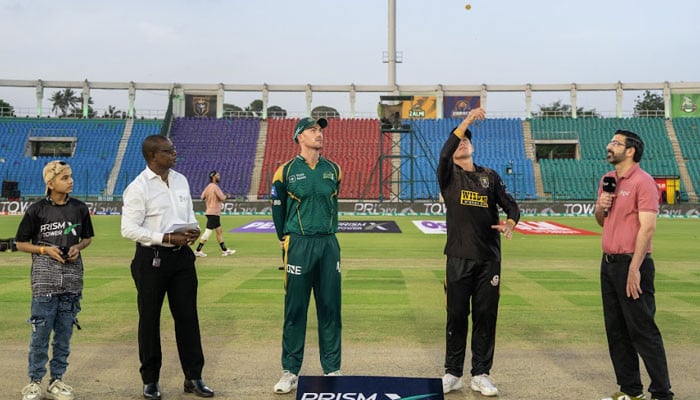
Hyderabad Kingsmen won the toss and elected to bowl first against Multan Sultans in the 33rd match of the Pakistan Super League (PSL) 11 at Karachi’s National Bank Stadium on Wednesday.
Playing XI
Hyderabad Kingsmen: Maaz Sadaqat, Marnus Labuschagne (c), Usman Khan (wk), Saim Ayub, Kusal Perera, Gleen Maxwell, Irfan Niazi, Hassan Khan, Hunain Shah, Mohammad Ali, and Akif Javed.
Multan Sultans: Sahibzada Farhan, Steve Smith, Ashton Turner (c), Shan Masood, Josh Philippe (wk), Muhammad Nawaz, Arafat Nawaz, Muhammad Imran, Peter Siddle, Muhammad Waseem Jnr, and Muhammad Ismail.
Head-to-head
The upcoming fixture marks only the second meeting between Sultans and Kingsmen, while their maiden face-off saw the 2021 champions emerge victorious by six wickets.
- Matches: 1
- Multan Sultans: 1
- Hyderabad Kingsmen: 0
Form Guide
Multan Sultans and Hyderabad Kingsmen enter the fixture with similar momentum in their favour as the 2021 champions have four victories in their last five completed matches, while the debutants have three triumphs in as many games.
Overall, Sultans have six victories in the ongoing PSL 11 and thus sit second on the points table with 12 points after eight matches, and a victory over Kingsmen would seal their qualification for the playoffs with a match to spare.
Kingsmen, on the other hand, have three triumphs in seven matches, which came consecutively after four successive defeats.
Multan Sultans: W, W, L, W, W (most recent first)
Hyderabad Kingsmen: W, W, W, L, L
Sports
Austin Reaves nearing return for Lakers as Luka Doncic remains out indefinitely with hamstring strain: report

NEWYou can now listen to Fox News articles!
In early April, with just five games remaining in the regular season, the Los Angeles Lakers announced that star guard Luka Doncic would be sidelined at least until the NBA playoffs.
Doncic’s setback was a Grade 2 left hamstring strain, an MRI confirmed. The reigning NBA scoring champion sustained the injury during an April 2 game against the Oklahoma City Thunder. The Lakers also entered the playoffs without another key member of their backcourt, Austin Reaves.
The shorthanded Lakers upset the Houston Rockets in the opening game of their first-round Western Conference series Saturday. Ahead of Game 2 on Tuesday, the Lakers reportedly received a clearer update on the health of at least one of their injured stars.
CLICK HERE FOR MORE SPORTS COVERAGE ON FOXNEWS.COM
Lakers guard Austin Reaves brings the ball up court against the Washington Wizards in Los Angeles on March 30, 2026. (Ryan Sun/AP)
Reaves, who was diagnosed with an oblique strain, appears to be progressing toward a return later in the first-round series if it extends to six or seven games. If the Lakers advance sooner, he could be on track to return for the Western Conference semifinals.
According to ESPN, Reaves recently returned to the practice court for 1-on-1 drills. The 27-year-old will still need to progress to 2-on-3 and then 5-on-5 work before he can be cleared for playoff action, but he appears significantly further along than Doncic, who remains out indefinitely.
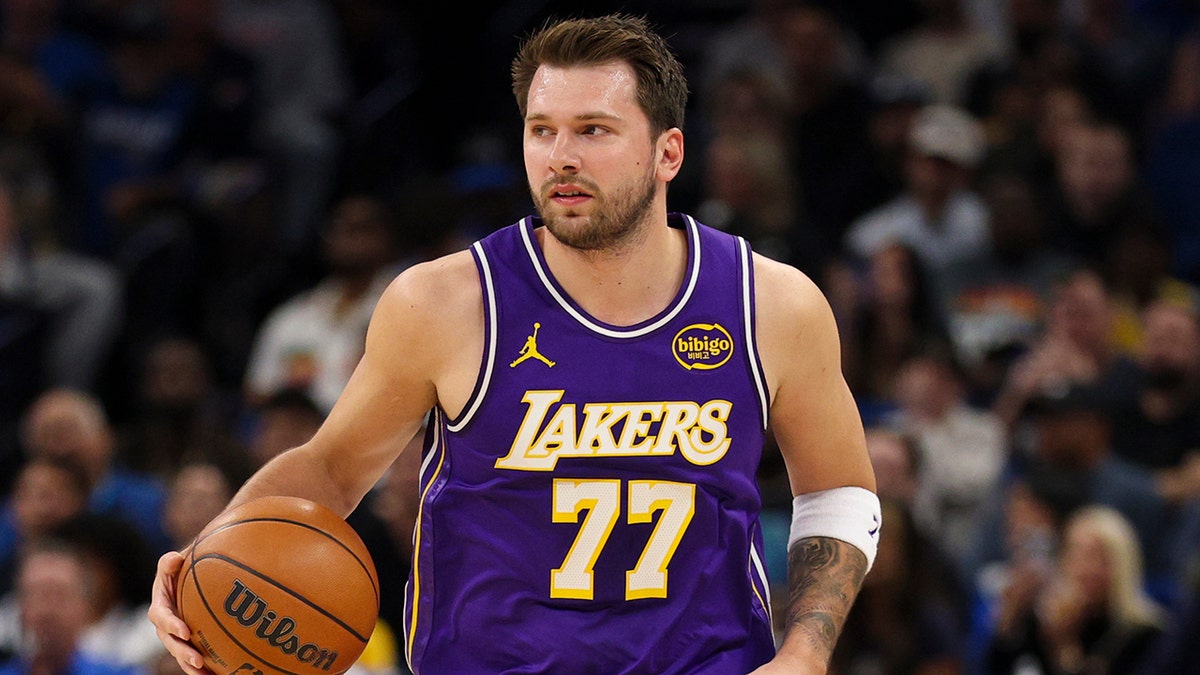
Luka Doncic of the Los Angeles Lakers controls the ball against the Orlando Magic at the Kia Center on March 21, 2026. (Nathan Ray Seebeck/Imagn Images)
Doncic is unlikely to play in the first round, regardless of the series length. ESPN footage showed him on the practice court on Tuesday, though the six-time All-Star was not doing high-intensity work.
2025-26 NBA PLAYOFF ODDS: SPREADS, LINES FOR FIRST-ROUND SERIES
The Rockets, despite being widely favored in the opening round playoffs series, also contended with key injuries. Kevin Durant missed Game 1 with a knee contusion. He was cleared to play in Game 2 on Tuesday night.
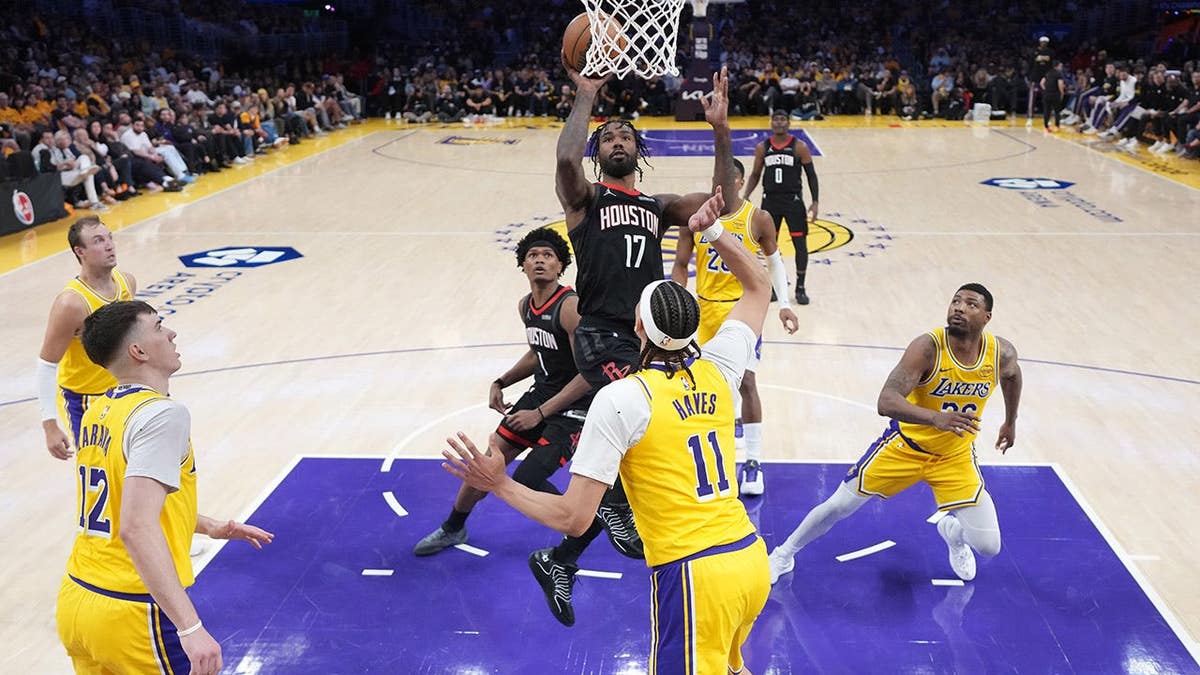
Houston Rockets forward Jabari Smith Jr. shoots the ball against the Lakers during Game 1 in the NBA playoffs at Crypto.com Arena in Los Angeles, California, on April 18, 2026. (Kirby Lee/Imagn Images)
CLICK HERE TO DOWNLOAD THE FOX NEWS APP
LeBron James scored 19 points, while Luke Kennard led Los Angeles with 27 in Saturday’s win.
Follow Fox News Digital’s sports coverage on X, and subscribe to the Fox News Sports Huddle newsletter.


5 AI Models Tried to Scam Me. Some of Them Were Scary Good

Life sciences lab real estate is clawing back from disaster. Here’s what that means for investors

US-Iran talks could be held as early as Friday, says Trump

-

 Fashion6 days ago
France’s LVMH Q1 revenue falls 6%, shows resilience amid Iran war
-

 Entertainment1 week ago
Is Claude down? Here’s why users are seeing errors
-

 Tech1 week ago
The Deepfake Nudes Crisis in Schools Is Much Worse Than You Thought
-

 Sports1 week ago
PSL 11: Peshawar Zalmi win toss, opt to field first against Quetta Gladiators
-

 Tech1 week ago
Bremont Is Sending a Watch to the Moon’s Surface
-

 Tech1 week ago
Human-machine teaming dives underwater
-
 Business1 week ago
BP sees ‘exceptional’ oil trading result as Iran war sends crude costs soaring
-

 Fashion1 week ago
What no one is saying about the 2026 apparel slowdown