

Business
The vaccine and public health debate at the center of CDC upheaval, explained


The exterior of the Center for Disease Control and Prevention (CDC) main campus in Atlanta, Georgia, U.S., Aug. 27, 2025.
Alyssa Pointer | Reuters
The Centers for Disease Control and Prevention is facing a leadership upheaval — and at the center of the shakeup is concern about the agency’s approach to vaccines and U.S. public health.
The White House on Thursday said President Donald Trump had fired CDC Director Susan Monarez after she refused to resign. Lawyers for Monarez said she was “targeted” for “protecting the public over serving a political agenda.”
Meanwhile, four other top health officials at the CDC announced Wednesday they were quitting the agency. That includes Demetre Daskalakis, director of the National Center for Immunization and Respiratory Diseases, who said he could no longer serve because of the “weaponizing of public health.”
Former Centers for Disease Control and Prevention (CDC) Chief Medical Officer Debra Houry, former National Center for Immunization and Respiratory Diseases Director Demetre Daskalakis, and former National Center for Emerging and Zoonotic Infectious Diseases Director Daniel Jernigan hold flowers and react after they appeared during a protest, a day after the White House fired CDC director Susan Monarez and several top officials resigned, in Atlanta, Georgia, U.S., Aug. 28, 2025.
Alyssa Pointer | Reuters
The loss of those respected leaders and efforts to oust Monarez follow a string of measures by Health and Human Services Secretary Robert F. Kennedy Jr. – a prominent vaccine skeptic – to overhaul federal health agencies and change immunization policy in the U.S. That includes mass firings, gutting a key government vaccine panel, canceling studies on mRNA shot technology and hiring those with like-minded views.
Kennedy has a long track record of making misleading and false statements about the safety of vaccine shots, but in his current role, he wields enormous power over the agencies that regulate the immunizations and determine both who can get them and which ones insurance plans should cover.
Dr. Georges Benjamin, executive director of the American Public Health Association, said the leadership overhaul at the CDC represents Kennedy’s “failed leadership and reckless mismanagement,” adding that he has a “blatant disregard for science and evidence-based public health.”
The agency is also reeling from funding cuts and an Aug. 8 attack by a gunman at its headquarters in Atlanta.
Some health policy experts said the leadership exodus could further erode the public’s trust in an agency that is responsible for detecting disease outbreaks and guiding state and local health departments when needed.
“This has to be seen on top of a raft of ways that CDC has been weakened and undermined, maybe irreversibly,” Lawrence Gostin, professor of public health law at Georgetown University, told CNBC.
“Throughout all of those years, CDC has been independent and the jewel in the crown of American science. That’s literally all crumbling as we speak,” he said. “This is almost the definition of politics undermining science.”
Top official highlights vaccine concerns
Daskalakis was among the officials to explicitly highlight concerns with the views held by Kennedy and his staff, which he said challenged his ability to continue in his role at the agency.
“I am unable to serve in an environment that treats CDC as a tool to generate policies and materials that do not reflect scientific reality and are designed to hurt rather than to improve the public’s health,” Daskalakis said in his resignation letter, which was posted on X.
He said the CDC’s recent changes to the adult and children’s immunization schedule “threaten the lives of the youngest Americans and pregnant people.”
High-ranking members of the Centers for Disease Control and Prevention (CDC), dressed in uniform, salute former CDC Chief Medical Officer Debra Houry, former National Center for Immunization and Respiratory Diseases Director Demetre Daskalakis, and former National Center for Emerging and Zoonotic Infectious Diseases Director Daniel Jernigan, a day after the White House fired CDC Director Susan Monarez and several top officials resigned, in Atlanta, Georgia, U.S., Aug. 28, 2025.
Alyssa Pointer | Reuters
In May, Kennedy said the CDC removed Covid vaccines from the list of shots recommended for healthy pregnant women and children. An updated guidance days later said shots “may” be given to those groups.
Daskalakis said the data analyses that supported the change have “never been shared with the CDC despite my respectful requests to HHS and other leadership.” He also said HHS circulated a “frequently asked questions” document written to support Kennedy’s decision without input from CDC subject matter experts, and that it cited studies “that did not support the conclusions that were attributed to these authors.”
On Wednesday, the Food and Drug Administration approved the latest round of Covid vaccines only for those at higher risk of serious illness, marking another shift in policy around those shots since the pandemic began.
Shares of Covid vaccine makers dipped on Thursday. Moderna’s stock fell more than 3%, while shares of Pfizer fell around 2%.
Those companies and other drugmakers have been bracing for changes to vaccine and public health policy since Trump first named Kennedy as his pick to lead HHS in November. The CDC’s leadership shakeup only adds to the uncertainty in the pharmaceutical industry, which is also grappling with Trump’s drug pricing policies.
Kennedy tried to distance himself from his previous views about vaccines and other health policies during his Senate confirmation hearings back in January, claiming that he isn’t “anti-vaccine” and would not make it “difficult or discourage people from taking” routine shots for measles and polio.
But some of Kennedy’s recent efforts appear to reflect his vaccine-critical views. For example, Kennedy in August argued that mRNA vaccines – the technology used in Covid shots – are ineffective and advocated for the development of other jabs that use other “safer” platforms.
Years of research support the effectiveness of mRNA Covid vaccines, and the technology is now approved for use in shots against respiratory syncytial virus.
Threat to public health
Former National Center for Immunization and Respiratory Diseases Director Demetre Daskalakis, next to former National Center for Emerging and Zoonotic Infectious Diseases Director Daniel Jernigan, speaks to the media during a protest, a day after the White House fired CDC director Susan Monarez and several top officials resigned, in Atlanta, Georgia, U.S., Aug. 28, 2025.
Alyssa Pointer | Reuters
As changes roll through the CDC, concerns over a threat to public health and protocol are growing.
Daskalakis slammed the means by which HHS and other CDC leadership have communicated major policy changes. For example, Kennedy announced he was firing the entirety of the Advisory Committee on Immunization Practices – a panel of vaccine advisors to the CDC – through an X post and op-ed “rather than direct communication with these valuable experts,” Daskalakis said.
He said he believed there would be an opportunity to brief Kennedy on key topics such as measles, avian influenza and the approach to the respiratory virus season. But Daskalakis said seven months into the new administration, no CDC subject matter expert from his center had briefed Kennedy.
“I am not sure who the Secretary is listening to, but it is quite certainly not to us,” he said. “Unvetted and conflicted outside organizations seem to be the sources HHS use over the gold standard science of CDC and other reputable sources.”
Former Centers for Disease Control and Prevention (CDC) Chief Medical Officer Debra Houry, followed by former National Center for Immunization and Respiratory Diseases Director Demetre Daskalakis, and former National Center for Emerging and Zoonotic Infectious Diseases Director Daniel Jernigan, reacts during a protest, a day after the White House fired CDC director Susan Monarez and several top officials resigned, in Atlanta, Georgia, U.S., Aug. 28, 2025.
Alyssa Pointer | Reuters
Dr. Debra Houry, who also resigned Wednesday from her post as the CDC’s chief medical officer, similarly said that senior leaders “never were able to brief the Secretary” on any of the issues the agency deals with.
“The CDC scientists are top notch and excellent,” she told MSNBC in an interview. “What we would actually have preferred was to have more interactions with the secretary.”
Houry added that “over the past few months, things at the CDC have been really difficult when it comes to having science and data driven decisions.”
As longtime experts leave the CDC, the threat of infectious diseases is growing. While measles cases are ticking up in the U.S. again, bird flu is spreading in cattle. The first human case of the flesh-eating parasite “New World screwworm” has been detected in the country.
The departures could “make our public health less assured,” Benjamin of the American Public Health Association said.
Susan Monarez, U.S. President Donald Trump’s nominee to be director of the Centers for Disease Control and Prevention, testifies before a Senate Health, Education, Labor, and Pensions Committee confirmation hearing on Capitol Hill in Washington, D.C., U.S., June 25, 2025.
Kevin Mohatt | Reuters
He said the leadership disruption also raises concerns about the nation’s ability to detect and respond to an emerging infectious disease spreading because the CDC is the “glue that holds” individual doctors and state and local health departments together.
“I am worried that we won’t know in time, and that we’ll be chasing that disease for far longer than we should,” Benjamin said.
Benjamin said he has “little confidence” that the Trump administration will find someone “highly competent” with relevant experience to replace Monarez.
“It obviously all has enormous implications for the health and well being of the public, and enormous implications around the finances of our nation,” he said. “Prevention and wellness saves us money, and public health is the best buy.”





Business
Rs 20,000 crore gold, silver rush: What will people buy this Akshaya Tritiya? – The Times of India

This Akshaya Tritiya, India’s gold and silver markets are heading for bumper purchases, with overall trade likely to cross Rs 20,000 crore even as record-high prices reshape buying patterns. The estimate, shared by the Confederation of All India Traders (CAIT), is higher than last year’s Rs 16,000 crore, signalling growth in value despite a sharp rise in bullion rates.Prices for the yellow metal have surged sharply over the past year, going from Rs 1,00,000 per 10 grams, to Rs 1.58 lakh. Meanwhile, silver has shown a steeper rally, jumping from Rs 85,000 per kilogram to Rs 2.55 lakh per kilogram. According to CAIT, this sharp escalation has not weakened demand, but is instead prompting consumers to make more deliberate and value-oriented purchases.Praveen Khandelwal, member of parliament from Chandni Chowk and secretary general of CAIT told ANI, “Akshaya Tritiya has traditionally been one of India’s most auspicious occasions for purchasing gold… While gold continues to dominate, the nature of purchasing is evolving significantly in response to steep price escalation.”Commenting on customer preference, CAIT national president BC Bhartia highlighted, “There is a clear shift towards lightweight, wearable jewellery, alongside a stronger focus on silver and diamond products. Attractive incentives such as reduced making charges and complimentary gold coins are also helping sustain consumer interest.”Despite the increase in overall trade value, the quantity of metals being sold tells a different story. Pankaj Arora, National President of the All India Jewellers and Goldsmith Federation (AIJGF), an associate of CAIT, explained that the projected Rs 16,000 crore gold trade amounts to nearly 10,000 kilograms (10 tonnes) at current rates. The value, spread across an estimated 2 to 4 lakh jewellers, translates to average sales of only 25 to 50 grams per jeweller, “clearly indicating a sharp decline in volume”.Meanwhile for silver, the estimated Rs 4,000 crore trade corresponds to around 1,56,800 kilograms (157 tonnes), resulting in average sales of about 400 to 800 grams per jeweller during the festival period. “These figures underline a critical shift: while the value of business is expanding due to rising prices, actual consumption is contracting,” Khandelwal said.This gap between value and volume is also reshaping consumer’s buying pattern, with smaller items and lightweight jewellery gaining popularity. At the same time, jewellers are facing challenges due to fluctuating prices, especially when it comes to managing inventory.Even so, festive demand remains steady, with markets witnessing healthy footfall. “Consumers are now adopting a more cautious and pragmatic approach, balancing traditional beliefs with financial discipline,” Khandelwal added.At the same time, it’s not just about physical gold anymore as consumers are increasingly exploring alternatives like digital gold, Sovereign Gold Bonds and gold ETFs, drawn by the promise of liquidity, safety and flexibility when prices are volatile.CAIT and AIJGF have urged jewellers to comply with mandatory hallmarking standards, including HUID certification, and advised buyers to verify the purity and authenticity of their purchases.
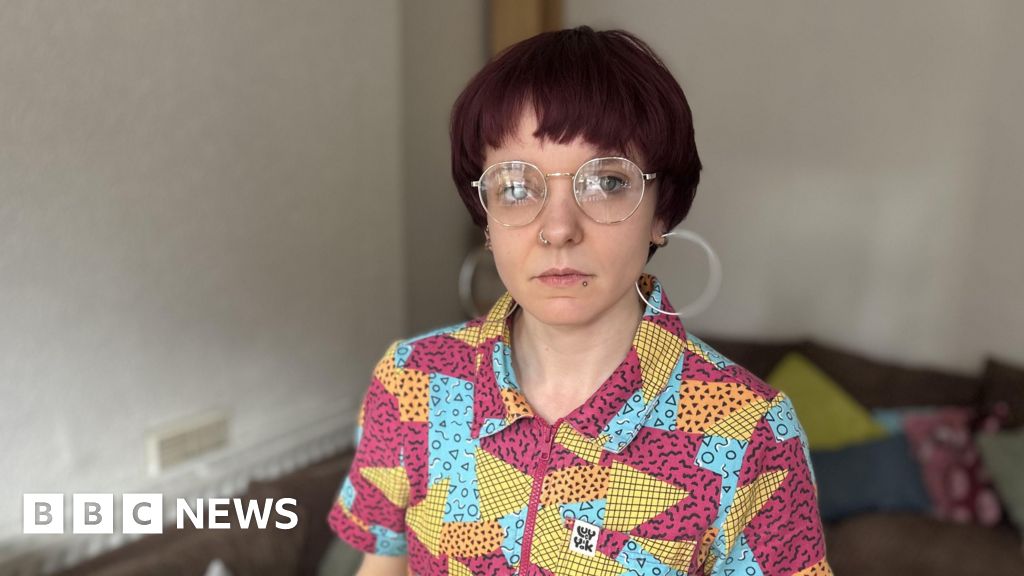
Lauren Elcock is among the young Londoners who say rising rents are forcing them to quit the capital.
Source link
As governments across the world restricted the movements of their citizens during Covid lockdowns from 2020, people spent more time online. We bought more online and socialised more online, and this brought us closer to the people who want to scam us. At the same time, realistic video impersonations, voices, websites, and texts became more commonplace, and scammers increased their use of social media including WhatsApp.

Rs 20,000 crore gold, silver rush: What will people buy this Akshaya Tritiya? – The Times of India

Prince Harry corrects blunder before peace with King Charles suffers again
The cost of rising rents: Working four jobs and pushed on to benefits

-

 Entertainment6 days ago
Palace left in shock as Prince William cancels grand ceremony
-

 Sports6 days ago
The case for Man United’s Fernandes as Premier League’s best
-

 Politics1 week ago
Chinese, Taiwanese will unite, Xi tells Taiwan opposition leader
-

 Entertainment1 week ago
Dua Lipa hits major career high ahead of wedding with Callum Turner
-
 Business1 week ago
100% road tax waiver for electric cars, new rules for 2, 3 and 4 wheelers – what Delhi govt’s draft EV policy says – The Times of India
-
 Business6 days ago
UK could adopt EU single market rules under new legislation
-
 Business1 week ago
The FAA wants gamers to apply for air traffic control jobs
-

 Fashion6 days ago
Energy emerges as biggest cost driver in textile margins