

Tech
The West Texas Measles Outbreak Has Ended

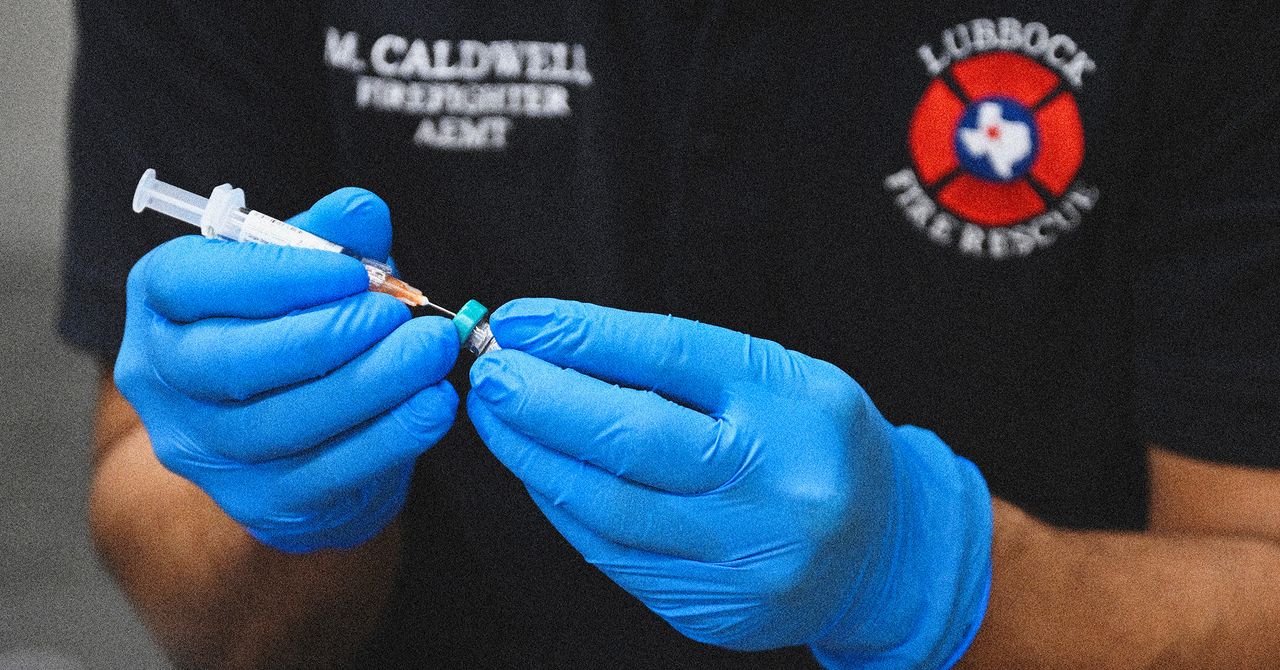
A large measles outbreak in Texas that has affected 762 people has now ended, according to an announcement Monday by the Texas Department of State Health Services. The agency says it has been more than 42 days since a new case was reported in any of the counties that previously showed evidence of ongoing transmission.
The outbreak has contributed to the worst year for measles cases in the United States in more than 30 years. As of August 5, the most recent update from the Centers for Disease Control and Prevention, a total of 1,356 confirmed measles cases have been reported across the country this year. For comparison, there were just 285 measles cases in 2024.
The Texas outbreak began in January in a rural Mennonite community with low vaccination rates. More than two-thirds of the state’s reported cases were in children, and two children in Texas died of the virus. Both were unvaccinated and had no known underlying conditions. Over the course of the outbreak, a total of 99 people were hospitalized, representing 13 percent of cases.
Measles is a highly contagious respiratory illness that can temporarily weaken the immune system, leaving individuals vulnerable to secondary infections such as pneumonia. In rare cases, it can also lead to swelling of the brain and long-term neurological damage. It can also cause pregnancy complications, such as premature birth and babies with low birth weight. The best way to prevent the disease is the measles, mumps, and rubella (MMR) vaccine. One dose of the vaccine is 93 percent effective against measles while two doses is 97 percent effective.
A measles outbreak is considered over after 42 days if no new cases are discovered because it is double the disease’s maximum incubation period—the longest time it can take between when a person is exposed to the virus and when they develop symptoms.
The CDC defines an outbreak as three or more related cases. The West Texas outbreak has been linked to cases in neighboring states, Mexico, and Canada.
While the Texas outbreak has ended, measles cases are still being reported elsewhere in the country. According to the CDC, 40 other states have reported cases, and a total of 32 US outbreaks have been reported in 2025, compared with 16 outbreaks in 2024.
The ongoing outbreaks put the country’s measles elimination status at risk. The designation means there is no ongoing domestic spread of measles for longer than 12 months. The US achieved that status in 2000 after years of increasing vaccination rates but almost lost it in 2019, when measles cases swept through undervaccinated Orthodox Jewish communities in New York for much of the year.
As vaccination rates continue to decline in the US, public health researchers warn that outbreaks of measles and other diseases are likely. One recent peer-reviewed paper found that at current state-level vaccination rates, measles could reestablish itself and become endemic again within the next two decades.












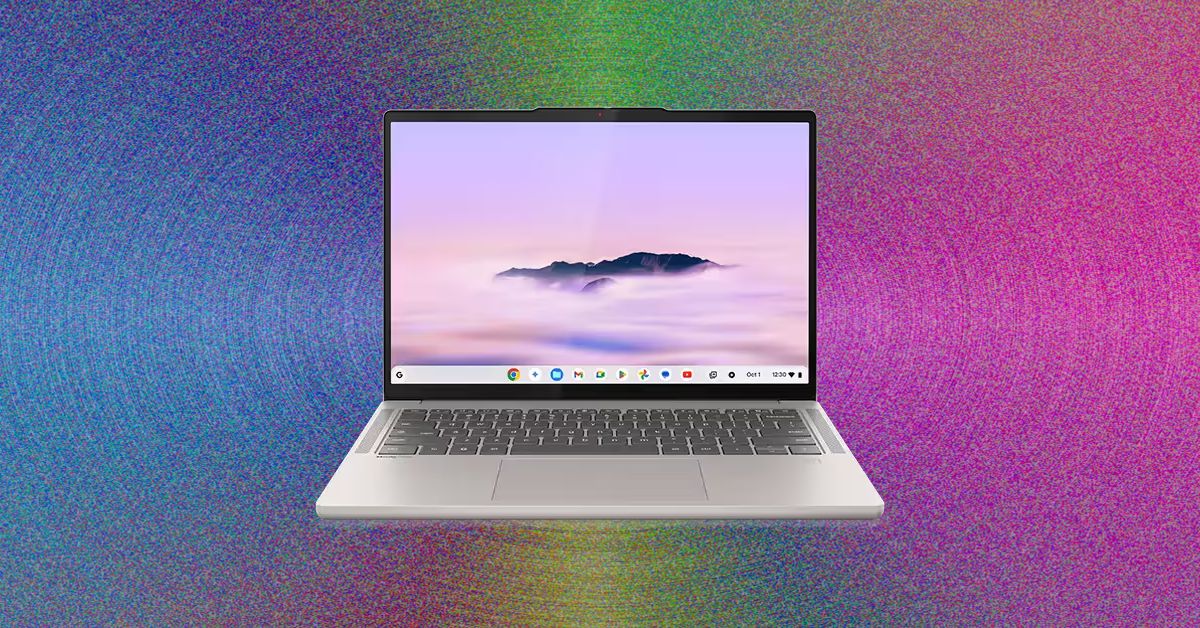
I was delighted to see that the Acer Chromebook Plus 516 didn’t skimp on a crappy touchpad. That goes a long way toward improving the experiencing of actually using the laptop on a moment-by-moment basis. I wasn’t annoyed every time I had to click-and-drag or select a bit of text. This one’s biggest weakness is definitely the screen, which is true of just about every cheap Chromebook I’ve tested. The colors are ugly and desaturated, giving the whole thing a sickly green tint. It’s also not the sharpest in the world, as it’s stretching 1920 x 1200 pixels across a large, 16-inch screen. But in terms of usability and performance, the Acer Chromebook Plus 516 is a great value, combining an Intel Core i3 processor with 8 GB of RAM and a 128 GB of storage. For a Chromebook that’s often on sale for $350, it’s a steal.
While we’re here, let’s go even cheaper, shall we? Asus has two dirt-cheap Chromebooks that I tested last year that I was mildly impressed by. The Asus Chromebook CX14 and CX15. Notice in the name that these are not “Chromebook Plus” models, meaning they can be configured with less RAM and storage, and even use lower-powered processors. That’s exactly what you get on the cheaper configurations of the CX14 and CX15, which is how you sometimes get prices down to as low as $130. I definitely recommend the version with 8 GB of RAM, but regardless of which you choose, the both the CX14 and larger CX15 are mildly attractive laptops. You’d know that’s a big compliment if you’ve seen just how ugly Chromebooks of this price have been in the past.
With these, though, I appreciate the relatively thin bezels and chassis thickness, as well as the larger touchpad and comfortable keyboard. The CX15 even comes in a striking blue color. The touchpad isn’t great, nor is the display. Like the Acer Chromebook Plus 516, it suffers from poor color reproduction and only goes up to 250 nits of brightness. It only has a 720p webcam too, which makes video calls a bit rough. But that’s going to be true of nearly all the competition (and there isn’t much).
Of the two models, I definitely prefer the CX14 though, as it doesn’t have a numberpad and off-center touchpad, which I’ve always found to be awkward to use. Look—no one’s going to love using a computer that costs the less than $200, but if it’s what you can afford, the Asus Chromebook CX14 will at least get you by without too much frustration.
Whatever you do, don’t just head over to Amazon and buy whatever ancient Chromebook is selling for $100 for your kid. It’s worth the extra cash to get something with better battery life, a more modern look, and decent performance.
Other Good Chromebooks We’ve Tested
We’ve tested dozens and dozens of Chromebooks over the past years, having reviewed every major release across the spectrum of price. Unlike Macs and Windows laptops, Chromebooks tends to stick around a bit longer though, and aren’t refreshed as often. I stand by my picks above, but here are a few standouts from our testing that are still worth buying for the right person.
Photograph: Daniel Thorp-Lancaster

Two of Big Tech’s most influential billionaires, Sam Altman and Elon Musk, will go head-to-head in a highly anticipated trial beginning April 27. In Musk v. Altman, a judge, advised by a jury, will ultimately determine whether OpenAI has strayed from its founding mission to ensure that artificial general intelligence (AGI) benefits humanity, and the ruling could influence how the world’s leading AI developer controls and distributes its technology. For now, you can learn more about the trial here.
On the Panel
On May 8, a panel of WIRED experts will go live to answer your questions about this consequential case.
- Zoë Schiffer: WIRED’s director of business and industry, who oversees coverage of business and Silicon Valley.
- Maxwell Zeff: a senior writer at WIRED covering the business of artificial intelligence. He writes the weekly Model Behavior newsletter, which focuses on the people, communities, and companies behind Silicon Valley’s AI scene.
- Paresh Dave: a senior writer at WIRED covering the inner workings of Big Tech companies. He writes about how apps and gadgets are built and about their impacts while giving voice to the stories of the underappreciated and disadvantaged.
Ask a Question
Submit all your burning questions about this historic legal battle at WIRED’s next, subscriber-only livestream scheduled for May 8 at noon ET / 9 PT. To leave questions in advance as the trial unfolds, head to the comment section below.
Become a Subscriber
The event will be streamed right here. For subscribers who are not able to join, a replay of the livestream will be available after the event. Not a subscriber yet? Subscribe now to get access to this livestream, plus full access to WIRED.
In the meantime, check out past livestreams on Big Tech and the military, the future of electric vehicles, and more.

The UK government has declared its intention to modernise payment services regulation, updating it to support innovations in money and payments, according to an HM Treasury statement. It is also set to publish a consultation inviting feedback from the payments sector.
Lucy Rigby, economic secretary to the HM Treasury, said: “Fintech is a true British success story, and we are backing the industry to maintain its competitive edge and go even further and faster in driving growth.
Rigby will attend events during Fintech Week in London to promote the government’s efforts in maintaining the UK as the leading destination for fintechs to start, scale and succeed, said the Treasury.
“Today’s package is our latest stake in the ground as we build a payments ecosystem that is secure, competitive and fully equipped to harness the opportunities created by rapid technological change,” said Rigby.
Britain is a world-leading destination for fintech, second only to the US in global fintech investment rankings. More than 3,000 fintech firms operate in the country, which account for tens of thousands of jobs.
Revolut – a UK-headquartered fintech firm – reported a £23bn value jump last year, bringing the company to £57bn. The digital bank has since been called Britain’s “leading technology company” by The Finanser CEO Chris Skinner. But in 2025, fintech investment in the UK fell to its lowest level since 2020.
Now, during this week’s London Fintech Week, the government is announcing strategies to grow Britain’s fintech industry, keep pace with technological progress and protect consumers. As part of the announced plan, the government has committed to spending a additional £1m to fund the Centre for Finance, Innovation and Technology (CFIT) from April to continue the centre’s work facilitating collaboration across the fintech sector.
The plan includes:
- Bringing the Payment Systems Regulator (PSR) into the Financial Conduct Authority (FCA);
- Laying out a single framework for both traditional and tokenised payment;
- Setting guidelines on how payment service regulation should respond to AI agents conducting purchases for customers and businesses;
- And regulating stablecoins use while cutting administrative burdens for companies who want to provide stablecoins payments.
Alongside this, the government is appointing Chris Woolard CBE as wholesale digital market’s champion to make the country’s financial sector more competitive.
Woolard praised British investment in the sector, claiming the country offers “a thriving startup ecosystem, global banks and insurers, and leading universities”, as well as regulators who keep up with innovation to let firms “test, learn and scale responsibly”.
Ultimately, he called for open dialogue between the private and public sectors to create a tokenised wholesale financial markets ecosystem. To improve communication, the government will publish a consultation, asking the payment sector for feedback.
This isn’t the first step in Britain’s path to fintech leadership. A few months ago, the government decided to establish itself as globally competitive by creating a financial service regulatory regime for crypto assets. Recently, the FCA outlined its open finance plan for 2030, which set out a roadmap to giving consumers and businesses more control over their financial data.
In a press release, stakeholder Philip Belamant, co-founder and CEO of Zilch, said: “The UK has a real opportunity to lead globally in enabling agentic finance, helping consumers benefit from smarter, more efficient ways to manage their money.”


US’ Gap & FIT launch programme to mentor fashion students

Nasa unveils new space telescope to probe mysteries of ‘dark energy’

Dubai to build $9.25bn ‘Golden Line’ metro, completion set for 2032

-

 Fashion6 days ago
France’s LVMH Q1 revenue falls 6%, shows resilience amid Iran war
-

 Entertainment7 days ago
Is Claude down? Here’s why users are seeing errors
-

 Fashion1 week ago
Asia claims largest share of markets on Kearney FDI Confidence Index
-

 Sports1 week ago
PSL 11: Peshawar Zalmi win toss, opt to field first against Quetta Gladiators
-

 Tech1 week ago
The Deepfake Nudes Crisis in Schools Is Much Worse Than You Thought
-

 Tech1 week ago
Bremont Is Sending a Watch to the Moon’s Surface
-

 Tech1 week ago
Human-machine teaming dives underwater
-
 Business1 week ago
BP sees ‘exceptional’ oil trading result as Iran war sends crude costs soaring