

Sports
‘There’s a lot of hate:’ These games define the Mizzou-Kansas rivalry

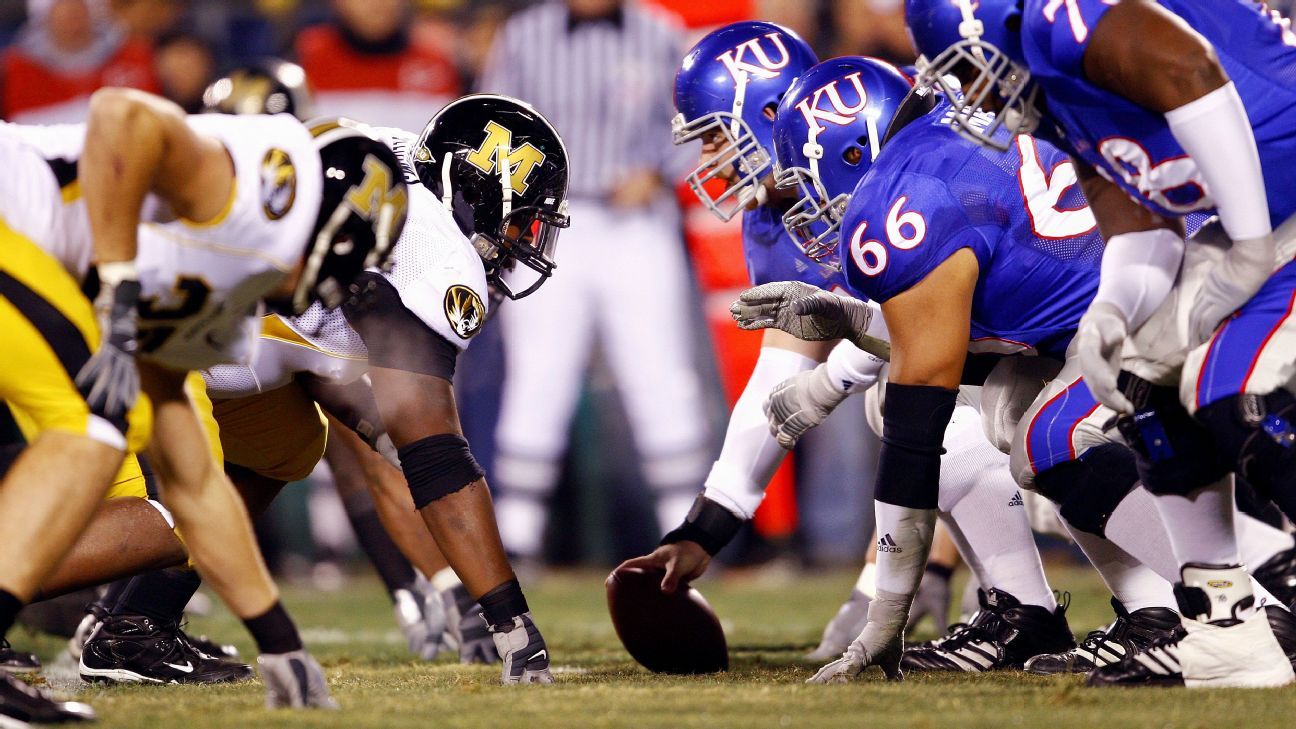
Around 5 or 5:15 p.m. local time on Saturday, the second Missouri Tigers home game of the season will go to a commercial break before the fourth quarter begins, and as has become customary in recent seasons, the Killers’ “Mr. Brightside” will play over the loudspeaker.
It has also become customary that the Mizzou fans in attendance at Memorial Stadium will lob F-bombs in unison at their biggest rival.
For the first time in quite a few years, that rival will be in said stadium to hear it.


Missouri and the Kansas Jayhawks will meet on the gridiron for the first time since 2011 (3:30 p.m. ET on ESPN2) and for the first time in Columbia since 2006. When Mizzou left the Big 12 for the SEC in 2012, the rivalry went on pause. The basketball rivalry resumed in 2021, with Kansas winning the first three games and Mizzou finally getting back on the board last December. Now it’s football’s turn.
This rivalry’s roots stem from Civil War days. Both schools’ nicknames were derived from Civil War nomenclature — “Jayhawkers” were robbers and raiders who terrorized slave-state supporters in Missouri counties bordering Kansas, while “Tigers” refers to a group of soldiers who protected the city of Columbia from pro-Confederacy guerillas, including some of the same people who participated in burning Lawrence to the ground in 1863. Mizzou and Kansas fans have certainly leaned into Civil War and Burning Lawrence connotations through the years, as problematic as it may look from the outside.
The rivalry’s name was changed from “Border War” to “Border Showdown” in the 2000s, but it didn’t tamp down the hostility. For that matter, neither did conference realignment. If you’re a KU or MU fan living in Kansas City, you probably have an MU or KU neighbor. The jawing has never really stopped, and if you didn’t believe that before Mizzou fans began adding a “F— KU” chant before the bridge to “Mr. Brightside,” no matter the day’s opponent, that certainly served as a pretty vivid and profane reminder.
“This is deeply seated,” Missouri coach Eli Drinkwitz told ESPN. “There’s a lot of hate, and whether it’s been basketball games that we’ve seen or soccer matches or now football games, we know it’s important to the fan base.”
“I’ve gone to those [basketball games], and obviously the crowd’s extremely into it and they’re exciting to see,” Kansas coach Lance Leipold said. “You can see that there’s an extra intensity during the game.”
The crowd in Columbia on Saturday will be awfully hostile, and the players will have to meet the moment. That’s a tricky thing when almost no player on the field actually grew up with the rivalry. The last time the game was played, after all, current freshman football players were about 4 years old.
“It’s important to go back all the way to the history of it,” Drinkwitz said. “We had Andy Hill, a former Mizzou player and coach, come back and share with us. We had [former ESPN anchor and Mizzou alum] John Anderson come back and share. We’ve really tried to emphasize the importance to the team. We had to educate them on what it is.”
“As this game’s been on the schedule, when I’m out in public appearances and things, people have come up to me and talked more about this one than any other game in recent years,” Leipold told ESPN. “There’s excitement that these two teams are playing again.”
The Mizzou-Kansas football rivalry hasn’t necessarily packed the same number of wild finishes or memorable moments as the men’s basketball rivalry has through the years. But it’s still tremendously hostile, and it still had an impact on multiple national title races, school rushing records and the invention of homecoming. It provided a trio of unbelievable neutral-site games in the 2000s, too. Let’s walk through 10 games that accurately describe the stakes and strange history of this reborn rivalry.

1911: Missouri 3, Kansas 3
“The most impressive feature of a Yale-Harvard game is the meeting of the old ‘grads’ who have come back to their college town to see the contest. After a few years this will be the case with the Missouri-Kansas game.” — Columbia Missourian, 1911
Mizzou claims the oldest homecoming gathering, or at least the oldest continuous homecoming, or at least the most homecoming-like substance, with rallies and parades and whatnot a part of its own homecoming since 1911. No matter what, it all started with KU. In front of about 9,000 fans on Rollins Field in Columbia — Memorial Stadium wasn’t built until the 1920s — Jimmy Shuck’s field goal allowed the home team to tie the game with about five minutes left and salvaged a smidgen of pride from a disappointing 2-4-2 season.
1958: Missouri 13, Kansas 13
You need some impossibly silly endings to drive a proper rivalry, and in the first Border War for new head coaches Dan Devine (Mizzou) and Jack Mitchell (Kansas), two near-.500 teams ran up the silly points here.
Mizzou burst to an early 13-0 lead in front of a sellout crowd of 32,000, thanks in part to a long touchdown off of a downfield lateral from Ed Mehrer to Jerry Curtright. The lead seemed like it was going to hold up despite a trio of missed field goals, but after a short touchdown by KU’s Bill Crank made it 13-7, Homer Floyd reeled in a pass over the middle with just 18 seconds left and raced for a stunning 80-yard touchdown. Victory seized from defeat? Nope! Mizzou’s Dale Pidcock blocked the ensuing PAT attempt. Tie game.
1960: Kansas 23, No. 1 Missouri 7
In almost any broadcast for any Mizzou-Kansas game, you’re almost guaranteed to hear something to the effect of, “These rivals are so bitter, they can’t even agree on the series record!” This game is the reason why.
By his third season in Columbia, Devine had Mizzou on the brink of its first national title. The Tigers had just moved to No. 1 for the first time ever following a blowout of Oklahoma, and with the final AP poll vote coming before bowl season, all Mizzou had to do was beat Kansas to wrap things up. But at 6-2-1, with losses only to two previous No. 1 teams (Syracuse and Iowa), Kansas was on the rise itself. Mitchell had brought in quite a few talented players, including a TCU transfer named Bert Coan. The Jayhawks were ineligible for an Orange Bowl bid because of violations that occurred during Coan’s recruitment, but he hadn’t yet been deemed ineligible himself, so he played against Missouri.
This was one of the most anxious and ruthlessly physical games in the rivalry’s history, producing just 353 combined offensive yards and eight turnovers. But the 6-foot-4 Coan reeled in a touchdown pass from John Hadl to make it 10-0 in the third quarter, then scored again to put the game out of reach.
Nearly three weeks after the game, the Big 8 Conference officially voted Coan ineligible and ordered KU to forfeit two games in which Coan played. That made Missouri the conference champion. An Orange Bowl win over Navy completed an “unbeaten” season — one-loss Minnesota was still named the AP’s national champion (and then lost again in the Rose Bowl) — and Mizzou lists the forfeit as the official result. But since the NCAA never officially recognized the forfeit, Kansas continues to claim a win as well. According to Mizzou, the Tigers lead the overall series 57-54-9. According to Kansas, it’s 56-55-9.
1976: Kansas 41, Missouri 14
The 1960s were a decade of success for both programs, as they combined for three conference titles (two for Mizzou) and 15 winning seasons. But Kansas grew increasingly inconsistent in the 1970s, and after Devine left for the NFL, Al Onofrio’s Tigers went from giants to inconsistent giant killers.
In six seasons from 1972 to 1977, Mizzou beat nine top-10 teams … and went 1-5 against Kansas. Depending on which team you root for, either the peak or nadir of this strange period came in 1976. Kansas came to Columbia 5-5, having lost five of its last six games thanks to an injury to quarterback Nolan Cromwell. Mizzou, meanwhile, had beaten both No. 8 USC and No. 2 Ohio State on the road in nonconference play, then toppled No. 3 Nebraska in the Big 8. The Tigers had risen as high as sixth in the AP poll. But they were also leaking fuel, having lost three of their last five games to fall to 6-4.
Only one team showed up at Faurot Field. Kansas scored 24 second-quarter points and led by as much as 34 as, in the words of the St. Louis Post-Dispatch’s Bob Broeg, “Comeback Kansas embarrassed (1) mystifying Missouri, (2) the red-faced Sun Bowl committee, (3) solemn Al Onofrio and (4) most of a hang-dog crowd of 62,559 Saturday.” Onofrio was fired a year later.
1988: Missouri 55, Kansas 17
Within a decade or so, Mizzou didn’t have to worry about beating giants anymore. Neither did Kansas. By 1986, Sports Illustrated was calling the Mizzou-Kansas-Kansas State trio the “Bermuda Triangle” of college football, “for lost fans, lost coaches, lost attendance.” K-State had never generated much football traction (at least until hiring Bill Snyder in 1989), Kansas enjoyed only one winning season between 1977 and 1990, and Mizzou didn’t manage a single one from 1984 to 1996. The Tigers’ and Jayhawks’ combined destitution was at its worst in 1988, when they managed only four combined wins — two against 0-11 Kansas State, one against Utah State, and one head-to-head.
Kansas took an early 10-7 lead in this one, but Mizzou won the last 3½ quarters by a 48-7 margin. Led by running back Mike Jones — who would switch to linebacker in the pros and make one of the most famous tackles in Super Bowl history — the Tigers rushed for 471 yards while forcing five turnovers. It continued an odd streak: Despite the teams being evenly matched in most of the 14 years from 1983 and 1996, only two games finished within single digits.
1991: Kansas 53, Missouri 29
Glen Mason’s tenure as Kansas’ head coach began disastrously in 1988, but by 1991 he was generating some traction: The Jayhawks would go 6-5 that year and keep inching upward toward a 10-win 1995 breakthrough. They won four of five against the destitute Tigers in this span, and one win broke records.
With both the temperatures and the winds in the mid-30s at kickoff and just 28,000 in the stands in Lawrence, Mizzou found brief success with its passing game in the second quarter, and KU led just 25-22 at halftime despite 156 rushing yards from the Jayhawks’ Tony Sands. But Mizzou’s Jeff Handy stopped completing passes in the second half, and Sands just kept running. He had 141 yards in the third quarter alone. And then he produced another 99 in the fourth quarter. He ended the day with 58 carries — hey, why not, it was the last game of the season — and a then-record 396 yards. Four players have since topped 400 yards in a game, but no one did it against their most bitter rival.
•”Kansas. Missouri. A rivalry that never disappoints – this game leave your brick from start to finish. 🔥 #BorderWar” @FansOfKU @KUAthletics @JayhawkSlant @nostalgic_ku @JayhawkTakeover @JayhawkTakeover @KUJHawks @jaylassoku @JayhawkTalk @JayhawkFocus @Brewenor @BarstoolKU pic.twitter.com/uJw1IRy4WS
— Tony sands (@tonysands24) August 31, 2025
1998: No. 25 Missouri 41, Kansas 23
The 1990s ended with a reversal. Mason left for Minnesota, and KU would suffer nine straight losing seasons; Mizzou, meanwhile, briefly emerged from its stupor under Larry Smith and came achingly close to greatness in 1998. The Tigers led four different top-10 teams at halftime but lost all four games, three by one score. But at least they exacted some Sands-ian revenge.
In a rare early-season meeting, running back Devin West needed only 32 carries to gain 319 yards. Upset-minded KU took a 23-20 lead midway through the third quarter, but rushing scores from West, then quarterback Corby Jones, then West again from 45 yards out, allowed the Tigers to pull away. “I’m going to lie down,” West told the Kansas City Star’s Joe Posnanski after the game, “and I might not get up for a long, long time.”
2007: No. 3 Missouri 36, No. 2 Kansas 28
This rivalry might have all the bitterness in the world, but it hasn’t seen a ridiculous number of tight games. The stars aligned in the early 2000s, however. For three straight years at Kansas City’s Arrowhead Stadium, the Tigers and Jayhawks both fielded solid to great teams — another rarity — and played absolute classics.
The first of the trio was, by any measure, the rivalry’s biggest game. Near the end of the most chaotic season in college football’s history, the rivals met in Kansas City as the No. 2 and No. 3 teams in the country, and with No. 1 LSU having lost the day before, the winner was guaranteed to move to the top spot and, with a win in the following week’s Big 12 championship game, lock up a berth in the national title game. ESPN’s “College GameDay” and a record-at-the-time “GameDay” audience awaited.
The game was cagey, weird and, by the end, incredibly tense. Missouri’s Chase Daniel threw a touchdown pass in each of the first three quarters, and Gary Pinkel’s Tigers eased out to a 28-7 fourth-quarter lead, but Todd Reesing and the KU offense got rolling late. They scored three times and got the ball back with a chance to win, down 34-28. But Mizzou’s defensive line dogpiled Reesing in the KU end zone for a safety with 12 seconds remaining. Mizzou went to No. 1 for a week, but after a second-half collapse against Oklahoma in the Big 12 championship, the Tigers fell short of a national title shot.
2008: Kansas 40, No. 12 Missouri 37
The stakes weren’t the same a year later, with Missouri having already clinched a second straight Big 12 North title and Mark Mangino’s Kansas having lost four of five after starting the year in the AP top 15. But revenge is always sweet, and the Jayhawks got theirs in a snowy and particularly picturesque Arrowhead.
This time it was KU’s turn to take a commanding lead, as two Reesing TD passes and a 19-yard run by Jake Sharp made it 26-10 Jayhawks midway through the third quarter. The Tigers struck back with TD passes from Daniel to Jeremy Maclin and Tommy Saunders, and we were all set for a classic ending. Mizzou took its first lead (30-26) on a short Chase Coffman touchdown, but Reesing and Kerry Meier made it 33-30 Jayhawks barely two minutes later. Mizzou’s Derrick Washington plunged in from 6 yards to make it 37-33 Mizzou with 1:50 left, but on fourth-and-7 from the Mizzou 26, with just 33 seconds remaining, Meier broke loose in the Tigers’ secondary and reeled in a touchdown lob. Phillip Strozier blocked a last-second, 54-yard field goal attempt, and Kansas scored one of the rivalry’s wildest wins.
2009: Missouri 41, Kansas 39
The Arrowhead rubber match had the lowest stakes: Mizzou was 7-4 following the departures of Daniel and other stars, while Kansas had plummeted from 5-0 to 5-6 and was just hoping to salvage bowl eligibility. But in terms of drama, this game was almost impossible to match. It featured 1,100 total yards, four turnovers and another well-timed safety. After trailing by 11 late in the first half, Mizzou seized the advantage with help from a 68-yard touchdown catch by All-American Danario Alexander. But Reesing and Dezmon Briscoe connected for a 74-yard score, and a field goal put KU back on top.
The Jayhawks got the ball back with a chance to run out the clock, but the script writers cued up another safety on another sack of Reesing — in the same end zone as the 2007 safety, no less — and down 39-38, Mizzou got one last chance to win. A quick pass to Alexander and a 27-yard run by Washington (who intentionally went down at the KU 5) set up Grant Ressel for a 27-yard game winner, and he nailed it as time expired.
The game remained at Arrowhead for Mizzou’s final two Big 12 seasons, but Kansas’ post-Mangino collapse was well underway, and both games were forgettable Tigers wins. Still, for three years, the potential of this gridiron rivalry was fully realized.
Both Leipold and Drinkwitz have been part of classic rivalries through the years. Leipold was part of Wisconsin-Minnesota when he was a graduate assistant, then took in Nebraska-Oklahoma and Nebraska-Colorado when he was an assistant in Lincoln. Drinkwitz got to know the Iron Bowl in two seasons as a young Auburn quality control coach, and he spent three years immersed in UNC-NC State when he was in Raleigh. There’s a pent-up hostility that could make Saturday’s matchup unique, but both coaches understand the importance of balancing the extreme need to win this game versus the fact that there are still three more months left in the season.
“If you put all your eggs in that basket, if you lose the game, how are you going to get your team back?” Leipold said. “And if you win the game, how are you going to keep ’em humble enough to be energized, come back and play the next week? The environment will be exciting, and we’re playing a team that’s won 21 football games over the last two years. But keeping the balance — that wherever the game takes us, we’ve got to get ready for a conference season shortly thereafter — will be a big focal point.”
“The players have to understand the intensity level of the rivalry,” Drinkwitz said, “but they’ve also got to understand that raw emotion isn’t going to help you block somebody else or tackle. You’ve got to really bring your fundamentals. It was important for me throughout the summer and offseason to share about the rivalry, but once we’re into game week, it’s going to be about fundamentals and technique and execution.”
Into the future, the Border Showdown will become the latest of what you might call the post-realignment rivalries. Pitt and West Virginia rekindled the Backyard Brawl to great excitement, but only in four-year chunks — 2022-25, then 2029-32. Pitt played Penn State from 2016-19, too. Oklahoma and Nebraska played in 2021 and ’22 and have another home-and-home series set up for 2029 and ’30. Nebraska and Colorado played in 2018 and ’19 and 2023 and ’24. Mizzou and Kansas State played in 2022 and ’23, and Mizzou will play Colorado in 2030 and ’31. (The Tigers will host the Buffaloes on the 40th anniversary of the Fifth Down.) UCLA and Cal, recently separated, have scheduled games for 2026-29.
Mizzou and Kansas have scheduled home-and-home series for 2025 and ’26 and 2031 and ’32. It’s something, but watch 30 seconds of Saturday’s game, and you’ll wonder, as with the Backyard Brawl, how in the hell college football isn’t making sure this game happens every year. It’s a waste of hostility, a waste of a sellout crowd and — an increasing rarity — a waste of a drivable game for local fans.
“Almost everybody except the SEC, I think, has gone almost coast-to-coast with conference members,” Leipold said, “and it makes it more difficult for fans to travel and pick what games they’re going to. When you have these types of matchups, which are very drivable, I think it’s healthy for attendance and all the other things that are also important in today’s college athletics. Anytime you can play bordering states where there’s a past history of competitiveness, I think it’s healthy. It’s great for college football.”
The healthiest version of the sport is when teams are playing games fans want them to play and players are well taken care of. We’ve made great headway on the latter, but we’re inching further and further from the former.
Of course, since teams continue to draw up their nonconference schedules for five or 10 years out, there aren’t exactly holes to fill with these types of games. You’d have to buy out contracts with other schools, and while there would probably be a financial benefit from doing so, it’s not something that happens often. Plus, since the SEC has announced it is expanding to a nine-game conference schedule starting in 2026 and Mizzou has four nonconference games scheduled from 2027-31, it already has some games to get rid of.
Granted, when they put me in charge of the sport, I’ll just draw up the schedules by hand and make sure that the Border War, Backyard Brawl, Bedlam and lots of other semi-lost rivalries are played annually.
“It’s one thing when people tell you about the past history of something,” Drinkwitz said, “but it’s another thing to try to learn it and understand it and realize its significance. That’s really what we try to do is make sure they understand the significance. And this is Team 136 [at Mizzou] — just because we haven’t played them for 13 years doesn’t mean that Teams 1 through 122 don’t have significant feelings about this game.
“That’s really important for us. We get a chance to represent all the past teams when we play.”
NEWYou can now listen to Fox News articles!
Kansas City, KS – With the 2026 FIFA World Cup just three months away, cities across the United States are racing to finalize training facilities that national teams will call home during the global tournament.
Among them is Kansas City, which will serve as the base camp for defending champion Argentina national football team, a major win for the region as it prepares to welcome both players and tens of thousands of international fans.
Base camps are critical to World Cup operations. They serve as home headquarters where teams live, train and recover while traveling between match sites throughout the competition.
WORLD CUP 2026: WHAT ARE THE HOST COUNTRIES, CITIES, STADIUMS?
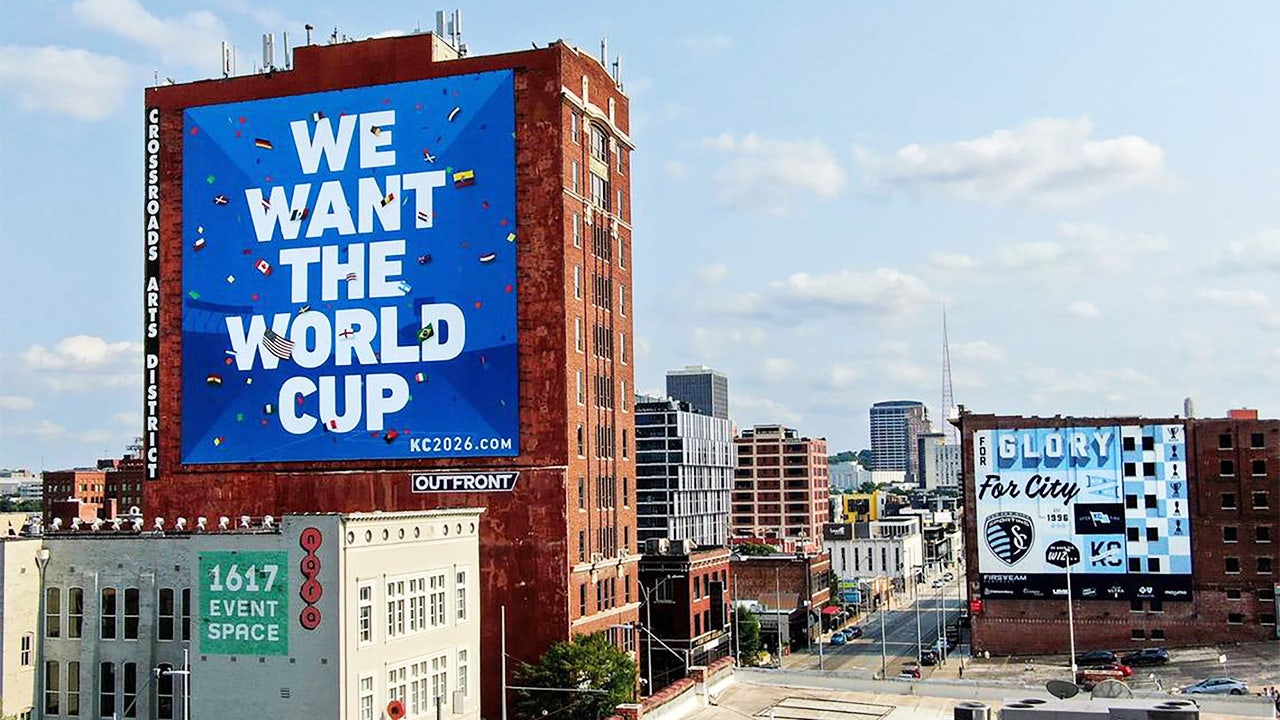
World Cup 2026 signage is displayed in Kansas City, one of the tournament’s host cities. (Olivianna Calmes)
“From private practice fields to player recovery rooms, these facilities are designed to support some of the biggest names in soccer,” said Alan Dietrich, who has worked closely with organizers.
Local leaders have spent more than a year pitching their cities to international teams, hoping to showcase not just athletic facilities but the broader community.
“We started actually over a year ago with countries beginning to visit,” Dietrich said.
WORLD CUP DEMAND SPARKS LODGING SCRAMBLE IN KANSAS CITY
Tourism officials say the opportunity extends far beyond the sport itself. Hosting a base camp allows cities to introduce themselves to global audiences and build long-term international relationships.
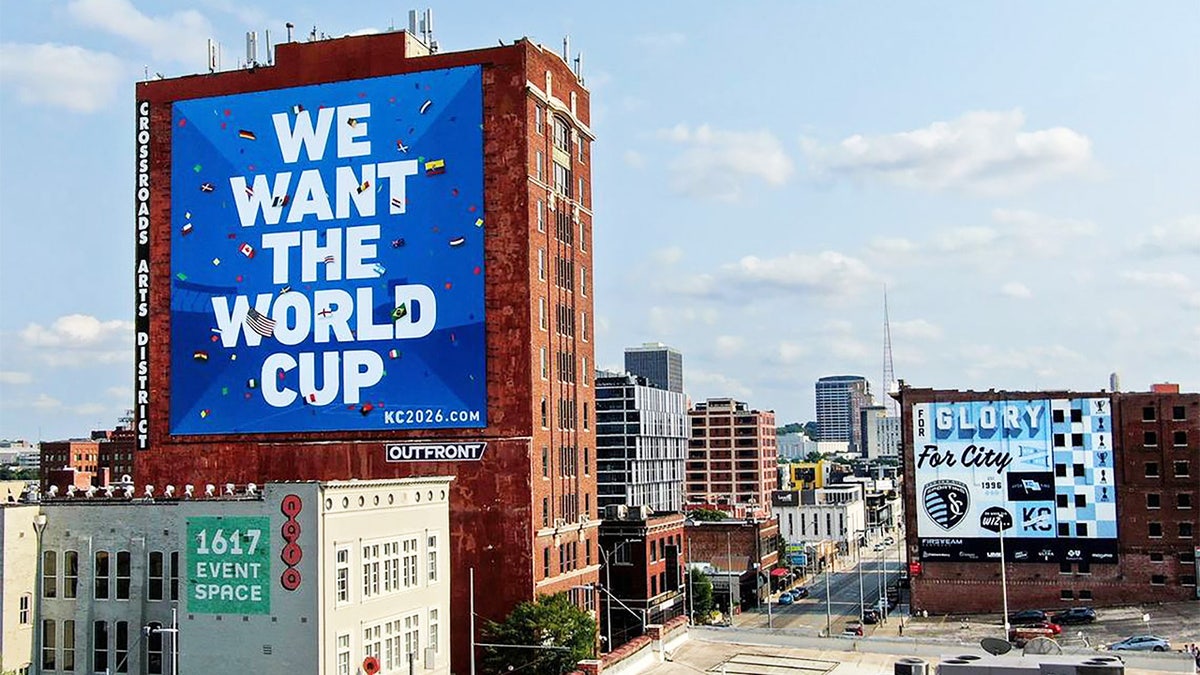
To show support for Kansas City’s bid for the men’s 2026 FIFA World Cup, the KC2026 Bid Committee and Outfront media installed a 90×90-foot banner on Main Street in Kansas City, Missouri. (Jill Toyoshiba/The Kansas City Star/Tribune News Service via Getty Images)
“We knew that the World Cup was going to be kind of our first chance and probably our biggest chance to be engaging these international markets,” said Devin Aaron with Visit KC.
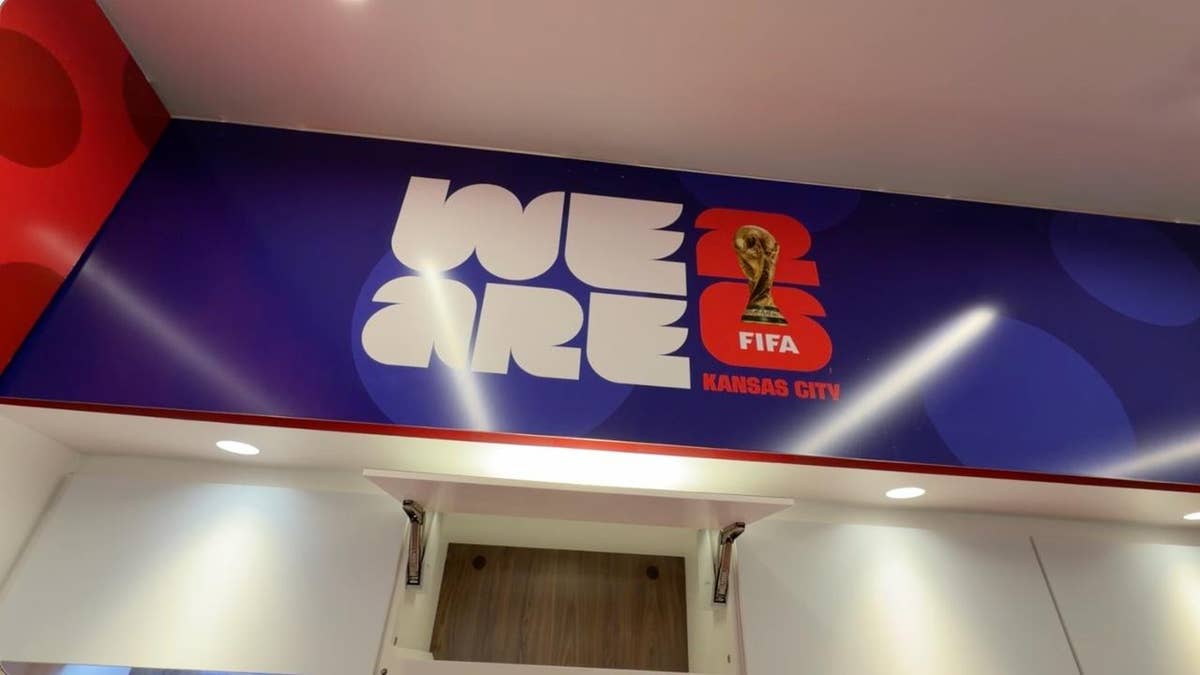
A locker room shows the “We are FIFA 2026 Kansas City” sign in Sporting KC training facility (Olivianna Calmes)
Early expectations had Argentina basing in Miami, but Kansas City ultimately stood out during the selection process.
“When Argentina visited, they really loved it here,” Dietrich said. “They loved our facilities, they loved our people.”
The team will train at Sporting Kansas City’s Compass Minerals National Performance Center, a state-of-the-art facility in Kansas City, Kansas that will serve as Argentina’s training home base during the tournament.
THE 2026 FIFA WORLD CUP LESS THAN 100 DAYS OUT! HERE’S WHAT TO KNOW
The complex features multiple professional grade fields and elite level training amenities designed for international competition.
Inside, players will have access to private dining areas, meeting rooms and dedicated recovery spaces designed to help them rest between matches.
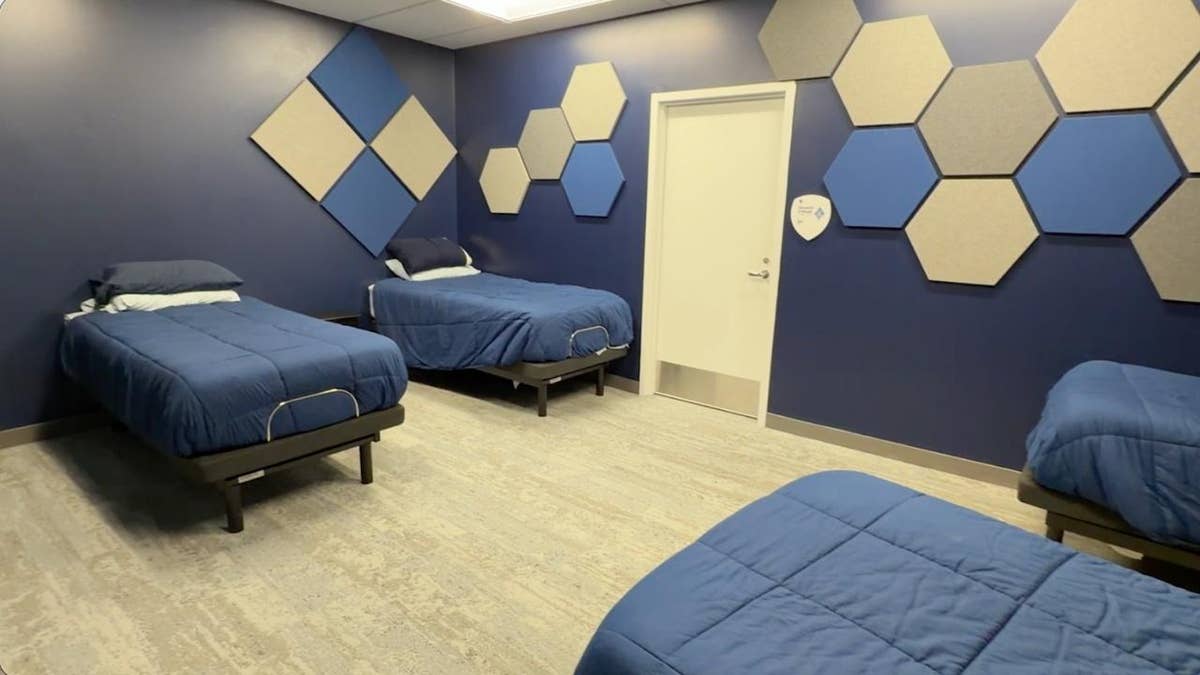
A resting room for World Cup players (Olivianna Calmes)
“If they’ve traveled a lot and they’re tired, they can come in here, turn the lights out and get a nice nap,” Dietrich added.
Up to 100,000 Argentine fans are expected to travel to Kansas City during the tournament, a preview of the global crowds set to flood World Cup host cities across the U.S.
Across the U.S., cities selected as host sites and base camps are preparing for similar surges, as teams finalize training locations and fans follow their national squads.
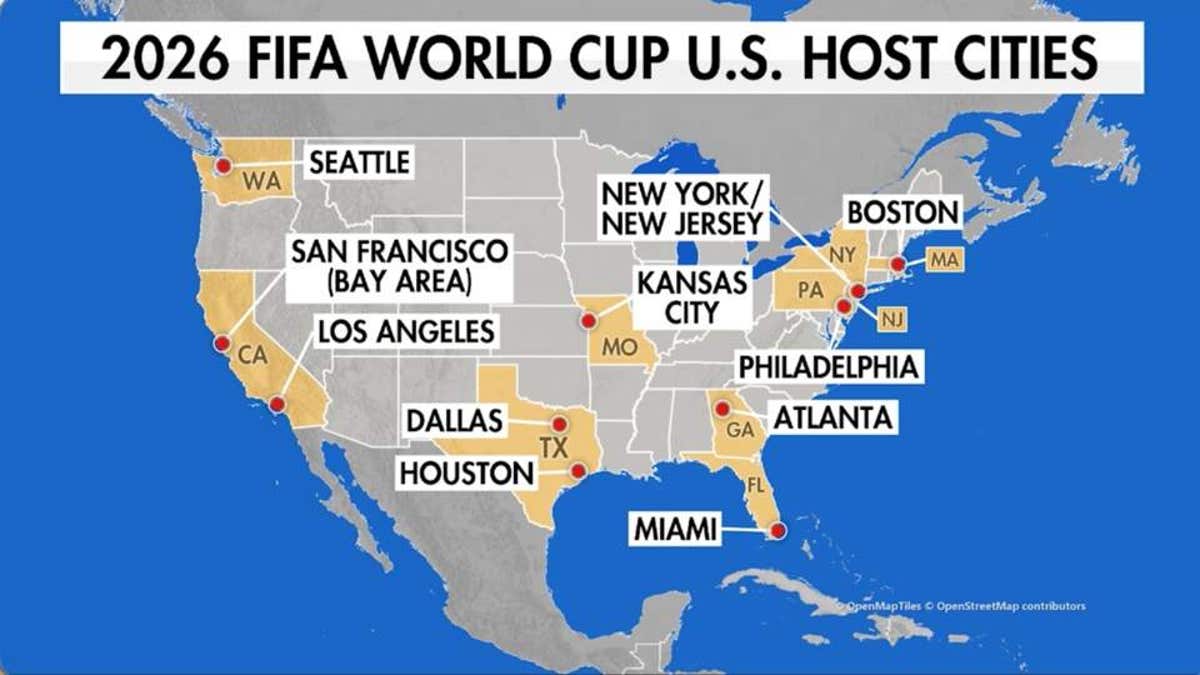
Cities across the US which are hosting World Cup games (Fox News)
CLICK HERE TO DOWNLOAD THE FOX NEWS APP
The 2026 World Cup will be the largest in history, expanding from 32 to 48 teams and spanning host cities across the United States, Canada and Mexico, with each location competing for global visibility and long-term economic impact.
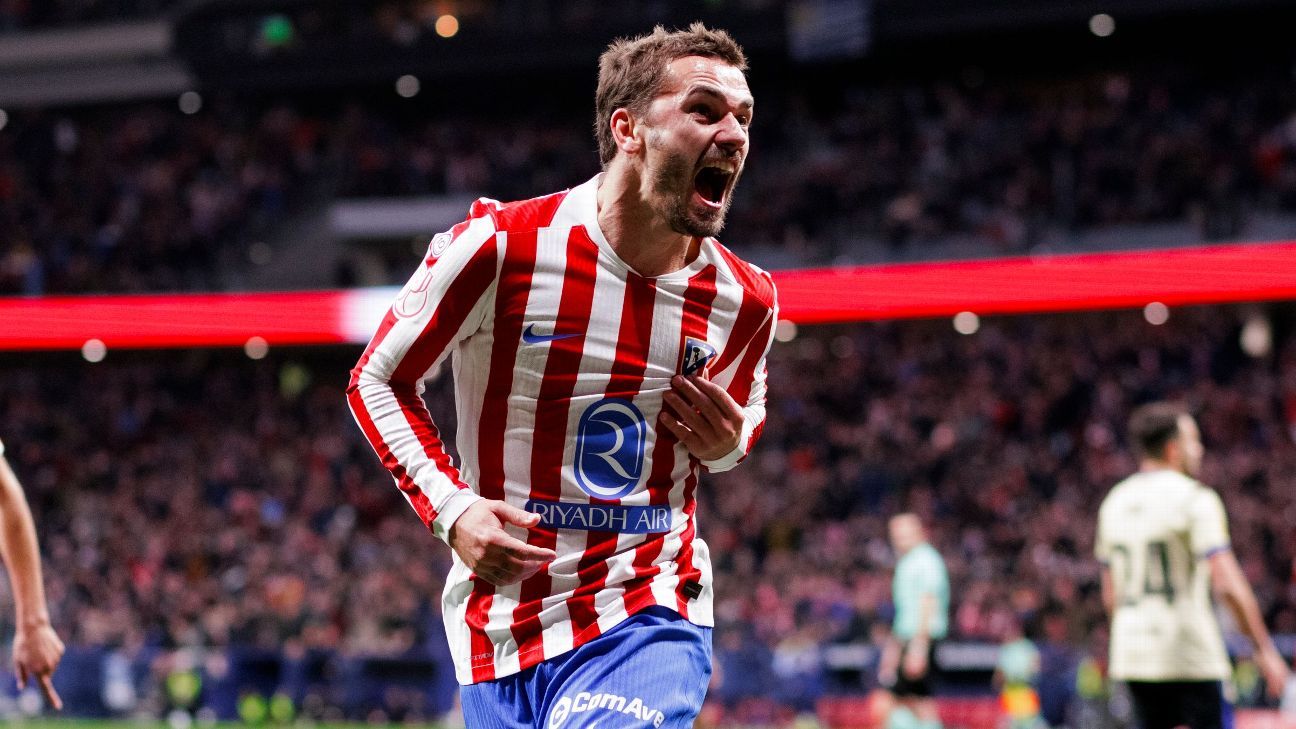
Antoine Griezmann is set to sign a two-year deal including an additional one-year option with Orlando City SC, multiple sources told ESPN Sunday.
The Atlético Madrid attacker left for Orlando on Sunday night after his team’s 3-2 derby loss to Real Madrid to finalize the move, sources added, with Griezmann expected to begin playing for the MLS side in July.
Griezmann will remain with Atlético until the end of the season, which still includes a Champions League quarterfinal tie with Barcelona and a Copa del Rey final against Real Sociedad.
The former France star, who was on the 2018 World Cup winning team, retired from international duty in 2024.
ESPN reported in February that Griezmann was in talks to make a move to Orlando before the end of the LaLiga season, but sources said he decided to put the move on hold to finish out the year with Atlético.
Griezmann is Atlético’s all-time leading scorer with 210 goals, but he has yet to win a major title with Diego Simeone’s team.
Simeone has said repeatedly that he would support any decision that Griezmann, a longtime Atlético Madrid veteran, made. His current deal with Atleti runs through 2027.
Major League Soccer’s summer window opens on July 13.
ESPN’s Gustavo Hofman and Jeff Carlisle contributed to this report.
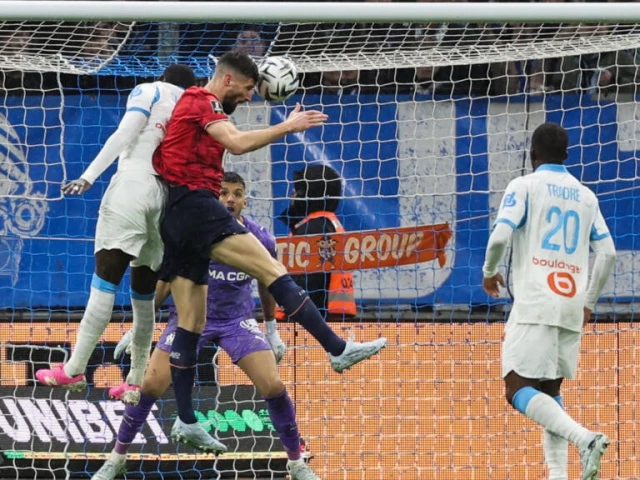
Olivier Giroud (C) headed home to complete the comeback for fifth-placed Lille. Photo: AFP
MARSEILLE:
Olivier Giroud came off the bench for Lille to condemn Marseille to a 2-1 home defeat on Sunday as fellow European contenders Lyon’s woes continued with another defeat.
Ethan Nwaneri’s first-half goal seemed to have put Marseille on course for a third straight win in the league as they look to consolidate the third and final Champions League spot.
But Belgian right-back Thomas Meunier struck back for seventh-placed Lille in the 49th minute to level matters at the Stade Velodrome.
Former Arsenal and France striker Giroud then netted his sixth goal of the season to send Lille in front inside the final five minutes.
The 39-year-old substitute headed in Meunier’s cross to complete the comeback for fifth-placed Lille and move them to within two points of their opponents.
“We didn’t deserve to be behind at half-time. So at the break, I told my players to keep doing what they’d been doing. We can be proud of what we’ve achieved, but we need to keep our feet on the ground,” Lille coach Bruno Genesio said.
“Olivier did us a world of good… He scored a brilliant striker’s goal.”
Defeat left Habib Beye’s Marseille on 49 points, also just two clear of fourth-placed Lyon after the seven-time French champions went down 2-1 at home to Monaco.
The defeat compounded a miserable week for Lyon after they were eliminated from the Europa League 3-1 on aggregate following Thursday’s 2-0 reversal at the Groupama Stadium to Spaniards Celta Vigo.
Paulo Fonseca’s charges are now without a win in their last six outings in all competitions.
“We played well up until the 70th minute, dominating the game and creating chances,” Lyon boss Fonseca said.
“We’ve been facing a lot of difficulties this season and the mistakes are piling up. I can accept that the referees don’t always have the best view, but how can some of the VAR decisions be explained?”
The Portuguese was particularly aggrieved by the decision not to award a penalty for a pull of the shirt on Lyon forward Endrick in the immediate build-up to the decisive spot-kick whistled for Monaco.
Pavel Sulc had sent the hosts ahead on 42 minutes but the principality side roared back courtesy of Maghnes Akliouche’s leveller shortly after the hour before Folarin Balogun netted from the spot in the 72nd minute to move Monaco into sixth and within one point of Lyon.
They sit on 46 points, two clear of Rennes, who played out a goalless stalemate with bottom-placed Metz.
Despite twice taking the lead against Strasbourg, second-bottom Nantes fell to a 3-2 loss after Joaquin Panichelli’s late brace and find themselves five points behind Auxerre, who occupy the relegation play-off spot.
Elsewhere, Paris FC took a big step towards ensuring their top-flight status for next season with a vital 3-2 home win over Le Havre.
The capital side sit on 31 points, with Le Havre now four behind them in 14th spot.


FTSE 100 in 11% fall since Iran war started as stock markets tumble

US’ economic index dips 0.1% in January amid easing headwinds: TCB

What Happens When You Can’t Get a Death Certificate in Gaza

Tips and Advice for Buying Used or Refurbished Electronics

UAE savings strategies 2026 explained: Best apps, tools, budget rules and smart money hacks to beat rising cost of living in emirates – The Times of India

Meet one of the last true paparazzi

-
 Tech1 week ago
Tips and Advice for Buying Used or Refurbished Electronics
-
Business1 week ago
UAE savings strategies 2026 explained: Best apps, tools, budget rules and smart money hacks to beat rising cost of living in emirates – The Times of India
-
 Entertainment1 week ago
Meet one of the last true paparazzi
-

 Entertainment1 week ago
Strategic oil stocks to be released ‘immediately’ in Asia and Oceania: IEA
-
 Entertainment1 week ago
Iran at war
-
 Sports1 week ago
College Basketball Invitational abruptly cancels 2026 tournament
-

 Sports1 week ago
Japan suffers shocking collapse to Venezuela in World Baseball Classic
-
 Business1 week ago
‘Gruesome’ war bets fuel calls for Kalshi Polymarket crackdown