

Fashion
Thermore expands in the fashion sector


Published
December 26, 2025
Thermore, a manufacturer of thermal insulation for clothing, is making inroads in the fashion industry. “We started out in the technical segment. Synthetic insulation was initially used in ski suits. As style evolved, fashion embraced technical materials, and today it represents the largest share of our business,” CEO Patrizio Lorenzo Siniscalchi tells FashionNetwork.com.
The company, founded in Milan by his father, Lucio, in 1972, has evolved into the sector’s first ingredient brand and today supplies down-free insulation to a wide range of fashion and luxury labels. Under the leadership of Siniscalchi Jr., it has strengthened its relationship with end consumers, who are increasingly discerning. “When we develop a new insulation product, we don’t think about our direct customer, but about the end user,” the CEO notes.
The latest collaboration is with Jaked, featuring Thermore insulation in the brand’s new outerwear collection for the Autumn/Winter 2025 season. The Impact Evo jackets, designed for racing, fitness, and sportswear, blend style and functionality, leveraging Ecodown Fibers Ocean technology, which is bluesign and OEKO-TEX certified.
Today, Thermore generates revenue of 13 million euros, with the US and Europe as its main markets. “Around 10% of sales come from Asia, primarily Korea and Japan. We have offices in New York and Tokyo. Around 90% of production is in the Far East, because insulated garments are manufactured there,” Siniscalchi continues.
On the pressing issue of the impact of fast fashion, “there needs to be a change. We must be more mindful of our consumption,” notes the CEO. “We do not use down, but recycled fibres from ocean-bound bottles, thereby helping to prevent the formation of massive plastic islands in the ocean. We have been investing in this for 40 years. We launched our first recycled product in the 1980s. At the beginning, it was difficult to find raw materials with the same quality as virgin polyester. Today, 98% of our insulation is made from recycled material. The chips used to make PET bottles are better than those used for fibres,” Siniscalchi concludes.
This article is an automatic translation.
Click here to read the original article.
Copyright © 2025 FashionNetwork.com All rights reserved.









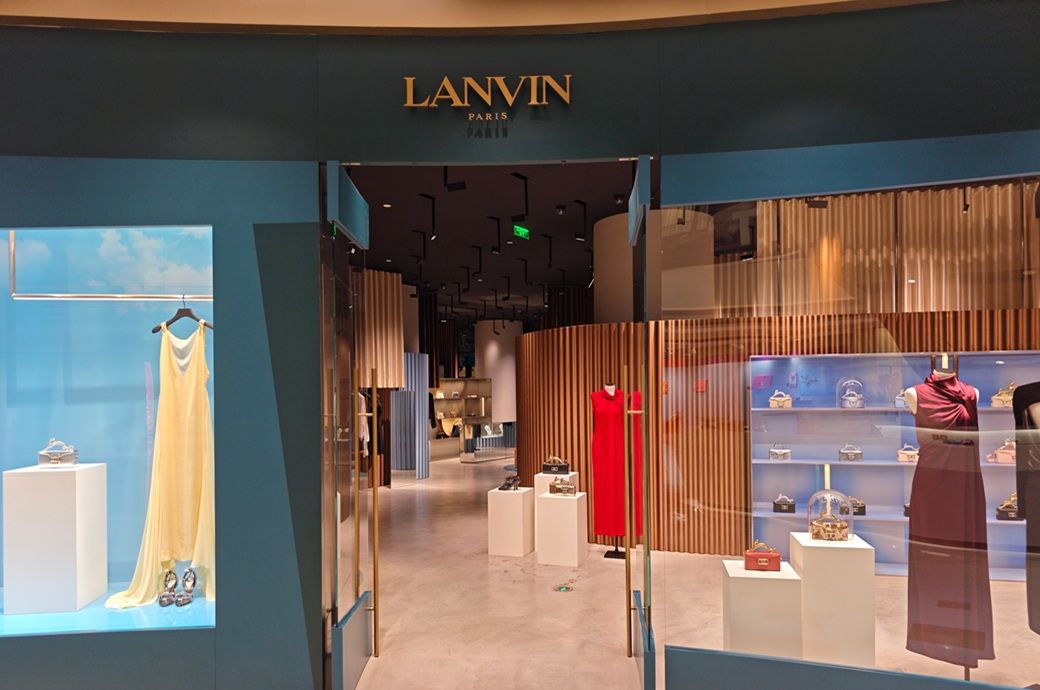
Despite the overall decline, the group indicated improving momentum in the second half of 2025, with revenue contraction narrowing significantly compared to the first half. This trend reflects early gains from ongoing transformation initiatives, including operational restructuring, cost discipline, and retail network optimisation.
Lanvin Group has reported revenue of €240.5 million (~$276.58 million) in FY25, down 17.6 per cent YoY, amid global luxury headwinds.
While Lanvin and Sergio Rossi declined sharply, St John remained resilient.
North America was stable, but China weakened significantly.
The group continues restructuring, leadership changes, and retail optimisation, targeting stronger growth and profitability by 2026.
At the brand level, performance remained mixed. Lanvin and Sergio Rossi both recorded sharp declines of 30 per cent, while Wolford fell 14 per cent. St John showed resilience, with revenue slipping just 1 per cent, supported by an 8 per cent increase in North America in local currency terms. Wolford’s performance stabilised during the year, aided by improved supply conditions and stronger traction in e-commerce and wholesale channels. Meanwhile, Lanvin progressed in its creative repositioning under artistic director Peter Copping, Lanvin said in a press release.
Regionally, North America has emerged as the most stable market, with revenue declining a modest 6 per cent to €116 million. In contrast, Europe, Middle East, and Africa (EMEA) revenues fell 21 per cent, while Greater China saw a steep 42 per cent drop, reflecting softer demand and cautious wholesale activity. Other markets declined 26 per cent, underscoring broader global volatility in luxury consumption.
Across channels, direct-to-consumer (DTC) and e-commerce revenues declined 18 per cent to €164 million, while wholesale revenues fell 15 per cent. The Group continued to streamline its retail footprint, including selective store closures and organisational adjustments, as part of its broader efficiency drive.
Leadership changes also supported the transformation, with Marco Pozzo appointed CEO of Wolford, Barbara Werschine as deputy CEO of Lanvin, and Mandy West as CEO of St John. These appointments are aimed at strengthening brand execution and accelerating strategic priorities, added the release.
Looking ahead, Lanvin Group expects to largely complete its transformation programme in 2026. The company plans to deepen its presence in core markets, expand asset-light business models, and pursue strategic partnerships, while continuing creative renewal across its portfolio. These efforts are intended to reinforce long-term growth and improve profitability amid an evolving global luxury landscape.
Fibre2Fashion News Desk (SG)
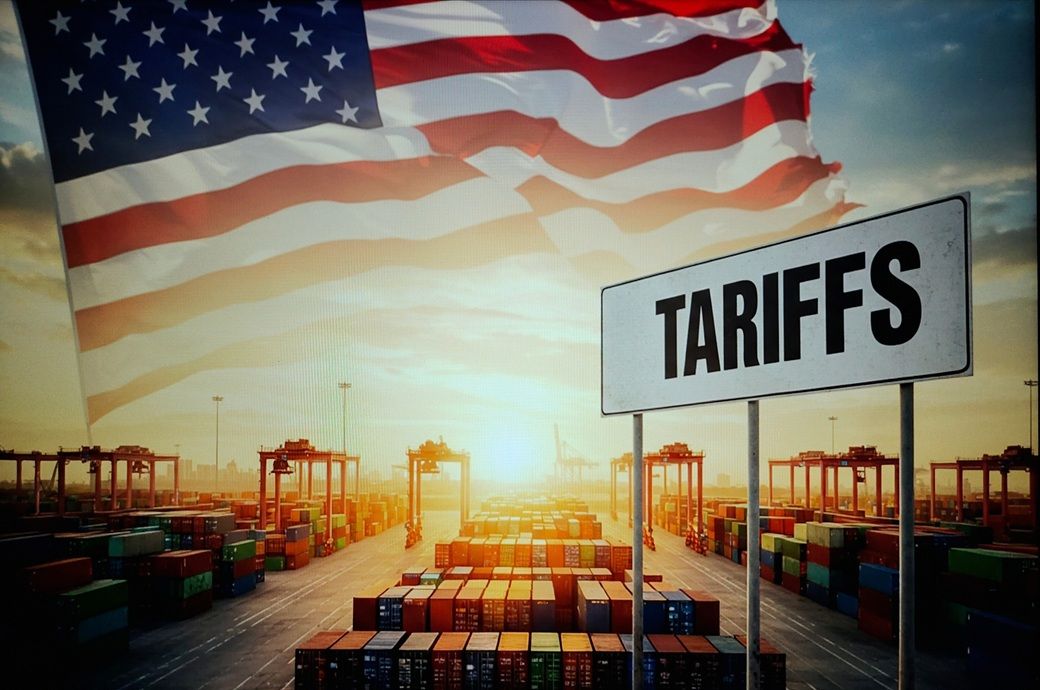
Despite the tariff hike being larger than the 1930 Smoot-Hawley tariffs, the aggregate impact on the US economy appears small—between 0.1 per cent of gross domestic product (GDP) and minus 0.13 per cent, wrote Pablo Fajgelbaum, professor of economics at the University of California, Los Angeles, and Amit Khandelwal, Don-Soo Hahn professor of global affairs and economics at Yale University.
Though President Donald Trump’s 2025 tariff hikes raised US trade protectionism to the highest level in at least 80 years, these so far have had only a small effect on the US economy, a paper discussed at the Brookings Papers on Economic Activity conference recently noted.
That is because federal revenue generated by the tariffs and gains to US producers largely offset the tariffs paid by US importers.
That is because federal revenue generated by the tariffs and gains to US producers largely offset the tariffs paid by US importers, they wrote.
While the aggregate net economic impact may be small, the authors noted that the tariffs also have distributional impacts between producers and importers. They estimate roughly 90 per cent of the tariffs have been passed through to importers, with foreign exporters absorbing only about 10 per cent of the cost by lowering their before-tariff prices.
Except from China, the majority of US exports have not faced retaliatory tariffs. And, the tariffs’ magnitude may be smaller than perceived by the public because announced tariffs “exceeded the actual tariffs imposed at the border,” they wrote.
Moreover, 57 per cent of imports entered the US duty-free. That includes most imports from Canada and Mexico, which enter under the United States-Mexico-Canada Free Trade Agreement of 2020.
The authors found evidence that the tariffs are achieving the administration’s objectives of raising federal revenue and decoupling trade with China. However, they found no evidence, or said it is too early to determine, whether other stated goals will be met, including lowering import prices excluding tariffs, reducing the US trade deficit, increasing trade with friendly nations, boosting manufacturing jobs and wages, and reshoring strategic industries, a release from the Brookings Institution said.
The authors found that the reduction of US-China trade, which began shrinking with the application of tariffs in 2018, during the first Trump administration, “accelerated markedly in 2025”. However, the overall US goods trade deficit in 2025 rose modestly from 2024 and manufacturing jobs declined slightly despite the tariffs.
Fibre2Fashion News Desk (DS)

The economic trajectory, which remained steady until early 2026, is now facing fresh headwinds as the conflict has disrupted key global supply chains, especially in energy and logistics, critical pillars of India’s economic stability.
The latest Monthly Economic Review by India’s Department of Economic Affairs projects a more uncertain economic outlook, citing disruptions to energy supplies and trade routes amid the Middle East conflict.
However, strong domestic growth, steady credit expansion, and resilient services exports continue to cushion the impact.
Despite rising risks, India has entered this phase from a sector steady.
The scale of disruption is stark. Ship movements through the Strait of Hormuz have nearly come to a standstill, from 200-300 a week to one a week, the review notes. This dramatic slowdown has tightened global oil and gas supply, pushing prices higher and increasing volatility across international markets.
The report warns of supply disruptions to oil, gas and fertilisers, higher import prices, higher logistics costs, and a possible decline in remittances by Indians in the Gulf countries.
These risks are particularly significant for India, which relies heavily on energy imports and has a large expatriate workforce in the Gulf region, contributing to remittance inflows.
Despite the risks, the review says India entered this phase from a position of strength.
On the domestic front, industrial activity has remained resilient.
“Retail inflation rose to a 10-month high of 3.21 per cent in February 2026, driven primarily by a sharp uptick in food prices,” said the review.
At the same time, the financial system continues to support growth. Bank credit expanded strongly, and the overall flow of financial resources to the commercial sector grew at 33.2 per cent (YoY).
The Finance Ministry review report emphasises the need for policy vigilance amid rising uncertainty.
Fibre2Fashion News Desk (DS)


Industrial output grows 5.2 per cent as manufacturing rebounds – The Times of India

Sources: Kentucky targeting Jackson State’s Mo Williams for staff

Katherine Schwarzenegger gushes over husband Chris Pratt

-

 Politics7 days ago
Afghanistan announces release of detained US citizen
-

 Sports7 days ago
Broadcast industry CEO says consolidation is ‘essential’ to compete for NFL soaring media rights prices
-

 Entertainment7 days ago
UN warns migratory freshwater fish numbers are spiralling
-
 Business7 days ago
Property Play: Home flippers see smallest profits since the Great Recession, real estate data firm says
-

 Tech7 days ago
Can a Home Appliance Fix the Problem of Soft-Plastic Waste?
-

 Fashion7 days ago
ICE cotton slips on weaker crude, profit booking
-
 Business7 days ago
More women are entering wealth management, but few are in advisory roles, study finds
-
 Business7 days ago
Centre plans to cut broken rice share in PDS, boost ethanol feedstock supply – The Times of India