Welcome to WIRED’s guide to the best Cyber Monday tech deals, where we can promise you two things: these devices are worth buying (we’ve tested and recommended every one of them), and these are actual discounts (not the year-round price). So, whether you need an upgrade, want to treat yourself, or are seeking a great gift, we have you covered.
Updated November 30: We’ve added deals on Samsung Galaxy Z Fold7 and Galaxy Z Flip7, Galaxy S25, S25+, S25 Ultra, Lenovo Flex 5i Chromebook Plus, Apple AirPods Pro 2, and Apple Watch SE 3.
Photograph: Julian Chokkattu
Photograph: Julian Chokkattu
Photograph: Julian Chokkattu
Photograph: Julian Chokkattu
The Google Pixel 10 is one of the best Android phones you can buy. Easy to recommend at full price, the Pixel 10 is an absolute bargain with this discount. You get an excellent triple-camera system with a 5X optical zoom sensor, support for Qi2 wireless charging, so you can magnetically attach to wireless chargers and docks, and Google’s super smart software features (Call Screen to filter out spam calls is our favorite). Learn more in the Best Pixel Phones guide.
Photograph: Julian Chokkattu
Photograph: Julian Chokkattu
Photograph: Julian Chokkattu
Photograph: Julian Chokkattu
The Pixel 9a is our top smartphone choice for most people, and it’s now $50 cheaper than it was on Black Friday itself. At $349, you’re getting a smooth-performing smartphone with a reliable dual-camera system that’s unmatched at this price, not to mention day-long battery life and a completely flat camera lens system for anyone who hates giant camera bumps. Oh, and it’ll get 7 years of software updates.
Photograph: Sony
Sony’s A7 IV is the best mirrorless camera on the market (for most people). It’s a 33-megapixel, full-frame camera with a brilliant autofocus system, impressive dynamic range, and crisp images. There’s an expansive range of 4K video options as well, along with customizable buttons to set up your preferences, so you don’t have to always rummage through the menus. Reviewer Scott Gilbertson found the grip to be super comfortable and the camera to be light enough to endure for long periods without any back strain. —Boutayna Chokrane
Photograph: Ryan Waniata
Soundcore by Anker
Aeroclip
If you’re shopping for open earbuds so that you can enjoy your music but still be aware of your surroundings, the Soundcore Aeroclip is the best we’ve tested so far. Reviewer Ryan Waniata praises the comfort, sound quality, usability, and value. The sound is wide and balanced, and the built-in controls are ideal for runs. Waniata likes to use them during outdoor activities, like hiking or biking, but he finds them especially helpful when he’s cooking dinner and needs to stay alert for his newborn’s cries. —Boutayna Chokrane
Photograph: Adrienne So
Editor Adrienne So says the Fitbit Ace LTE is the first fitness tracker she’s gotten her kids to use. It’s a fitness tracker (designed with Fitbit’s health sensors), gaming device, and location tracker. The $10/monthly subscription includes both LTE connectivity and Fitbit Arcade, which has a variety of movement-based games that get children on their feet and incentivize them to keep their watches on. They can call and text their guardians (and other approved contacts) through the Fitbit Ace app, and their location is trackable via Google Find My. —Boutayna Chokrane
Photograph: Philips
This is a rare and tasty deal on my favorite Xmas lights. They work indoors or out, can be scheduled, and support a bunch of lovely animated effects. While I’m mentioning Philips Hue and its excellent but horribly expensive wares, you might want to check out some of its other Cyber Monday deals. My picks would be the wall washers ($316), TV lightstrip ($129), and HDMI sync box ($270).
Photograph: Simon Hill
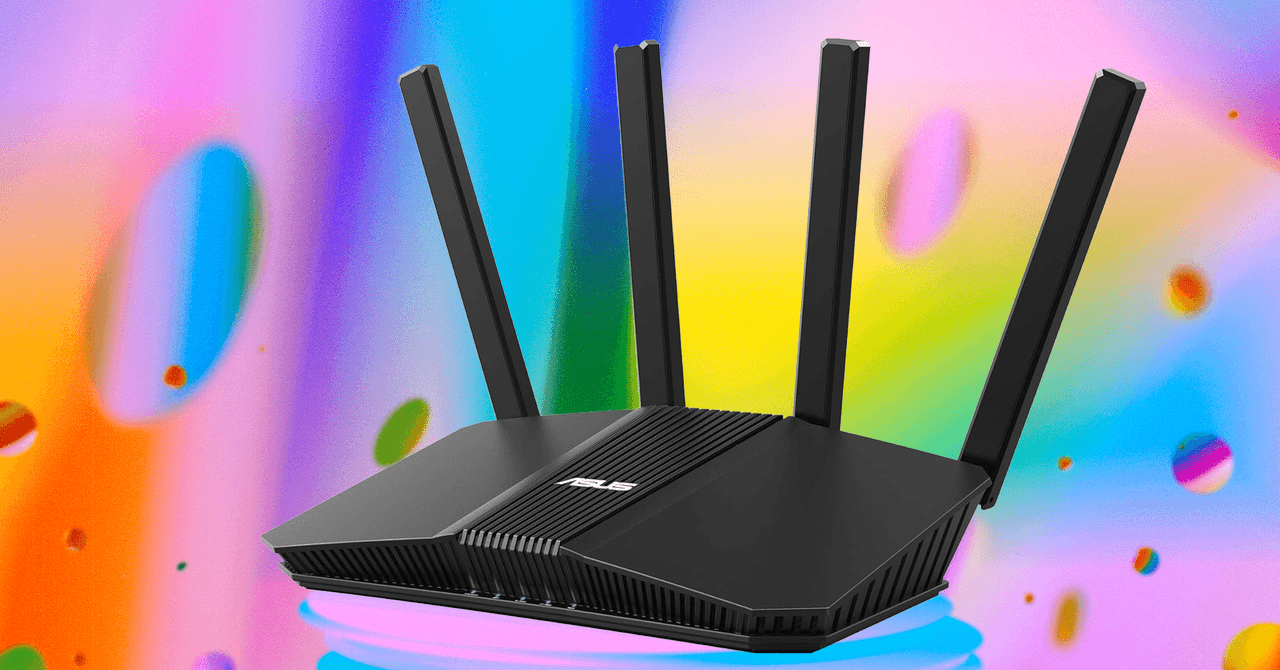
The Asus RT-BE58U is perhaps the ideal Wi-Fi 7 upgrade for modest homes and apartments still struggling with the crappy router their internet service provider sent, and that’s why it tops our Best Wi-Fi Routers guide. It’s easy to set up and use, can cover up to 2,000 square feet, and boasts plenty of ports. As a dual-band router, it lacks the 6-GHz band, but has all the other advantages of Wi-Fi 7. There’s also support for VPN service, separate IoT or guest networks, and Ai Mesh.
Photograph: Eric Ravenscraft
Don’t ask me why they keep taking our ports away. God forbid you should want to plug something into your laptop. Well, you can stick it to those minimalist designers with the best laptop docking station. This one doubles as a wedge to prop your laptop up and has a storage slot.
Courtesy of Sony
These wireless noise-canceling headphones may not be the latest release from Sony, but they are still an excellent pair of cans with a far deeper discount. The Sony WH-1000XM5 are relatively light and comfortable, producing accomplished sound in every scenario, and have great control options.
Photograph: Ryan Waniata
You can spend a lot on a TV, but you can also get a great screen without breaking the bank, and the TCL QM6K proves it. This is the best TV for most people right now as it offers excellent color and processing, all the apps you want, and great performance, even in bright rooms. There are discounts across the range of screen sizes.
Photograph: Parker Hall
Roku
Streaming Stick Plus (2025)
If you want to get the latest streaming apps on an older TV, the Roku Streaming Stick Plus is for you. It’s easy to set up, works reliably, and has a handy voice remote that makes finding content easier than ever. It slots neatly behind most TVs, and Roku’s interface is nice and clear.
Photograph: Brenda Stolyar
Photograph: Brenda Stolyar
Apple doesn’t really do sales, but other retailers do. This is the lowest price we’ve seen on a solid iPad the whole family can enjoy. The Apple iPad (A16, 2025) performs great for most tasks, looks pretty nice, and has a 12-megapixel camera. It is honestly all the iPad most folks need for surfing the web and streaming shows in bed. With iPadOS 26 and the new windowing apps feature, you can even comfortably do some work if you pair it with a Bluetooth keyboard and mouse.
Photograph: Simon Hill
Handy as they are for keeping you connected when your phone dies unexpectedly, portable chargers can be very same-y. The reason the Nimble Champ tops our Best Power Banks guide is Nimble’s focus on the environment. It’s made from 90 percent certified recycled plastic and comes in fully biodegradable packaging. It also works well, with capacities starting from 5,200 mAh, with USB-A and USB-C ports, and up to 15-watt charging.
Photograph: Nena Farrell
Photograph: Nena Farrell
Courtesy of Amazon
Amazon
Kindle Paperwhite (2024, 12th Generation)
Yes, you should read more, and Amazon’s Kindle e-readers make it easier to do exactly that. Our current favorite is the Kindle Paperwhite (12th generation). It has a sharp 7-inch display, auto-adjusting warm light, three-month battery life, snappy performance, and it’s slim and light, making it comfortable to hold. It even has integration with Overdrive for your library books and support for several languages.
Photograph: Nena Farrell
The reMarkable 2 is one of the best digital notebooks, offering a paperlike writing experience, intuitive software, and several weeks of battery life. This is a budget model, so it lacks front light and color, but it’s still a decent device. Bundles where you choose both a marker and folio are heavily discounted right now, and they’re not often on sale, so it’s a good time to snap one up.
Photograph: Julian Chokkattu
Keychron boards are popular here at WIRED, and the Q6 HE is our current pick of the best mechanical keyboards. Sturdy, satisfying to type on, with a lovely retro aesthetic, what more do you need? Well, the Q6 HE also boasts hot-swappable Hall Effect switches, four macro keys, and is relatively easy to customize or repair.
Photograph: Julian Chokkattu
Nomad
65W Slim Power Adapter
The great thing about Nomad’s 65-watt charger is that it’s incredibly slim, with flip-out prongs, so it can slip easily into small pockets in your bag or purse. You get dual USB-C ports, and can pull 45 watts out of the left port and 20 out of the right. Or, if you’re just charging one device, the full 65 watts is enough for any phone, most tablets, and even some MacBooks or Windows laptops (though they may not charge at top speed).
Photograph: Simon Hill
Photograph: Simon Hill
Photograph: Simon Hill
Photograph: Simon Hill
You know what I don’t miss in the slightest? Mowing the lawn. A good robot mower, like this relatively affordable one from newcomer Anthbot, will do it for you, quietly. No wire required; it recharges itself, you just set a schedule and relax. OK, it sometimes leaves a verge, but the only model I’ve tried that doesn’t is more than twice the price.
Photograph: Simon Hill
Photograph: Simon Hill
Sharp 2K video, color night vision, a wide 160-degree field of view, and clear two-way audio make the Arlo Pro 5S easy to recommend for folks seeking a security camera. You also get AI recognition for people and pets, a siren to scare intruders, and the quick-loading Arlo app. But you need Arlo Secure ($8 per month for one camera or $13 per month for unlimited cameras) for subject recognition, smart alerts, and cloud storage. The Arlo Pro 5S is our pick of the best outdoor security cameras.
Photograph: Simon Hill
Photograph: Simon Hill
I love my Oura Ring 4. It accurately tracks my sleep, activity, and stress levels and offers insights that I find genuinely useful. It’s also very comfortable, the app is super slick, with new features being added all the time, and it’s far less obtrusive than any other kind of tracker you could wear. The catch is a subscription, but this is still the best of the best smart rings.
Photograph: Simon Hill
It’s the thoughtful design that elevates the Backbone One above the rest of the best mobile controllers. Slot your phone into the compact cradle, with a USB-C jack for speedy connectivity, and you get satisfyingly clicky and responsive controls plus a 3.5-mm headphone port. You can also customize it for different games, or even use Backbone’s software as a one-stop gaming hub, if you’re willing to pay a subscription.
Photograph: Adrienne So
Ray-Ban
Meta Smart Glasses
Yes, there is a new version of the Ray-Ban Meta Wayfarers, but the good news is that the old pair is now on sale. If you can stomach Meta AI’s privacy policies, there’s a strong argument that it has won the smart glasses race already (at least, so far). The best smart glasses must be easy to wear, and these look great and help offload things from your phone, so you don’t have to dip into that pocket quite as much.
Photograph: Ryan Waniata
Photograph: Ryan Waniata
Photograph: Ryan Waniata
The JBL Flip 7 is the Bluetooth speaker that has it all. It’s durable, it has stamina, it produces a punchy sound, and it comes in fun colors. As the best Bluetooth speaker you can buy, this deal is for real.
Courtesy of Tonies
Toniebox is our favorite speaker for young kids, particularly ages three through seven. It’s essentially a squishy cube that plays stories and songs tied to different characters (aka Tonies). It’s activated when your child places the figurine on top of the speaker. There are so many Tonies to choose from. Peppa Pig, Moana, Winnie the Pooh, the list goes on. You can also buy Creative Tonies to record your own audio. Super easy to use, and the cutesy ears double as volume controls. —Boutayna Chokrane
Courtesy of Vintage
Bad Blood: Secrets and Lies in a Silicon Valley Startup
The best tech books unpack the rise and fall of the characters that invented the stuff that runs our lives. TheNew York Times and former Wall Street Journal reporter John Carreyrou writes about Elizabeth Holmes, as she miserably fails to build a blood testing machine that would allegedly eliminate the need for hypodermic needles. Her company raised hundreds of millions of dollars, but its technology was inaccurate. Rather than admit defeat, she pressed on, which is why Holmes was put on trial for fraud and sentenced to 11 years in prison. —Boutayna Chokrane
Photograph: Julian Chokkattu
Samsung
Galaxy S25, S25+, S25 Ultra
Samsung’s flagship Galaxy S25 has been heavily discounted all Cyber Weekend, probably because its successors are right around the corner (the Galaxy S26 series is expected to be announced in January). But we still love these excellent smartphones. The S25 is the smallest, the S25+ gets a few extra perks, plus a bigger screen and better battery life, and the Galaxy S25 Ultra has a dual telephoto camera system, integrated S Pen stylus, and a beefy battery. Be sure to check out the Best Samsung Phones guide for the full scoop. —Molly Higgins
Photograph: Julian Chokkattu
Photograph: Julian Chokkattu
Photograph: Julian Chokkattu
Samsung
Galaxy Z Fold7 and Galaxy Z Flip7
You’re not like other girls; you have a folding phone. In all seriousness, folding phones are not as fragile as they used to be, with durability improving while remaining slim. We love the Galaxy Z Fold7 because it’s amazingly slim and versatile. You can use the front screen like normal, and when you need extra real estate, open the device up. You can view apps on a much larger scale or easily split-screen two apps. If you’re not feeling a folding phone, the updated Galaxy Z Flip7 has a more usable front screen. Read our Best Folding Phones guide to decide which is best for you at the discounted price this Cyber Weekend. —Molly Higgins
Courtesy of Lenovo
Lenovo
Flex 5i Chromebook Plus
The Lenovo Flex 5i Chromebook Plus is super cheap and compact, with a small touchscreen for more versatility. Especially with the Cyber Monday discount, it’s one of the most affordable Chromebook Plus models you can find, plus WIRED reviewer Luke Larsen thinks it’s in a whole different league over standard Chromebooks at this price because of its improved screen with a 360-degree hinge and touchscreen, fast performance, more storage, and crisp webcam. —Molly Higgins
Photograph: Christopher Null
Apple
AirPods Pro 2 (With USB-C)
Even though they’re an older model, we like these AirPods because of their hearing aid feature, comfort, and outstanding streaming experience. If you’re an iPhone user, you should have some AirPods, and we still think these are a good choice for most people because of their active noise cancellation, sound quality, and easy pairing within the Apple ecosystem. Plus, it doesn’t hurt that they’re nearly 25 percent off for Cyber Monday. —Molly Higgins
Photograph: Adrienne So
We on the WIRED Reviews team still think this is the best Apple Watch for most people. With its newest upgrade, it now has the latest S10 chip, a Liquid Glass display, Workout Buddy, and wrist-flick gestures. If you have an iPhone, this accessory is a no-brainer. It makes a great gift for yourself or others, and is seriously discounted at only $200 right now. —Molly Higgins
HOKA’s max-stacked Rocket X Trail combines road race shoe energy with boosted grip from a 3-mm lugged outsole. If you’re looking for a fast shoe to go on the attack, this is it. It’s also fantastic for all round comfort. In testing, I laced up the Rocket X Trail and ran 3 hours (just short of 19 miles) fresh out of the box, across roads, forest gravel trails, some grass and through some serious water. It delivered efficiency and energy whether I was moving at marathon pace or with heavier, tired, ragged footfalls in the latter miles.
The rockered, supercritical midsole uses HOKA’s liveliest foam, similar to those you find in its race-ready road shoes, along with a carbon plate. That combines for a really fun ride that’s smooth, springy and fast and really consistent. It’s also highly cushioned, so you will sacrifice a lot of ground feel for that big stack springy softness. It’s also less stable over very lumpy terrain. But on open, flat, runnable mixed terrain, it’s excellent.
The lightweight uppers have a race-shoe-ready feel and after running through ankle-deep flooded sections, they shed water really quickly. This is a pricey road-to-trail shoe, it’s versatile and there’s plenty of winter road potential, too.
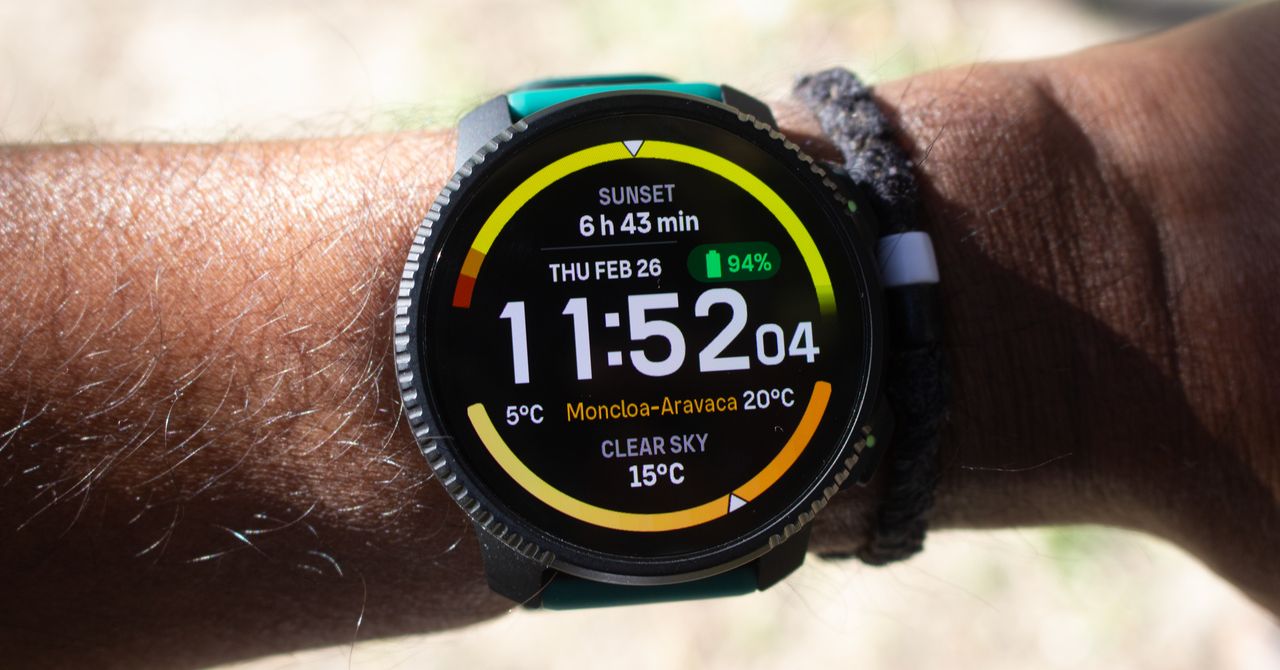
It’s always pleasing to see an array of physical buttons, and you get sizable ones too. You’re not going to miss these wide flat ones even when picking the pace up. The silicone strap has a nice stretch to it and while the button clasp is a bit awkward to get into place, this watch does not budge.
Suunto has jumped on the flashlight trend, with an LED light strip sat on the front of the case. You can adjust brightness levels and there’s SOS and alert modes to emit a very noticeable pulsating light pattern. This is a light I found useful rooting around indoors as well as on nighttime outings.
The biggest change is the introduction of a 1.5-inch, 466 x 466 AMOLED display. This replaces the dull, albeit very visible, memory-in-pixel (MIP) display. Suunto also ditched the solar charging that did require spending a significant amount of time outside to reap its battery benefits.
Adding AMOLED screens to outdoor watches has been contentious. The older MIP displays are just more power-efficient. The Vertical 2 is down by about 10 days from the older Vertical for what Suunto calls daily use.
Still, even if you’re putting its tracking and mapping features to use, you’re not going to be reaching for the charger every few days. After two hours of tracking in optimal GPS mode, the battery only dropped by 2 to 3 percent. The battery drop outside of tracking is also small and the standby performance is excellent as well.
Software Updates
Photograph: Michael Sawh
A more streamlined set of smartwatch features helps reserve battery for when it really matters. Unfortunately, I probably got better battery life because you don’t get phone notifications or responses if it’s paired to an iPhone instead of an Android. There’s also no onboard music player, but you do get a pretty slick set of music playback controls that are accessible during tracking.
Over the past few years, edge artificial intelligence (AI) has quickly transformed from a niche technology to a vital and strategic necessity. This is mainly because it helps resolve or minimise some of the key bottlenecks of traditional cloud-based AI. These include data volume, latency, privacy and cost, among others, while allowing companies to make instant decisions to keep up with modern and increasingly automated operations.
As a result, the deployment of edge AI is no longer only a technical architecture choice, but one that is actively reshaping risk, cost, compliance and responsibility for enterprises. Businesses are increasingly choosing to store sensitive information mainly on local networks, instead of relying on cloud providers, which has further driven the growth of edge AI.
Rather than asking whether or not to adopt edge AI, the crucial question for most companies is how to do so without creating new security, cost and governance issues. As a relatively new technology still, several companies risk implementing edge AI simply to jump on the AI bandwagon, without being fully aware of which situations can most benefit from it.
“Edge AI attracts a lot of enthusiasm because it enables real-time, autonomous decisions. However, the real danger is a false sense of technological maturity,” notes Michaël Bikard, professor of strategy at the Insead business school. “Edge AI can work well locally while producing fragile outcomes at the system level. Historically, that’s when failures occur. Not because the technology fails, but because it is trusted too early, before institutions, organisations and governance are ready.”
As such, understanding the consequences of edge AI deployment is paramount to deciding long-term strategy.
Why businesses are moving from cloud-first to hybrid
Businesses are increasingly choosing a more hybrid AI approach over a cloud-first strategy, driven mainly by larger and more complex AI workloads. Many firms have also been disappointed by the savings achieved by adopting a full public cloud strategy, instead being faced with sharply surging operational costs.
These costs, exacerbated by data-heavy applications, mainly arose from moving large datasets to and from the cloud and between providers. Surprise fees and unpredictable bills have further strained IT budgets and complicated budgeting and forecasts.
Edge AI attracts a lot of enthusiasm because it enables real-time, autonomous decisions. However, the real danger is a false sense of technological maturity Michaël Bikard, Insead
On the other hand, with edge AI, companies can run stable and predictable workloads on-premise much cheaper than in the cloud.
Latency is another overarching concern. Edge AI can often be better than the cloud to minimise latency for applications which need real-time, high-speed processing. These include operational control systems and local analytics, among others.
In highly regulated industries such as finance and healthcare, some data may only be stored within certain jurisdictions, which has further driven the shift to edge AI or on-premise solutions.
Major, single cloud providers can also come with supplier lock-ins, while multicloud environments are increasingly complicated to manage, also leading to hybrid approaches.
A hybrid strategy lets companies use public cloud to train and update applications which need to scale fast, while keeping high-volume, sensitive or stable data on-premise. This allows organisations to balance agility, cost efficiency and operational resilience, especially in a global context where real-time intelligence is increasingly valuable.
Edge AI business drivers: What’s real and what’s noise
At present, most businesses using edge AI have adopted the technology due to practical operational needs. Successful deployments have focused on solving specific, cloud-only limitations, rather than trying to overhaul entire company tech infrastructures.
The need for real-time decision-making has primarily driven edge AI adoption, especially in sectors like infrastructure, logistics, manufacturing and transport. This is especially as latency can have far-reaching operational and financial consequences, which the technology can help significantly in cutting down.
Applying edge AI to these sectors helps companies process data closer to where it is generated, which enables them to react faster during times of lost central connectivity.
The technology also helps organisations dealing with sensitive data stay legally and financially compliant in jurisdictions with especially strict data storage laws.
For companies working on critical operations, edge AI can greatly improve operational resilience by making sure that data and intelligence are distributed throughout a number of locations. This helps reduce dependence on centralised systems, which in turn decreases the impact of outages.
However, some business drivers are vastly overestimated when it comes to influencing the need to implement edge AI. The biggest of these is short-term cost savings. Edge AI can certainly cut down on transfer and cloud data consumption costs in the long-run.
However, it initially needs significant capital expenditure, mainly in the form of hardware device upgrades. There are also ongoing maintenance, monitoring and software update costs following implementation. In some cases, integration with legacy systems may be slower than expected and businesses may have to hire specialised labour as well. Edge AI systems also use considerable amounts of power, leading to higher energy bills.
These factors can all cause costs to be higher in the first few months, requiring businesses to have a long-term view when it comes to seeing strategic benefits from edge AI.
Another notion that is often overestimated is edge AI being able to deliver anything like “super-intelligence”, by running huge, complicated models like datacentre graphics processing units. However, given current computing and power restrictions in most cases, this scenario is highly unlikely at the moment.
Similarly, expectations of businesses being able to switch entirely to edge AI, instead of a hybrid approach, are also unrealistic, mainly because of practical deployment, integration and maintenance limitations across various locations.
How edge AI is changing security, governance and ownership
As edge AI becomes more embedded in hybrid business tech strategies, risk management, enterprise security and governance are also changing, moving away from centralised IT control. These areas are now being shaped by local operational teams taking increasingly autonomous decisions, factoring in the real-time conditions of critical physical infrastructure.
Rising edge AI usage could heighten security concerns as well, as it widens organisational attack surfaces through multiple distributed devices and infrastructure. These then need to be protected, monitored and updated equally, following a set of standard guidelines, despite each of them presenting their own unique limitations.
AI systems can perform exceptionally well under conditions similar to their training data, yet fail abruptly under rare, extreme, or novel scenarios – precisely the situations that matter most in critical infrastructure Florian Stahl, Mannheim Business School
“AI systems can perform exceptionally well under conditions similar to their training data, yet fail abruptly under rare, extreme, or novel scenarios – precisely the situations that matter most in critical infrastructure,” remarks Florian Stahl, chair of quantitative marketing and consumer analytics at Mannheim Business School.
Patch management can pose more issues with edge AI as well, with thousands of endpoints and vulnerabilities causing potential delays and discrepancies in maintenance.
With edge AI being all about local deployments, more questions around version control, oversight and audit issues can arise. This means that companies may need to maintain more in-depth and regular records about data inputs, decision-making processes and operational factors. Highly regulated industries may especially demand evidence trails and seek greater accountability, which can impact company reputations and licences.
“Real-time AI systems, particularly those based on machine learning, often operate as ‘black boxes’, making it difficult to explain or audit decisions when failures occur. This lack of transparency is problematic in infrastructures where accountability and post-incident analysis are essential,” Stahl adds.
As autonomous decisions taken locally can have very real financial, safety and compliance consequences, businesses may be compelled to take accountability far more seriously if they choose to use edge AI.
Senior leadership may also need to adapt centralised organisational and governance models to a more distributed intelligence strategy, all while keeping costs low.
These factors have led to edge AI becoming a structural change just as much as a technical one, impacting how and where decisions are taken, how risk is evaluated and overall accountability.
What leaders should consider before implementing edge AI
Given the considerable initial investment required by most edge AI models, leaders should prioritise long-term strategic impact, rather than the hype of the latest technology. This means that while evaluating company-readiness, apart from timing, the potential scope of the intended edge AI model is paramount.
The biggest factor to consider is which processes or systems are most likely to benefit from using edge AI first and which can wait for a few more months. Ideally, businesses should prioritise any processes where latency, operational risk and data locality are most critical. By doing this, organisations can spread out costs while testing new deployments in a relatively lower-risk manner.
“Importantly, organisations should evaluate AI deployments not only through efficiency metrics, but also through risk-adjusted performance indicators, recognising that marginal efficiency gains are rarely justified if they introduce disproportionate systemic or ethical risks,” Stahl advises.
The next question is: to scale or not to scale? In several cases, a pilot edge AI deployment is either enough for the short-term, does not deliver the expected results, or highlights many hidden costs and operational issues.
In these cases, decision-makers need to evaluate whether it is worth taking the risk to scale, which will need more investment, specialised skills and manpower.
However, knowing when not to use edge AI, and when it could cause more harm than good, is equally important for businesses. This is primarily in cases where data volumes are still low, latency is not crucial, or the company does not have the means to appropriately handle several distributed endpoints.
“Edge AI should not be deployed in sectors where use cases are broad, stakes are high, and the consequences of errors are poorly understood,” Insead’s Bikard states. “That combination usually signals a timing problem rather than a technological one. In open, highly interconnected environments, even small mistakes can cascade before organisations have time to respond.”
In such cases, exercising strategic restraint is far more instrumental to long-term value.
From tech choice to organisational shift
Ultimately, implementing edge AI models should be primarily focused on delivering long-term, strategic value, rather than a trend-based decision. This is especially true if latency and real-time data analysis pose real risks. Businesses need to consider that edge AI use is likely to reshape everything from cost structures and decision-making to autonomy and risk, and prepare accordingly.
“There are real potential gains from using AI for predictive maintenance, but those gains rarely come from the technology alone. For AI to pay off, the surrounding organisation – its incentives, culture, structures and skills – must also adapt. Predictions only create value if people are empowered to act on them,” Bikard concludes.
Enterprises that treat edge AI as an entire operational shift, rather than an independent feature to be tacked onto legacy systems, will inevitably be able to take advantage of it better in the long run.





.jpg)

-Reviewer-Photo-SOURCE-Simon-Hill.jpg)


-Portable-Charger-Reviewer-Photo-(no-border)-SOURCE-Simon-Hill.jpg)
%2520_%2520Nena%2520Farrell.png)


.jpg)


-Reviewer-Photo-SOURCE-Ryan-Waniata.jpg)


.png)

.png)





















 Politics1 week ago

 Fashion7 days ago
 Sports6 days ago
 Fashion6 days ago