

Sports
Three Week 5 losses that Barnwell can’t quite believe: What went wrong for the Cardinals, Eagles and Rams?

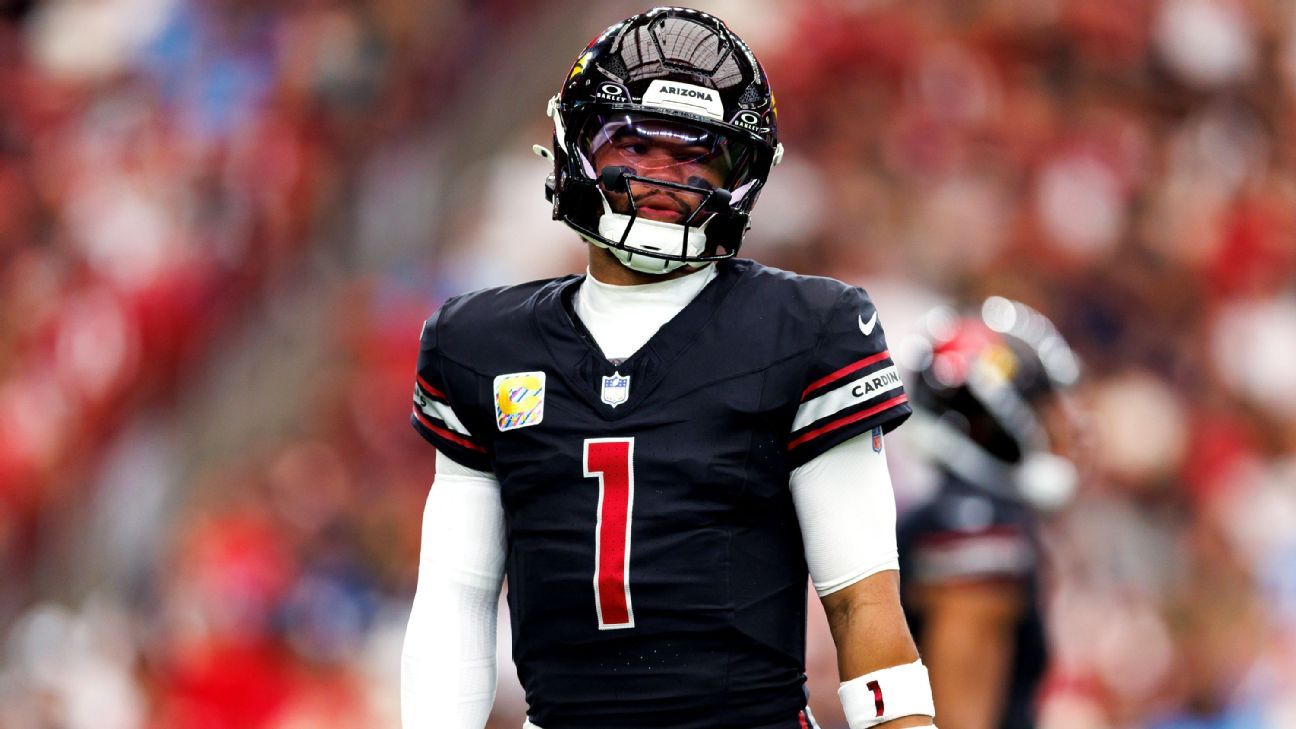
I don’t know how they lost that game. Watching the 49ers celebrate after stopping the Rams on a game-deciding fourth-and-1 run Thursday night, I simply couldn’t form an explanation for how the Rams had managed to blow what should have been an easy victory over their injury-riddled division rivals. It felt like the Rams could have done whatever they wanted on offense, and a limping Mac Jones‘ only reliable target was Kendrick Bourne on the 49ers’ side. So the Rams’ 26-23 defeat looked like it would be one of the most frustrating and inexplicable losses of the entire season.
And then Sunday rolled around. Sure, there were ugly defeats, like the Giants turning the ball over five times to lose 26-14 to the previously winless Saints, the Raiders allowing the Colts to score six straight touchdowns in a 40-6 defeat and the junior varsity Ravens singlehandedly reinspiring confidence in the Texans in a 44-10 blowout. And to cap off Sunday, the Bills fell 23-20 to the Patriots. But even judged by the standard that started Week 5 on Thursday night, fans had to endure some truly monumental and heartbreaking collapses on Sunday that went beyond any of those.
Subscribe: ‘The Bill Barnwell Show’
Which one was the worst? I’m here to answer that very question. If it sounds similar to a conversation we had a couple Mondays ago, you’re not wrong. After a series of losses that must have caused televisions around the nation to shudder in fear of flying objects, though, we have to essentially run back that same topic to see whether these Week 5 losses were just a confluence of awful moments or something more significant to worry about for the losers. And I have to start with a game that transcended the rest.
Jump to:
Cardinals’ loss to the Titans
Eagles’ loss to the Broncos
Rams’ loss to the 49ers


The story: The team that doesn’t know how to win versus the team that desperately does not want to win
Let’s get this out of the way: This was the worst loss of Week 5. As someone born and raised on the East Coast during an era when the Cardinals weren’t one of the league’s better teams, I’ll admit that I don’t have a ton of personal friends who are Cardinals fans. The ones I do know had the same reaction to Sunday’s loss on social media or via text: This was the worst Cardinals loss they’d ever seen.
There have been a few agonizing ones, too, with the 24-23 defeat to the Bears on “Monday Night Football” that inspired the late Dennis Green’s famous “They are who we thought they were!” speech as perhaps the most memorable. But I can’t even chalk this one up to recency bias. Outside of losing a more important game, I really can’t imagine a more nonsensical and despairing way to lose a football game.
Let’s start with the first inexplicable play. Up 21-6 in the fourth quarter, it looked like the Cardinals were about to turn the lights out on the hapless Titans. They pulled a lineman as part of a gap scheme run on third-and-1 and didn’t even do a great job of blocking it up, but the Titans weren’t about to get in their way. Emari Demercado didn’t really need to make a cut and didn’t encounter any defenders at the first, second or third levels. On the easiest explosive run Demercado will ever have in his career, he went untouched 72 yards to the end zone.
But the ball went only 71 yards. Just as L’Jarius Sneed caught up at the goal line, Demercado relaxed and let the ball fall to the ground. He saw it bounce on the ground in front of him but simply decided to let it roll through the back of the end zone for a touchback. Sneed knew. Demercado began to celebrate. If he didn’t know, he was about to find out.
0:53
Emari Demercado drops the ball and wipes away a 70-yard Cardinals TD
Emari Demercado drops the ball before crossing the goal line, wiping away what would have been a 70-yard touchdown.
You don’t need me to tell you — or tell NFL players — that they shouldn’t run the risk of dumping the ball out of their hands anywhere close to the goal line. There’s no benefit. Holding the ball for an extra beat or two and letting it go then looks just as cool. This was going to be the fifth and longest touchdown of Demercado’s career. And given that the Titans had yet to score 21 points in a game all season before Sunday, going up 27-6 with just under 13 minutes of regulation left was going to end the contest.
What makes this even more painful, of course, is that Demercado was surely reminded of this last week, when Indianapolis receiver Adonai Mitchell dropped a ball just before the goal line in what ended up turning into a 27-20 Colts loss to the Rams. NFL players don’t get to watch a lot of random football during the season — they’re working on Sundays and it’s hard enough to prepare for the team you’re actually playing — but Demercado even played on Thursday night last week. I know his coaches were watching what was happening on Sunday, and I’m sure every single staff around the NFL saw the Mitchell disaster and reminded their players to not do the one simple thing that can cost you six points as you’re streaking to the end zone. Demercado doing it anyway is unconscionable.
That’s a disaster, but it felt more like an unnecessary mistake than a critical, game-altering failure in the moment, because the Titans had been absolutely hopeless. They had racked up a total of 120 net yards across their 10 prior drives, including three consecutive three-and-outs to start the third quarter. They were entering their eighth consecutive quarter without a touchdown or even as much as a trip inside the red zone.
And so, of course, Cam Ward and the Titans morphed into the 2023 Dolphins. Ward drove the Titans 80 yards in six plays, hitting Calvin Ridley for a 47-yard completion on third-and-10 along the way. The Titans scored their first touchdown since Week 3, but when coach Brian Callahan curiously decided not to go for the 2-point conversion, Joey Slye promptly missed the extra point. Arizona still held a 21-12 lead.
After a Cardinals three-and-out, the Titans drove downfield, at which point something even wilder happened. Facing a third-and-2 on the Arizona 20-yard line, Ward scrambled and had a pass tipped at the line, which fell into the arms of Dadrion Taylor-Demerson. With 4:53 to go in a two-possession game, that’s probably something close to a wrap on the Titans if Taylor-Demerson simply goes down and is touched by a Titans player.
Instead, something happened that would even seem outlandish in a movie where a dog is one of the team’s star players. Taylor-Demerson went down under his own power and fumbled. Kei’Trel Clark, the first player to see the ball on the ground, couldn’t stop and kicked it forward toward his own end zone. Despite the fact that there were three Cardinals hovering directly over the football like they were roasting s’mores, the ball somehow squeezed out of their grasp and into the end zone, where Tyler Lockett — whose Titans career was only relevant for Immaculate Grid purposes before Sunday — fell on it for a touchdown. Suddenly 21-19.
0:58
Titans come away with one of the wildest TDs of the season
Cardinals safety Dadrion Taylor-Demerson fumbles the interception which finds the hands of Tyler Lockett for a fumble recovery touchdown.
From that point on, it might have felt like fate. The Cardinals punted after racking up 15 yards on their next drive. And while the Titans needed to get into field goal range from their own 18-yard line with one timeout and 1:53 to go, they didn’t have much trouble. Ward hit three straight short completions, found Chig Okonkwo for a first down and then hit his big shot, going over the top of Clark in coverage to Ridley for 38 yards. With the game on the line, the Cardinals didn’t give a corner who’s only in the lineup because of injuries any help over the top against Tennessee’s top wide receiver. After an attempt to let the Titans score failed, the Cardinals used their timeouts on kneel-downs and watched Slye hit a chip-shot field goal to end the sort of game that would cause the home fans to cancel their season tickets for 2026.
Realistically, we’re going to remember the two once-in-a-lifetime plays the Titans stacked for their victory and treat this more as a unforeseeable, unrepeatable meltdown by the Cardinals than some sort of turning point for the previously winless Titans. And that’s probably fair. Per NFL Next Gen Stats, the average win probability for the Titans at any point during this game was 12.1%, the lowest for any winning team in any game since 2016. Ward deserves credit for some of the throws he made late in this matchup, but the problems the Titans had coming into this game didn’t disappear.
Everything beyond those two plays will fade, but this wasn’t simply a fluke loss for Arizona. The Cards stumbled through a game they should have dominated against arguably the worst team in the NFL and left the door open before running directly into it and knocking themselves out. The Cardinals scored touchdowns on three of their first four possessions, one of which was aided by a short field, and then went to sleep on offense. Their five drives in the second quarter produced a total of 27 yards, including what might be the worst intentional grounding penalty I’ve ever seen. Kyler Murray‘s attempted pass was 15 yards away from the nearest receiver and a full 9 yards short of the line of scrimmage.
After halftime, Murray drove the Cardinals into field goal range, only for a premature snap to hit him in the helmet, leading to a Titans fumble recovery. Murray then left the game briefly before returning, but the offense could do nothing; outside of the Demercado run that ended so tragically, the Cardinals managed 28 net yards and two first downs on their 16 ensuing plays after Murray was hit by the snap.
Arizona’s game management simply wasn’t good enough. Facing a third-and-8 from their own 35-yard line with 2:12 to go and a two-point lead, the entire playbook should have been open. The Titans still had a timeout, but with the two-minute warning stopping the clock, the maximum amount of time the Cardinals could have taken off with a run would have been only 12 seconds. Instead, of all people, the Cardinals handed the ball to Demercado. This time, the Titans had an unblocked linebacker at the second level, had edge defender Dre’Mont Jones fight off a block and tackled Demercado for no gain.
Of course, this isn’t the first time that the Cardinals have struggled to get their offense going for the vast majority of a game. Just last week, facing a difficult Seahawks defense, Drew Petzing’s group racked up six points and averaged 16.3 yards per possession across their first nine drives before scoring touchdowns on each of their final two attempts in the fourth quarter. In Week 3, they topped 50 net yards only once on a drive against the 49ers, and that required 33 penalty yards. In the opener against the Saints, leading 20-10 in the third quarter, Murray & Co. mustered only five first downs and 49 net yards combined across their final four drives, opening the door for the Saints to come within a contested catch of tying the game in the final minute.
There is absolutely no consistency to this offense, and that’s a product of the run game dissipating. Losing James Conner and Trey Benson to injuries hurt, but the rush attack was struggling even before the Cardinals were forced to turn to their third-string backs. While they did hit a big play to Demercado on Sunday, they have not been able to rely on their run game keeping the offense on schedule. Between 2023 and 2024, the Cardinals ranked eighth in the league in success rate on designed runs. This season, they’re 31st by the same metric.
Correlation isn’t always causation, but it does seem notable that Cardinals offensive line coach Klayton Adams left Arizona this offseason to join Dallas and take over as their offensive coordinator. Guess what has happened there? Led by a resurgent season from Javonte Williams, a Cowboys run game that ranked 12th in success rate on designed runs between 2023 and 2024 is now second in 2025.
The Cardinals were renowned for their usage of heavy personnel groupings and used a Day 2 pick on blocking tight end Tip Reiman in last year’s draft, but they’ve gotten away from that this season. Petzing was in 12 or 13 personnel (which use two or three tight ends) more than 44% of the time last season; that has gone down below 36% this year. Some of that is injury-related, with Reiman missing all of Week 2 before being carted out of Sunday’s loss with a serious ankle injury. But in Week 4, with the Cardinals flailing on offense for most of the game, Reiman played more snaps on special teams (13) than offense (six). Now, with Reiman expected to miss significant time, those sort of personnel groupings aren’t even on the table.
With the run game rolling in 2023 and 2024, the Cardinals were a top-10 offense by EPA per play with Murray in the lineup. But too much of the offense is falling on his shoulders now, leading to inconsistency as the Cardinals rely on Murray creating outside of structure. There aren’t even consistent roles for their best players. Marvin Harrison Jr. had four catches for 79 yards in the first half and was targeted just once after the break. In Week 3, he had just two targets before halftime. And he has one target out of a stack or bunch formation over the past four weeks. At what point do the Cardinals need to be creating designed opportunities for the guy they drafted with the fourth overall pick in last year’s draft, especially during stretches where the offense has gone missing?
Coach Jonathan Gannon should be distraught. The Cardinals were a completion away from hitting victory formation against the 49ers in Week 3 and lost. They were badly outplayed by the Seahawks in Week 4, but a late comeback should have pushed them to overtime, only for Chad Ryland‘s kickoff to land short of the landing zone and the Seahawks to hit one completion before a 52-yard field goal. They should have won this game going away. The Cardinals could be 4-1 right now. Instead, they’re 2-3 and staring down the Colts and Packers over the next two games before their bye.

The story: The team that has struggled to put opponents away all season finally doesn’t get away with it
The Eagles were in position to leave no doubt. Having drawn comparisons inside and outside of Philadelphia to the 2023 team that rode its luck early in the season before collapsing later on, this was a chance for Nick Sirianni’s group to prove it is more like the 2024 vintage. Facing a great defense in the Broncos, the Eagles had finally thrown the football effectively in the first half. Saquon Barkley‘s first big play of the year arrived on a 47-yard touchdown catch in the third quarter. And with Bo Nix struggling badly and his Broncos trailing by two touchdowns midway through that third stanza, the Eagles were in position to close out the game and put what has been the most frustrating 4-0 start possible for a defending Super Bowl champion in the rear view.
That didn’t happen. After the Barkley touchdown, the Eagles picked up one first down on their next four possessions. Nix, who had been averaging 3.2 yards per dropback when you include his two grounding penalties, put together the most important stretch of his career, proving that he’s capable of fielding a comeback against a very good defense on the road. He led a pair of consecutive touchdown drives at the end of the third quarter and the beginning of the fourth quarter, then set the Broncos up in position for the game-winning field goal. Over that stretch, he went 12-of-13 for 136 yards and nine first downs.
It was the Eagles who imploded. Flummoxed by a series of questionable calls that all seemed to go against the defending champs, they could do nothing to avoid their collapse. As they’ve done in games against the Cowboys, Chiefs and Buccaneers this season, the Eagles got out to a lead but weren’t able to pull away from their opponents. And this time it came back to bite the Birds.
The Eagles didn’t lose simply because of the penalties, but let’s start with that remarkable run of calls and how they impacted the game. The Eagles committed a pair of penalties to start their drives at the end of the third quarter (an A.J. Brown false start) and the start of the fourth quarter (a Brett Toth holding call). Those weren’t controversial, but they did put the Eagles immediately behind schedule on drives that would become three-and-outs. Other calls after the Broncos took the lead were more dramatic:
1. After a good kick return from Will Shipley, the Eagles had a first down on a throw to DeVonta Smith called back for Tyler Steen being illegally downfield. They ended up facing a fourth-and-4 around midfield, and when the Broncos sent a big blitz, Jalen Hurts threw a ball over the top to Smith for a 30-yard completion.
The catch would have put the Eagles in field goal range, but Barkley was flagged for an illegal shift after motioning from out wide into the backfield. (It’s a shame, because Barkley flipped a blitzer over in pass protection after the snap.) Moving one man in motion at the snap is fine, but the Eagles briefly had other players moving while Barkley came in motion, which meant he needed to come to a complete stop before the snap. The snap also came with just two seconds left on the play clock, meaning that there wasn’t much time for Hurts to wait for his star tailback to get set. This also wasn’t controversial, but it was certainly sloppy and meaningful, given that the Eagles would have been in position to kick a field goal to take the lead. Instead, they punted.
2. After the Broncos got the ball back, Sean Payton called for Nix to run a naked bootleg off play-action. There, he met Jalyx Hunt, who quickly closed down the second-year quarterback. Nix tried to escape and throw the ball away, but his attempt didn’t make it back to the line of scrimmage. Nix was flagged for his third intentional grounding of the game, but without so much as an explanation, the flag was picked up. After the game, referee Adrian Hill told a pool reporter that his communication device to speak to other officials wasn’t working and that another official spotted a receiver in the area.
Nix’s throw didn’t make it back to the line of scrimmage. The pool report suggested that “28” was in the area; the Broncos didn’t have a No. 28 on the field for that snap, but they did have a No. 82 in Adam Trautman, who was just past the line of scrimmage and running away from where the ball was thrown. It’s tough for me to believe that Trautman ever had a realistic chance of catching Nix’s pass, but if you believe that Nix’s throw was influenced by Hunt’s hit, you could convince yourself that this wasn’t grounding. I believe the initial call was probably the correct one.
3. With the drive extended and the Broncos in field goal range, the Eagles appeared to come up with a stop when Andrew Mukuba tackled RJ Harvey short of the sticks on another boot concept with 2:29 to go. The Eagles were in position to call timeout and get the ball back before the two-minute warning, down by no more than four points. But Zack Baun was flagged for unnecessary roughness, extending the drive and forcing the Eagles to use their timeouts.
Baun’s naturally going to be upset about this one. Harvey was holding himself up to try to stretch out of the Mukuba tackle and pick up a critical yard. It’s going to be extremely difficult for Baun to slow himself down and avoid tackling Harvey if he actually does go down at the last moment. Baun’s already visibly about to launch himself as Harvey’s knee hits the ground. At the same time, though, Baun also hit a vulnerable Harvey in the head with a forearm, making what might have been a fractionally late hit look and feel more vicious and unnecessary. Eagles fans are upset with the call, and Broncos fans would have been upset if it hadn’t been called. I couldn’t blame either.
4. With nine seconds to go and the Eagles desperately trying to get in position for a game-winning touchdown, Kevin Patullo dialed up four verticals, with Dallas Goedert and Brown switching downfield to try creating a throwing angle. Hurts tried to put his pass to Goedert on the back shoulder, but it fell incomplete. Despite heavy contact from backup safety JL Skinner, the refs didn’t throw a flag for pass interference.
Now, this would have been a very controversial pass interference call. Goedert and Skinner were engaged and hand-fighting for about 10 yards before the ball arrived. There’s unquestionably contact, and there’s a slight late tug on Goedert’s jersey that might justify a flag. But this was hardly the obvious call Sirianni was making it out to be on the sideline. This would have been more controversial as a flag on Skinner (who was penalized earlier on the drive for pass interference) than it will be as a non-call.
Game situation shouldn’t matter for calls, but this would have been a game-shifting decision on an extremely narrow flag. How many of the Eagles fans who wanted this flag were upset that the refs didn’t let the players decide things on the field when James Bradberry IV was (correctly) rang up for holding to set up the game-winning kick for the Chiefs in Super Bowl LVII? This was a good no-call.
Lost in the conversation about the calls is the reality that the Eagles, yet again, were not able to definitively put a team away. The 2024 Eagles were typically able to rest by the time they got to the final few minutes of the fourth quarter; while there were occasional scares against the Jaguars and Panthers and eventual losses after late drops against the Falcons and Commanders, the eventual Super Bowl champs were typically able to extend or maintain leads in the fourth quarter last season.
1:16
Broncos go ahead on TD and 2-pt conversion in the fourth quarter
Evan Engram finds pay dirt then Troy Franklin snags a dime from Bo Nix to give the Broncos the lead on a successful 2-point conversion.
This year’s team has not been able to do that, in part because it hasn’t been able to reliably run the football. Strip out scrambles and kneel-downs, and the Eagles are 23rd in success rate on the ground in the second half of games this season, down from 10th a year ago.
Success rate doesn’t matter as much if a team is generating big plays, but those haven’t been around, either. The Eagles obviously haven’t had the same explosive plays that helped them seal up games in 2024 with late Barkley touchdowns. While he had a 47-yard catch in the passing game (and would have had another long touchdown as a receiver last week if Hurts saw him come wide open on a scramble drill), Barkley has yet to turn even one of his 83 carries into a 20-yard rush this season. In 2024, Barkley had 17 runs hit 20-plus yards during the regular season and added four more (including 60-, 62- and 78-yard touchdowns) during the playoffs.
What was truly remarkable in the second half on Sunday is that the Eagles simply didn’t even try to run the ball. As Nate Tice mentioned on Twitter, the Eagles essentially abandoned the run in the second half. Holding a lead for much of the final two quarters, the Eagles dialed up just two designed runs, one of which was called back for holding. They dropped back 26 times. Four of those dropbacks were RPOs where Hurts could have chosen to hand off the ball, but the most devastating run game in football last season simply didn’t run it in the second half of this game.
Are there mitigating factors here? Some. Seven of the pass dropbacks came with the Eagles trailing and out of timeouts, where a run probably wasn’t going to be a good idea. Penalties at the beginning of drives pushed the Eagles into first-and-15 on one possession and first-and-20 on the next, steering them toward the pass by virtue of the game situation. Those drives never got back into spots where the run was a realistic threat, limiting the Eagles to dropbacks on six more snaps.
But at the same time, the Broncos weren’t exactly selling out to stop the run throughout those drives. There were a few seven-man boxes, but Denver never got to the sort of eight-man loaded box that truly discourages teams from running the football. Barkley finished the day with just six carries, four of which came against seven-man fronts. He averaged nearly six yards per carry in those spots last season.
In addition, the Broncos shifted toward heavier doses of zone coverage as the game went along. Hurts was 9-of-15 for 142 yards and two touchdown passes against man coverage, but he was 14-of-23 for 138 yards — and took all six of his sacks — against zone. The Broncos were in zone on 17 of Hurts’ 22 dropbacks in the second half, and the Eagles never really found a solution that worked for them against those coverages.
No offensive coordinator is going to be on the hot seat after a 4-1 start, but there are understandable questions about whether Patullo is finding the answers the Eagles need on the offensive side of the ball. This is the most expensive offense in NFL history in terms of cash spending, returning 10 of 11 starters from a devastating 2024 attack. Sure, guard Landon Dickerson was limited to 12 snaps in this game after suffering an ankle injury, and offensive tackle Lane Johnson was out for most of the Rams win with a stinger, but the Eagles are hardly the Ravens defense in terms of injuries.
0:50
Eagles lose 1st game of season after Hail Mary attempt fails
The Broncos’ defense steps up and prevents the Eagles from scoring on the game’s final play, sealing a win for Denver.
More than anything, this team doesn’t have a successful offensive identity right now, which is why so many of its star players are griping about not getting the ball frequently enough. It’s one thing for a wide receiver like Brown to complain about not getting it enough when Barkley is coming close to the single-season rushing record. It’s another when the run game isn’t creating explosive plays or even keeping the offense on schedule. This offense is 17th in EPA per play, down from sixth in 2024.
Patullo’s quandary has to stretch to the quarterback. Likely in the hopes of keeping their signal-caller healthy for the full season, the Eagles have essentially removed Hurts from the designed run game. Stripping sneaks and scrambles out of the equation, Hurts has eight designed runs in five games this season. He has averaged about 3.5 designed runs per game over the prior three seasons. Those runs have an impact, even when Hurts doesn’t actually carry the football; the threat of Hurts keeping it on read plays or running counter or power concepts slows down opposing defenders, keeping them from chasing down Barkley when he gets the football.
Do the Eagles get Hurts involved in the designed run game, even if just for a week or two, to try making life easier for Barkley? Does Patullo have another solution? Are he and Sirianni just going to spend each game leaning into whatever the biggest criticism of the offense was the prior week? Or will Barkley start finding those explosive runs that have been missing this season? The Eagles are going to be fine, but after 2024, the bar was supposed to be much higher than fine.

The story: Star power doesn’t always overcome the weakest links
I normally lean toward avoiding the Thursday game in the Monday morning column, and there were certainly other viable candidates for frustrating defeats. The Chargers couldn’t stop committing penalties in a 27-10 loss to the Commanders. The Dolphins went up 17-0 and then had one drive gain more than 20 yards the rest of the way in a brutal 27-24 loss to the Panthers. But I have to go back to what we saw in Inglewood to begin the week.
After a hot start from the 49ers, who went up 14-0, the Rams basically dominated this game. While their first two drives ended in a punt and a fumble, Sean McVay’s team averaged 8.2 yards per play from that point forward, behind only the Seahawks and Buccaneers so far in Week 5. Over that stretch, Matthew Stafford went 27-of-42 for 365 yards, three touchdown passes and zero sacks. Facing a 49ers defense that was already battling injuries before losing linemen Yetur Gross-Matos and Kalia Davis in the first half, the Rams did whatever they wanted throwing the football for most of this game.
Meanwhile, the Niners felt like everything they did on offense was a struggle for most of the final three quarters. Mac Jones struggled through the game at times, and an offense whose top four options at receiver were all injured relied on Kendrick Bourne, who was cut by the Patriots at the end of August. On paper, this should have been a Rams blowout.
Yet on the field, the 49ers somehow pulled out a miraculous victory. There were three key moments that didn’t go Los Angeles’ way, and they all, to some extent, were self-inflicted mistakes.
First, McVay’s conservative decision-making — which has been an issue for the Rams this season — created problems. With the game tied at 20 and 8:19 to go, the Rams faced a fourth-and-1 from their own 39-yard line. McVay elected to punt. Different fourth-down models had their own feelings about the decision, but Ben Baldwin’s model had this as an enormous swing, with the Rams costing themselves seven percentage points of win probability with the decision to punt. That’s one of the bigger swings you’ll see from any decision in a typical season. (ESPN’s model also favored going for it by 2.4%.)
McVay got what he wanted, though. The Rams punted all the way to the San Francisco 2-yard line. Jones was clearly less than 100 percent, and the 49ers had been limited to one first down on their previous two drives. When he discusses his choices publicly, McVay is prone to leaning on game flow after he makes a fourth-down decision. I’d argue that the game flow suggested that the Rams offense looked like the Greatest Show on Turf edition, but perhaps McVay had more faith in his defense.
The tough thing about game flow is that it doesn’t always keep flowing the same way. The 49ers drove 57 yards on the ensuing possession, picking up two third-down conversions and taking more than five minutes off the clock. They actually never made it back to the spot where the Rams punted, but it didn’t matter when Eddy Pineiro booted a 59-yard field goal through the uprights, giving the 49ers a 23-20 lead with 2:52 to go.
Here’s the second mistake. After the Rams worked the ball inside the 5-yard line with 1:07 left and trailing by three points, Kyren Williams fumbled at the 2-yard line, handing the 49ers back the football. It was a spectacular play from rookie lineman Alfred Collins, who batted out the ball and recovered it for a 49ers turnover — but it’s also a problem the Rams have simply chosen to overlook with their lead running back.
2:24
Why Shanahan, Saleh deserve credit for 49ers’ win over Rams
Tom Pelissero joins “The Rich Eisen Show” to recap the 49ers’ gritty win over the Rams on Thursday night.
Thursday’s fumble was Williams’ 10th since the start of 2023, a 33-game span. The only back with more fumbles since the start of the 2023 campaign than Williams is Rhamondre Stevenson. And while Williams has the fourth-most touches of any back in the NFL over that span, he is fumbling once every 71 touches, while the rest of the league’s backs have fumbled about once every 108 touches over that same span.
I don’t think it’s fair to suggest that the Rams should have thrown the ball in that spot, and Collins deserves credit for a truly clutch play at the most opportune of moments. But this isn’t a risk that the Rams have been worried about over the past few years. Williams has continued to enjoy one of the largest workloads in the league, and the Rams signed him to a three-year, $33 million extension this offseason.
It seemed telling that the Rams all but benched backup Blake Corum after he fumbled on a pitch from Stafford in the second quarter, giving the second-year back just four offensive snaps the rest of the way. Williams was right back on the field after his fumble for the final drive of regulation and then the Rams’ drive in overtime, which ended in agonizing fashion.
That brings us to our third pivotal moment — when Williams was stopped on a fourth-and-1 carry from the 11-yard line with 3:41 to go in OT. A short field goal would have tied and extended the game, although the Rams were having kicking issues that I’ll get to in a minute. The models I’ve seen suggest that going for it was the obvious correct call for the Rams, with NFL Next Gen Stats’ fourth-down algorithm pegging it as a 4.6% win probability swing in the right direction. ESPN’s model had it at 10.4%.
Naturally, McVay came out after the game and said that he made the wrong choice, seemingly both the decision to go for it and the playcall he chose. The Rams ran duo, one of their core run concepts, but Williams was stuffed at the line.
Did McVay choose poorly? I’m not so sure. He was right to go for it; given the game situation, kicking a field goal would have run the risk of limiting the Rams to no better than a tie. With the Rams down to one timeout, there was no guarantee they were going to get the ball back again after a successful kick. And given that both the Rams and 49ers called timeout between third down and the fourth-down attempt, it’s hardly as if McVay was rushed into the decision to go for it or any particular play. He had plenty of time to think about his choice and make the best call for the situation. I’m at least a little skeptical that he truly believes the playcall was wrong, even if the outcome didn’t go well.
Should the Rams have called something else? Fourth-down second-guessing has evolved into a place where the playcall an offense makes on a failed attempt is always wrong. It’s an easy game. We just saw the called play not work in reality in front of our very eyes. Almost by definition, any other playcall would have a better shot of being more successful, given that we didn’t have to see how it would actually go with the game on the line.
The Rams had leaned heavily into the passing game during the final three-plus quarters, and they had been very successful working choice concepts and getting their receivers open out of stacks and bunches in key spots. You don’t necessarily want to go back to those same concepts in every big moment, though, and there’s always a chance that a short pass gets tipped at the line and knocked away.
I probably would have preferred a pass given how well Stafford had been playing and what little rush the 49ers had been able to muster all game, but if that pass had fallen incomplete or been dropped, there would have been an outcry insisting that the Rams should have kept things simple and tried to run over a tired line of 49ers backups for 1 yard.
The look the Rams got for their run didn’t turn out to be great. Mykel Williams split between guard Kevin Dotson and tackle Warren McClendon Jr. at the snap, and that left awkward angles for Davis Allen to block Fred Warner and for Puka Nacua to try displacing backup cornerback Chase Lucas (who did an incredible job of holding his gap against one of the league’s best blocking wideouts). Jordan Whittington, the third wideout in the area, never really got on anybody.
Could the Rams have given Stafford the ability to check to another play if he didn’t like the run look? Would they look back and wish they ran behind the other side of the line, given the presence of a backup right tackle in McClendon? Sure. I’m also going to be realistic and say that the Rams believed they could get a yard and just got outexecuted. That happens sometimes, too.
As with the Cardinals and Eagles, though, focusing on the key moments hides the broader problems that led this game to be a close contest. The Rams are a very good team, and their handful of stars are playing at an extremely high level. As was the case in their loss to the Eagles, though, the Rams were hit by their two obvious weak spots: cornerback and the kicking game.
Let’s start with the latter. Joshua Karty had two field goals blocked late in the loss to the Eagles, and while those might not have been solely on him, he had a much worse game against the 49ers. He missed a 53-yard field goal attempt in the third quarter, which came after Williams dropped what should have been an easy first down and much more in the flat on the prior play. The 49ers were able to penetrate on the interior during the miss, and that continued again later in the game, when Jordan Elliott shot in between the long-snapper and right guard to block Karty’s extra point try, keeping the score at 20-20.
The Rams have now had four kicks blocked through five games. While this has obviously come in a year that has served as some sort of odd renaissance for blocked kicks, just one team (2021 Washington) has had more than four kicks blocked over an entire season across the past eight years. The Rams will have to hold the line for 12 more games to avoid becoming the next team to deal with that problem. Karty also came up short of the landing zone with his opening kickoff in overtime, handing the ball to the 49ers on the 40-yard line.
The clear weak spot on this roster, meanwhile, is cornerback. The Eagles had success picking on Emmanuel Forbes Jr. and Darious Williams in the Week 3 comeback victory, and the Rams drastically dropped Forbes’ snap rate on Thursday. Without much confidence in their corners, the Rams played zone on 82% of Jones’ dropbacks, limiting their ability to press and threaten an underwhelming group of 49ers receivers.
Bourne had a field day, and it came mostly by picking on slot defender Quentin Lake and other defensive backs over the middle of the field. He took a quick crossing route for 35 yards in the first quarter when Jaylen McCollough missed a tackle, Bourne’s longest catch on a day where he had 10 receptions on 11 targets for 142 yards.
The Rams were too sloppy in coverage. They allowed a 15-yard reception to Christian McCaffrey early in the game on a play where no zone defender matched to the star back’s route. Tight end Jake Tonges was left completely uncovered off the line of scrimmage for a 6-yard touchdown on the opening drive. In overtime, a missed tackle by Forbes on McCaffrey turned a checkdown into a 15-yard completion, getting the 49ers into field goal range for what would be the game-winning kick. The Rams whiffed on 17.2% of their tackle attempts in this game per NFL Next Gen Stats, the fifth-highest rate for any defense in Week 5. And while we can chalk that up a little to McCaffrey being a special talent, the Rams’ missed tackle rate was over 20% in last week’s win over the Colts.
The Rams are a very good football team. They looked utterly unstoppable for stretches of this game. I’m still not entirely sure how they lost. There will be weeks when their explosive passing attack and their fine young pass rushers take over games. If they continue to struggle with kick protection, don’t get better in the secondary and/or use this loss to lean further into McVay’s conservative tendencies with fourth-down decisions, though, they’re not going to get that second ring for Stafford before he retires. The Rams can beat anybody on their day, a list that includes themselves.

Roster overhauls are not uncommon in today’s era of men’s college basketball.
This offseason is no different, with around a dozen power-conference schools returning zero or just one player from this past season. It has been a growing trend as the sport has become more reliant on the transfer portal, with salary caps dictating roster construction and teams adding seven to eight players in the spring becoming the new norm.
Last week, we looked at how the Final Four teams — and Duke — have been approaching the offseason. This week, we’re putting the same focus on the three winningest programs in college basketball history: Kansas, Kentucky and North Carolina. None made it out of the first weekend of the NCAA tournament, and each face massive rebuilds heading into next season.
All information as of 9 a.m. ET on April 20

Players leaving: Bill Self faces arguably the biggest rebuild of the three programs featured here.
Potential No. 1 pick Darryn Peterson was gone regardless, but All-Big 12 big man Flory Bidunga‘s decision to enter the portal and head to Louisville was a difficult loss. Starting wings Melvin Council Jr. and Tre White were seniors, and six more players joined Bidunga in the portal. The biggest loss among that group was Bryson Tiller, who started 31 games and looks poised for a breakout season in 2026-27. Making matters worse, Tiller committed to rival Missouri.
Players staying or incoming: The retention list is short. Kohl Rosario, who started the first six games of this past season before seeing his role diminish as the year progressed, is back and still has a high ceiling.
Self has the fifth-best class of incoming freshmen, led by five-star point guard Taylen Kinney. Two more SC Next 100 recruits, Davion Adkins and Trent Perry, and four-star guard Luke Barnett round out the group.
Kansas has also landed two players out of the portal thus far: Utah transfer Keanu Dawes and Toledo transfer Leroy Blyden Jr. Dawes was one of the Big 12’s best rebounders last season, ranking in the top 50 nationally at 8.8 per game. Blyden, a 6-foot-1 point guard, was the MAC Freshman of the Year.
Players in limbo: Freshman big man Paul Mbiya has been an interesting follow. He suddenly played a key role in the NCAA tournament, reports emerged that he planned to enter the portal … and yet, he’s still on the Jayhawks and hasn’t portaled yet.
Work to do: Kansas has a massive amount of work to build a roster that can compete next season. The Jayhawks’ top target is No. 1 recruit Tyran Stokes, who they appeared on track to land until a recent trip to Kentucky cast doubt on their status as the front-runners.
Kansas has hosted a long list of players from the portal, although Terrence Hill Jr. (Tennessee) and DeSean Goode (Miami) have committed elsewhere. Charlotte big man Anton Bonke was on campus last week, as was Utah transfer Terrence Brown, though UNC appears to be the favorite for Brown.
With Blyden committed, Self needs a scorer with size on the wing. Vyctorius Miller (Oklahoma State) is among the players on the Jayhawks’ list for that role. In the frontcourt, Cincinnati transfer Moustapha Thiam — one of the best bigs left in the portal — is among their targets, though he is visiting Michigan this week.

Players leaving: A roller-coaster season that started with the nation’s largest payroll and ended with a second-round loss to Iowa State in the NCAA tournament portended a roster overhaul.
The starting backcourt of Otega Oweh and Denzel Aberdeen is out of eligibility (although Florida is attempting to secure an extra year for Aberdeen), while Jayden Quaintance was expected to declare for the NBA draft. Six more players also entered the transfer portal, including starting guard Collin Chandler and frontcourt mainstays Andrija Jelavic, Mouhamed Dioubate and Brandon Garrison.
Players staying or incoming: Two key contributors are back from last season: starting center Malachi Moreno and rotation wing Kam Williams, who missed most of the second half of the campaign with a broken foot. Moreno has a chance to be one of the best centers in the country next season.
Role player Trent Noah and redshirts Braydon Hawthorne and Reece Potter are also back. And Kentucky’s lone high school commit is four-star guard Mason Williams, son of new assistant coach Mo Williams.
After missing on a few early portal targets such as BYU’s Robert Wright III and Georgia’s Jeremiah Wilkinson, Mark Pope finally landed his 2026-27 backcourt last week with Washington transfer Zoom Diallo and Furman transfer Alex Wilkins. Diallo averaged 15.7 points and 4.5 assists last season for the Huskies, while Wilkins was one of the most electric first-year point guards in the country and boosted his stock with 21 points against UConn in the NCAA tournament.
Players in limbo: Barring a surprise return from Quaintance, Pope isn’t waiting on any stay-or-go decisions.
Work to do: Kentucky still has plenty of targets left on the board, with overall No. 1 recruit Stokes at the top of the list.
Stokes is down to the Wildcats and Jayhawks, with a decision expected to come at any point. Pope could use a statement signing to help the overall vibe in Lexington, and they don’t get much bigger than Stokes. Kansas had the lead entering Stokes’ recent visit to Kentucky; did Pope flip momentum on the trip?
Kentucky needs shooting, and NC State transfer Paul McNeil Jr. is on the short list. Utah transfer Terrence Brown was also a target but visited North Carolina and Kansas and hasn’t rescheduled a visit to Kentucky. Up front, the Wildcats are prioritizing Syracuse transfer Donnie Freeman, one of the best players available. Former USC center Gabe Dynes is expected to visit this week; the 7-foot-5 Dynes would provide interior depth.

Players leaving: With Hubert Davis out and Michael Malone in, extensive roster turnover was inevitable.
Projected top-five pick Caleb Wilson was headed to the NBA regardless, while Seth Trimble is out of eligibility. Still, nine players entered the portal following the coaching change, with Derek Dixon and Luka Bogavac the most notable, although two have since opted to withdraw and return to Chapel Hill to play for Malone.
It’s also worth noting that Carolina had a commitment from top-10 incoming freshman Dylan Mingo until he reopened his recruitment last week.
Players staying or incoming: The lone starter guaranteed to return from last season is Jarin Stevenson, who helped fill Wilson’s shoes after his injury and played well, averaging 10.7 points and 6.4 rebounds over the Tar Heels’ final 10 games. Jaydon Young and Isaiah Denis are returning after initially exploring the portal. And while Mingo opted to decommit, top-25 recruit Maximo Adams kept his commitment to the Tar Heels after the coaching change.
Since the portal opened, Malone added Virginia Tech transfer Neoklis Avdalas. The 6-foot-9 guard was inconsistent for most of his freshman season but generated first-round NBA draft buzz early in the campaign and has an intriguing combination of size and playmaking ability.
Players in limbo: All-ACC big man Henri Veesaar has yet to announce his intentions.
The proven big man could return to Carolina, enter the NBA draft or head into the transfer portal. Veesaar is essentially the linchpin to Malone’s first season who would be in the preseason All-American conversation should he return to college after averaging 17.0 points and 8.7 rebounds last season.
Work to do: There are two priorities for Malone right now.
One, as we just mentioned, is keeping Veesaar. He provides an anchor on the interior and would give the new head coach a player to build around. But given the timing of Veesaar’s pending decision, the lack of legitimate replacements at his position is glaring.
The second focus is a couple of perimeter scorers and playmakers, and the Tar Heels have a few players on their shortlist. Utah transfer Terrence Brown is atop the board; he has visited UNC and Kansas. Wake Forest transfer Juke Harris met with the Carolina staff a couple weekends ago, although he’s also going through the NBA draft process. NC State’s Matt Able and Paul McNeil Jr. have also been linked to the Tar Heels.
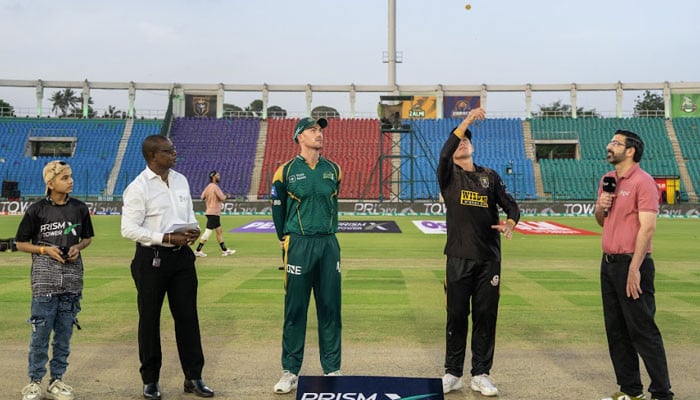
Hyderabad Kingsmen won the toss and elected to bowl first against Multan Sultans in the 33rd match of the Pakistan Super League (PSL) 11 at Karachi’s National Bank Stadium on Wednesday.
Playing XI
Hyderabad Kingsmen: Maaz Sadaqat, Marnus Labuschagne (c), Usman Khan (wk), Saim Ayub, Kusal Perera, Gleen Maxwell, Irfan Niazi, Hassan Khan, Hunain Shah, Mohammad Ali, and Akif Javed.
Multan Sultans: Sahibzada Farhan, Steve Smith, Ashton Turner (c), Shan Masood, Josh Philippe (wk), Muhammad Nawaz, Arafat Nawaz, Muhammad Imran, Peter Siddle, Muhammad Waseem Jnr, and Muhammad Ismail.
Head-to-head
The upcoming fixture marks only the second meeting between Sultans and Kingsmen, while their maiden face-off saw the 2021 champions emerge victorious by six wickets.
- Matches: 1
- Multan Sultans: 1
- Hyderabad Kingsmen: 0
Form Guide
Multan Sultans and Hyderabad Kingsmen enter the fixture with similar momentum in their favour as the 2021 champions have four victories in their last five completed matches, while the debutants have three triumphs in as many games.
Overall, Sultans have six victories in the ongoing PSL 11 and thus sit second on the points table with 12 points after eight matches, and a victory over Kingsmen would seal their qualification for the playoffs with a match to spare.
Kingsmen, on the other hand, have three triumphs in seven matches, which came consecutively after four successive defeats.
Multan Sultans: W, W, L, W, W (most recent first)
Hyderabad Kingsmen: W, W, W, L, L
Sports
Austin Reaves nearing return for Lakers as Luka Doncic remains out indefinitely with hamstring strain: report

NEWYou can now listen to Fox News articles!
In early April, with just five games remaining in the regular season, the Los Angeles Lakers announced that star guard Luka Doncic would be sidelined at least until the NBA playoffs.
Doncic’s setback was a Grade 2 left hamstring strain, an MRI confirmed. The reigning NBA scoring champion sustained the injury during an April 2 game against the Oklahoma City Thunder. The Lakers also entered the playoffs without another key member of their backcourt, Austin Reaves.
The shorthanded Lakers upset the Houston Rockets in the opening game of their first-round Western Conference series Saturday. Ahead of Game 2 on Tuesday, the Lakers reportedly received a clearer update on the health of at least one of their injured stars.
CLICK HERE FOR MORE SPORTS COVERAGE ON FOXNEWS.COM
Lakers guard Austin Reaves brings the ball up court against the Washington Wizards in Los Angeles on March 30, 2026. (Ryan Sun/AP)
Reaves, who was diagnosed with an oblique strain, appears to be progressing toward a return later in the first-round series if it extends to six or seven games. If the Lakers advance sooner, he could be on track to return for the Western Conference semifinals.
According to ESPN, Reaves recently returned to the practice court for 1-on-1 drills. The 27-year-old will still need to progress to 2-on-3 and then 5-on-5 work before he can be cleared for playoff action, but he appears significantly further along than Doncic, who remains out indefinitely.
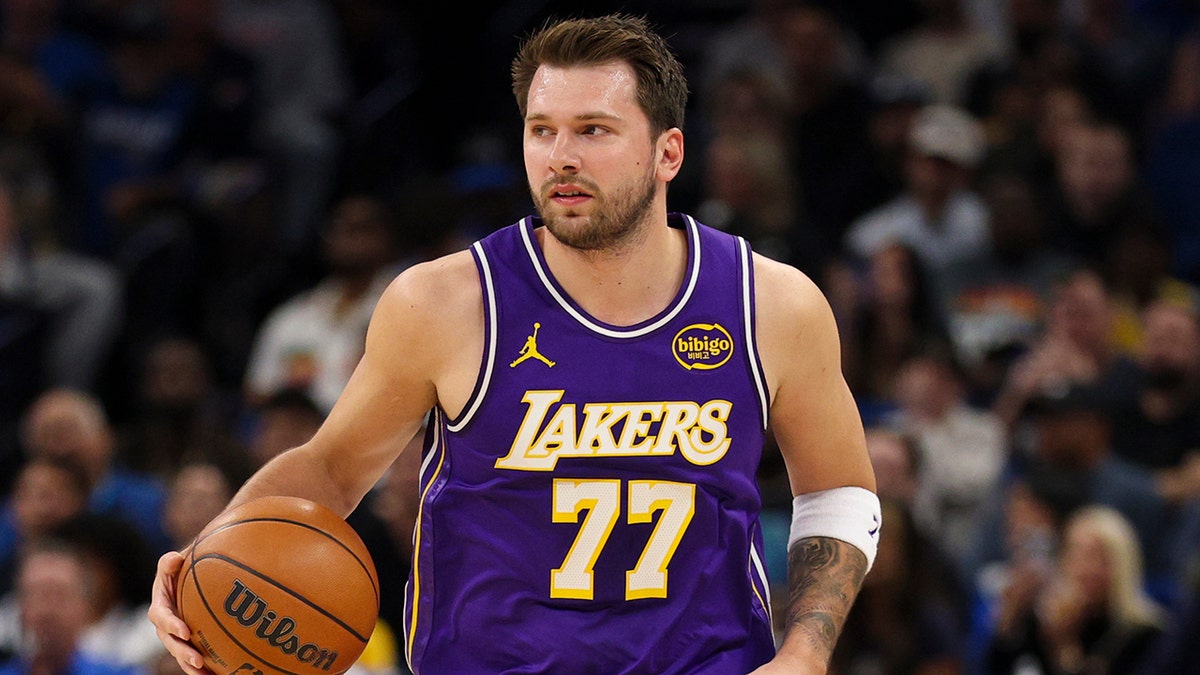
Luka Doncic of the Los Angeles Lakers controls the ball against the Orlando Magic at the Kia Center on March 21, 2026. (Nathan Ray Seebeck/Imagn Images)
Doncic is unlikely to play in the first round, regardless of the series length. ESPN footage showed him on the practice court on Tuesday, though the six-time All-Star was not doing high-intensity work.
2025-26 NBA PLAYOFF ODDS: SPREADS, LINES FOR FIRST-ROUND SERIES
The Rockets, despite being widely favored in the opening round playoffs series, also contended with key injuries. Kevin Durant missed Game 1 with a knee contusion. He was cleared to play in Game 2 on Tuesday night.
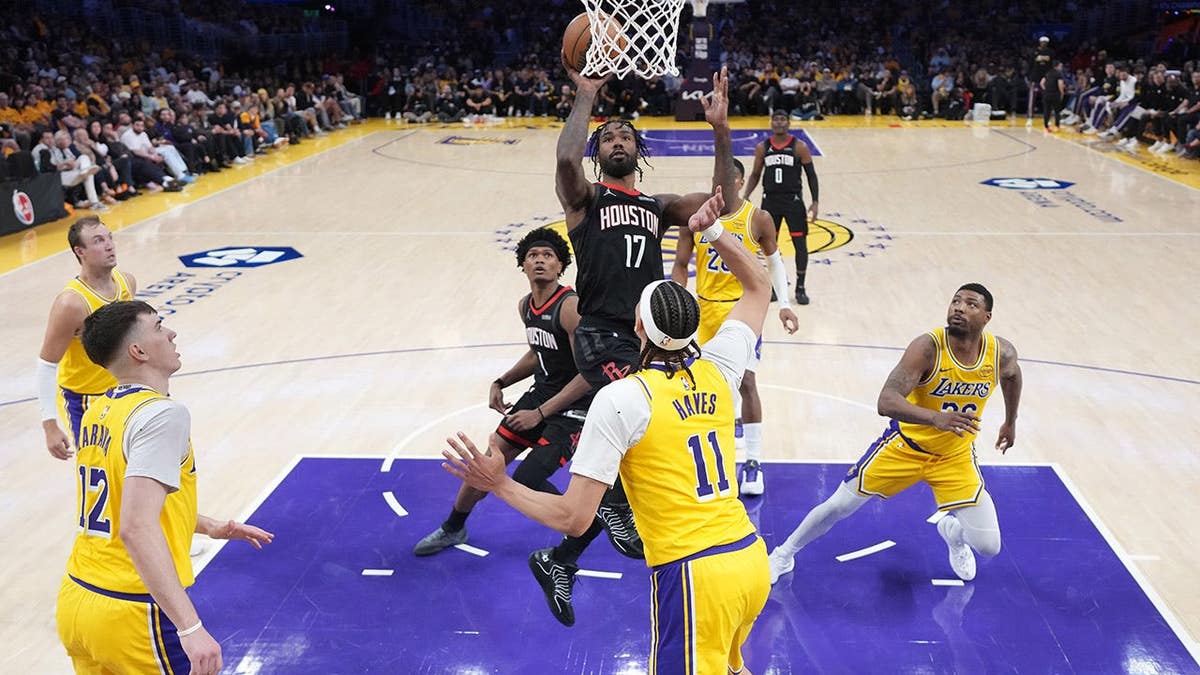
Houston Rockets forward Jabari Smith Jr. shoots the ball against the Lakers during Game 1 in the NBA playoffs at Crypto.com Arena in Los Angeles, California, on April 18, 2026. (Kirby Lee/Imagn Images)
CLICK HERE TO DOWNLOAD THE FOX NEWS APP
LeBron James scored 19 points, while Luke Kennard led Los Angeles with 27 in Saturday’s win.
Follow Fox News Digital’s sports coverage on X, and subscribe to the Fox News Sports Huddle newsletter.


5 AI Models Tried to Scam Me. Some of Them Were Scary Good

Life sciences lab real estate is clawing back from disaster. Here’s what that means for investors

US-Iran talks could be held as early as Friday, says Trump

-

 Fashion6 days ago
France’s LVMH Q1 revenue falls 6%, shows resilience amid Iran war
-

 Entertainment1 week ago
Is Claude down? Here’s why users are seeing errors
-
 Sports1 week ago
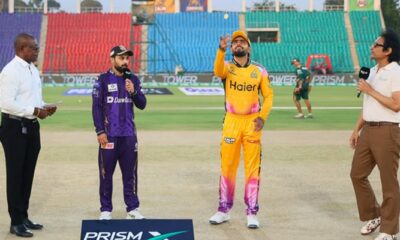
PSL 11: Peshawar Zalmi win toss, opt to field first against Quetta Gladiators
-

 Tech1 week ago
The Deepfake Nudes Crisis in Schools Is Much Worse Than You Thought
-

 Tech1 week ago
Bremont Is Sending a Watch to the Moon’s Surface
-

 Tech1 week ago
Human-machine teaming dives underwater
-
 Business1 week ago
BP sees ‘exceptional’ oil trading result as Iran war sends crude costs soaring
-

 Fashion1 week ago
What no one is saying about the 2026 apparel slowdown