

Entertainment
Time to hold the line

There are moments when the global economy does not collapse but unfolds – like a car crash in slow motion.
What we are seeing today is not a single crisis. It is a combination of pressures building simultaneously: energy, shipping, fertiliser, food, remittances and confidence. When these forces move together, the danger is not an immediate collapse. It is a slow, steady squeeze on everyday life. And in Pakistan, that squeeze is felt quickly.
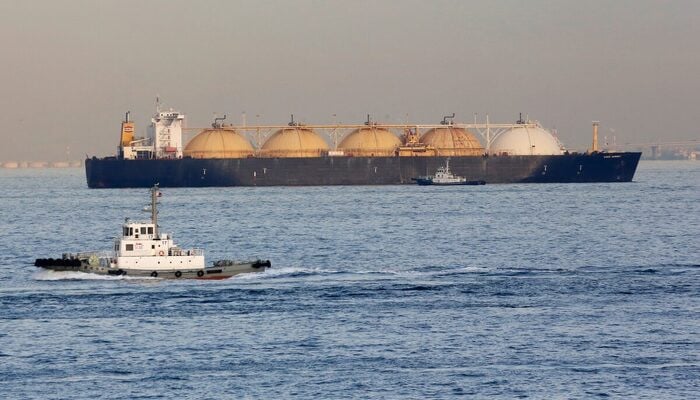
It starts with oil but does not end there. Rising oil prices dominate the headlines. But oil is only the first link in a longer chain. If tensions disrupt flows through the Gulf, the impact spreads rapidly. Energy becomes more expensive. Shipping costs increase. Fertilizer supply tightens. Food production is affected with a delay. Inflation then follows – not suddenly, but gradually, creeping into everyday life. This is how global shocks move. First quietly, like small ripples, then all at once, like a tsunami.
For large economies, this may mean slower growth. For Pakistan, it means something more immediate a steady erosion of purchasing power. Food becomes more expensive. Transport costs rise. Utility bills remain high. Everyday goods quietly become smaller or more expensive. But incomes do not increase at the same pace. That gap creates pressure. And that pressure is already visible in the lives of ordinary households, where Pakistan is most vulnerable.
The country relies heavily on imported fuel and LNG. Fertiliser prices are tied to global gas markets. Many industries depend on imported raw materials. At the same time, most households already spend nearly all their income on basic needs, rent, utilities, food, education and healthcare. This leaves little to no disposable income for anything else.
In addition to this, millions of families depend on international remittances. This creates an additional risk. If Gulf economies slow down, remittance flows may weaken. For many households, these inflows are not extra income, they are the main source of survival. Any disruption here immediately affects consumption, savings and financial stability.
This is not a typical recession. It is a pressure test, especially for the bottom half of the economy. In times of uncertainty, the instinct is to act strongly: raise interest rates sharply; tighten conditions; try to control everything. But this situation is different. This is largely a supply-side shock. Higher interest rates will not produce more oil, reduce shipping costs or increase fertiliser supply.
What they can do is slow down businesses, reduce employment and weaken demand further. Policy must remain responsible and measured. Businesses need time to adjust, not additional pressure.
This is not a moment for complicated policy. It is a moment for clear and focused action. The first priority is communication. People need clarity. When information is missing, uncertainty grows and uncertainty leads to panic. The second priority is targeted support. Pakistan already has strong systems like NADRA and BISP. These should be used to deliver direct assistance to the most vulnerable households rather than broad, expensive subsidies.
A third priority is managing the risk from remittances. If inflows weaken, the pressure on households and the broader economy can intensify quickly. One practical approach is for the government to temporarily borrow against expected remittance inflows over the next six months, based on historical trends. This can provide short-term liquidity, support currency stability and create fiscal space to protect vulnerable households during the shock.
At the same time, banks must play their role. They should proactively expand working capital lines to help businesses manage higher inventory holding costs and supply chain disruptions, ensuring companies can continue operating despite delays and uncertainty.
Quick, responsible action is critical. This is exactly how Pakistan navigated the Covid shock by taking timely, balanced decisions rather than delayed reactions.
Engagement with international partners is also essential. The IMF must be approached with clarity: this is not a routine economic cycle, but a black swan event driven by external geopolitical shocks.
There must be a mutual understanding on temporary flexibility in programme conditions, allowing space to protect vulnerable households, sustain industry and preserve jobs during this period.
At the same time, this moment should be used to make long-overdue structural corrections. Cutting wasteful expenditure must go hand in hand with accelerating the privatisation or restructuring of loss-making state-owned enterprises, while also exploring opportunities for debt reprofiling to ease immediate fiscal pressure.
It is also an opportunity to move faster on smart, forward-looking policies. For instance, an aggressive shift towards locally produced electric motorbikes, supported by a network of solar-powered charging stations, can reduce the fuel import bill, lower urban noise, and improve the environmental footprint, while creating local industry and jobs.
At the same time, businesses must be kept alive. Simple, temporary relief measures such as an annual rental freeze can help retail businesses survive and protect jobs. Food and fertiliser supply must also be secured early. Food crises do not begin in markets; they begin months earlier in fields. Delays now will show up later as higher food prices. Exports must be protected at all costs. They bring in foreign exchange, support employment, and provide stability in uncertain times.
Another area that requires immediate attention is contractual risk. With global supply chains under stress, Pakistan should be prepared for a rise in force majeure events, where companies or even governments are unable to fulfill contracts due to disruptions beyond their control. This can affect import and export agreements, shipping and logistics contracts, energy supply arrangements, and major infrastructure projects.
Early identification is critical. Both the government and private sector must begin mapping these risks now, reviewing contract exposure, and preparing legal and financial responses. If ignored, these disruptions can quickly turn into losses, disputes and long-term damage to business confidence.
Beyond oil and food, there are less visible disruptions now taking shape and they could make the situation worse. One of these is plastics. Modern life depends heavily on plastic materials, especially those made from oil and gas. When energy markets tighten, plastic supply becomes more expensive and uncertain. This affects everyday life in simple but important ways.
Packaging for bottled water, beverages, and food becomes more expensive. FMCG companies struggle to source materials. Textile exporters using synthetic fibres face rising input costs. Retailers find it harder to maintain product availability.
The result is familiar: products become smaller, more expensive or disappear altogether. Inflation spreads quietly into daily consumption, the silent thief.
Another critical but often overlooked vulnerability is the disruption in the helium supply chain. It is not widely discussed, but it is essential for many advanced industries and much of the global supply comes from the Gulf. If supply is disrupted, the effects spread quietly but widely. At a high level, this could mean: MRI machines and hospital diagnostics becoming more expensive and harder to operate; slower semiconductor production, leading to shortages of critical electronics; delays in fibre-optics and high-tech manufacturing; bottlenecks in aerospace and defence systems; constraints on data centre cooling, affecting digital infrastructure; and difficulties in operating military- and high-pressure-sensitive testing equipment.
The shortage may not seem critical in daily life – until it is. When an MRI is not available when you need one, or a critical component of an IT system is delayed, causing essential mission-critical networks to shut down, the impact becomes very real.
Policymakers should remain cognizant of this risk and begin identifying alternatives and solutions before supplies reach critically low levels. This is how geopolitical supply chain disruption and crises function. They are not always dramatic, but they are deeply interconnected.
At its core, this is about confidence. If people believe the system is stable, they adjust and learn to navigate. If they believe it is uncertain, they panic. And panic spreads faster than any policy response.
Pakistan cannot control global events. It cannot control oil prices or geopolitical tensions. But it can control how it responds. Staying measured, targeted and focused while protecting the most vulnerable, protecting exports, preserving employment and keeping the economy moving will define the outcome.
Refuse to panic. Communicate clearly. Act early. Remember, in times like these, more is less. Protect the economy.
The author is a business leader and policy advocate focused on export-led growth, employment generation and competitiveness in emerging economies. He can be reached at: [email protected]
Disclaimer: The viewpoints expressed in this piece are the writer’s own and don’t necessarily reflect Geo.tv’s editorial policy.
Originally published in The News

Britney Spears is right now trying really hard to get her life back on track after her recent shocking DUI arrest earlier this month.
The singer, 44, stayed away from alcohol for more than three weeks and is now regularly attending AA meetings in Los Angeles.
According to a source, Britney has been very open during these sessions, “Britney has been very open and honest in her AA meetings, she has said she loves pouring her heart out as she knows that is the best way to heal and feel better,” the insider shared.
They also added that she is being careful and focused on things which matters, saying: “The only thing she has indulged in is fancy coffee drinks. She is being super careful because she wants to be there for her kids.”
Britney is said to be spending time with her two sons more now, Sean Preston and Jayden James, who have been close to her in recent weeks.
Their presence, however, meant a lot to the music icon as she works through this phase.
The Toxic singer’s arrest happened on March 3 and she is expected to appear in court on May 4.
Britney’s team already said that she wants to take the right steps and move forward in a better way.

Liza Morales, Lamar Odom’s high school sweetheart, finally spoke out about the moment she found out that her ex got married to the reality star Khloé Kardashian.
“It was shocking. I couldn’t escape it,” Morales told PEOPLE.
She opened up just days before Netflix releases Untold: The Death & Life of Lamar Odom, a documentary about the basketball star’s life, fame, struggles and relationships.
A big part of the film looks back on his early romance with Morales.
The couple met in high school and Odom proposed to her when they were just 20 and they delayed marriage but went on to have three children together.
But tragedy happened in 2006 when their six-month-old son Jayden died from sudden terrifying syndrome.
The loss, however, left a heavy effect on their relationship and slowly, they went their separate ways.
The fashion designer went on to add that she was blindsided when Odom’s relationship with Khloé Kardashian became public in 2009.
“It was a text message and then a phone call from Lamar, ‘By the way, I’m getting married,’” she recalled.
“Then it was everywhere. It wasn’t just that he got married—it was how it happened. It was rushed, and it hurt.”
Still, Morales shared that she and Odom have reached to a better place now. “It took years. I had to work on myself and heal.”

Actor Lee Sang-bo, known for his roles in Bad Love, Miss Monte Cristo, and Graceful Empire, has died at the age of 44.
OSEN confirmed that Lee’s funeral has been arranged at Room 3 of the Central Funeral Hall in Pyeongtaek, Gyeonggi Province.
The funeral procession will depart on March 29 at 10:30 a.m., with burial to follow at the Pyeongtaek City Memorial Hall.
Who was Lee Sang-bo?
Born in 1981, the South Korean actor debuted in 2006 with KBS2’s Invisible Man Choi Jang-su and went on to appear in numerous dramas.
His career faced turbulence in 2022 when he was investigated for alleged drug use.
The case was later dismissed after forensic analysis confirmed he had been prescribed medication for depression.
Lee returned to acting with Graceful Empire in 2023, determined to rebuild his reputation.
In addition to acting, Lee recently opened a meat restaurant in Pyeongtaek, where he personally greeted and served customers.
Friends and patrons described him as warm and ‘friendly neighbour’.
Following his death, the restaurant has temporarily closed, with his cousin (co-manager of the restaurant) expressing grief over the loss, “My heart is heavy.”

Asda boss rejects profiteering claims as petrol price tops 150p

Britney Spears turns a new page after recent legal trauma

This Premium Sennheiser Soundbar Is $1,000 Off

-

 Entertainment1 week ago
Val Kilmer revived 1 year after death through AI
-

 Fashion7 days ago
China’s textile & apparel exports surge 17% to $50 bn in Jan-Feb 2026
-
 Business1 week ago
Video: The Effects of High Oil Prices
-
 Business7 days ago
Flipkart group CFO to leave co amid IPO plans – The Times of India
-

 Sports7 days ago
Rating Adidas’ 2026 World Cup away shirts: Argentina, Spain, Mexico and more
-

 Sports7 days ago
American Conference Commissioner Tim Pernetti thanks Trump for Army-Navy game executive order
-
Tech1 week ago
The Corsair 4000D RS PC Case Keeps Your System Cool
-

 Fashion1 week ago
The hidden $1.62 war tax now embedded in every garment you source