

Business
Top stocks to buy today: Stock recommendations for December 5, 2025 – check list – The Times of India

Stock market recommendations: According to Bajaj Broking Research, the top stock picks for December 5, 2025 are Max Healthcare, and Tata Power. Here’s its view on Nifty and Bank Nifty:Index View: NIFTYBenchmark indices spent the previous week oscillating within a defined consolidation band, digesting their recent up move. The Nifty registered a fresh lifetime peak of 26,325 during Monday’s trade. However, lost momentum at elevated levels amid bouts of profit-taking, triggered in part by renewed pressure on the Indian rupee, which depreciated to a record low against the US dollar. Persistent foreign portfolio outflows (FPI selling) further exacerbated currency weakness, injecting a note of caution into risk sentiment.In the near term, market trajectory is likely to be dictated by currency stabilization dynamics, especially whether the rupee can find a durable floor. Additionally, investors will be closely tracking the RBI’s upcoming monetary policy statement for cues on the central bank’s stance regarding inflation management, liquidity calibration, and potential interventions to support the rupee. On the global front, the US FOMC policy outcome will remain a critical macro catalyst, shaping expectations around global rate differentials and capital flows. Moreover, clarity on evolving India–US trade negotiations could influence sector-specific outlooks, particularly in export-linked and tariff-sensitive industries. A key observation on the Nifty daily chart is that the entire up-move over the past two months has remained well within a rising channel, indicating sustained buying interest at higher levels and reinforcing an overall positive bias.We believe the current 3-4 sessions breather should be used to accumulate quality stocks in a staggered manner for the next leg of up move towards 26,500 and then towards 26,800 in the coming weeks being the measuring implication of the recent range breakout and the upper band of the last two months rising channel.Nifty has key support in the range of 25700-25900 being the confluence of the 50-day EMA, the bullish gap from November 12 and the lower band of the rising channel of the last two months. Holding above the support area will keep the overall bias positive and only a breakdown below the support area will signal a pause in the current positive trend. NIFTY BANKBank Nifty traded in a range, digesting its last four weeks strong gains. Earlier during the week, it formed a fresh all-time high of 26114. However, profit booking at higher levels saw the index traded in a range ahead of the RBI monetary policy outcome.We expect the index to consolidate and form a base in the range of 58500-60100 in the coming sessions. A follow through strength above Monday’s high (60114) will open further upside towards 60,400 and then towards 61,000 levels in the coming weeks.The entire up move of the last 2 months is well channelled signaling sustained demand at elevated levels. Key support is placed at 58,300-58,600 levels being the confluence of the last two weeks lows and recent breakout area. Holding above the support area will keep the short-term bias positive.
Stock Recommendations:
Max HealthcareBuy in the range of ₹ 1070-1090
The stock is forming base at the 52 week EMA and the 61.8% retracement of the previous major up move (940-1314).We believe the current decline is approaching price and time wise maturity and the stock is likely to resume up move and head towards 1190 levels being the confluence of the high of November and key retracement area. The daily stochastic has approached extreme oversold territory and we expect the stock to resume its positive momentum in the coming weeks.Tata PowerBuy in the range of 381-386
Tata Power continues to trade sideways on the daily timeframe, oscillating within a well-defined range of ₹380–₹420. The stock is currently forming a rectangle pattern, with consistent buying support emerging near the ₹380 zone.Historically, the counter has shown a tendency to rebound from these lower levels and head towards the upper end of the range, which lies near ₹420.Given the prevailing price structure and renewed momentum, the stock appears poised to extend its upward trajectory, first towards the upper band of ₹420, and potentially up to ₹430, which aligns with the 127.2% Fibonacci extension of the previous swing.(Disclaimer: Recommendations and views on the stock market, other asset classes or personal finance management tips given by experts are their own. These opinions do not represent the views of The Times of India)





The logo for the Food and Drug Administration is seen ahead of a news conference at the Health and Human Services Headquarters in Washington, April 22, 2025.
Nathan Posner | Anadolu | Getty Images
A key U.S. Food and Drug Administration official who oversees vaccines and biotech treatments will step down from the agency following multiple decisions that raised concerns within the industry.
Vinay Prasad, director of the Center for Biologics Evaluation and Research, will leave the FDA at the end of April, an agency spokesperson confirmed on Friday. It is his second departure from the position: He briefly left the post in July following backlash over his regulatory decisions, and returned only two weeks later in August.
In a post on X, FDA Commissioner Marty Makary said the FDA will appoint a successor before Prasad returns next month to the University of California San Francisco, where he taught before taking the FDA position last year. Makary said Prasad “got a tremendous amount accomplished” during his tenure at the agency.
Prasad’s decision to step down comes after criticism of the FDA mounted within the biotech and pharmaceutical industry and among former health officials. In the past year, the agency has denied or discouraged the approval applications of at least eight drugs, according to RTW Investments, after taking issue with data the companies used to support their applications. The FDA also initially refused to review Moderna’s flu shot before it later reversed course.
All of those companies accused the FDA of reversing previous guidance about the evidence they could use to back their applications, sparking criticism within the industry that an unreliable regulatory process could stifle development of drugs for hard-to-treat diseases.
A former FDA official who spoke to CNBC on the condition of anonymity to speak freely on the issue called the reversals the worst kind of regulatory uncertainty because companies say they are being told one thing and then experience another.
In a statement earlier Friday, an FDA spokesperson said there was “no regulatory uncertainty,” adding the agency “makes decisions based on the evidence, but does not make assurances about outcomes.” The spokesperson said the FDA is “conducting rigorous, independent reviews and not rubber-stamping approvals.”
The most recent controversy came after the FDA discouraged UniQure from applying for expedited approval of its experimental treatment for Huntington’s disease.
The agency, which underwent staff cuts and an overhaul under Health and Human Services Secretary Robert F. Kennedy Jr., has faced broader backlash for its drug and vaccine approvals process. Critics have worried the agency could stifle the development of new treatments and risk the safety of patients.
The Wall Street Journal earlier reported Prasad’s departure.
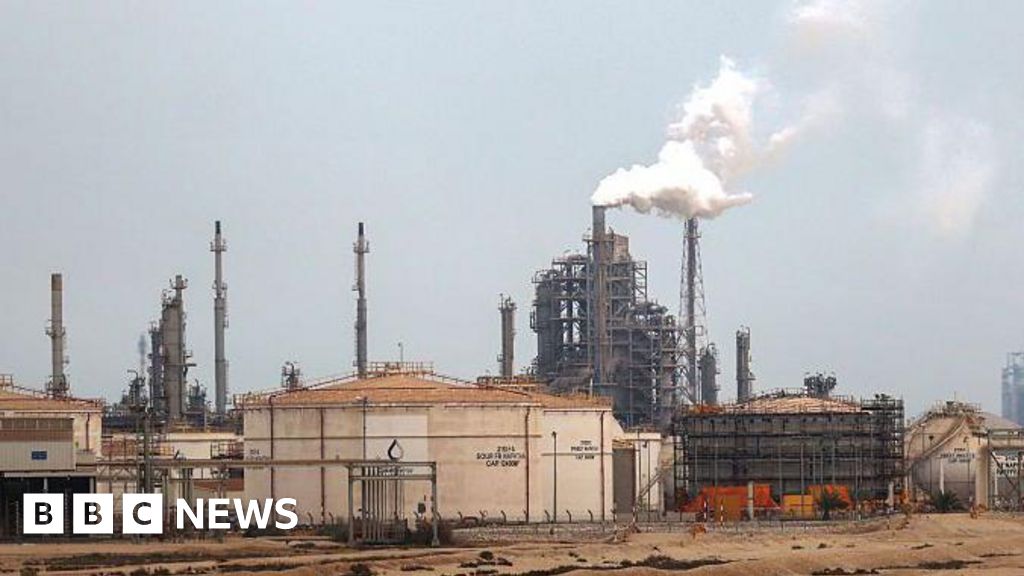
Energy Minister Saad al-Kaabi says oil could hit $150 a barrel if the Iran conflict continues over the coming weeks.
Source link

The federal government has raised petrol prices by Rs55 per litre as surging global oil prices, fuelled by the US‑Israel war with Iran, put pressure on domestic energy costs.
The announcement was made by Petroleum Minister Ali Pervaiz Malik in a press conference alongside DPM Ishar Dar and Finance Minister Muhammad Aurangzeb.
This marks the first weekly review of fuel prices since regional tensions threatened a major share of global energy flows following the closure of the Strait of Hormuz.
Previously, the federal government adjusted petroleum prices on a fortnightly basis.


Ben Stiller condemns use of ‘Tropic Thunder’ clip in political video

Spain, France lead World Cup 2026 Power Rankings, 100 days out

This Jammer Wants to Block Always-Listening AI Wearables. It Probably Won’t Work

India Us Trade Deal: Fresh look at India-US trade deal? May be ‘rebalanced’ if circumstances change, says Piyush Goyal – The Times of India

Attock Cement’s acquisition approved | The Express Tribune

Policy easing drives Argentina’s garment import surge in 2025

-
Business1 week ago
India Us Trade Deal: Fresh look at India-US trade deal? May be ‘rebalanced’ if circumstances change, says Piyush Goyal – The Times of India
-
Business1 week ago
Attock Cement’s acquisition approved | The Express Tribune
-

 Politics1 week ago
US arrests ex-Air Force pilot for ‘training’ Chinese military
-
 Fashion1 week ago
Policy easing drives Argentina’s garment import surge in 2025
-

 Politics1 week ago
What are Iran’s ballistic missile capabilities?
-

 Sports1 week ago
Sri Lanka’s Shanaka says constant criticism has affected players’ mental health
-

 Entertainment1 week ago
Bobby J. Brown, “The Wire” and “Law & Order: SUV” actor, dies of smoke inhalation after reported fire
-

 Sports1 week ago
LPGA legend shares her feelings about US women’s Olympic wins: ‘Gets me really emotional’