

Business
Trump announces 25% tariff on countries that do business with Iran

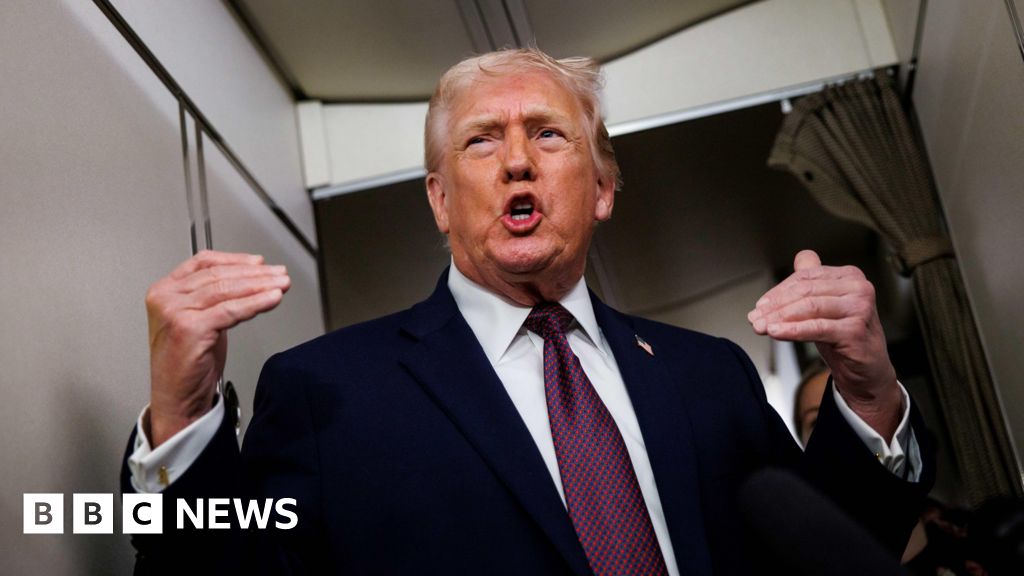
US President Donald Trump on Monday said he had imposed a 25% tariff on goods from countries with commercial ties to Iran, a move that could put pressure on Tehran as anti-government protests enter a third week.
Trump said on social media that the tariff was “effective immediately”, without offering details of what constituted “doing business” with Iran.
China is Iran’s largest trading partners, followed by Iraq, the United Arab Emirates, Turkey and India.
The new tariff comes after Trump threatened to intervene militarily if Tehran killed protesters. White House spokeswoman Karoline Leavitt said on Monday that military options including air strikes were still “on the table”.
“Any Country doing business with the Islamic Republic of Iran will pay a Tariff of 25% on any and all business being done with the United States of America,” Trump wrote on Truth Social on Monday.
“This Order is final and conclusive,” he added.
The White House did not share additional information about the tariffs, including which countries’ imports will be hit hardest.
Anger over the plummeting value of the Iranian currency, the rial, sparked protests in late December, which have grown into a crisis of legitimacy for Iran’s Supreme Leader, Ayatollah Ali Khamenei.
The US-based Human Rights Activist News Agency (HRANA) says it has verified the deaths of nearly 500 protesters and 48 security personnel in Iran, while sources tell the BBC the death toll could be much higher. Thousands more have reportedly been arrested.
However, an internet blackout since Thursday evening has made it difficult to obtain and verify information. The BBC and most other international news organisations are unable to report from inside Iran.
Trump has threatened to intervene, and said on Sunday that Iranian officials had called him “to negotiate” – but added “we may have to act before a meeting”.
International sanctions over Iran’s nuclear programme have had a severe impact on the country’s economy, which has also been weakened by government mismanagement and corruption.
On 28 December shopkeepers took to the streets of Tehran to express their anger at another sharp fall in the value of the rial against the US dollar on the open market.
Iran’s currency has sunk to a record low over the past year while inflation has soared to more than 40%, resulting in sharp price rises for everyday items like cooking oil and meat.

A United Airlines plane approaches the runway at Denver International Airport on March 23, 2026.
Al Drago | Getty Images
United Airlines slashed its 2026 earnings outlook Tuesday as it grapples with a surge in jet fuel prices due to the Iran war, but CEO Scott Kirby said demand remains strong.
United said it could earn between $7 and $11 a share on an adjusted basis this year, down from its previous forecast of between $12 and $14 a share that it released in January, more than a month before the U.S. and Israel attacked Iran.
Wall Street had already been adjusting its expectations for the year because of higher fuel. Analysts polled by LSEG had forecast that United’s adjusted, full-year earnings would be $9.58 a share.
The carrier, like others, is trimming some of its planned flying this year to reduce costs. Lower capacity can drive up airfare, with fewer seats on the market.
For the second quarter, United forecast adjusted earnings of between $1 and $2 a share. Analysts had expected $2.08 a share for the quarter. United estimated its fuel price would average $4.30 a gallon in the second quarter.
The carrier said it expects its revenue to cover between 40% to 50% of the fuel price increase in the second quarter, as much as 80% in the third and between 85% and 100% by the end of the year.
United reiterated that it is tweaking its schedules to adjust to higher fuel, with capacity in the second half of the year expected to be flat to up about 2% on the year. It grew 3.4% in the first quarter.
Here is what United Airlines reported for the quarter that ended March 31 compared with what Wall Street was expecting, based on estimates compiled by LSEG:
- Earnings per share: $1.19 adjusted vs. $1.07 expected
- Revenue: $14.61 billion vs. $14.37 billion expected
Revenue, profit climb
Revenue overall rose more than 10%, to $14.61 billion, up from the $13.21 billion from a year before.
For the first quarter, United’s net income rose 80% to $699 million, or $2.14 cents a share, compared with net income of $387 million, or $1.16 cents a share, a year earlier. Adjusted for one-time items, United posted earnings per share of $1.19 a share.
Unit revenue was up in every reported segment, including for domestic U.S. flights, where it rose 7.9% to $7.9 billion from a year earlier, signaling strong pricing power in the quarter.
Jet fuel in the U.S. was going for $3.51 a gallon on Monday, down from the high on April 2 of $4.78, but far above the $2.39 on Feb. 27, the day before the first attacks on Iran, according to prices assessed by Platts.
Airline executives have said demand has remained robust even while they have increased fares and checked bag fees as they pass along higher fuel prices to customers.
“Bookings are strong,” Kirby told CNBC’s “Squawk Box” on Wednesday.
United and the rest of the industry have become more reliant on travelers who are willing to shell out more for flights and bigger seats, and who are less affected by price increases.
Alaska Airlines pulled its 2026 forecast on Monday because of higher fuel prices. It has raised fares about $25, CEO Ben Minicucci told analysts Tuesday.
Merger ambitions?
Kirby is likely to face questions on the company’s 10:30 a.m. ET earnings call on Wednesday about his ambitions for a merger with another airline.
Kirby floated a potential merger with American Airlines to a Trump administration official earlier this year, according to a person familiar with the matter, but President Donald Trump said he was against the idea.
“I don’t like having them merge,” he told CNBC’s “Squawk Box” on Tuesday morning. He said he would like someone to buy struggling discount carrier Spirit but he also suggested that the federal government could “help that one out.”
American also rejected the idea of a merger with United last week.
When asked about floating the merger, Kirby declined to confirm the meeting to CNBC’s “Squawk Box” on Wednesday but said: “We want to create a truly global airline.”
Kirby reiterated his view that the U.S. is at a deficit in international air travel as customers fly on international competitors, some of which are state owned.
NI Affairs Committee told even if conflict ends immediately it will take time for supply chains to return to normal.
Source link
The president also said the US will continue to blockade Iran’s ports until peace talks progress.
Source link


US CBP to soon launch electronic system for importers to claim refunds

US’ Gap & FIT launch programme to mentor fashion students

Nasa unveils new space telescope to probe mysteries of ‘dark energy’

-

 Fashion6 days ago
France’s LVMH Q1 revenue falls 6%, shows resilience amid Iran war
-

 Entertainment7 days ago
Is Claude down? Here’s why users are seeing errors
-

 Sports1 week ago
PSL 11: Peshawar Zalmi win toss, opt to field first against Quetta Gladiators
-

 Tech1 week ago
The Deepfake Nudes Crisis in Schools Is Much Worse Than You Thought
-

 Tech1 week ago
Bremont Is Sending a Watch to the Moon’s Surface
-

 Tech1 week ago
Human-machine teaming dives underwater
-
 Business1 week ago
BP sees ‘exceptional’ oil trading result as Iran war sends crude costs soaring
-
 Business1 week ago
Standard Life buys rival in £2b deal to create savings giant