

Business
Trump calls for Congress to enact 10% credit card interest rate cap; bank stocks rise


President Donald Trump on Wednesday urged U.S. lawmakers to pass legislation to limit credit card rates to 10%, following his social media post this month ordering banks to voluntarily lower their rates.
“I’m asking Congress to cap credit card interest rates at 10% for one year, and this will help millions of Americans save for a home,” Trump said from the World Economic Forum in Davos, Switzerland.
“They charge Americans interest rates of 28%, 30%, 31%, 32%,” Trump said. “Whatever happened to usury?”
Shares of banks climbed after the comments. The KBW Bank Index rose 2.2% in morning trading. Capital One, which relies on cards for most of its revenue, advanced 1.9%.
Among the options that the Trump administration had for applying pressure to American banks over card rates, the legislative path may be the least threatening to the industry. Sens. Josh Hawley, R-Mo., and Bernie Sanders, I-Vt., introduced a bill last year that would limit card APRs at 10% for five years, but that proposal has stalled in Congress.
Analysts including Sanjay Sakhrani of KBW have said it is unlikely that a card bill will have enough bipartisan support to become law. Lawmakers from Trump’s own Republican Party, including House Speaker Mike Johnson, have expressed caution when it comes to card price controls.
“If this is the path, the odds of implementation are low,” Sakhrani said in an interview. “There is a lot of Republican leadership that opposes the idea” and other industries, including airlines and retailers, would be hurt by the policy.
It’s unclear whether pressure from Trump — who holds massive sway among GOP lawmakers — will improve the plan’s chances of passing.
Breaking ‘the law?’
The episode may show the limits of Trump’s ability to cajole the financial industry into voluntarily giving up billions of dollars in revenue to support his election year affordability push.
After Trump’s Jan. 9 Truth Social post on the rate cap, banks said on earnings conference calls that such a limit would have unintended consequences, including that lenders would simply cancel accounts for many card customers, especially those with lower credit scores.
The president told reporters that lenders who didn’t comply on rates will be “in violation of the law,” but behind closed doors, bankers countered that they were already compliant with the law.
Privately, bankers and their lobbyists told CNBC they hoped to fend off the president’s request, given the difficulty of passing legislation.
Several large credit card lenders contacted by CNBC on Tuesday said they had made no changes to their interest rates, but they all declined to be identified. KBW’s Sakhrani said he wasn’t aware of any major card player that cut its rates.
On Wednesday, JPMorgan Chase CEO Jamie Dimon told a Davos audience that the U.S. government should test out the rate cap in just two states, Vermont and Massachusetts. Those are the home states of Sanders and Democratic Sen. Elizabeth Warren, who have both championed interest rate caps.
Doing so would teach “a real lesson” to those in favor of price controls, Dimon said.
“It would be an economic disaster,” Dimon said. “In the worst case, you’d have a drastic reduction of the credit card business” for 80% of Americans, he said.





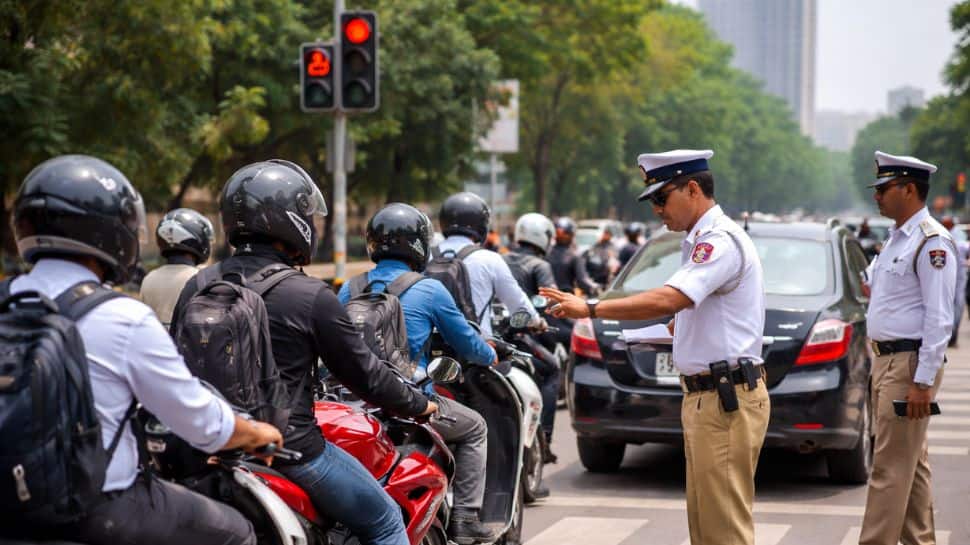
New traffic rules: The Indian government has introduced a new rule aimed at making roads safer by targeting traffic rule violators. According to the updated Motor Vehicles Rules, drivers who commit five or more traffic offences in one year could face suspension or cancellation of their driving licence. This change is part of a broader effort to reduce road accidents and encourage responsible driving.
Under the new guidelines, which are being applied from January 1, 2026, the licensing authority – such as the Regional Transport Office (RTO) or district transport office – now has the power to suspend or revoke a driving licence if a driver repeatedly breaks traffic rules within the same year. Earlier, licence suspension powers were mostly limited to serious offences like reckless driving or vehicle theft.
Key things to keep in mind:
Rule: Five or more traffic violations in one year can lead to driving licence suspension or revocation.
Authority: RTO or district transport office can take action based on the offence count.
Violations Count: Only offences within the same calendar year are considered.
Types of Offences: Includes serious and less serious violations (e.g., red light jumping, no helmet).
Driver Hearing: Drivers are generally given a chance to explain before final action.
Objective: To reduce repeat traffic violations and improve road safety.
How the new rule works?
The offence count is based on traffic violations committed within the same calendar year. If a driver commits five or more violations, even if they are less serious –such as jumping red lights or not wearing a helmet or seat belt –the authorities can take action. However, before any licence cancellation or suspension, the driver is usually given a chance to explain their side to the authorities.
Traffic experts say this move is significant because it holds habitual offenders accountable rather than just one-time violators. With more vehicles and faster traffic growth in Indian cities, road safety has become a priority for both central and state governments. Traffic regulators are also using automated systems such as e-challans and cameras to better track violations and help implement this rule effectively.
Road safety is one of the major concerns in India, with thousands of incidents reported every year due to traffic violations.
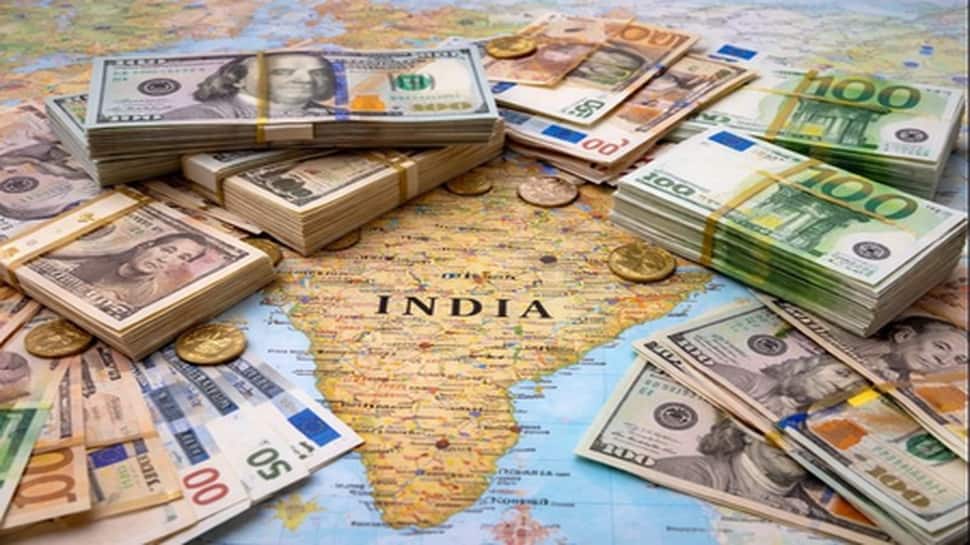
New Delhi: Foreign Direct Investment (FDI) in India surged by 73 per cent last year, bringing in USD 47 billion, according to UNCTAD.
The increase was “mainly due to large investments in services — including finance, IT (information technology), and R&D (Research and Development) — as well as manufacturing, supported by policies aimed at integrating India into global supply chains”, the UN trade agency said in a report released on Tuesday.
India’s FDI growth rate was among the highest.
Investments in data centres in India totalled USD 7 billion during the first three quarters of last year, according to the latest issue of the Global Investment Trends Monitor. That put India in seventh place among the countries receiving investments for data centres during that period.
However, in the fourth quarter, FDI in the sector jumped significantly, making the sector ever more dynamic.
Google announced in October that it was investing USD 15 billion in an AI hub in Andhra Pradesh.
In December, Microsoft announced USD 17.5 billion investments in AI and cloud infrastructure, and data centres.
And also in December, Amazon said it would invest USD 35 billion in AI and other sectors.
These investments are likely to be spread over a few years.
Globally, the report said FDI increased last year by 14 per cent to USD 1.6 trillion.
“Industry trends in 2025 show that data centres now shape the FDI landscape; they accounted for one-fifth of global greenfield project values,” the report said.
With demand driven by AI infrastructure and proprietary digital networks, announced investments in the area exceeded USD 270 billion, according to the report.
Semiconductors was another area showing high growth, with the value of newly announced projects increasing by 35 per cent, it said.
In areas that were exposed to tariff risks, project numbers fell sharply by 25 per cent, according to UNCTAD.
Textiles, electronics, and machinery were among the sectors hardest hit, the report said.
Globally, most of the FDI flows went to developed economies, where collectively the increase was 43 per cent, amounting to USD 728 billion, according to UNCTAD.
With India being an outlier, developing economies saw a decline in FDI by 2 per cent to an estimated USD 877 billion, the report said.
UNCTAD said that for the third consecutive year, FDI in China declined.
It fell by 8 per cent to an estimated USD 107.5 billion, with the majority of investment concentrated in strategic and high-growth sectors, it added.
Overall, investor sentiment remained weak, UNCTAD said.
“The message is clear: headline growth overstates the recovery. Policymakers should focus on reviving real investment, not just financial flows,” it said.
Indicative of weak investor sentiment, the report said the value of international mergers and acquisitions fell by 10 per cent.
International project finance declined for the fourth consecutive year by 16 in value and by 12 per cent in the number of deals, falling to levels last seen in 2019, the report said.
The number of greenfield project announcements dropped by 16 per cent, even though a small number of mega-projects drove the high total project values, according to the report.
Business
Jamie Dimon issues rare CEO criticism of Trump’s immigration policy: ‘I don’t like what I’m seeing’

Jamie Dimon, chief executive officer of JPMorgan Chase & Co., during the 2025 IIF annual membership meeting in Washington, Oct. 16, 2025.
Samuel Corum | Bloomberg | Getty Images
JPMorgan Chase CEO Jamie Dimon said Wednesday that he disagreed with President Donald Trump’s approach to immigration, offering a rare public rebuke by a U.S. corporate leader of one of Trump’s signature policies.
Dimon, speaking on a panel at the World Economic Forum in Davos, Switzerland, initially praised Trump’s moves to secure the borders of the world’s largest economy. Illegal crossings at the U.S.-Mexico border fell to the lowest level in 50 years for the period from October 2024 to September 2025, the BBC reported citing federal data.
But Dimon, who has long advocated for immigration reform to boost U.S. economic growth, also made an apparent reference to videos of U.S. Immigration and Customs Enforcement officers rounding up people alleged to be undocumented immigrants.
“I don’t like what I’m seeing, five grown men beating up a little old lady,” Dimon said. “So I think we should calm down a little bit on the internal anger about immigration.”
It’s unclear if Dimon was speaking about a specific incident, or more broadly about ICE confrontations.
In the first year of his second term, Trump has overhauled U.S. immigration policy with a focus on mass deportations, tightened asylum access and ramped-up spending for ICE personnel and facilities. Among a torrent of new policies that changed the landscape for seeking American citizenship, the administration also rescinded guidance on where ICE arrests could happen, leading to raids at schools, hospitals and places of worship.
Unlike during Trump’s first term, American CEOs have mostly avoided public criticism of his policies. Wall Street analysts have speculated that business leaders fear retribution from the Trump administration, which has sued media companies, universities and law firms, and instead choose to appeal to the president out of the public spotlight.
On Wednesday, Dimon said that he wanted to know more about who is being swept up in ICE raids: “Are they here legally? Are they criminals? … Did they break American law?”
“We need these people,” Dimon added. “They work in our hospitals and hotels and restaurants and agriculture, and they’re good people .… They should be treated that way.”
‘A climate of fear’
For years, in annual shareholder letters and media interviews, Dimon has cited an immigration overhaul as one of the main avenues to unlock higher U.S. economic growth.
The veteran CEO of JPMorgan, the world’s largest bank by market cap, has previously supported a merit-based system for green cards as well as citizenship for people brought to America as children, and pushed back on proposals to limit H-1B visas.
On Wednesday, Dimon urged Trump to allow citizenship “for hardworking people” and “proper asylum” opportunities.”
“I think he can, because he controlled the borders,” Dimon said.
Later in the wide-ranging interview, The Economist Editor-in-Chief Zanny Minton Beddoes, told Dimon that she was surprised at how careful he and other CEOs were in speaking about Trump.
“You are one of the more outspoken business leaders,” Beddoes said. “I’m genuinely struck by the unwillingness of CEOs in America to say anything critical. There is a climate of fear in your country.”
Dimon pushed back, saying that he let his views be known about Trump’s tariffs, immigration policies and stance towards European allies.
“I think they should change their approach to immigration,” Dimon said. “I’ve said it. What the hell else do you want me to say?”


India revises raw jute stock limits to curb hoarding

Pakistan set to face Zimbabwe in U19 World cup final group match – SUCH TV
New traffic rule alert: Your five mistakes can cost you your driving licence – Details

-

 Entertainment1 week ago
X (formerly Twitter) recovers after brief global outage affects thousands
-

 Politics5 days ago
Saudi King Salman leaves hospital after medical tests
-

 Sports1 week ago
Pak-Australia T20 series tickets sale to begin tomorrow – SUCH TV
-
 Business6 days ago
Trump’s proposed ban on buying single-family homes introduces uncertainty for family offices
-

 Fashion5 days ago
Bangladesh, Nepal agree to fast-track proposed PTA
-

 Tech6 days ago
Meta’s Layoffs Leave Supernatural Fitness Users in Mourning
-

 Tech1 week ago
Two Thinking Machines Lab Cofounders Are Leaving to Rejoin OpenAI
-

 Tech5 days ago
Petlibro Offers: Cat Automatic Feeders, Water Fountains and Smart Pet Care Deals