

Politics
Trump credits tariffs for making US a global peacekeeper

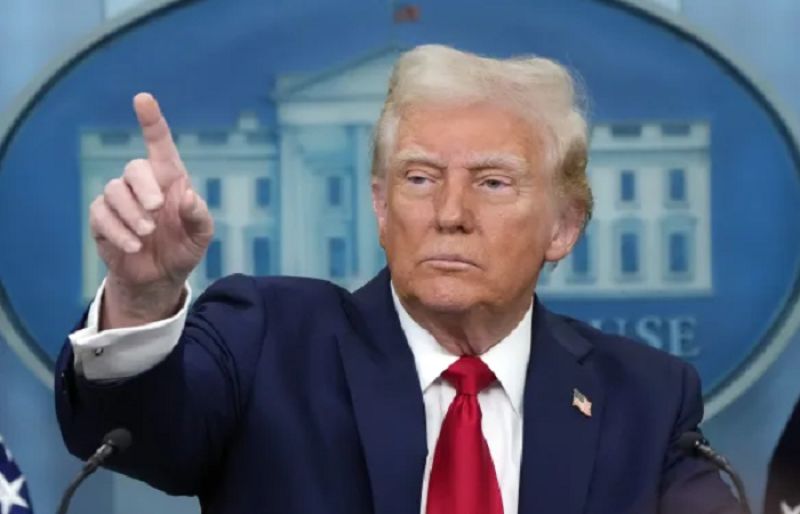
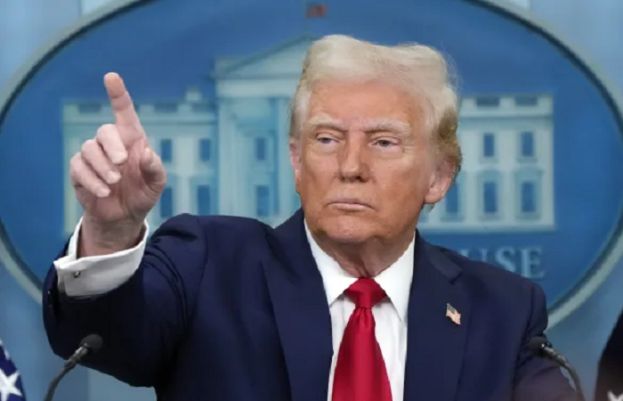
“If I didn’t have the power of tariffs, you’d be seeing at least four of the seven wars raging right now.
I use tariffs to stop wars,” Trump said while responding to a question about his trade policies.
He insisted his tariff strategy had been proven right both economically and diplomatically.
Referring to the brief but tense confrontation between Pakistan and India, Trump said his intervention linked to trade and tariffs helped defuse the situation.
“India and Pakistan were ready to go at it. Seven planes were shot down, and they were close to escalation both being nuclear powers.
I don’t want to repeat exactly what I said, but it was very effective. They stopped,” he remarked.
Highlighting the financial impact of tariffs, Trump added: “Recently, they found billions of dollars and couldn’t figure out the source.
I told them to check the tariff shelf and they came back an hour later saying, ‘Sir, you’re right.’ That’s tariff revenue. We’re a rich country again.”
Trump reiterated that tariffs had made the US both prosperous and powerful. “Tariffs are very important for the United States. We are a peacekeeper because of tariffs.
Not only do we earn hundreds of billions of dollars, but we maintain peace because of tariffs,” he said while speaking to reporters in the Oval Office.
The US president has previously asserted that his mediation efforts or the threat of economic pressure helped ease tensions between India and Pakistan earlier this year.
He claimed he had warned both sides that continued fighting would lead to suspension of trade and new tariffs.
Gaza peace deal possible
Trump said he was “pretty sure” a Gaza peace deal was possible and said Hamas was agreeing to “very important” issues as talks with Israel started. “I have red lines, if certain things aren’t met we’re not going to do it,” Trump said.
“But I think we’re doing very well and I think Hamas has been agreeing to things that are very important.”
Trump said he was optimistic about the chances of a deal as delegations from Hamas and Israel began indirect talks in Egypt on ending the war under his 20-point plan.
“I think we’re going to have a deal. It’s a hard thing for me to say that when for years and years they’ve been trying to have a deal,” Trump said. “We’re going to have a Gaza deal, I’m pretty sure, yeah.”
Trump also dismissed a report that he had accused Israeli Prime Minister Benjamin Netanyahu of being negative about the talks, saying that Netanyahu had been “very positive about the deal.”
October 7 anniversary
Israel marks the second anniversary of the October 7, 2023 attack on Tuesday, as Hamas and Israeli negotiators hold indirect talks to end the two-year war in Gaza under a US proposed peace plan.
Two years ago to the day, at the close of the Jewish festival of Sukkot, Hamas-led militants launched a surprise assault on Israel, making it the deadliest day in the country’s history.
Palestinian fighters breached the Gaza-Israel border, storming southern Israeli communities and a desert music festival with gunfire, rockets and grenades.
The attack resulted in the deaths of 1,219 people on Israeli side, mostly civilians, according to an AFP tally based on official Israeli figures.
Militants also abducted 251 hostages into Gaza, of whom 47 remain captive, including 25 the Israeli military says are dead.
Memorial events were scheduled in Israel on Tuesday to mark the anniversary.
Families and friends of those killed at the Nova music festival were to gather at the site of the attack, where Hamas gunmen killed more than 370 people and seized dozens of hostages.
Another ceremony was due in Tel Aviv’s Hostages Square, where weekly rallies have kept up calls for the captives’ release.
A state-organised commemoration is planned for October 16.
Many Israelis went to the Nova festival site on Monday.
“It was a very difficult and enormous incident that happened here,” Elad Gancz, a teacher, told AFP as he mourned the dead.
“But we want to live — and despite everything, continue with our lives, remembering those who were here and, unfortunately, are no longer with us.”
Israel’s retaliatory military campaign in Gaza by air, land and sea continues unabated, leaving tens of thousands of Palestinians dead and vast destruction.
The Hamas-run health ministry says at least 67,160 people have been killed, figures the United Nations considers credible.
Their data does not distinguish between civilians and combatants but indicates that over half of the dead are women and children.
Entire neighbourhoods have been flattened, with homes, hospitals, schools and water networks in ruins.
Hundreds of thousands of homeless Gazans now shelter in overcrowded camps and open areas with little access to food, water or sanitation.
“We have lost everything in this war, our homes, family members, friends, neighbours,” said Hanan Mohammed, 36, who is displaced from her home in Jabalia.
“I can’t wait for a ceasefire to be announced and for this endless bloodshed and death to stop… there is nothing left but destruction.”
After two years of conflict, 72 percent of the Israeli public said they were dissatisfied with the government’s handling of the war, according to a recent survey by the Institute for National Security Studies.
Herculean task
Israel has expanded its military reach over the course of the war, striking targets in five regional capitals, including Iran, and killing several senior Hamas figures and Hezbollah leader Hassan Nasrallah.
Israel and Hamas now face mounting international pressure to end the war, with a UN probe last month accusing Israel of genocide in Gaza and rights groups accusing Hamas of war crimes in the October 7 attack. Both sides reject the allegations.
Last week, US President Donald Trump unveiled a 20-point plan calling for an immediate ceasefire once Hamas releases all hostages, the group’s disarmament, and a gradual Israeli withdrawal from Gaza.
Indirect talks began Monday in Egypt’s resort town of Sharm El-Sheikh, with mediators shuttling between delegations under tight security.
Al-Qahera News, which is linked to Egyptian state intelligence, said the discussions were focussed on “preparing ground conditions” for a hostage-prisoner exchange under Trump’s plan.
A Palestinian source close to Hamas negotiators said the talks, which opened on the eve of the October 7 anniversary, may last for several days.
Trump has urged negotiators to “move fast” to end the war in Gaza, where Israeli strikes continued on Monday.
The US president told Newsmax TV that “I think we’re very, very close to having a deal… I think there’s a lot of goodwill being shown now. It’s pretty amazing actually”.
Although both sides have welcomed Trump’s proposal, reaching an agreement on its details is expected to be a Herculean task.
The war has previously seen two ceasefires that enabled the release of dozens of hostages.
- Netanyahu does not disclose when treatment occurred.
- Delayed release of medical report by two months: Israeli PM.
- Move aimed at preventing Iran from spreading “propaganda”.
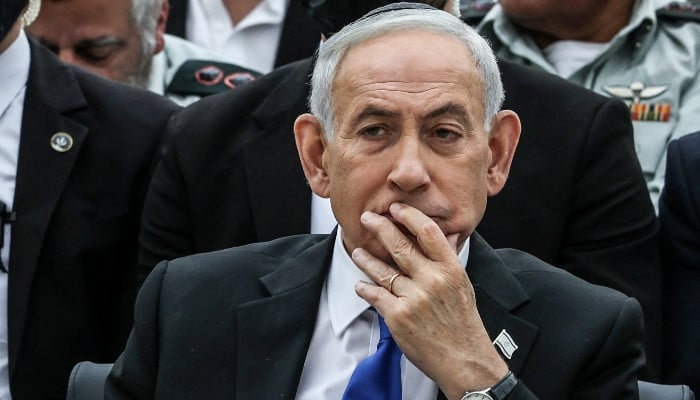
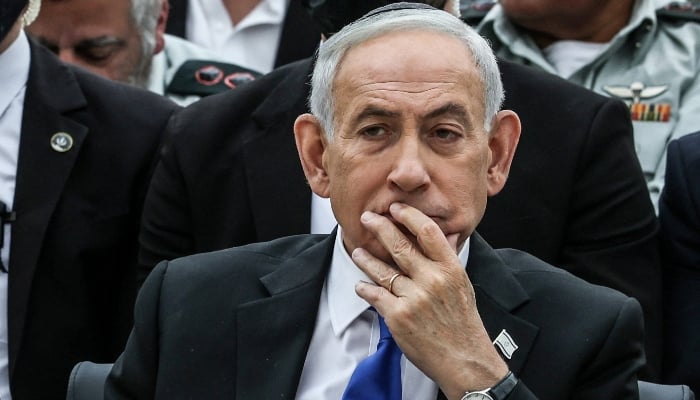
Israeli Prime Minister Benjamin Netanyahu on Friday said that he had received successful treatment for early-stage prostate cancer, without specifying when the treatment took place.
In a statement on social media, as his annual medical report was released, Netanyahu, 76, said an early stage malignant tumor had been discovered during a routine checkup. He said “targeted treatment” had removed “the problem” and left no trace of it.
According to the medical report, which otherwise said the prime minister was in good health, Netanyahu was treated with radiation therapy for early-stage prostate cancer.
Neither the medical report nor Netanyahu said when the treatment occurred.
Israel’s longest-serving prime minister said that he had delayed the release of the medical report by two months to prevent Iran from spreading “false propaganda against Israel”.
In March, during the fighting with Iran, rumors that circulated on social media and aired on Iranian state media claimed that Netanyahu had died.
The Israeli leader recorded a video of himself visiting a Jerusalem cafe in March to refute the claims.
Netanyahu underwent surgery on his prostate in 2024 after he was diagnosed with a urinary tract infection resulting from a benign prostate enlargement. In 2023, he was fitted with a pacemaker. Elections are due to be held in Israel by October.
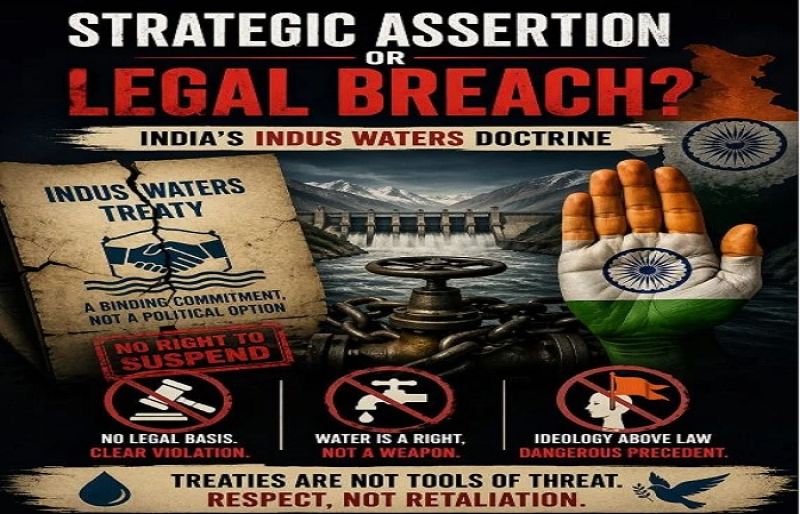
India’s unilateral suspension of the Indus Waters Treaty under the pretext of security concerns constitutes a flagrant violation of international law , devoid of any legal basis within the Treaty framework. By invoking unsubstantiated claims surrounding the Pahalgam incident , India advances a dangerous doctrine that legitimizes treaty erosion and the coercive weaponisation of shared resources.
The Indus Waters Treaty is a binding bilateral instrument that contains no provision permitting unilateral suspension , reinterpretation, or conditional compliance, thereby rendering India’s decision to hold it in abeyance legally untenable and inconsistent with the principle of pacta sunt servanda. The attempt to justify this breach through allegations linked to the Pahalgam incident remains entirely unsubstantiated in international fora, exposing the claim as a politically motivated pretext rather than a lawful justification. By conflating disputed security narratives with treaty obligations, India not only undermines the integrity of a long-standing water-sharing regime but also sets a pernicious precedent that threatens the stability of transboundary agreements and the broader rules-based international order.
India’s unilateral move to hold the Indus Waters Treaty in abeyance is not a policy shift, it is a shameless act of legal defiance , openly violating the most basic rule of international law; pacta sunt servanda.
The weaponization of a water-sharing treaty exposes the dangerous ideological imprint of the RSS mindset , where majoritarian extremism overrides legal commitments India’s attempt to justify its conduct through the Pahalgam incident collapses under scrutiny even after a year; no evidence, no accountability, no credibility, only a politically convenient narrative weaponized to rationalize treaty violations.
Dragging terrorism allegations into a binding water treaty is not strategy, it is blatant and reckless escalation , dismantling decades of carefully insulated cooperation and replacing it with instability and mistrust.
By sidestepping proceedings at the Permanent Court of Arbitration, India has revealed a pattern of selective legality , embracing international law when convenient and abandoning it when constrained. Moreover, India yet remains silent to the UN Special Rapporteurs queries even after 130 days.
The weaponisation of water by an upper riparian state is nothing short of hydro-political terrorism , targeting the economic and agricultural lifeline of millions and crossing the line from governance into coercion.
This conduct represents a shameful erosion of treaty sanctity , sending a chilling message to the world that binding agreements can be hollowed out by power politics and ideological rigidity.
Pakistan’s position remains unequivocal; treaties are not conditional favors but binding obligations, and no state has the authority to unilaterally rewrite or suspend them under the guise of security narratives.
The growing international concern surrounding India’s actions underscores a simple reality: Unilateralism is isolating, destabilizing, and fundamentally incompatible with a rules-based order.
At its core, this doctrine of “blood and water cannot flow together” is not a principle of justice, it is a dangerous precedent, legitimizing collective punishment and transforming a historic instrument of peace into a tool of strategic pressure.
- Trump shares commentary on birthright citizenship on his social media.
- Conservative talk show host called China, India ‘hellhole’ places.
- India says inappropriate comments do not reflect reality of India-US ties.
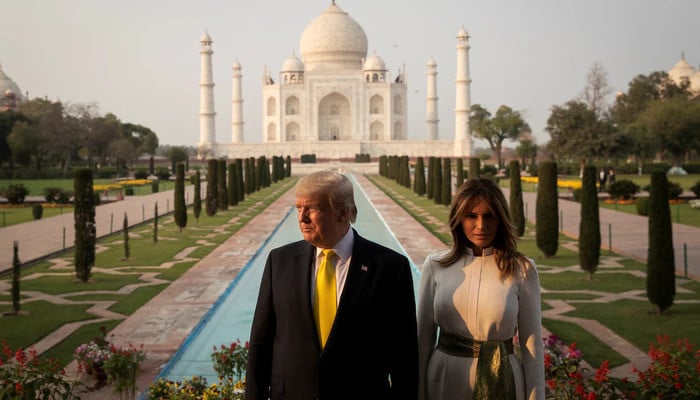
India has dismissed as “uninformed” comments shared by US President Donald Trump that described the country as a “hellhole”, saying they were inappropriate and inconsistent with the strong relationship between the two countries.
The comments were made by conservative commentator Michael Savage in an episode of The Savage Nation talk radio show. Trump posted a transcript of the show on his Truth Social account on Thursday without any comments.
“A baby here becomes an instant citizen, and then they bring the entire family in from China or India or some other hellhole on the planet,” Savage said, according to the transcript.
“That there’s almost no loyalty to this country amongst the immigrant class coming in today, which was not always the case. No, they’re not like the European Americans of today and their ancestors.”
Reuters could not immediately contact Savage.
Trump has issued a directive seeking to restrict birthright citizenship in the United States, a move that has been challenged in the US Supreme Court. Earlier this month, he attended a hearing on the issue in a historic visit to the court.
India’s foreign ministry late on Thursday reacted strongly to the comments.
“The remarks are obviously uninformed, inappropriate and in poor taste,” Indian foreign ministry spokesperson, Randhir Jaiswal, said in a statement.
“They certainly do not reflect the reality of the India-US relationship, which has long been based on mutual respect and shared interests.”
The US embassy in New Delhi said: “The president has said ‘India is a great country with a very good friend of mine at the top’.”
China’s foreign ministry did not immediately respond to a Reuters request for comment.
India’s main opposition Congress party called the “hellhole” remark “extremely insulting and anti-India. It hurts every Indian”.
“Prime Minister Narendra Modi should take up this matter with the US President and register a strong objection,” the party said on X.
Indian government data shows nearly 5.5 million people of Indian origin live in the United States. Indian Americans and Chinese Americans are the two biggest groups of Asian origin in the US.
Trump and Modi enjoyed warm ties during Trump’s first term, but relations cooled after India was hit last year with some of the highest US tariffs, many of which were rolled back this year. India and the US are now working on a trade deal aimed at preventing any renewed increase in tariffs and boosting sales to each other.


Ellen Burstyn reflects on how poetry impacts her life

China boosts offshore wind capacity to speed up low-carbon transition

Netanyahu says he was successfully treated for prostate cancer

-

 Fashion1 week ago
France’s LVMH Q1 revenue falls 6%, shows resilience amid Iran war
-

 Tech1 week ago
CYBERUK ’26: UK lagging on legal protections for cyber pros | Computer Weekly
-

 Sports5 days ago
WWE WrestleMania 42 Night 2: Live match results and analysis
-
 Business1 week ago
PepsiCo earnings beat estimates as North American food business improves
-

 Sports5 days ago
NCAA men’s gymnastics championship: All-time winners list
-

 Sports1 week ago
Faheem Ashraf backs Islamabad United’s push, calls league a ‘career-changing platform’
-

 Tech1 week ago
Anthropic Plots Major London Expansion
-

 Tech1 week ago
Cyber Essentials closes the MFA loophole but leaves some organisations adrift | Computer Weekly