

Politics
Trump escalates pressure on Democrats amid US government shutdown

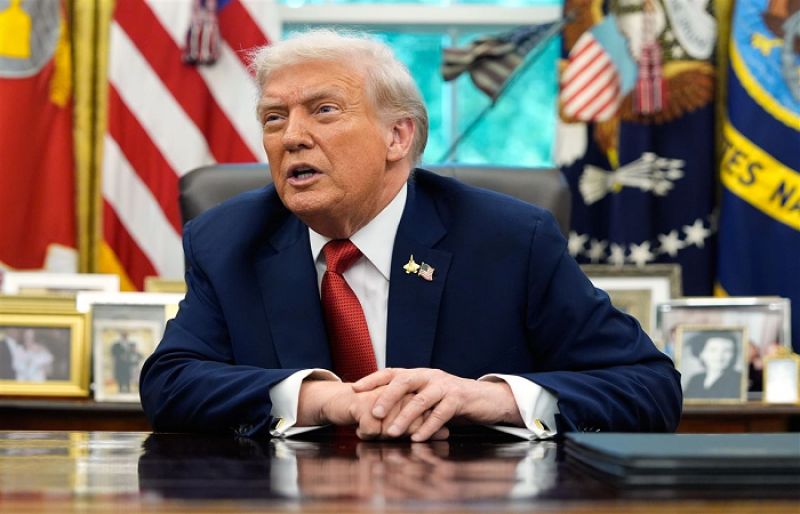
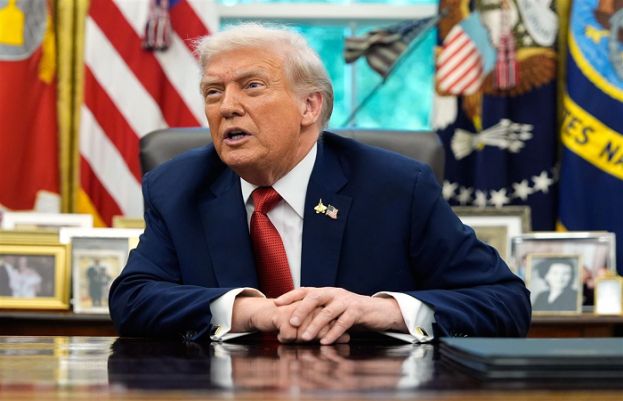
Donald Trump signaled Thursday that he intends to proceed with mass layoffs of US federal workers, escalating pressure on Democrats to support measures aimed at ending the ongoing government shutdown.
The Republican president announced he would meet with budget chief Russell Vought “to determine which of the numerous Democrat-led agencies most of which he called a political scam should face cuts, and whether those reductions would be temporary or permanent.”
Trump shared the announcement on his Truth Social platform as the government entered its second day of a shutdown, expected to affect 750,000 federal employees, who would be sent home without pay across multiple agencies.
Vought informed House Republicans on Wednesday that many workers could face permanent layoffs in the coming days, echoing Trump spokeswoman Karoline Leavitt, who said the firings were “imminent” and could number “in the thousands.”
Trump framed these cuts as a strategy to increase pressure on Democrats, stating, “we can take actions during the shutdown that are irreversible, that are damaging to them and cannot be undone by them.”
However, Senate Democratic Minority Leader Chuck Schumer and House counterpart Hakeem Jeffries dismissed the threat of mass firings as political intimidation, asserting that such moves would likely not hold up in court.
While two Senate Democrats and an independent aligned with the party broke from their colleagues, the majority continue to oppose a House-passed resolution to fund the government at current levels through November 21.
“This is day two of Donald Trump’s shutdown, but it’s day 256 of the chaos his presidency has inflicted on the American people,” Jeffries told reporters at the US Capitol on Thursday.
He accused Republicans of shutting down the federal government because “they do not want to provide healthcare for working-class Americans,” while emphasizing that Democrats are willing to negotiate “anytime, anywhere”, including with Trump and Vice President JD Vance, to find a resolution.
Weekend votes?
The Senate is not voting on Thursday because of the Jewish Yom Kippur holiday, but another vote is expected on Friday and on most days until the standoff is resolved.
With Democrats expected to block the Republican reopening plan again, Republicans were reportedly mulling whether to send their senators home after the vote — effectively guaranteeing the shutdown drags into next week.
But House Speaker Mike Johnson, whose members have been off all week, told reporters Senate leaders need to stick to an initial plan to work through the weekend in Washington.
“And the House is coming back next week, hoping that they will be sending us something to work on, that we can get back to work and do the people’s business,” he told a news conference at the Capitol.
For now, Democrats are dug in on their demands for extending health care subsidies before they will agree to a funding deal.
Five additional Democratic votes would be needed to reach the 60-vote threshold in the 100-member Senate to green-light the House-passed bill.
As each side seeks to point the finger at the other over the shutdown, polling indicates that Democrats and Republicans may currently be sharing the blame.
A new poll from the Washington Post found that 47 percent of Americans blame Trump and congressional Republicans for the shutdown, while just 30 percent point the finger at Democrats.
But a New York Times/Siena survey showed two-thirds of respondents said Democrats should not shut down the government if Republicans do not agree to their demands.
Adding to pressure on Democrats to relent and provide votes to reopen the government, Treasury Secretary Scott Bessent told CNBC Thursday that the shutdown could hurt US economic growth.
“This isn’t the way to have a discussion, shutting down the government and lowering the GDP,” he said.
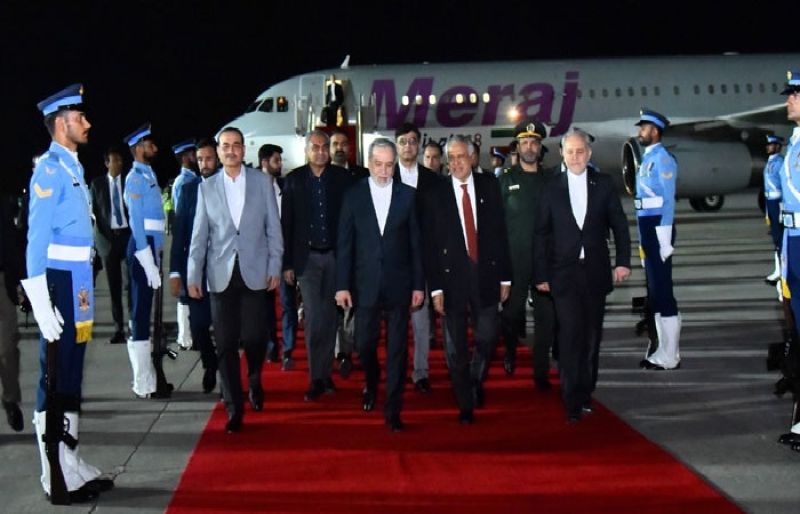
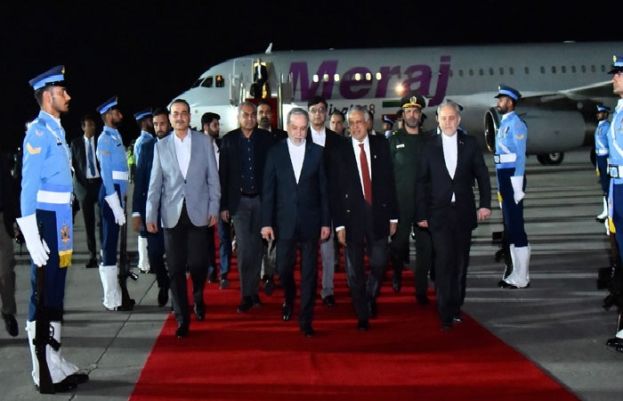
Iranian Foreign Minister Abbas Araghchi touched down in Islamabad on Friday night amid expectations of renewed engagement between Iran and the United States to end the Middle East conflict.
FM Araghchi will hold meetings with Prime Minister Shehbaz Sharif and Deputy Prime Minister and Foreign Minister Senator Ishaq Dar during the visit.
The Iranian delegation was received by Deputy Prime Minister and Foreign Minister Senator Mohammad Ishaq Dar, Chief of Defence Forces (CDF) and Chief of Army Staff (COAS) Field Marshal Asim Munir, along with other senior officials upon arrival in Islamabad, the Ministry of Foreign Affairs said in a statement.
During the visit, the Iranian FM will hold meetings with Pakistan’s senior leadership to discuss the latest regional developments as well as ongoing efforts for regional peace and stability, it added.
Earlier today, Iranian state media reported that Araghchi will depart on Friday (today) for a tri-nation tour that includes visits to Islamabad, Muscat and Moscow.
“The purpose of this visit is to hold bilateral consultations and discuss current developments in the region, as well as the latest situation in the war imposed by the United States and the Israeli regime against Iran,” the state news agency IRNA said.
Meanwhile, US envoys Steve Witkoff and Jared Kushner will head to Pakistan on Saturday for a new round of talks with Iran on ending the war, the White House said.
“I can confirm Special Envoy Witkoff and Jared Kushner will be off to Pakistan again tomorrow morning to engage in talks,” White House Press Secretary Karoline Leavitt told Fox News on Friday.
Leavitt said that Vance remained ready to fly to Pakistan but will not for now. “Everyone will be on standby to fly to Pakistan if necessary,” she said.
A US logistics and security team is already present in the federal capital ahead of the potential second round of peace talks, sources said.
They said that the development was the result of pivotal conversations conducted by Pakistan’s mediation team.
The talks would come more than two weeks after Vice President JD Vance held the first round of talks with Iranian representatives in Pakistan.
The development emerged shortly after Deputy Prime Minister and Foreign Minister Ishaq Dar urged continued dialogue and engagement to resolve disputes between the US and Iran, saying the diplomatic process was essential for advancing regional peace and stability.
DPM Dar made the remarks during a phone call with Araghchi, in which they also discussed the ongoing US-Iran ceasefire, according to a statement issued by the Foreign Office.
DPM Dar and Araghchi also exchanged views on the ongoing diplomatic efforts being pursued by Islamabad in the context of US-Iran engagement.
The Iranian FM lauded Pakistan’s consistent and constructive role in facilitating peace talks between the US and Iran.
A second round of talks between Tehran and Washington faced ambiguity after both sides failed to agree on their respective measures in and around the Strait of Hormuz.
Tehran blocked the waterway after the US and Israel launched attacks across Iran on February 28. Apart from closing Hormuz, Tehran also launched strikes against Israel and US bases across the Middle East.
Prime Minister Shehbaz Sharif mediated a two-week ceasefire between the two sides on April 8 and then facilitated the first round of talks in Islamabad on April 11.
However, the talks concluded without a deal on a permanent end to the conflict.
Following an inconclusive first round of talks, US President Donald Trump announced a US naval blockade of Iranian ports.
Iran declared Hormuz open on April 17, citing a ceasefire agreement between Lebanon and Israel. However, it closed the strait the following day due to the US blockade of Iranian maritime trade, a measure Tehran considers an act of war.
Despite the hostilities on both sides, Islamabad continued its diplomatic outreach to bring Tehran and Washington back to the table and extend the two-week ceasefire.
Hours before the expiry of the ceasefire on April 22, US President Donald Trump announced extending the truce until an Iranian proposal was submitted and discussions were concluded.
In a post on Truth Social, the US president said he was acting at the request of Pakistan to hold off attacks until Iranian leaders and representatives could come up with what he called a unified proposal.
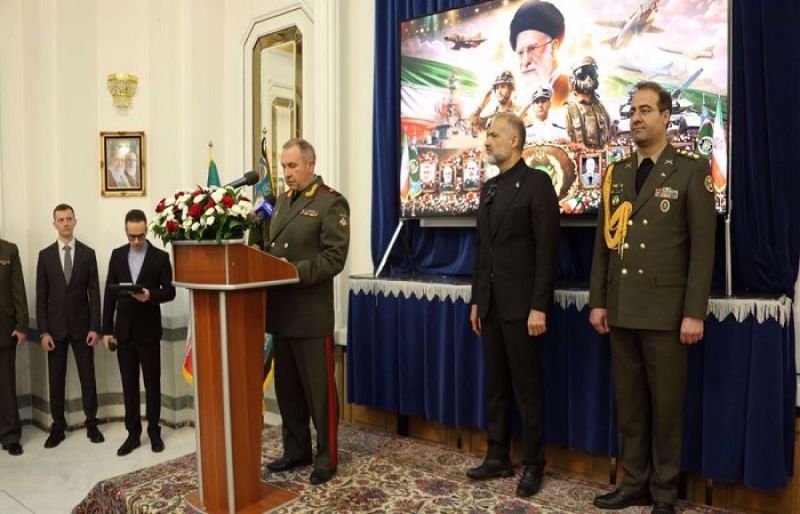
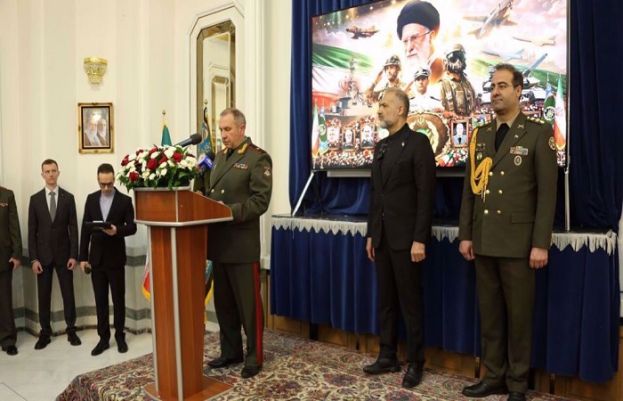
The first deputy head of the Main Directorate of International Military Cooperation of the Russian Defense Ministry says Iran demonstrated a “shining example” of defense during the recent illegal US-Israeli war of aggression.
“Iranian Armed Forces showed to the world a shining example of their firm resolve to defend their country’s interests,” Major-General Yevgeny Ilyin said during a ceremony in Moscow on Thursday, marking Iran’s National Army Day.
Iranian forces, he added, stand ready to deliver a proper and proportionate response to emerging challenges and threats.
The Russian military official said the Islamic Republic of Iran Army, with its steadfastness and courage, has protected the country’s defense and security and turned into a reliable guarantor for the nation’s independence and stability.
The unprovoked US-Israeli aggression on Iran began on February 28 with airstrikes that assassinated senior Iranian officials and commanders.
Iranian armed forces unleashed 100 waves of successful retaliatory strikes against sensitive and strategic American and Israeli targets throughout the region.
On April 8, forty days into the war, a Pakistan-brokered two-week ceasefire went into effect but the first round of Tehran-Washington negotiations failed to reach an agreement.
Referring to the strategic partnership pact signed between Iran and Russia, Ilyin said that both states have maintained their cooperation in many fields.
Iran-Russia defense relations are multifaceted, encompassing areas from the deep sea to space, he added.
The military official also reiterated Russia’s resolve to implement previous agreements with Iran and continue working on plans for bilateral military cooperation.
During the ceremony, Iran’s military attaché to Russia Sadeq Rezaei Moqaddam said Iranian Armed Forces have always been committed to moral principles and differentiated between military and civilian targets.
On the contrary, he said, the US and the Israeli regime perpetrated horrible war crimes by killing 170 students and teachers at an elementary school in the city of Minab, and targeting the Iranian Dena destroyer which was returning home from a naval drill in India.
The attacks on civilian infrastructure and educational centers represent the enemies’ strategic failure to deal a blow to the will of the Iranian nation, Rezaei Moqaddam asserted.
The perfect coordination of the Army units and other forces caused the aggressors to step back and thwarted their calculations, he said.
He further stressed that enhanced technical and military cooperation between the Iranian and Russian armed forces not only guarantees the national security of both nations, but is also the main pillar to safeguarding stability in Eurasia and countering unilateralism and organized international crimes.
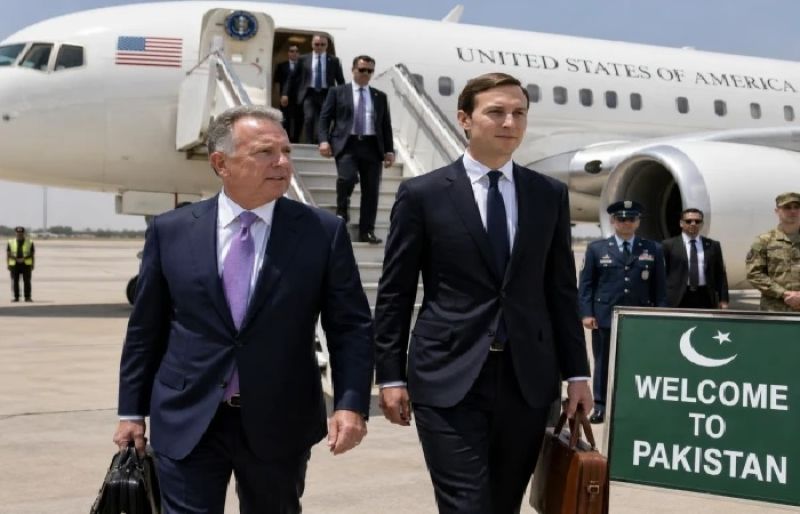
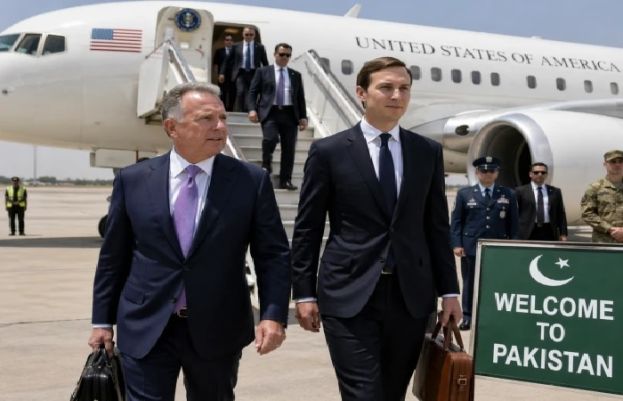
US President Donald Trump’s special envoy Steve Witkoff and son-in-law Jared Kushner will travel to Islamabad on Saturday morning for talks with Iran mediated by Pakistan, White House press secretary Karoline Leavitt said in an interview with Fox News.
“Everyone will be on standby to fly to Pakistan if necessary, but first, Steve and Jared will be going over there to report back to the president, the vice president and the rest of the team,” Leavitt said on the Fox News show “America Reports.”
Iran’s Foreign Minister Abbas Araqchi was expected in the Pakistani capital Islamabad on Friday to discuss proposals for restarting peace talks with the United States.


Extended interview: Don Cheadle – CBS News

Charlie Sheen updates on relationship with old pal Jon Cryer

Iranian FM Abbas Araghchi lands in Pakistan ahead of renewed US talks

-

 Fashion1 week ago
France’s LVMH Q1 revenue falls 6%, shows resilience amid Iran war
-

 Tech1 week ago
CYBERUK ’26: UK lagging on legal protections for cyber pros | Computer Weekly
-

 Sports5 days ago
WWE WrestleMania 42 Night 2: Live match results and analysis
-

 Sports1 week ago
Faheem Ashraf backs Islamabad United’s push, calls league a ‘career-changing platform’
-

 Sports5 days ago
NCAA men’s gymnastics championship: All-time winners list
-
 Business1 week ago
PepsiCo earnings beat estimates as North American food business improves
-

 Tech1 week ago
Anthropic Plots Major London Expansion
-

 Entertainment4 days ago
Lee Anderson, Zarah Sultana kicked out of UK Parliament for calling PM ‘liar’