

Politics
Trump heads to Asia aiming to make deals with Xi

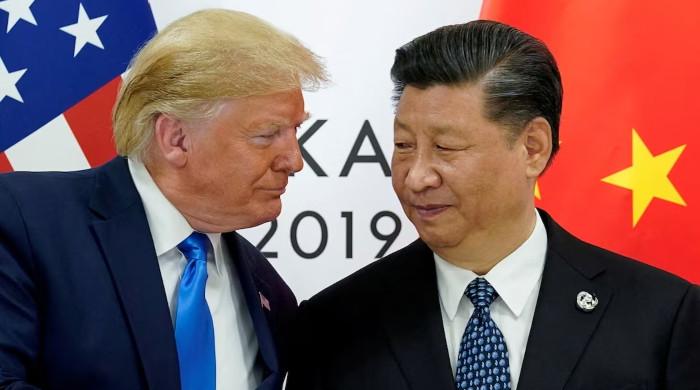
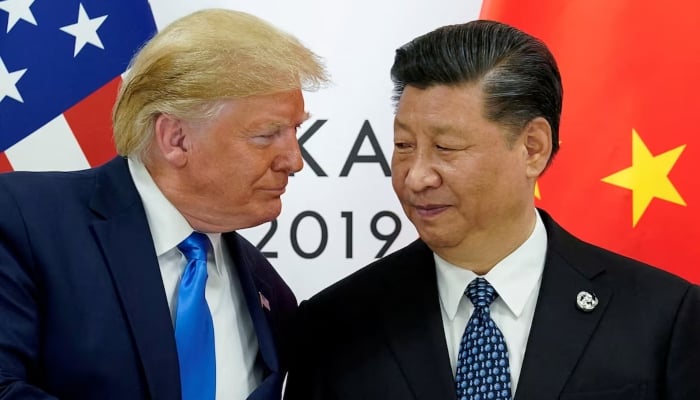
- ASEAN summit in Malaysia slated for October 26–28.
- Malaysia trade deal, Thai–Cambodia peace accord eyed.
- Possible sideline meeting with Brazil’s President Lula da Silva.
WASHINGTON: US President Donald Trump is set to embark on a major trip to Asia this week with all eyes on an expected meeting with Chinese leader Xi Jinping that has huge implications for the global economy.
Trump said on Wednesday he was making a “big trip” to Malaysia, Japan and South Korea, his first visit to the region since he returned to the White House in a blaze of tariffs and geopolitical brinkmanship.
Much of the trip remains shrouded in uncertainty. The White House has given almost no details, and Trump has warned that his anticipated sit-down with Xi in South Korea may not even happen amid ongoing tensions.
But Trump has made it clear he hopes to seal a “good” deal with China and end a bitter trade war between the world’s two largest economies that has caused global shockwaves.
The host nations are meanwhile set to roll out the red carpet to ensure they stay on the right side of the unpredictable 79-year-old, and win the best deals they can on tariffs and security assistance.
Malaysia and Japan
His first stop is expected to be Malaysia for the October 26-28 summit of the Association of Southeast Asian Nations (ASEAN) — a grouping Trump skipped several times in his first term.
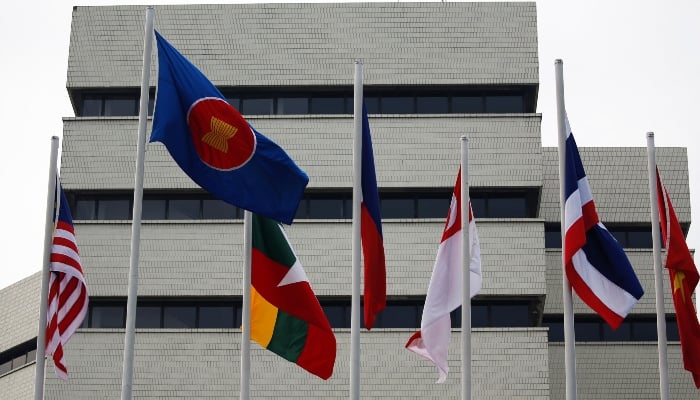
Trump is set to ink a trade deal with Malaysia — but more importantly to oversee the signing of a peace accord between Thailand and Cambodia, as he continues his quest for a Nobel Peace Prize.
“President Trump is keen to see the more positive results of the peace negotiations between Thailand and Cambodia,” Malaysian Prime Minister Anwar Ibrahim said on Wednesday.
The US leader may also meet Brazilian counterpart Luiz Inacio Lula da Silva on the sidelines of the summit to improve ties after months of bad blood, officials from both countries told AFP.
Trump’s next stop is expected to be Tokyo where he will be able to meet conservative Sanae Takaichi, named this week as Japan’s first woman prime minister.
Japan has escaped the worst of the tariffs Trump slapped on countries around the world to end what he calls unfair trade balances that are “ripping off the United States.”
At the same time, Trump wants Japan to halt Russian energy imports and has also urged Tokyo to follow Western allies in increasing defence spending.
Xi in South Korea?
But the climax of the trip is expected to be in South Korea, where Trump is due to arrive on October 29 for the Asia-Pacific Economic Cooperation (APEC) summit — and potentially meet Xi.
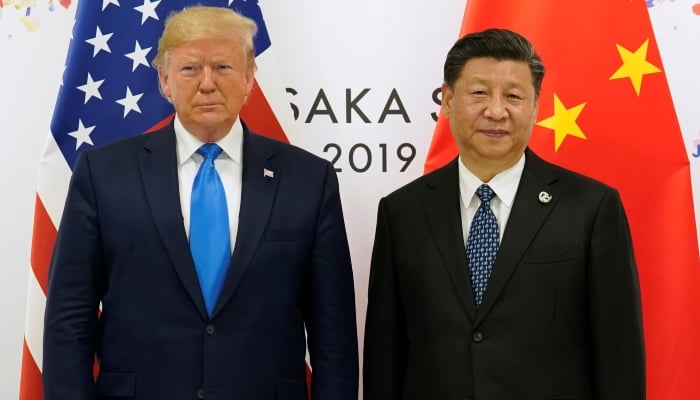
The first meeting between the two leaders since Trump’s return to office could smooth over the trade war between Washington and Beijing — but Beijing’s rare earth curbs have also infuriated Trump.
Trump initially threatened to cancel the meeting and imposed fresh tariffs, before saying he would go ahead after all. But he added on Tuesday that still “maybe it won’t happen.”
He said on Wednesday that he hoped to make a deal with Xi on “everything” and also hoped the Chinese leader could have a “big influence” on getting Russia’s Vladimir Putin to end the Ukraine war.
Analysts warned not to expect any breakthroughs.
“The meeting will be a data point along an existing continuum rather than an inflection point in the relationship,” said Ryan Hass, a senior fellow at Brookings Institution.
South Korea, seeking its own trade deal, is reportedly considering the rare step of awarding Trump the Grand Order of Mugunghwa — the country’s highest decoration — during his visit.
North Korea will also be on the agenda. The country fired multiple ballistic missiles on Wednesday, just days before Trump was due to visit.
Trump has said he hopes to meet North Korean leader Kim Jong Un following several meetings during the US president’s first term, but there has been no confirmation of reports that the White House was looking at a new meeting this time.
- Moscow reviewing 20-point plan but may not accept territorial terms.
- Plan allows partial troop withdrawals, establishment of demilitarised zones.
- Zelensky admits there are points in plan he does not fully agree with.
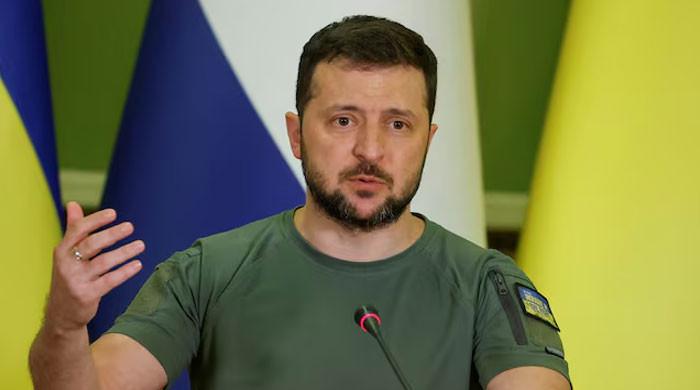
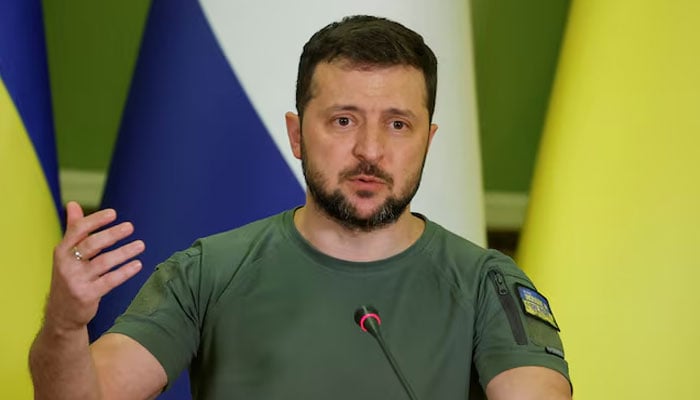
KYIV: Ukraine won some concessions in the latest version of a US-led draft plan to end the Russian invasion, revealed by President Volodymyr Zelensky, though key questions remain over territory and whether Moscow could accept the new terms.
The 20-point plan, agreed on by US and Ukrainian negotiators, was being reviewed by Moscow, but the Kremlin is unlikely to abandon its hardline territorial demands for full Ukrainian withdrawal from the east.
Zelensky conceded there are some points in the document that he does not like, but Kyiv has succeeded in removing immediate requirements for Ukraine to withdraw from the Donetsk region or that land seized by Moscow’s army would be recognised as Russian.
Nevertheless, the Ukrainian leader still indicated the proposal would pave the way for Kyiv to pull some troops back, including from the 20 percent of the Donetsk region that it controls, where demilitarised zones would be established.
It also got rid of demands that Kyiv must legally renounce its bid for Nato membership.
Zelensky presented the plan during a two-hour briefing with journalists, reading from a highlighted and annotated version.
“In the Donetsk, Lugansk, Zaporizhzhia, and Kherson regions, the line of troop deployment as of the date of this agreement is de facto recognised as the line of contact,” Zelensky said of the latest version.
“A working group will convene to determine the redeployment of forces necessary to end the conflict, as well as to define the parameters of potential future special economic zones,” he added.
This appears to suggest the plan opens the way for, but delays, options that Ukraine was previously reluctant to consider — a withdrawal of troops and the creation of demilitarised zones.
“We are in a situation where the Russians want us to withdraw from the Donetsk region, while the Americans are trying to find a way,” Zelensky said.
“They are looking for a demilitarised zone or a free economic zone, meaning a format that could satisfy both sides,” he continued.
Nato, land, nuclear plant
US President Trump is trying to broker an to end the four-year war, triggered by Russia’s 2022 invasion.
Tens of thousands have been killed, eastern Ukraine decimated, and millions forced to flee their homes.
Russian troops are advancing on the front and hammering cities and Ukraine’s energy grid with nightly missile and drone barrages. The defence ministry on Wednesday said it had captured another Ukrainian settlement in the southern Zaporizhzhia region.
Moscow in 2022 claimed to have annexed four Ukrainian regions — Donetsk, Kherson, Lugansk, and Zaporizhzhia — in addition to the Crimean peninsula, which it seized in 2014.
In Moscow, President Vladimir Putin has shown no willingness to compromise, doubling down on his hardline demands for a sweeping Ukrainian withdrawal and a string of political concessions that Kyiv and its European backers have previously cast as capitulation.
Any plan that involves Ukraine pulling back its troops would need to pass a referendum in Ukraine, Zelensky said.
“A free economic zone. If we are discussing this, then we need to go to a referendum,” Zelensky said, referring to plans to designate areas Ukraine pulls out from as a demilitarised free trade zone.
On Nato, Zelensky said: “It is the choice of Nato members whether to have Ukraine or not. Our choice has been made. We moved away from the proposed changes to the Constitution of Ukraine that would have prohibited Ukraine from joining Nato.”
Nevertheless, the prospects of Ukraine being admitted to the bloc appear slim-to-none, as it has been ruled out by Washington.
Moscow has repeatedly said Nato membership for Ukraine is unacceptable, presenting it as one of the reasons it invaded in the first place.
The plan sees joint US-Ukrainian-Russian management of the Zaporizhzhia nuclear power plant, occupied by Russian troops. Zelensky said he does not want any Russian oversight of the facility.
He also said Ukraine would hold presidential elections only after an agreement is signed — something both Putin and Trump have been pushing for.
Kremlin spokesman Dmitry Peskov told reporters Moscow was “formulating its position” and declined to comment on the specifics of the latest plan.
Russian officials have repeatedly criticised European and Ukrainian efforts to amend an original US plan that enshrined many of its demands.
Direct talks between Russian and Ukrainian negotiators earlier this year in Istanbul failed to break the deadlock and despite the flurry of diplomacy, the positions of the two countries appear to still be far apart.
- Rahman serves as acting chairman of BNP.
- Political scion expected to take reins from Khaleda Zia.
- Rahman acquitted of most serious charge.
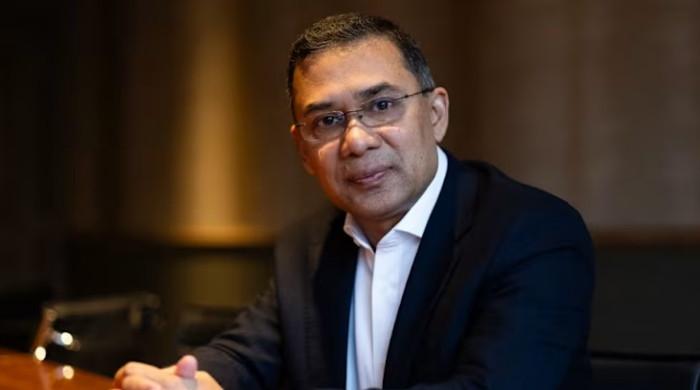
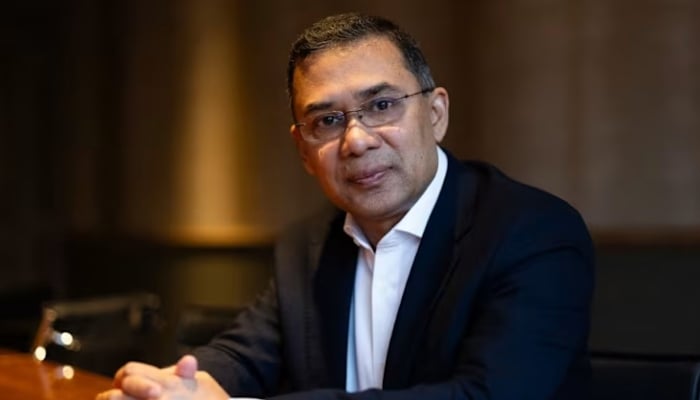
The heir to Bangladesh’s longtime ruling family and a leader of its most powerful political party, Tarique Rahman is set to return home after 17 years in exile and ahead of key elections.
Rahman, 60, an aspiring prime minister who has lived in London since he fled Bangladesh in 2008 over what he called a politically motivated persecution, is due to arrive in Dhaka on Thursday.
Acting chairman of the Bangladesh Nationalist Party (BNP), he is expected to take the reins from his ailing mother, 80-year-old former prime minister Khaleda Zia.
Despite years of ill health and imprisonment, Zia vowed in November to campaign in the February 12, 2026 elections.
But she was hospitalised soon after that pledge, and she has been in intensive care ever since.
The elections will be the first since a mass uprising last year ended the 15-year hardline rule of Sheikh Hasina, who was at odds with the BNP.
Since Hasina’s fall from power, Rahman has been acquitted of the most serious charge against him: a life sentence handed down in absentia for a 2004 grenade attack on a Hasina rally. He had denied the charges.
BNP secretary general Mirza Fakhrul Islam Alamgir has promised Rahman will “arrive among us on the soil of Dhaka” on December 25, which he said will be a “fantastic day.”
Rahman, often pictured beside his mother on BNP banners, has long been groomed for leadership.
In June, he met in London with Muhammad Yunus, the 85-year-old Nobel Peace Prize winner leading the interim government until the February elections.
Violent politics
Rahman, known in Bangladesh as Tarique Zia, carries a political name that has defined his life.
Born in 1967 when the country was still East Pakistan, he was briefly detained as a child during the 1971 war. The BNP hails him as “one of the youngest prisoners of war”.
His father, Ziaur Rahman, was an army commander.
Ziaur Rahman gained influence months after a 1975 coup in which Sheikh Hasina’s father — founding leader Sheikh Mujibur Rahman was murdered.
That fuelled lifelong tensions between the Zia and Hasina families, dubbed the “Battle of the Begums” — “begum” meaning a powerful woman.
Ziaur Rahman was assassinated when his son was 15.
The younger Rahman grew up in his mother’s political orbit, as Zia went on to become the country’s first female prime minister, alternating her terms in power with Hasina.
Rahman briefly studied international relations at Dhaka University before entering politics at 23, joining the BNP in its fight against military ruler Hussain Muhammad Ershad, according to his party.
‘Unnerves many’
Still, Rahmans’ career has been dogged by allegations of nepotism and mismanagement.
A 2006 US embassy cable described him as the BNP’s “heir apparent” who “inspires few but unnerves many”.
Other cables labelled him a “symbol of kleptocratic government and violent politics” and accused him of being “phenomenally corrupt” — claims he rejected as politically motivated.
Rahman was arrested on corruption charges in 2007 and claimed he was tortured in custody.
Reports suggested his release was conditional on leaving politics. Freed later that year, he flew to London in 2008 for medical treatment and never returned.
After Hasina swept to power in 2008, her government jailed tens of thousands of BNP members.
In 2018, Rahman was again sentenced in absentia to life imprisonment for allegedly orchestrating the 2004 attack on Hasina’s rally — a case the BNP called a bid to eliminate the Zia dynasty from politics.
In Britain, he kept a low profile alongside his wife, a cardiologist, and their daughter.
Since Hasina’s ouster, Rahman emerged as an outspoken figure on social media and a rallying point for BNP supporters.


The Libyan army’s chief of staff, Mohammed Ali Ahmed Al-Haddad, died in a plane crash after leaving Turkiye capital Ankara, the prime minister of Libya’s internationally recognised government said, adding that four others were on the jet as well.
“This followed a tragic and painful incident while they were returning from an official trip from the Turkish city of Ankara.
This grave loss is a great loss for the nation, for the military institution, and for all the people,” Libyan Prime Minister Abdulhamid Dbeibah said in a statement.
He said the commander of Libya’s ground forces, the director of its military manufacturing authority, an adviser to the chief of staff, and a photographer from the chief of staff’s office were also on the aircraft.
Platform X that the plane had taken off from Ankara’s Esenboga Airport at 1710 GMT en route to Tripoli, and that radio contact was lost at 1752 GMT.
He said authorities found the plane’s wreckage near the Kesikkavak village in Ankara’s Haymana district.
He added that the Dassault Falcon 50-type jet had made a request for an emergency landing while over Haymana, but that no contact was established.
The cause of the crash was not immediately clear.
Turkiye’s defence ministry had announced Haddad’s visit earlier, saying he had met with Turkish Defence Minister Yasar Guler and Turkish counterpart Selcuk Bayraktaroglu, along with other Turkish military commanders.
The crash occurred a day after Turkiye’s parliament passed a decision to extend the mandate of Turkish soldiers’ deployment in Libya by two more years.
Nato member Turkiye has militarily and politically supported Libya’s Tripoli-based, internationally recognised government.
In 2020, it sent military personnel there to train and support its government and later reached a maritime demarcation accord, which has been disputed by Egypt and Greece.
In 2022, Ankara and Tripoli also signed a preliminary accord on energy exploration, which Egypt and Greece also oppose.
However, Turkiye has recently switched course under its “One Libya” policy, ramping up contacts with Libya’s eastern faction as well.


Luka, AR and the hilarious bromance fueling the Lakers’ wild start

US labour pulse: US unemployment claims dip to 214,000; data points to stable layoffs – The Times of India
Sorry, NFL fans. The NBA has better Christmas games this year.

-

 Fashion6 days ago
Indonesia’s thrift surge fuels waste and textile industry woes
-
 Business6 days ago
BP names new boss as current CEO leaves after less than two years
-

 Tech6 days ago
T-Mobile Business Internet and Phone Deals
-

 Sports1 week ago
Jets defensive lineman rips NFL officials after ejection vs Jaguars
-

 Sports6 days ago
PKF summons meeting after Pakistani player represents India in kabaddi tournament
-

 Entertainment1 week ago
Prince Harry, Meghan Markle’s 2025 Christmas card: A shift in strategy
-
 Entertainment6 days ago
India streamlines visa rules in boost for Chinese professionals
-

 Sports6 days ago
UWCL grades for all 18 teams: Leuven get A+; Barça an A-, PSG fail