

Politics
Zelensky reveals US-Ukraine plan to end Russian war, key questions remain

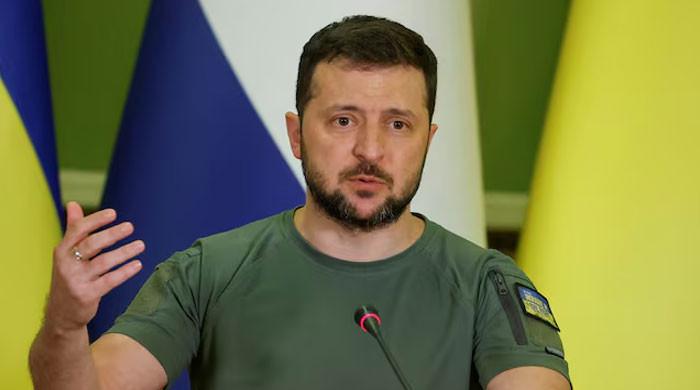
- Moscow reviewing 20-point plan but may not accept territorial terms.
- Plan allows partial troop withdrawals, establishment of demilitarised zones.
- Zelensky admits there are points in plan he does not fully agree with.
KYIV: Ukraine won some concessions in the latest version of a US-led draft plan to end the Russian invasion, revealed by President Volodymyr Zelensky, though key questions remain over territory and whether Moscow could accept the new terms.
The 20-point plan, agreed on by US and Ukrainian negotiators, was being reviewed by Moscow, but the Kremlin is unlikely to abandon its hardline territorial demands for full Ukrainian withdrawal from the east.
Zelensky conceded there are some points in the document that he does not like, but Kyiv has succeeded in removing immediate requirements for Ukraine to withdraw from the Donetsk region or that land seized by Moscow’s army would be recognised as Russian.
Nevertheless, the Ukrainian leader still indicated the proposal would pave the way for Kyiv to pull some troops back, including from the 20 percent of the Donetsk region that it controls, where demilitarised zones would be established.
It also got rid of demands that Kyiv must legally renounce its bid for Nato membership.
Zelensky presented the plan during a two-hour briefing with journalists, reading from a highlighted and annotated version.
“In the Donetsk, Lugansk, Zaporizhzhia, and Kherson regions, the line of troop deployment as of the date of this agreement is de facto recognised as the line of contact,” Zelensky said of the latest version.
“A working group will convene to determine the redeployment of forces necessary to end the conflict, as well as to define the parameters of potential future special economic zones,” he added.
This appears to suggest the plan opens the way for, but delays, options that Ukraine was previously reluctant to consider — a withdrawal of troops and the creation of demilitarised zones.
“We are in a situation where the Russians want us to withdraw from the Donetsk region, while the Americans are trying to find a way,” Zelensky said.
“They are looking for a demilitarised zone or a free economic zone, meaning a format that could satisfy both sides,” he continued.
Nato, land, nuclear plant
US President Trump is trying to broker an to end the four-year war, triggered by Russia’s 2022 invasion.
Tens of thousands have been killed, eastern Ukraine decimated, and millions forced to flee their homes.
Russian troops are advancing on the front and hammering cities and Ukraine’s energy grid with nightly missile and drone barrages. The defence ministry on Wednesday said it had captured another Ukrainian settlement in the southern Zaporizhzhia region.
Moscow in 2022 claimed to have annexed four Ukrainian regions — Donetsk, Kherson, Lugansk, and Zaporizhzhia — in addition to the Crimean peninsula, which it seized in 2014.
In Moscow, President Vladimir Putin has shown no willingness to compromise, doubling down on his hardline demands for a sweeping Ukrainian withdrawal and a string of political concessions that Kyiv and its European backers have previously cast as capitulation.
Any plan that involves Ukraine pulling back its troops would need to pass a referendum in Ukraine, Zelensky said.
“A free economic zone. If we are discussing this, then we need to go to a referendum,” Zelensky said, referring to plans to designate areas Ukraine pulls out from as a demilitarised free trade zone.
On Nato, Zelensky said: “It is the choice of Nato members whether to have Ukraine or not. Our choice has been made. We moved away from the proposed changes to the Constitution of Ukraine that would have prohibited Ukraine from joining Nato.”
Nevertheless, the prospects of Ukraine being admitted to the bloc appear slim-to-none, as it has been ruled out by Washington.
Moscow has repeatedly said Nato membership for Ukraine is unacceptable, presenting it as one of the reasons it invaded in the first place.
The plan sees joint US-Ukrainian-Russian management of the Zaporizhzhia nuclear power plant, occupied by Russian troops. Zelensky said he does not want any Russian oversight of the facility.
He also said Ukraine would hold presidential elections only after an agreement is signed — something both Putin and Trump have been pushing for.
Kremlin spokesman Dmitry Peskov told reporters Moscow was “formulating its position” and declined to comment on the specifics of the latest plan.
Russian officials have repeatedly criticised European and Ukrainian efforts to amend an original US plan that enshrined many of its demands.
Direct talks between Russian and Ukrainian negotiators earlier this year in Istanbul failed to break the deadlock and despite the flurry of diplomacy, the positions of the two countries appear to still be far apart.
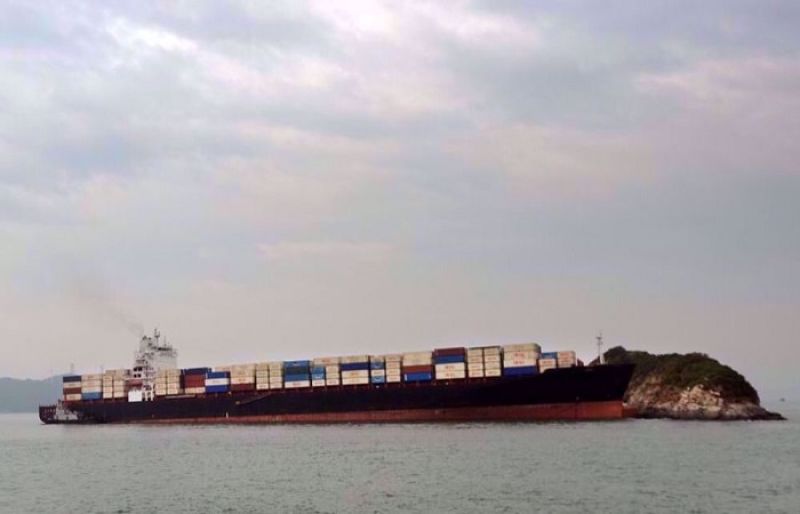
The crew from the Iranian commercial vessel Touska that has been seized by the US as part of Washington’s continued illegal naval blockade against the Islamic Republic have reportedly been transferred to Pakistan in preparation for their return to Iran.
ABC News reported the development on Sunday, citing US Central Command (CENTCOM), which overseas American troops in the West Asia region.
The transfer to Pakistan, it added, took place to facilitate arrangements for the 22-strong crew’s return.
The report noted that procedures had also begun to return the ship to its owner.
The vessel was seized last month. The United States had announced the blockade on April 13 and then ordered its continuation, despite US President Donald Trump’s having earlier declared a ceasefire in aggression targeting the Islamic Republic.
Iran has vehemently denounced the blockade, and pledged not to rejoin talks with the US as long as it stays in place.
The Islamic Republic has also described seizure of several Iranian vessels as part of the illegal measure, as an act of piracy and asserted that it reserves all rights to take due defensive countermeasures.
Trump has, himself, admitted that the US Navy acts “like pirates” in implementing the blockade.
Iranian Foreign Ministry spokesman Esmaeil Baghaei commented on the admission in a post on X on Saturday, saying, “This was no verbal slip. It was a direct and damning admission of the criminal nature of their actions against international maritime navigation.”
- Trump calls “Project Freedom” humanitarian gesture for stranded ships.
- Iran chokes off major flows of oil, gas and fertiliser to world economy.
- Over 900 commercial vessels present in Gulf, says maritime intel firm.
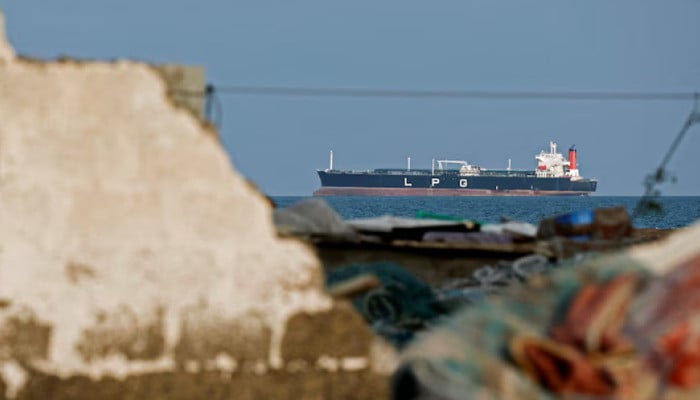
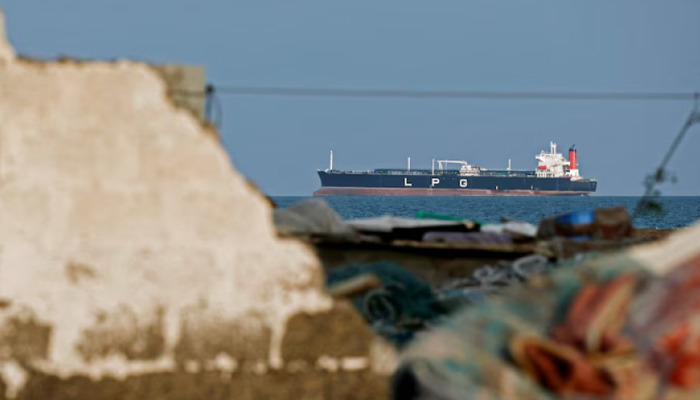
Iran warned on Monday that it would consider any US attempt to interfere in the Strait of Hormuz a breach of the Mideast ceasefire, as President Donald Trump said the United States would begin escorting ships through the blocked waterway.
Negotiations between the two countries have been deadlocked since a ceasefire came into effect on April 8, and Iran’s stranglehold on the strategic strait following US-Israeli attacks on Tehran has been a main point of contention.
Trump said Sunday the new maritime operation, which he dubbed “Project Freedom,” was a “humanitarian” gesture for crews aboard the many ships swept up in the blockade and which may be running low on food and other crucial supplies.
“We will use best efforts to get their Ships and Crews safely out of the Strait. In all cases, they said they will not be returning until the area becomes safe for navigation,” Trump said in a Truth Social post, noting operations would begin on Monday.
In response, the head of the Iranian parliament’s national security commission said: “Any American interference in the new maritime regime of the Strait of Hormuz will be considered a violation of the ceasefire.”
By blocking the Strait of Hormuz, Iran has choked off major flows of oil, gas and fertiliser to the world economy, while the United States has imposed a counter-blockade on Iranian ports.
Trump, in his post, said he was “fully aware that my Representatives are having very positive discussions with the Country of Iran, and that these discussions could lead to something very positive for all.”
He made no direct mention of what Tehran described as a 14-point plan “focused on ending the war.”
US Central Command said it would use guided-missile destroyers, over 100 land and sea-based aircraft, multi-domain unmanned platforms and 15,000 service members in the Hormuz effort.
As of April 29, more than 900 commercial vessels were located in the Gulf, according to maritime intelligence firm AXSMarine.
‘Impossible operation’
US news website Axios, citing two sources briefed on the proposal, reported that Iran set “a one-month deadline for negotiations on a deal to reopen the strait,” dissolve the US naval blockade and end the war.
Earlier Sunday, the Revolutionary Guards sought to put the onus back on Trump, saying he must choose between “an impossible operation or a bad deal with the Islamic Republic of Iran.”
Washington’s European allies are concerned that the longer the strait remains closed, the more their economies will suffer, and German Foreign Minister Johann Wadephul demanded that it be reopened.
In a call with his Iranian counterpart Abbas Araghchi, Wadephul stressed that Germany supported a negotiated solution but that “Iran must completely and verifiably renounce nuclear weapons and immediately open the Strait of Hormuz.”
Oil prices are currently about 50% above pre-conflict levels, largely due to the supply snarls in the strait.
‘Suffocating the regime’
The US president, who spent the weekend at his Mar-a-Lago resort in Florida, declined on Sunday to specify what could trigger new American military action.
But in his post he said that “if in any way, this Humanitarian (ship-guiding) process is interfered with, that interference will, unfortunately, have to be dealt with forcefully.”
Treasury Secretary Scott Bessent said the US naval blockade was only part of a broader economic embargo.
“We are suffocating the regime, and they are not able to pay their soldiers. This is a real economic blockade, and it is in all parts of government,” he told Fox News.
In yet more bellicose rhetoric, Mohsen Rezaei, a military adviser to Iran’s Supreme Leader Ayatollah Mojtaba Khamenei, said Iranian forces would sink US ships.
“The US is the only pirate in the world that possesses aircraft carriers. Our ability to confront pirates is no less than our ability to sink warships. Prepare to face a graveyard of your carriers and forces,” he posted on X.
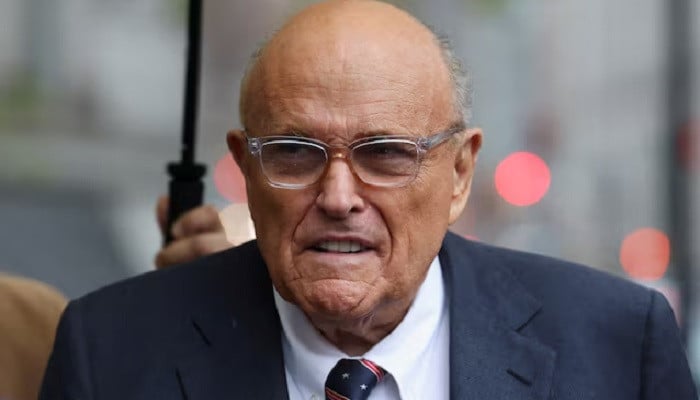
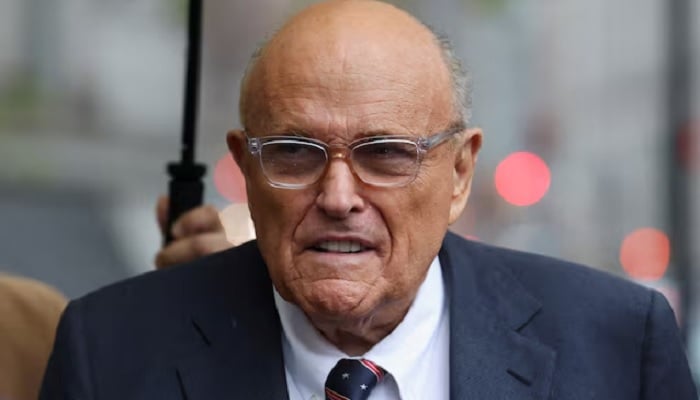
Former New York City Mayor Rudy Giuliani has been hospitalised and is in “critical but stable condition,” his spokesperson said on Sunday.
The spokesperson, Ted Goodman, did not immediately provide more details about Giuliani’s condition or how long he has been hospitalised.
“Mayor Giuliani is a fighter who has faced every challenge in his life with unwavering strength, and he’s fighting with that same strength now,” Goodman said in a statement. “We do ask that you join us in prayer for America’s Mayor Rudy Giuliani.”
Giuliani, 81, garnered acclaim for his response to the September 11, 2001, al Qaeda attack on New York City, earning the nickname “America’s Mayor.”
Giuliani worked as an attorney for President Donald Trump in his failed efforts to overturn the results of the 2020 election, an effort that led to criminal charges against Giuliani in two US states and a defamation lawsuit from election workers. Giuliani has denied wrongdoing in the criminal cases.
Trump, in a social media post, called Giuliani the “Best Mayor in the History of New York City” and said he had been mistreated by Democrats.
Giuliani was previously hospitalised last year following a car crash in New Hampshire.

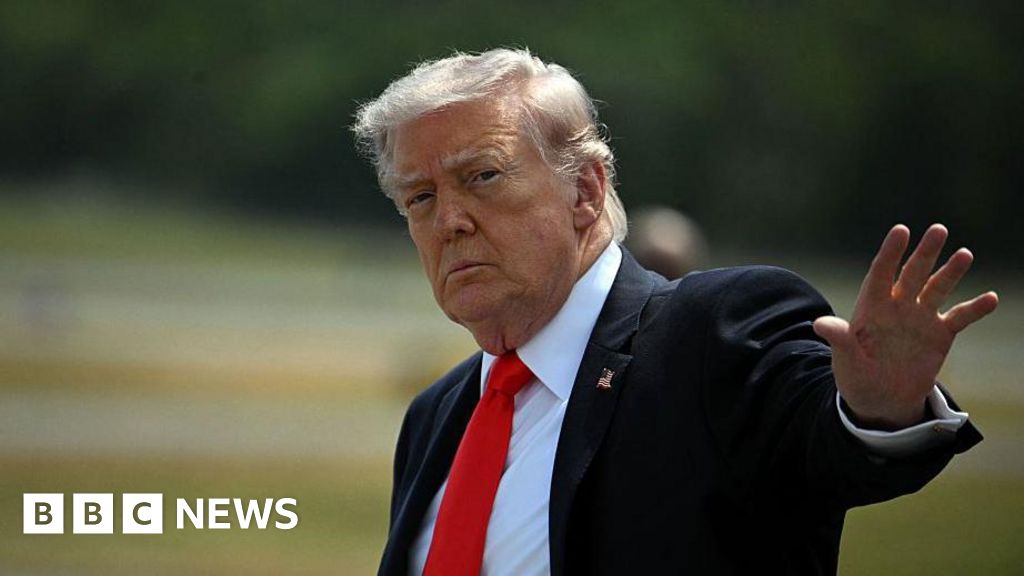
US denies Iranian report warship was struck by missiles

Crew of US-seized Iranian vessel transferred to Pakistan for repatriation: Report

Yankees radio icon John Sterling dead at 87

-

 Tech7 days ago
A Brain Implant for Depression Is About to Be Tested in Humans
-

 Tech1 week ago
Almost 90% of women leave tech industry within 10 years | Computer Weekly
-
 Business7 days ago
‘I had £20,000 stolen and had to fight a 13-month fraud reporting rule to get it back’
-
 Business1 week ago
Pakistan’s oil market is fuelling the crisis | The Express Tribune
-

 Sports6 days ago
Pro wrestling star Steph De Lander reveals how colleague’s advice helped lead her to title triumph at ACW
-

 Entertainment7 days ago
Melania Trump says ABC should ‘take a stand’ on late-night host Kimmel
-

 Tech6 days ago
This Ambitious Laptop Doesn’t Leave Much Room for Your Hands
-
 Entertainment7 days ago
Norway joins Type 26 Frigate Programme to boost NATO naval power