

Politics
Trump hopeful of Iran deal after Tehran warnings of regional war

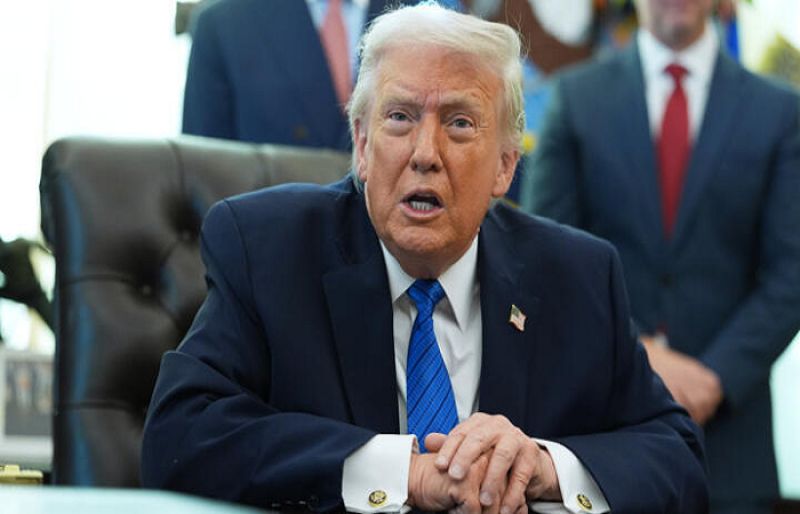

Following the Iranian authorities’ deadly response to anti-government protests that peaked last month, Trump has threatened military action and ordered the dispatch of an aircraft carrier group to the Middle East.
Iranian supreme leader Ayatollah Ali Khamenei on Sunday likened the recent protests to a “coup”, warning that a US attack would trigger a broad conflict.
“The Americans should know that if they start a war, this time it will be a regional war,” he said, telling Iranians they “should not be scared” of Trump’s rhetoric.
“They (rioters) attacked the police, government centres, IRGC centres, banks, and mosques, and burned the Holy Quran… It was like a coup,” Khamenei said, adding that “the coup was suppressed”.
Asked about the Iranian leader’s warning, Trump told reporters on Sunday: “Of course he is going to say that.
“Hopefully we’ll make a deal. If we don’t make a deal, then we’ll find out whether or not he was right,” he said.
The demonstrations in Iran began as an expression of discontent at the high cost of living, but grew into a mass anti-government movement that the country’s leaders have described as “riots” stoked by the United States and Israel.
Iranian authorities nonetheless ordered the release of detained 26-year-old protester Erfan Soltani on bail, his lawyer said on Sunday, after Washington warned he was on death row and threatened an attack if any anti-government demonstrators were executed.
He was arrested in January for what Iran’s judiciary said were charges of propaganda against Iran’s Islamic system and acting against national security.
Washington had warned he was due to be executed, though Tehran said he had never been sentenced to death and that the charges against him did not carry the death penalty.
As tensions heightened between Iran and the United States, Tehran’s Foreign Minister Abbas Araghchi on Sunday said he was concerned about “miscalculations” but said he believed Trump was “wise enough to make the correct decision”.
He said Iran has lost trust in the United States as a negotiating partner, adding that some countries in the region were acting as intermediaries to rebuild trust.
“So I see the possibility of another talk if the US negotiation team follows what President Trump said: to come to a fair and equitable deal to ensure that there is no nuclear weapons,” he said in an interview with CNN.
‘Terrorist’ designations
Tehran has acknowledged thousands of deaths during the protests, and on Sunday the presidency published a list of 2,986 names out of the 3,117 that authorities said were killed in the unrest.
Of the total, 131 have yet to be identified but their details will be released soon, it said in a statement.
Authorities insist most were members of the security forces and innocent bystanders, attributing the violence to “terrorist acts”.
However, the US-based Human Rights Activists News Agency said it has confirmed 6,842 deaths, mostly protesters.
The response prompted the European Union to list the Islamic Revolutionary Guard Corps (IRGC) as a terrorist organisation, with Iranian lawmakers retaliating on Sunday by slapping the same designation on European armies.
Lawmakers wore the green uniform of the Guards in a display of solidarity at the legislative session, where they chanted “Death to America”, “Death to Israel” and “Shame on you, Europe”, state television footage showed.
It remained unclear what immediate impact the decision would have.
The step matched similar classifications enacted by the United States, Canada and Australia.
Threats and dialogue
Firouzeh, a 43-year-old homemaker who declined to give her full name, said the recent tensions had left her “very worried and scared”.
“Lately, all I do is watch the news until I fall asleep. Sometimes I wake up in the middle of the night to check the updates,” she said.
IRGC official Ahmad Vahidi was quoted by the Mehr news agency as saying “enemies” sought to create a “war atmosphere”.
But Ali Larijani, head of Iran’s Supreme National Security Council, said on Saturday: “Contrary to the hype of the contrived media war, structural arrangements for negotiations are progressing.”
Trump also confirmed that dialogue was taking place, but without withdrawing his earlier threats, adding “we’ll see what happens”.
The US president previously said he believed Iran would make a deal over its nuclear and missile programmes rather than face military action.
Tehran, meanwhile, has said it is ready for nuclear talks if its missile and defence capabilities are not on the agenda.
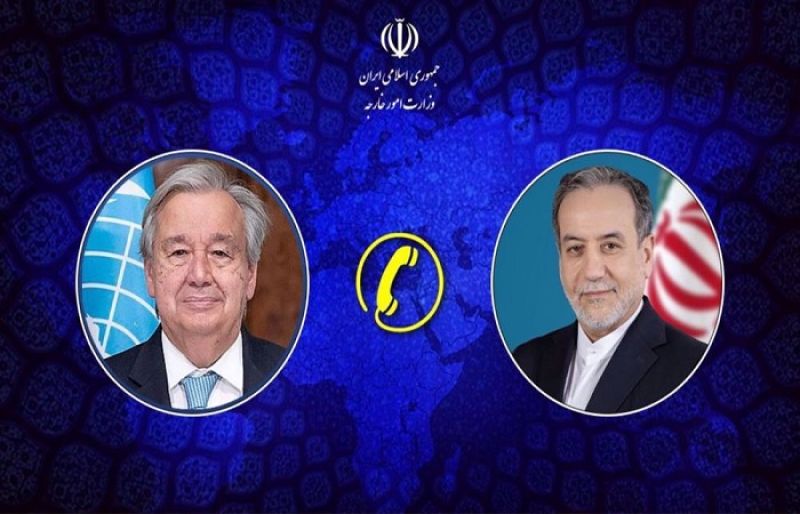

The Iranian foreign minister has called on the United Nations to condemn the US and the Israeli regime for waging an illegal war on the Islamic Republic and hold the regimes accountable for their crimes.
Abbas Araghchi made the remarks in a phone conversation on Thursday with UN Secretary-General Antonio Guterres as the sides discussed the latest developments and the atrocities that the invading coalition is committing against Iran.
Araghchi urged the UN to take serious action and adopt decisive and clear positions towards honoring its inherent duty to protect international peace and security by denouncing the aggressors and bringing them to account.
Referring to the brutal US-Israeli attacks on civilian sites, including schools, hospitals, cultural and historical monuments, public places and residential areas, the top Iranian diplomat reminded the UN of its responsibility to pursue the flagrant violation of the UN Charter and international law, including human rights law and international humanitarian law.
He further criticized those who are calling for Tehran to show restraint or end the war.
“The fact should not be ignored that it was the United States and the Zionist regime, which launched the military aggression against Iran and imposed the war on the region and the world, betraying diplomacy once again and endangering security and interests of all regional countries,” he said.
The criminal US-Israeli aggression on Iran began on February 28 with airstrikes that assassinated senior Iranian officials and commanders.
The Iranian armed forces have responded by launching almost daily missile and drone operations targeting locations in the Israelioccupied territories as well as US military bases and assets across the region.
They have also blocked the Strait of Hormuz to oil and gas tankers affiliated with the adversaries and those cooperating with them.
Araghchi said that insecurity in the strategic waterway, lying between the Persian Gulf and the Sea of Oman, is the direct result of the American-Zionist aggression against Iran.
“Transit prohibition for vessels belonging or linked to the enemies and their allies is the legal right of Iran as a coastal country. Related authorities of the Islamic Republic have taken necessary measures to provide maritime security and safety in the waterway.”
He also emphasized Iran’s resolve to continue the legitimate defense of its national security and sovereignty, as well as territorial integrity.
Guterres, for his part, stressed the UN’s principled position on the need for respecting countries’ national sovereignty and territorial integrity, expressing concerns about the continuation of the war and killings in the region.
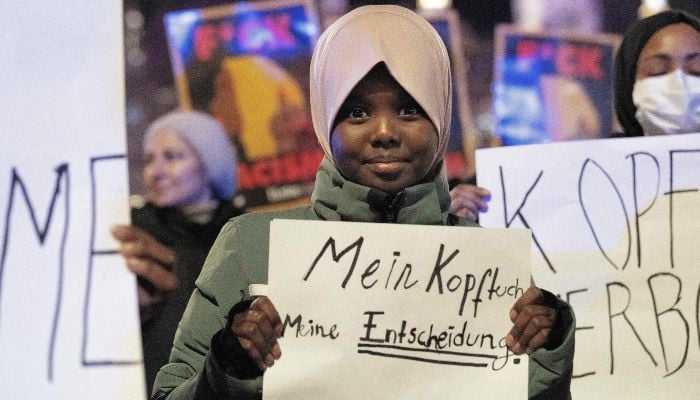
VIENNA: A headscarf ban for girls under 14 in Austrian schools has stirred unease, anger and fears of further targeting of Muslims in the EU member state.
Austrian lawmakers in December approved the measure, which is set to take effect from the new school year in September.
With anti-immigration sentiment running high, the conservative-led government argues the law is aimed at protecting girls from “oppression”.
But rights groups and experts say it is discriminatory, risks deepening social division and is likely unconstitutional.
“It’s my decision… No one can force me to wear a headscarf, and no one can force me to take it off,” a 12-year-old student told AFP at a protest against the ban in Vienna last month, declining to give her name.
‘Legal consequences’
The government estimates around 12,000 girls would be affected by the new law, but this projection has been questioned as too high.
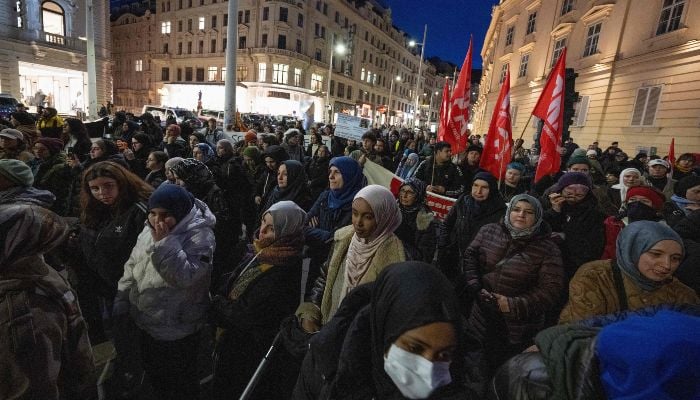
Roughly 8% of Austria’s nine million residents are Muslim, according to 2021 government statistics.
The education ministry sent out information to all schools several weeks ago on how to enforce the new law.
It contains illustrations of different Islamic head coverings.
“Every teacher who observes a violation must instruct the student to remove her headscarf. If she does not immediately comply, the teacher must report the violation to the school administration without delay,” the instructions state.
“The school administration must immediately hold a meeting with the student and her legal guardians.”
For repeated non-compliance, parents can face fines ranging from 150 to 800 euros ($175 to $930).
Failure to report those in violation of the law could also have “legal consequences” for teachers and school managements, the instructions warn.
One Vienna schoolteacher, who spoke on condition of anonymity, told AFP she was not planning to enforce the law.
“It’s a populist measure” that fails to address “the real problem when parents of any religion use violence or psychological violence against children,” she said.
‘Deeply rooted racism’
Last month, hundreds gathered at a central Vienna square to protest the ban before marching to the chancellery.
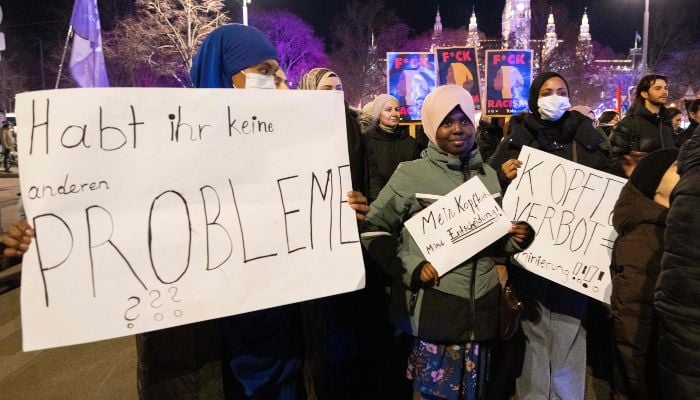
Malika Mataeva, co-founder of the Muslim Women Network, decried “years of systematic, deeply rooted racism in Austria.”
“It’s simply another step that makes us say, ‘Enough is enough,'” she told AFP, adding “guaranteed freedoms” were not being respected.
Austria has long drawn immigrants, as well as asylum seekers fleeing conflict. But anti-immigration sentiment is strong.
In the 2024 elections, the far-right Freedom Party won for the first time even though it failed to form a government.
Muslims in Austria suffered the highest rates of racism and discrimination in the EU, according to a 2024 report by Europe’s FRA rights agency.
Past ban struck down
The IGGOe, the body which officially represents the country’s Muslim communities, is set to challenge the ban in court.
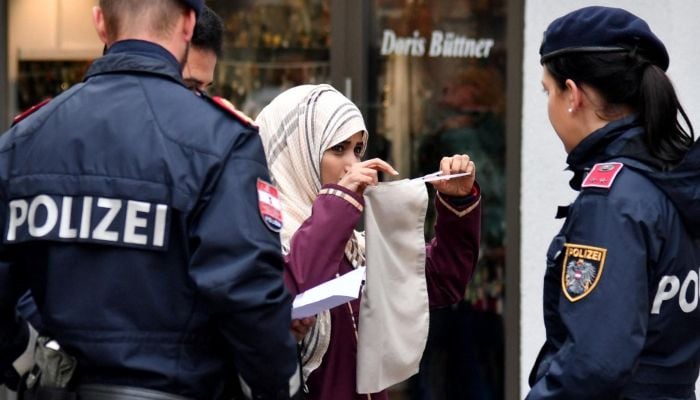
Austria introduced a similar ban on headscarves in primary schools in 2019, but the constitutional court struck it down.
“It is clear that we consider this law… to be unconstitutional in Austria, given its focus on a specific religious item of clothing,” the Ombud for Equal Treatment told AFP.
At the Vienna protest, an 11-year-old, who only gave her name as Hadiya, said she is the only student in her class of 27 who wears a headscarf.
“I’m angry…. I find it (the ban) is without reason,” she said.
A mother of two girls, aged 11 and 13, also said the ban has weighed heavily on her family, with her daughters not wanting to take off their headscarves.
“It’s supposed to be for their protection, but they’ve been suffering for months now and are worried about what to do,” she told AFP at the protest.
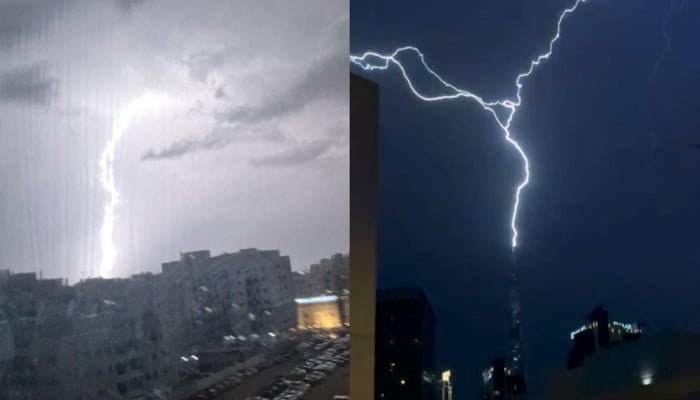
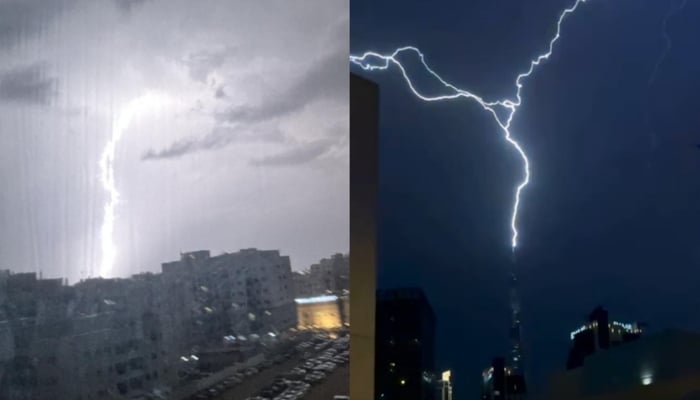
DUBAI: A powerful storm system swept across the United Arab Emirates overnight, bringing heavy rain, strong winds, and near-constant lightning that lit up the night sky for more than two hours, residents said.
Flashes were so bright in some areas that parts of the country appeared “like daytime in the dark,” with booming thunder waking residents around 11pm local time.
The storm affected multiple emirates, including Dubai, Sharjah, Ajman, Umm Al Quwain, Fujairah, Ras Al Khaimah and Abu Dhabi. Fujairah recorded 47.9mm of rainfall, while Ras Al Khaimah saw flooding on sections of Emirates Road caused by overflow from Al Beeh and Qada’a valleys, prompting authorities to advise motorists to take alternative routes.
The National Centre of Meteorology (NCM) issued a flash flood alert after midnight as the storm moved from western regions into Abu Dhabi and Dubai.
Dubai Police and the Ministry of Interior also issued public advisories, including messages in Urdu, urging residents to avoid unnecessary travel, maintain safe distances on roads, and stay away from pools of water or fast-moving rivers to prevent vehicles from skidding. Hail and reduced visibility in some areas were reported.
Dubai Airports warned travellers to allow extra time for journeys to DXB and DWC airports as adverse weather might cause delays. Authorities also announced the temporary closure of Jebel Jais in Ras Al Khaimah due to hazardous conditions.
The UAE Government and NCM said unstable weather, including heavy rain, thunderstorms, strong winds, and occasional hail, is expected to continue through Friday before gradually easing from Saturday, with clearer skies and cooler temperatures forecast. Officials urged residents to remain vigilant and cooperate with authorities to stay safe.


Consumer confidence hit by ‘ripple of fear’ over Iran war

Transfer rumors, news: Could Foden leave Man City this summer?

Germany’s ifo index drops to 86.4 in March as uncertainty weighs on

-

 Fashion1 week ago
Sales at US apparel, clothing accessories stores up 4% YoY in Jan 2026
-

 Entertainment1 week ago
Val Kilmer revived 1 year after death through AI
-
 Fashion1 week ago
US’ G-III Apparel’s FY26 sales fall 7% to $2.96 bn
-

 Sports1 week ago
March Madness 2026 – How to watch in SA, start time, schedule, TV channel for NCAA championship basketball tournament
-
 Business1 week ago
Brits cashing in jewellery as gold price hits record high
-

 Fashion6 days ago
China’s textile & apparel exports surge 17% to $50 bn in Jan-Feb 2026
-
 Business1 week ago
Video: The Effects of High Oil Prices
-
 Business6 days ago
Flipkart group CFO to leave co amid IPO plans – The Times of India