

Business
Trump is threatening broadcast station licenses — what that means, and how it all works


A sign is seen outside of the “Jimmy Kimmel Live!” show outside the El Capitan Entertainment Centre on Hollywood Boulevard, from where the show is broadcast in Hollywood, California on Sept. 18, 2025.
Frederic J. Brown | AFP | Getty Images
Disney’s decision this week to pull “Jimmy Kimmel Live!” from its broadcast network ABC is shining a light on a part of the media business over which the federal government has control.
On Thursday, President Donald Trump suggested his administration should revoke the licenses of broadcast TV stations that he said are “against” him. Federal Communications Commission Chair Brendan Carr has made similar threats, including during a CNBC interview, also on Thursday.
It’s not the first time Trump or Carr has invoked the government’s power to pull a broadcast station license — putting an in-the-weeds part of the media business front and center for consumers, and flexing the government’s power over a major part of the industry.
What’s a broadcast license?
Let’s start with the basics: Networks such as Disney’s ABC, Paramount Skydance’s CBS, Comcast Corp.’s NBC and Fox Corp.’s Fox are part of a system that requires them to obtain over-the-air spectrum licenses from the federal government in order to broadcast these household-name stations.
That means free, over-the-air service to anyone with an antenna on their TV.
Pay-TV networks such as CNN, MTV or FX, for example, are considered “over-the-top” and available for subscription fees. They’re often bundled together and distributed by companies such as Comcast, Charter Communications or DirecTV.
Broadcasters such as ABC are known for programming that includes local news, live sports, prime-time sitcoms and dramas, as well as late-night shows such as “Jimmy Kimmel Live!”
Although the way consumers watch these programs has significantly changed from the days of using an antenna for free viewership — now they’re often viewed via pay-TV bundles, plus the content is frequently found on streaming platforms — the model has remained largely the same.
Companies that own local broadcast TV stations, such as Nexstar Media Group and Sinclair, license spectrum — or the public airwaves — from the government, with the FCC in control.
Through this public spectrum for radio and TV stations, the federal agency has the right to regulate broadcasting and requires each network “by law to operate its station in the ‘public interest, convenience and necessity.’ Generally, this means it must air programming that is responsive to the needs and problems of its local community of license,” according to the FCC website.
Can Trump and the FCC revoke licenses?
That definition of serving the “public interest” is what the FCC’s Carr has zeroed in on with conversations around revoking licenses.
On Thursday, Carr told CNBC’s “Squawk on the Street” that comments by Kimmel, linking the suspect in the killing of conservative activist Charlie Kirk to Trump’s MAGA movement, were “not a joke,” and instead, he said, were “appearing to directly mislead the American public about … probably one of the most significant political events we’ve had in a long time.”
When Trump has noted the government’s right to take away licenses — both this week and in the past — he has pointed to what he said is bias against him as president.
“I have read someplace that the networks were 97% against me, again, 97% negative,” Trump said Thursday, referring to his 2024 election victory.
“They give me only bad publicity, press. I mean, they’re getting a license,” Trump said. “I would think maybe their license should be taken away.”
People protest at the El Capitan Entertainment Centre, where “Jimmy Kimmel Live!” was recorded for broadcast, following his suspension for remarks he made regarding Charlie Kirk’s assassination, on Hollywood Boulevard in Los Angeles, California, U.S. Sept. 18, 2025.
David Swanson | Reuters
In August, Trump accused networks ABC and NBC of being “two of the worst and most biased networks in history” and suggested revoking their broadcast licenses.
Carr earlier this year, freshly in his post as FCC chairman, reawakened complaints directed at ABC, NBC and CBS from the conservative organization the Center for American Rights.
And in February, during a conversation at Semafor’s “Innovating to Restore Trust in News” summit in Washington, D.C., he suggested the agency would be looking closely at licenses.
“If you’re going to have a license to be a broadcaster, it comes with something called ‘you have to serve the public interest.’ If you don’t want to do that, that’s OK,” Carr said during the summit. “I will give you the address of the FCC … you’re free to turn your license in and you can go podcast and you go over-the-top.”
What happens if ABC or NBC loses its license?
If the federal government deems a broadcast TV network isn’t acting in the public interest, it can revoke the license from the station’s owner, and the local station would effectively go dark in its market.
The local networks can preempt the programming, meaning air something other than what the broader network is offering up. That would theoretically keep the stations in compliance if the FCC were to find the broadcast content unlawful. But it’s unclear where that line would fall.
The process of revoking a license isn’t so simple, according to Roy Gutterman, a professor and expert on communications law and the First Amendment at Syracuse University’s Newhouse School.
“There’s a whole process before you can yank someone’s license,” Gutterman said, adding that the matter would be subject to an investigation and procedure — and would likely garner legal challenges.
Typically, the discussion of whether a station violated the FCC’s guidelines centers around children’s programming, a cut to news content, or obscenity — such as Janet Jackson’s wardrobe malfunction during the Super Bowl in 2004.
Trump and his administration’s threats take a different tack.
“This is such an unprecedented issue,” Gutterman said. “Responsible use of the airwaves doesn’t mean having the political language [the government] doesn’t want on there … Responsible use isn’t a political issue.”
Pressure mounting
There’s another factor at play here: The government’s role in local TV consolidation.
On Wednesday, before ABC sidelined Kimmel, Nexstar announced its stations affiliated with ABC wouldn’t air the late night show and instead would preempt it “for the foreseeable future” due to the host’s statements.
While Disney owns a portion of its ABC-affiliated networks, Nexstar, as well as Sinclair — which similarly said it would preempt the show — own the vast majority. Nexstar owns about 30 ABC-affiliated networks across the U.S., or 10% of the more than 200 stations Nexstar owns in total.
Nexstar is currently seeking government approval of a $6.2 billion deal to merge with fellow broadcast TV station owner Tegna, which would upend longstanding regulations for broadcast station owners.
Sinclair has also said it’s looking to merge its broadcast TV station business with another competitor, although a deal has yet to be announced.
While Nexstar and its peers have bulked up over the years through acquisitions, they’ve been subject to longstanding federal limits on the number of stations that these parent companies can own.
On Tuesday, May 13, 2025 at North Javits in New York City, an incredible roster of all-star talent will tout their connections to storytelling, Disney, and each other while showcasing their latest projects for the upcoming year.
Michael Le Brecht | Disney General Entertainment Content | Getty Images
Following Trump’s election in November, leaders of the station owners — as well as other media businesses — saw an opening for further consolidation and deals.
The FCC’s Carr has also publicly said in recent months that he would support getting rid of broadcast station ownership rules and caps, paving the way for such deals, which could help salvage a business model that’s being disrupted.
With the rise of streaming, the pay-TV ecosystem has bled consumers, and broadcast TV networks and local affiliates have also felt the effects.
While the stations are free to air, distributors such as Charter pay the broadcasters so-called retransmission fees, on a per-subscriber basis, for the right to carry the stations. These lucrative fees heavily buoy the profits of companies such as Nexstar, which means dwindling pay-TV customers cuts into broadcast profits.
Disclosure: Comcast is the parent company of NBCUniversal, which owns CNBC. Versant would become the new parent company of CNBC under a planned spinoff.






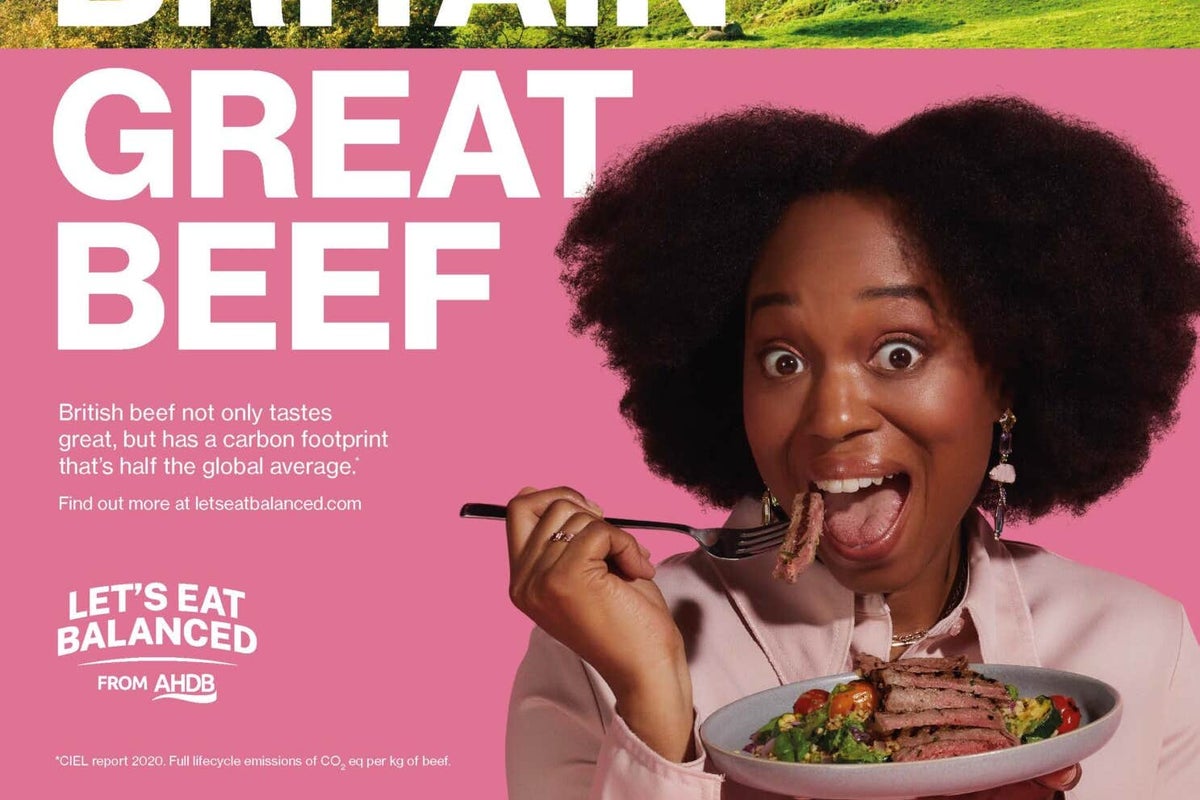
Two ads promoting British beef and milk have been banned after television presenter and environmental campaigner Chris Packham complained that they misled consumers about the products’ carbon footprints.
Both ads for the Agriculture and Horticulture Development Board’s (AHDB) Let’s Eat Balanced campaign used the carbon footprint of British beef and milk to promote the products, firstly stating: “British beef not only tastes great, but has a carbon footprint that’s half the global average*.”
The asterisk linked to text that stated: “Full lifecycle emissions of CO2 eq (carbon dioxide equivalent) per kg of beef.”
The ad for milk stated: “British milk not only tastes good, but is also produced to world-class standards, and has a carbon footprint a third lower than the global average.”
Packham complained to the Advertising Standards Authority (ASA) that the ads, and specifically the carbon footprint claims, were misleading as they did not reflect the full environmental impact of British meat and dairy.
The AHDB said the ads’ mention of carbon emissions would be understood in relation to the environmental impact of beef and milk that occurred between the “cradle-to-retail” stages.
But the ASA said the average consumer “being reasonably well-informed, observant and circumspect” would understand the claims to apply beyond the retail stage and include actions such as cooking and wastage.
The ASA said: “While we acknowledged the potential difficulties in producing post-retail emissions data, the claims in the ads suggested those emissions were included and we therefore expected the evidence provided to also include them.
“We therefore concluded that the evidence presented was insufficient to support the full life-cycle claims in the ads, which was how the average consumer was likely to interpret them.
“We reminded AHDB that environmental claims should be based on the full life cycle unless the ad stated otherwise.”
AHDB’s director of communications and market development, Will Jackson, said: “Let’s Eat Balanced is doing what it was designed to do, providing clear, factual, evidence-led information about British food, nutrition and farming standards.
“Since the investigation began, we have conducted independent consumer research which found that the majority of respondents interpreted these adverts as relating to the production phase only, from farm to retail.
“This research provides important insight into consumer understanding and supports our belief that consumers were not misled by the information we shared in these two specific adverts.”

BENGALURU: India’s Gen Z workforce is embracing what experts describe as “portfolio careers” – balancing multiple professional identities and income streams simultaneously. New research from LinkedIn shows that 75% of Gen Z entrepreneurs in India now manage multiple income streams, significantly higher than the 62% among Gen X entrepreneurs. The findings point to a growing preference among younger professionals for flexibility, autonomy and diversified sources of income. “We’re also seeing the rise of the ‘portfolio era’, with more professionals creating multiple income streams and redefining what a career can look like. This shift is making entrepreneurship more accessible than ever before,” said LinkedIn India country manager Kumaresh Pattabiraman.Rather than depending on a single full-time role, many professionals are simultaneously building businesses, freelancing, consulting, creating online content and monetising specialised skills through digital platforms. The trend comes amid a broader rise in entrepreneurial activity in India. LinkedIn recorded a 104% year-on-year increase in members adding “Founder” to their profiles – the highest growth among all global markets.AI is also emerging as a major enabler of this shift. The report found that 85% of Gen Z entrepreneurs consider AI and digital tools important to their business operations.
Sam Altman said Elon Musk tried many times for total control of OpenAI, which he’s now suing.
Source link


India’s apparel sourcing window reopens—for now

Will LeBron James retire after current season?

South Korea reviews phased support for Strait of Hormuz security efforts

-

 Tech1 week ago
DHS Demanded Google Surrender Data on Canadian’s Activity, Location Over Anti-ICE Posts
-
 Business1 week ago
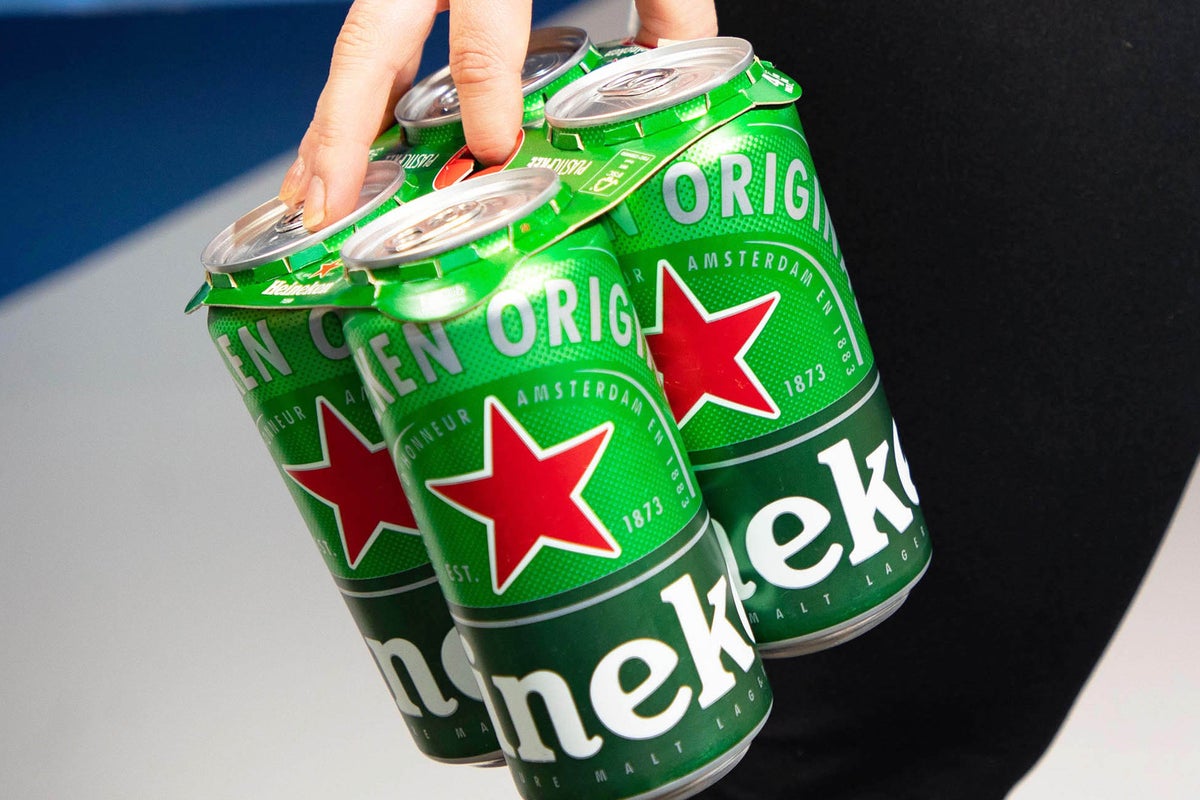
Heineken plans huge investment in hundreds of UK pubs ahead of World Cup
-

 Tech5 days ago
A new frontier: Identity stack evolves for agentic systems | Computer Weekly
-

 Tech4 days ago
‘Orbs,’ ‘Saucers,’ and ‘Flashes’ on the Moon: Pentagon Drops New UFO Files
-
 Business1 week ago
India among most resilient large EMs, better placed for future global shocks; policy reforms & strong buffers help: Moody’s – The Times of India
-

 Sports5 days ago
Shaheen Afridi achieves landmark feat during opening Test against Bangladesh
-

 Tech5 days ago
What Microsoft Executives Really Thought About OpenAI in 2018
-

 Fashion5 days ago
New orders in German manufacturing up 5% MoM in Mar 2026: Destatis