

Politics
Trump moves to limit US stays of students, journalists

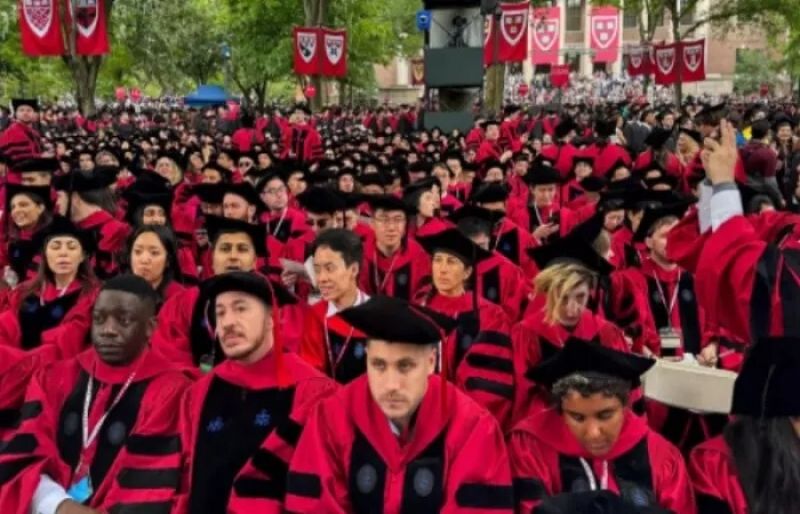
US President Donald Trump’s administration moved on Thursday to impose stricter limits on how long foreign students and journalists can stay in the United States, the latest bid to tighten legal immigration in the country.
Under a proposed change, foreigners would not be allowed to stay for more than four years on student visas in the US.
Foreign journalists would be limited to stays of just 240 days, although they could apply to extend by additional 240-day periods — except for Chinese journalists who would get just 90 days.
The US, until now, has generally issued visas for the duration of a student’s educational programme or a journalist’s assignment, although no non-immigrant visas are valid for more than 10 years.
The proposed changes were published in the Federal Register, initiating a short period for public comment before they can go into effect.
Trump’s Department of Homeland Security alleged that an unspecified number of foreigners were indefinitely extending their studies so they could remain in the country as “‘forever’ students.”
“For too long, past administrations have allowed foreign students and other visa holders to remain in the US virtually indefinitely, posing safety risks, costing untold amount of taxpayer dollars and disadvantaging US citizens,” the department said in a press statement Wednesday.
The department did not explain how US citizens and taxpayers were hurt by international students, who according to Commerce Department statistics contributed more than $50 billion to the US economy in 2023.
The United States welcomed more than 1.1 million international students in the 2023-24 academic year, more than any other country, providing a crucial source of revenue as foreigners generally pay full tuition.
A group representing leaders of US colleges and universities denounced the latest move as a needless bureaucratic hurdle that intrudes on academic decision-making and could further deter potential students who would otherwise contribute to research and job creation.
“This proposed rule sends a message to talented individuals from around the world that their contributions are not valued in the United States,” said Miriam Feldblum, president and CEO of the Presidents’ Alliance on Higher Education and Immigration.
“This is not only detrimental to international students — it also weakens the ability of US colleges and universities to attract top talent, diminishing our global competitiveness.”
Backlash
The announcement came as universities were starting their academic years with many reporting lower enrollments of international students after earlier actions by the Trump administration.
But Trump also heard rare criticism within his base when he mused Monday that he would like to double the number of Chinese students in the United States to 600,000 as he hailed warm relations with counterpart Xi Jinping.
His remarks marked a sharp departure from Secretary of State Marco Rubio’s earlier vow to “aggressively” rescind visas of Chinese students.
The State Department said last week it had overall revoked 6,000 student visas since Trump took office, in part due to Rubio’s targeting of campus activists who led demonstrations against Israel.
Trump has also suspended billions of dollars in federal research funds to universities, with his administration contending they have not acted against antisemitism, and Congress has sharply raised taxes on private universities’ endowments.
In a speech before he was elected, Vice President JD Vance said conservatives must attack universities, which he described as “the enemy.”
Trump, at the end of his first term, had proposed curbing the duration of journalist visas, but his successor Joe Biden scrapped the idea.
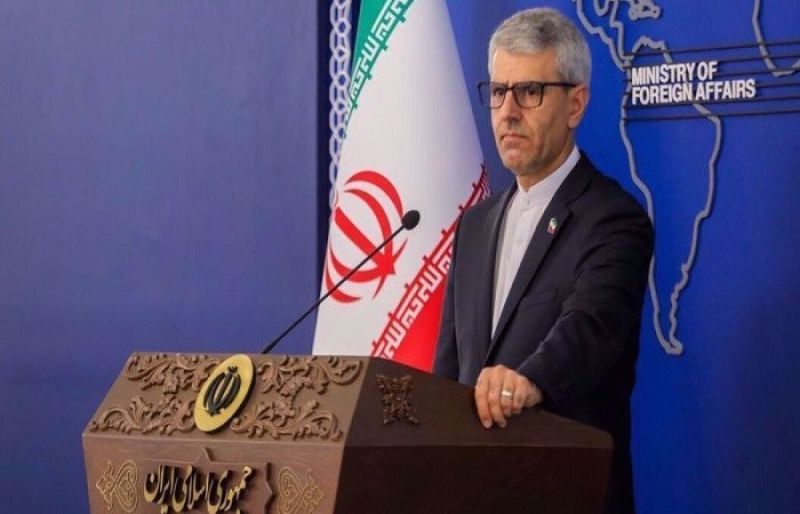

Iran’s foreign ministry spokesman says confronting US-Israeli threats leaves the country no option but military retaliation, while stressing it has no issue with the American people.
In an interview with the US public radio (NPR) published on Sunday, Esmaeil Baghaei discussed the country’s positions on the current developments following the recent US-Israeli aggression.
“This is an unjust war imposed on our nation, and we have no other choice other than fighting against this injustice,” he said.
He emphasized that these military actions are unwarranted and unprovoked, and pointed out they arrived while the US and Iran were making progress in diplomatic negotiations over nuclear issues.
Baghaei stated that the conflict is the United States administration’s preferred war.
He noted that according to the Omani mediator’s remarks on Friday, a deal was close, and Iran was slated to meet the American delegation in Vienna the previous day to discuss technical details—emphasizing that Iran did not initiate the war.
He referred to the assassination of the Leader of the Islamic Revolution Ayatollah Seyed Ali Khamenei, saying, “he was not only a political leader. He was also a high-ranking religious jurist with tens of millions of followers, even outside Iran, across the region.”
In response to a question on who is leading the country now, the Iranian diplomat explained that an interim council now governs Iran, composed of the head of the judiciary, the president, and a member of the council of experts, which will be responsible for electing a new leader.
Responding to a question about whether Iran’s leadership can withstand aggressive US sanctions, President Trump’s calls for regime change, Israeli pressure and domestic opposition, Baghaei said a foreign power cannot dictate changes to a nation’s system of governance.
He added that Iranians have historically united against foreign aggression and domination, fighting to protect their freedom, independence, dignity and sovereignty.
Reacting to the death of at least three Americans, Baghaei said “I have said many times that we have no problem with the American people. And we believe that this is not their war.”
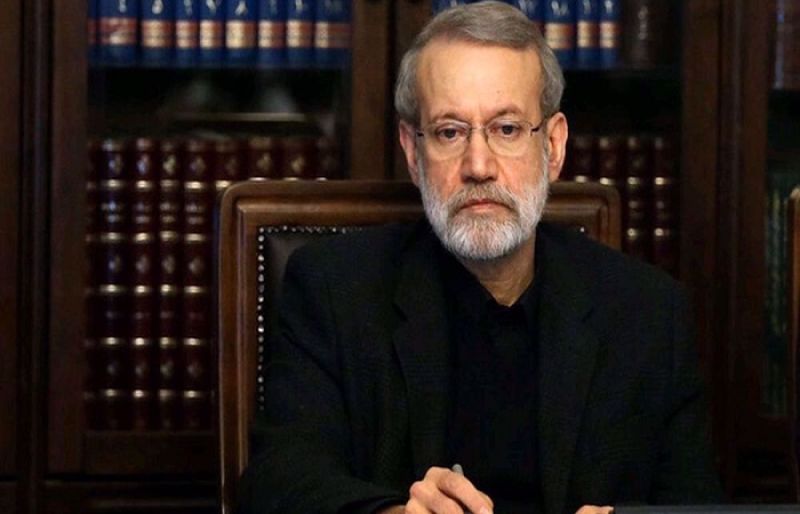
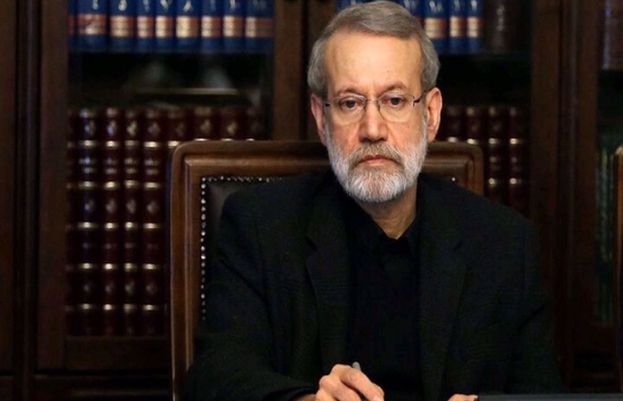
Secretary of Iran’s Supreme National Security Council (SNSC) Ali Larijani says the Islamic Republic will hold no negotiations with the United States after Washington and Tel Aviv waged war against the country.
Larijani made the remark in a post on his X account on Monday in response to a report by The Wall Street Journal claiming that he had started new efforts to resume talks with the US.
The US and Israel started a fresh round of aerial aggression on Iran on Saturday, some eight months after they carried out unprovoked attacks on the country.
The Saturday attacks led to the martyrdom of Leader of the Islamic Revolution Ayatollah Seyyed Ali Khamenei.
The Iranian administration on Sunday declared 40 days of public mourning and seven days of holidays following the Leader’s martyrdom.
The aggression was launched as Tehran and Washington had held three rounds of indirect negotiations in the Omani capital of Muscat and the Swiss city of Geneva and planned to open technical talks in Vienna, Austria, last Monday.
Iran began to swiftly retaliate against the strikes by launching barrages of missile and drone attacks on the Israeli-occupied territories as well as on US bases in regional countries.
On the second day of the joint aggression, US President Donald Trump claimed that Iranian authorities wanted to hold talks with Washington.
In another post on X, Larijani said the US president had caused turmoil in the region as a result of his “pipe dreams” and is now concerned about more losses on the American servicemen.
The top Iranian security official added that Trump changed the self-made slogan of “America First” to “Israel First” through his illusion-driven performance and sacrificed the American soldiers for the sake of Israel’s ambitions.
Larijani emphasized that the American soldiers and their families are bearing the brunt of Trump’s lie mongering and his ill nature.
“Today, the Iranian nation is defending itself. Iran’s Armed Forces have not launched any aggression,” the SNSC secretary pointed out, emphasizing it was not Iran that initiated the war.
Iran has reaffirmed its policy to promote peace in the region but pledged that it will not hesitate to defend its territorial integrity against any act of aggression.
Iranian officials have also already called on the country’s neighbors not to allow their soil to be used by the US and Israel for any attack against the Islamic Republic, warning to retaliate.
- Ras Tanura refinery hit by drone, says source.
- Major Israeli gas fields, including Leviathan, offline.
- Most output in Iraqi Kurdistan shut down as precaution.
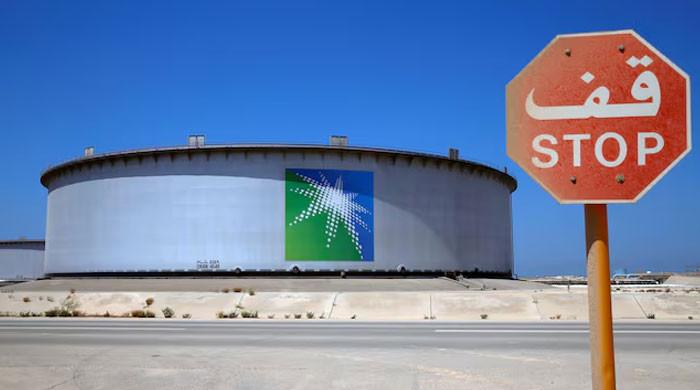
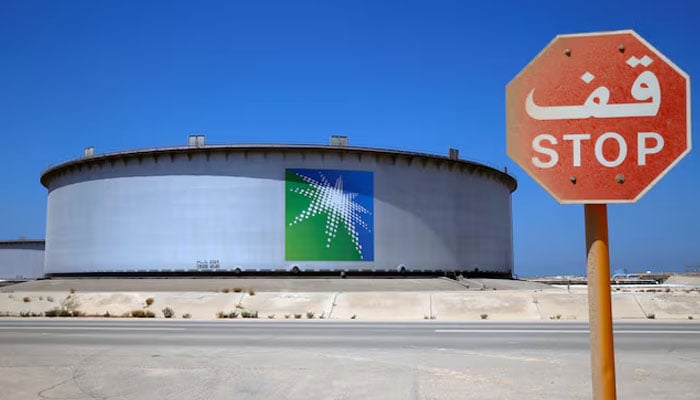
Saudi Arabia shut its biggest domestic oil refinery on Monday after a drone strike, a source said, as Israeli and US strikes and Iranian retaliation forced shutdowns of oil and gas facilities across the Middle East.
A wave of attacks on the region stretched into a third day, resulting in the precautionary suspension of most oil production in Iraqi Kurdistan and at several major Israeli gas fields, throttling exports to Egypt.
State oil giant Saudi Aramco’s 550,000 barrels per day (bpd) Ras Tanura refinery, which was shut as a precautionary measure, is part of an energy complex on the kingdom’s Gulf coast which also serves as a critical export terminal for Saudi crude oil.
In Iraqi Kurdistan, which exported 200,000 barrels of oil per day (bpd) via pipeline to Turkiye’s Ceyhan port in February, companies including DNO, Gulf Keystone Petroleum, Dana Gas and HKN Energy have stopped output at their fields as a precaution, with no damage reported.
Offshore Israel, the giant Chevron-operated Leviathan gas field was shut on Saturday, according to sources, while Energean shut down its production vessel serving smaller gas fields.
Drones intercepted in Saudi Arabia
The situation at Aramco’s Ras Tanura refinery is under control, the source said. Two drones were intercepted at the facility, with debris causing a limited fire, the Saudi defence ministry’s spokesperson said on Al Arabiya TV, adding there were no injuries.
Aramco did not immediately respond to an emailed request for comment.
Some of the refinery’s units were shut as a precautionary measure but the supply of petroleum and its derivatives to local markets was not affected, Saudi state news agency SPA said, citing an unnamed official at the energy ministry.
Still, its shuttering will likely add to supply anxieties as shipping through the Strait of Hormuz, through which around a fifth of global oil consumption flows, grinds to a near-halt after vessels were attacked around it on Sunday. Brent crude futures LCOc1 surged roughly 10% on Monday to over $82 a barrel.
Attack seen as significant escalation
“The attack on Saudi Arabia’s Ras Tanura refinery marks a significant escalation, with Gulf energy infrastructure now squarely in Iran’s sights,” said Torbjorn Soltvedt, principal Middle East analyst at risk intelligence firm Verisk Maplecroft.
“The attack is also likely to move Saudi Arabia and neighbouring Gulf states closer to joining US and Israeli military operations against Iran.”
Saudi Arabia’s heavily fortified energy facilities have been targeted previously, most notably in September 2019 when drone and missile attacks on the Abqaiq and Khurais plants temporarily knocked out more than half of the kingdom’s crude production.
Ras Tanura was attacked by Yemen’s Iran-aligned Houthis in 2021.

Will petrol and diesel prices go up now?

Bangladesh’s CPD calls for reforms in biz & tax climate, trade deals

Iran says has ‘no choice’ but to fight back, holds no enmity toward American people

Pakistan carries out precision strikes on seven militant hideouts in Afghanistan

Eye-popping rise in one year: Betting on just gold and silver for long-term wealth creation? Think again! – The Times of India

These Cheap Noise-Cancelling Sony Headphones Are Even Cheaper Right Now

-
 Politics1 week ago
Pakistan carries out precision strikes on seven militant hideouts in Afghanistan
-
Business1 week ago
Eye-popping rise in one year: Betting on just gold and silver for long-term wealth creation? Think again! – The Times of India
-
 Tech1 week ago
These Cheap Noise-Cancelling Sony Headphones Are Even Cheaper Right Now
-

 Entertainment1 week ago
Viral monkey Punch makes IKEA toy global sensation: Here’s what it costs
-

 Sports1 week ago
Kansas’ Darryn Peterson misses most of 2nd half with cramping
-
Sports1 week ago
Mike Eruzione and the ‘Miracle on Ice’ team are looking for some company
-

 Sports1 week ago
How James Milner broke Premier League’s appearances record
-
 Entertainment1 week ago
Saturday Sessions: Say She She performs "Under the Sun"