

Politics
Trump moves to limit US stays of students, journalists

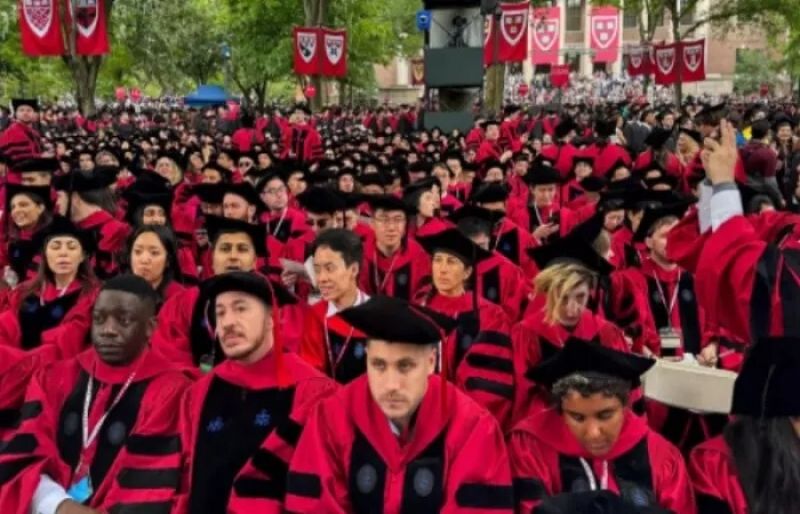
US President Donald Trump’s administration moved on Thursday to impose stricter limits on how long foreign students and journalists can stay in the United States, the latest bid to tighten legal immigration in the country.
Under a proposed change, foreigners would not be allowed to stay for more than four years on student visas in the US.
Foreign journalists would be limited to stays of just 240 days, although they could apply to extend by additional 240-day periods — except for Chinese journalists who would get just 90 days.
The US, until now, has generally issued visas for the duration of a student’s educational programme or a journalist’s assignment, although no non-immigrant visas are valid for more than 10 years.
The proposed changes were published in the Federal Register, initiating a short period for public comment before they can go into effect.
Trump’s Department of Homeland Security alleged that an unspecified number of foreigners were indefinitely extending their studies so they could remain in the country as “‘forever’ students.”
“For too long, past administrations have allowed foreign students and other visa holders to remain in the US virtually indefinitely, posing safety risks, costing untold amount of taxpayer dollars and disadvantaging US citizens,” the department said in a press statement Wednesday.
The department did not explain how US citizens and taxpayers were hurt by international students, who according to Commerce Department statistics contributed more than $50 billion to the US economy in 2023.
The United States welcomed more than 1.1 million international students in the 2023-24 academic year, more than any other country, providing a crucial source of revenue as foreigners generally pay full tuition.
A group representing leaders of US colleges and universities denounced the latest move as a needless bureaucratic hurdle that intrudes on academic decision-making and could further deter potential students who would otherwise contribute to research and job creation.
“This proposed rule sends a message to talented individuals from around the world that their contributions are not valued in the United States,” said Miriam Feldblum, president and CEO of the Presidents’ Alliance on Higher Education and Immigration.
“This is not only detrimental to international students — it also weakens the ability of US colleges and universities to attract top talent, diminishing our global competitiveness.”
Backlash
The announcement came as universities were starting their academic years with many reporting lower enrollments of international students after earlier actions by the Trump administration.
But Trump also heard rare criticism within his base when he mused Monday that he would like to double the number of Chinese students in the United States to 600,000 as he hailed warm relations with counterpart Xi Jinping.
His remarks marked a sharp departure from Secretary of State Marco Rubio’s earlier vow to “aggressively” rescind visas of Chinese students.
The State Department said last week it had overall revoked 6,000 student visas since Trump took office, in part due to Rubio’s targeting of campus activists who led demonstrations against Israel.
Trump has also suspended billions of dollars in federal research funds to universities, with his administration contending they have not acted against antisemitism, and Congress has sharply raised taxes on private universities’ endowments.
In a speech before he was elected, Vice President JD Vance said conservatives must attack universities, which he described as “the enemy.”
Trump, at the end of his first term, had proposed curbing the duration of journalist visas, but his successor Joe Biden scrapped the idea.
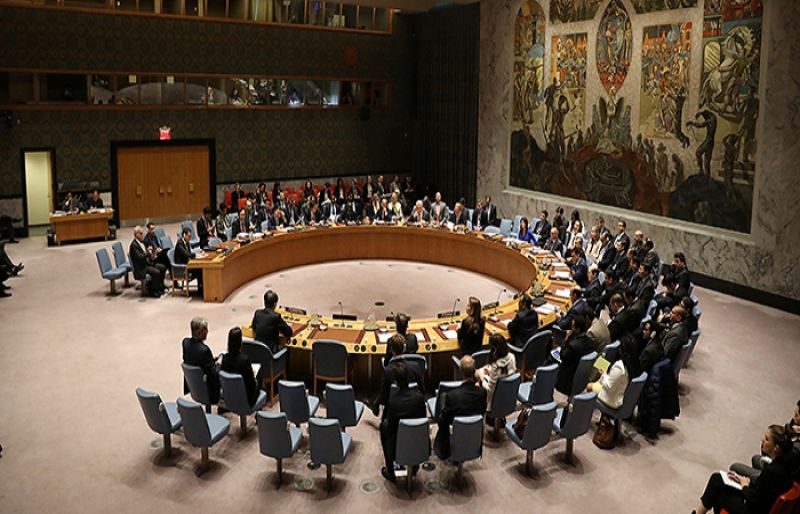
The UN Security Council on Monday condemned the recent killing of a French peacekeeper in Lebanon, whose death France has blamed on Hezbollah.
The Frenchman was killed and three others wounded when their unit was ambushed on Saturday as it headed to a UN Interim Force in Lebanon (UNIFIL) outpost cut off from the fighting between Hezbollah and Israel.
“The members of the Security Council condemned in the strongest terms the attack…(and) reaffirmed their full support for UNIFIL” a statement from the UN body said.
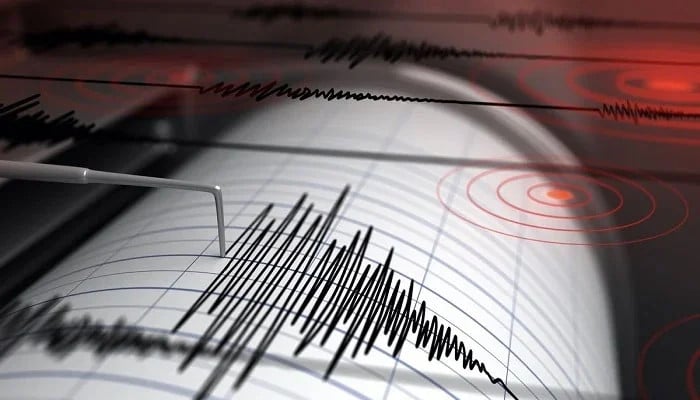
TOKYO: At least six people were reported injured on Tuesday, a day after a powerful quake rattled northern Japan, but there appeared to be no major damage from the tremor that also triggered tsunami waves up to 80 centimetres (31 inches).
However, the Japan Meteorological Agency (JMA) also warned of an increased risk of a megaquake — a tremor with a magnitude of 8.0 or stronger — hours after Monday’s 7.7 magnitude quake in Pacific waters off northern Iwate prefecture.
The jolt was so intense that it shook large buildings in the capital Tokyo, hundreds of kilometres from the epicentre.
Six people were reported injured by 8am (2300 GMT Monday), two seriously, the Fire and Disaster Management Agency (FDMA) said in a statement.
There were no reported fire outbreaks or damage to important facilities, it said.
Japan issued a warning for tsunami waves of up to three metres (10 feet) but it was lifted hours after an 80-centimetre (31-inch) wave hit a port in Kuji in Iwate, one among a series of small waves that hit elsewhere in northern Japan.
The JMA said that “the likelihood of a new, huge earthquake occurring is relatively higher than during normal times”.
Municipalities in the affected region issued non-compulsory evacuation directives to more than 182,000 residents, the FDMA said.
Japan is one of the world’s most seismically active countries, sitting on top of four major tectonic plates along the western edge of the Pacific “Ring of Fire”.
The archipelago, home to around 125 million people, typically experiences around 1,500 jolts every year and accounts for about 18 percent of the world´s earthquakes.
The vast majority are mild, although the damage they cause varies according to their location and the depth below the Earth´s surface at which they strike.
Japan is haunted by the memory of a massive 9.0 magnitude undersea quake in 2011, which triggered a tsunami that killed or left missing around 18,500 people and caused a devastating meltdown at the Fukushima nuclear plant.
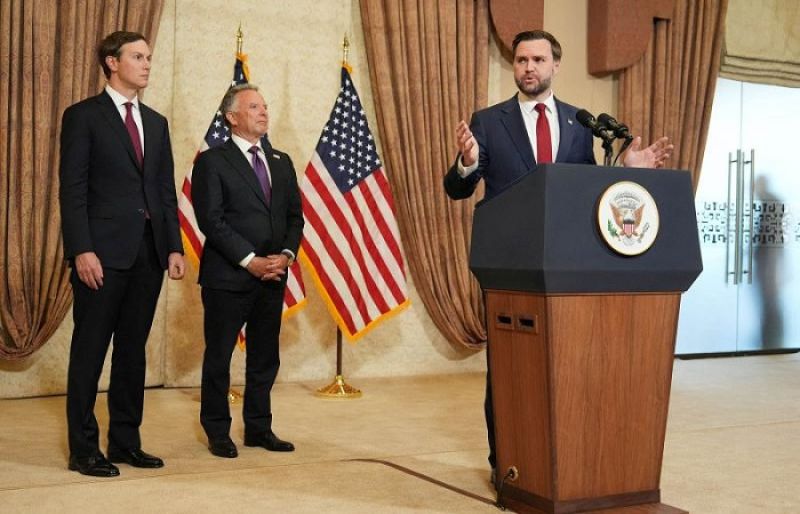
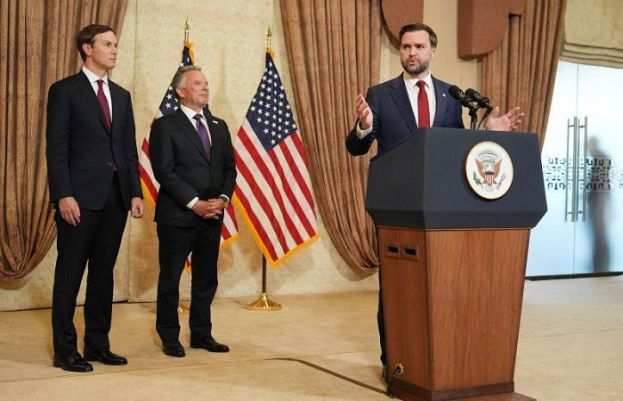
A US delegation led by Vice President JD Vance is en route to Pakistan and expected to land in Islamabad within hours for the second round of talks with Iran, President Donald Trump said on Monday.
Trump confirmed the development in an interview with the New York Post, saying he would be willing to meet Iranian leaders himself if progress is made in the talks.
Apart from Vance, the US delegation includes Trump’s son-in-law, Jared Kushner, and Special Envoy to the Middle East Steve Witkoff, as per a report by Axios.
If reports about the other delegation members are accurate, it would mean the US delegation is the same as in the first round of Iran talks held in Islamabad on April 11.
However, a source familiar with the plan told AFP on Monday that a US delegation will head to Pakistan “soon” for a new round of peace negotiations with Iran.
Meanwhile, mediator Pakistan — which brokered a two-week ceasefire between the two sides on April 8 — was making efforts to end the US naval blockade of Iranian ports and to ensure Iran’s participation in the peace talks.
With the ceasefire set to expire, a senior Iranian official told Reuters that Tehran was “positively reviewing” its participation following Pakistan’s efforts, but no final decision had been made.
The comments conveyed a clear change of tone from earlier statements ruling out attendance and pledging to retaliate for US aggression.
Separately, Deputy Prime Minister and Foreign Minister Ishaq Dar held a phone call with Iranian Foreign Minister Abbas Araghchi, emphasising the importance of continued dialogue and engagement to resolve all pending issues.
DPM Dar stressed that persistent dialogue was essential to ensure regional peace and stability, read a statement issued by the Foreign Office.
Since the announcement of the ceasefire, Tehran and Washington have disagreed on a number of issues, including Iran’s blockade of the Strait of Hormuz and the US naval blockade of Iranian ports.
Tehran effectively blocked the waterway and launched attacks against Israel and US bases across the Middle East in response to the joint US-Israel attacks on February 28.
Iranian Foreign Minister Abbas Araghchi, on April 17, announced the reopening of the strait for commercial vessels following the ceasefire in Lebanon.
However, Iranian authorities blocked the waterway again the following day, citing the US blockade of Iranian ports.
On April 18, the Islamic Revolutionary Guard Corps (IRGC) said that the US blockade represented “acts of piracy and maritime theft”.
“Until the US restores full freedom of navigation for vessels travelling from Iran to their destinations and back, the status of the Strait of Hormuz will remain tightly controlled and in its previous condition,” it said.
US Marines board Iranian vessel
The ceasefire had appeared in jeopardy after the US said it had seized an Iranian cargo ship that tried to run its blockade, and Tehran vowed to retaliate.
The US military said it had fired on an Iranian-flagged cargo ship headed towards Iran’s Bandar Abbas port on Sunday after a six-hour standoff, disabling its engines.
US Central Command released a video showing Marines descending ropes from helicopters onto the vessel.
Iran’s military said the ship had been travelling from China and accused the US of “armed piracy”, according to state media.
They said they were ready to confront US forces over the “blatant aggression”, but were constrained by the presence of crew members’ families on board.
Trump on Sunday warned that the US would destroy every bridge and power plant in Iran if it rejected his terms, continuing a recent pattern of such threats.
Iran has said that if the US were to attack its civilian infrastructure, it would strike power stations and desalination plants in its Gulf Arab neighbours.


UN Security Council denounces killing of French peacekeeper in Lebanon
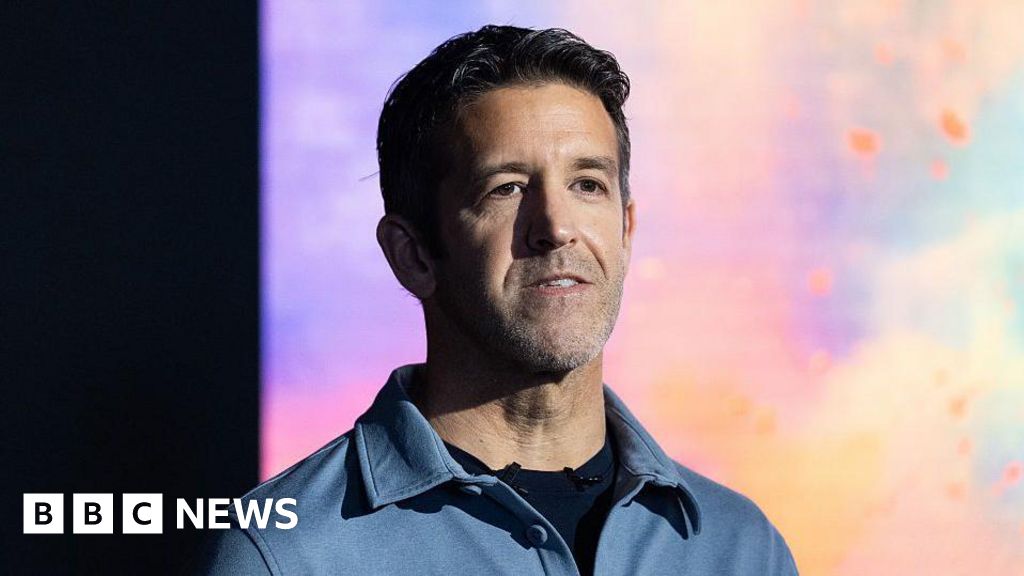
Apple names new boss to replace Tim Cook after 15 years

India, US to resume BTA talks today

-

 Fashion5 days ago
France’s LVMH Q1 revenue falls 6%, shows resilience amid Iran war
-

 Sports1 week ago
The case for Man United’s Fernandes as Premier League’s best
-

 Entertainment1 week ago
Palace left in shock as Prince William cancels grand ceremony
-
 Business1 week ago
UK could adopt EU single market rules under new legislation
-

 Entertainment6 days ago
Is Claude down? Here’s why users are seeing errors
-

 Fashion1 week ago
Energy emerges as biggest cost driver in textile margins
-
 Business1 week ago
Delta Air Lines unveils first new Delta One suite in premium cabin arms race
-

 Tech1 week ago
A Lot of Shops Won’t Fix Electric Bikes. Here’s Why