

Politics
Trump pauses attacks on Iran’s energy plants for ten days

- Trump claims talks with Iran are ‘going very well’.
- Iranian official dismisses US peace proposal as ‘unfair’.
- WSJ cites mediators as saying: Iran hasn’t asked for pause.
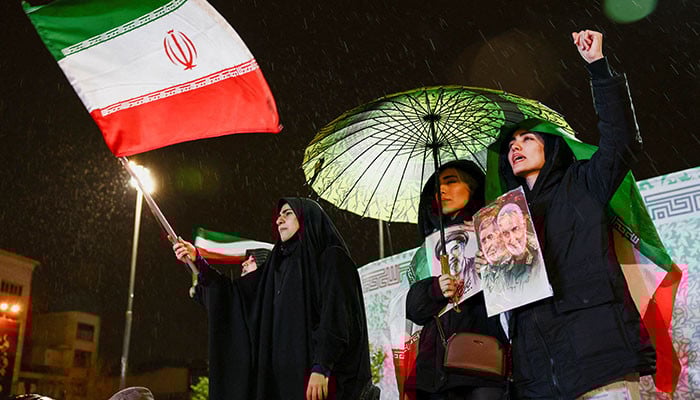
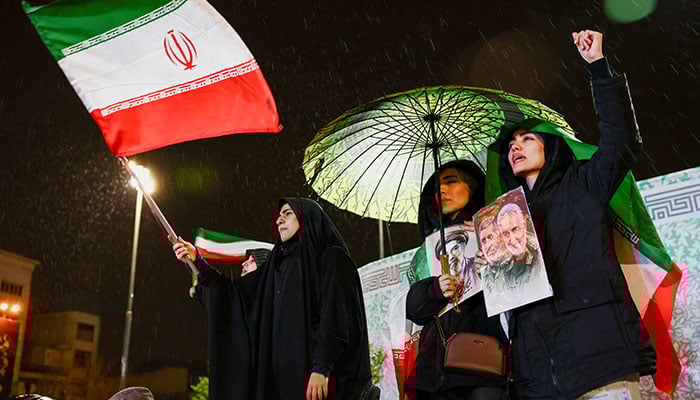
DUBAI/TEL AVIV/WASHINGTON: President Donald Trump announced that he will pause attacks on Iran’s energy plants for 10 days at Tehran’s request and said talks with Iran were going “very well,” although an Iranian official dismissed a US proposal for ending the conflict as “one-sided and unfair.”
The war has killed thousands of people, spread to neighbouring nations and hit the global economy with soaring energy prices since the US and Israel launched strikes on February 28, after talks about Tehran’s nuclear programme failed to yield a deal.
On Thursday, Trump threatened during a cabinet meeting at the White House to increase pressure on Iran if it did not make a deal, before later posting on social media that he would pause attacks on Iranian energy plants for 10 days until April 6, 2026 at 2000 EDT (0000 GMT on April 7).
“Talks are ongoing and, despite erroneous statements to the contrary by the Fake News Media, and others, they are going very well,” he added in his Truth Social post.
He later told Fox News’ “The Five” programme that the Iranians had asked for a seven-day pause. There was no immediate reaction from Tehran.
Iran has not asked for a 10-day pause on strikes on its energy plants, the Wall Street Journal cited peace talk mediators as saying.
Drone speedboats
The war has massively disrupted shipping, sending crude oil prices up around 40% and causing a spike of some two-thirds in shipments of liquefied natural gas to Asia. Prices of nitrogen-based fertilisers, critical to food production, have risen by around 50%.
Despite Trump’s upbeat assessment, Iran continued to retaliate against US and Israeli strikes by hitting Israel and US bases; it also struck Gulf states and effectively blocked Middle East fuel exports via the Strait of Hormuz.
The US has deployed uncrewed drone speedboats for patrols as part of its operations against Iran, the Pentagon told Reuters, the first time Washington has confirmed using such vessels in an active conflict.
Trump said the US would become the Islamic Republic’s “worst nightmare” if it did not comply with US demands, which include opening the strait and ending Tehran’s nuclear programme.
He said taking control of Iran’s oil was an option, but gave no details.
The Iranian official told Reuters that a 15-point US proposal, conveyed to Tehran by Pakistan, was reviewed in detail on Wednesday by senior Iranian officials and the representative of Iran’s supreme leader.
While they felt it served only US and Israeli interests, diplomacy had not ended, the official said.
The fighting continued to rage, however.
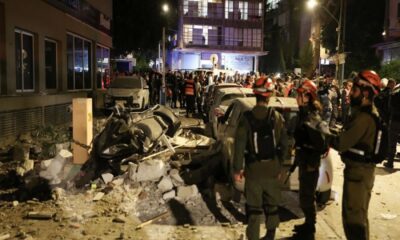
On Thursday, Iran launched multiple waves of missiles at Israel, striking Tel Aviv, Haifa and other areas, including a Palestinian town in central Israel.
At least one ballistic missile hit Tel Aviv, according to Israel’s military, while others carried cluster munitions that dispersed smaller explosives, damaging homes and cars.
Israel’s ambulance service said a man was killed in Nahariya after Hezbollah fired a rocket barrage at the northern city.
In Iran, strikes hit the southern city of Bandar Abbas and a village on the outskirts of the southern city of Shiraz. A university building in Isfahan was reported to have been hit.
Strait of Hormuz a crucial issue
Trump suggested on Thursday that Iran let 10 oil tankers transit the Strait of Hormuz as a goodwill gesture in negotiations, including some Pakistan-flagged vessels.
The president has sent thousands of troops to the Middle East, some of whom have already arrived, driving expectations of a ground invasion, although details remain scant.
Trump’s special envoy, Steve Witkoff, confirmed that the US had sent a “15-point action list” as a basis for negotiations to end the war.
It includes demands ranging from dismantling Iran’s nuclear programme to curbing its missiles and effectively handing over control of the strait, according to sources and reports.
Pakistan’s foreign minister said “indirect talks” between the US and Iran were taking place through messages relayed by Islamabad, with other states including Turkey and Egypt also supporting mediation efforts.
Any talks look set to be extremely thorny.
Iran has hardened its stance since the war began, demanding guarantees against future military action, compensation for losses, and formal control of the strait, Iranian sources say.
It also told intermediaries that Lebanon must be included in any ceasefire deal, regional sources said.
Trump has not identified with whom the US is negotiating in Iran, with many high-ranking officials among the thousands of people killed in the war across the Middle East.
- US officials say shipments began year ago and may still be ongoing.
- Says collaboration may include training on semiconductor technology.
- Allegations risk worsening tensions between Washington and Beijing.
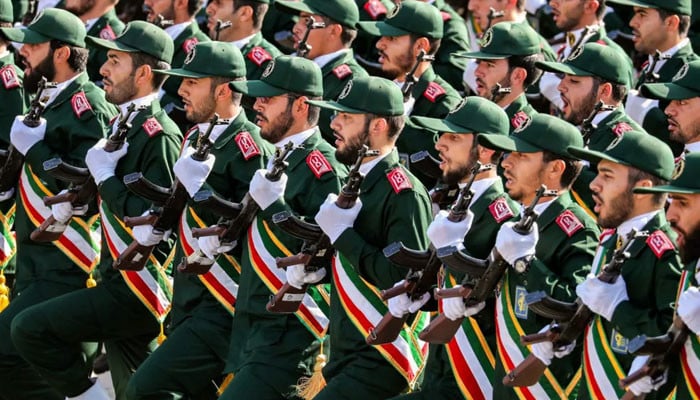
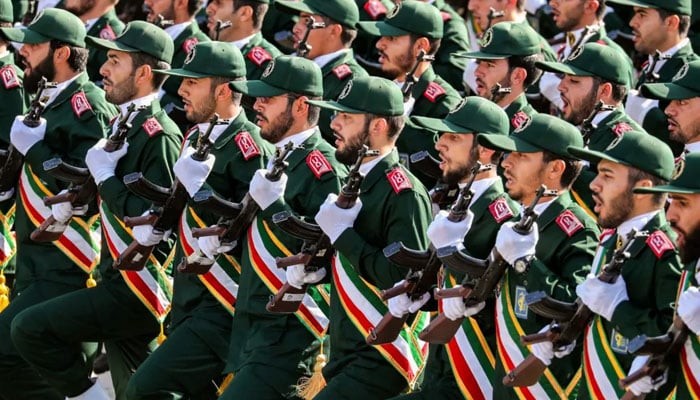
WASHINGTON: SMIC, China’s largest chipmaker, has sent chipmaking tools to Iran’s military, two senior Trump administration officials said on Thursday, raising questions about Beijing’s stance in the month-old US-Israeli conflict with Iran.
SMIC, which has been heavily sanctioned by the US government over alleged ties to the Chinese military, began sending the tools to Iran roughly a year ago and “we have no reason to believe that any of this has stopped,” one of the officials said.
The official added that the collaboration “almost certainly included technical training on SMIC’s semiconductor technology.”
The officials spoke on condition of anonymity in order to discuss previously undisclosed US government information. They did not specify whether the tools were of US origin, which would likely make shipment to Iran a violation of US sanctions.
SMIC, the Chinese Embassy in Washington, and a spokesperson for the Iranian mission to the United Nations did not immediately respond to requests for comment.
The Chinese government maintains that it carries out normal commercial trade with Iran. SMIC, which was added to a trade blacklist in 2020 that restricts its access to US exports, has denied allegations that it has ties to the Chinese military-industrial complex.
China has not publicly taken a side in the Middle East conflict. Chinese Foreign Minister Wang Yi this week called on the parties to seize all opportunities to start peace talks as soon as possible.
The allegations threaten to heighten tensions between Washington and Beijing as the US wages war against Tehran and as it has sought to choke off China’s advanced chip industry.
Reuters reported last month that Iran was close to a deal with China on the purchase of anti-ship cruise missiles, just as the United States deployed a vast naval force near the Iranian coast ahead of strikes on the Islamic Republic.
It was not immediately clear what, if any, role the chipmaking tools have played in Iran’s response to the war, which was launched by the US and Israel on February 28 and has roiled financial markets, triggered a surge in oil prices and fuelled global inflation fears.
One of the officials said the tools have been provided to Iran’s “military industrial complex” and could be used for any electronics that require chips.
Washington has sought to curtail China’s ability to make advanced semiconductors through sanctions on SMIC and other Chinese chipmakers, aiming to limit their access to advanced chipmaking equipment from top US suppliers such as Lam Research, KLA and Applied Materials.
The Biden administration tightened restrictions on SMIC in 2024 by cutting off its most advanced factory from more US imports after it produced a sophisticated chip for Huawei’s Mate 60 Pro phone, Reuters reported.
Politics
US-Iran mediation: Politicians castigate India’s Jaishankar for spiteful remarks on Pakistan
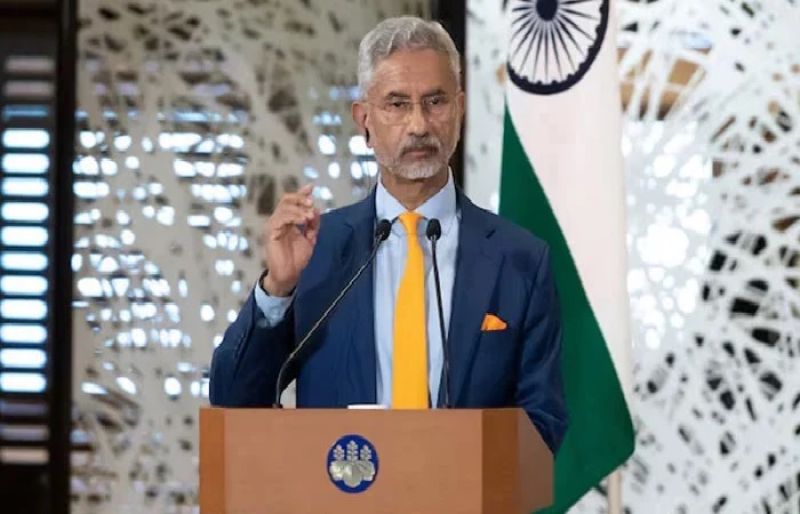
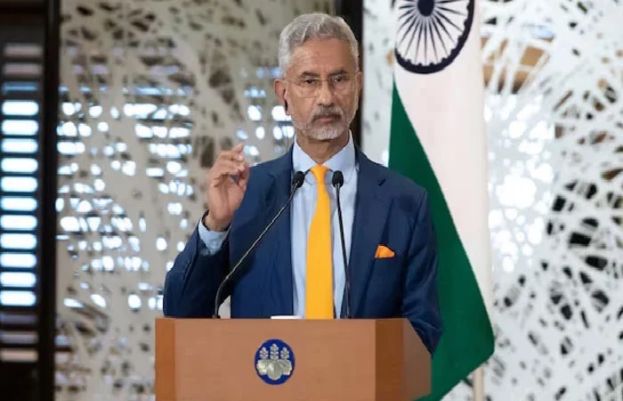
Indian External Minister for Foreign Minister Subrahmanyam Jaishankar came under heavy criticism from politicians for issuing spiteful remarks about Pakistan over the latter’s mediation role in the ongoing US-Israel war against Iran.
During an all-party meeting in India, Jaishankar said that India does not view itself as a “dalaal” (broker) like Pakistan, dismissing Pakistan’s efforts as a mediator between Iran and the US, The News reported on Thursday.
“There is nothing new in Pakistan’s mediation efforts, as that country has been ‘used’ by the US since 1981,” Jaishankar said during the all-party meeting convened by the government to discuss the ongoing West Asia crisis.
The development comes days after reports suggested that Pakistan is positioning itself as a key mediator to help broker an end to the US-Israel war against Iran through active back-channel diplomacy.
According to international media reports, Chief of Army Staff and Chief of Defence Forces Field Marshal Asim Munir recently held a telephonic conversation with US President Donald Trump, with the White House also confirming the contact. Senior Pakistani officials have reportedly been facilitating communication between Tehran and key US interlocutors, including Steve Witkoff and Jared Kushner.
Reports also suggest that Islamabad is being considered as a potential venue for a high-level meeting between the United States and Iran later this week, with US Vice President JD Vance expected to attend if the proposal materialises.
Castigating the Indian foreign minister, Defence Minister Khawaja Asif said that Jaishankar thought of himself as “a hi-fi dalal”, adding that the remarks “reflect personal frustration”.
Meanwhile, Murtaza Solangi — who serves as President Asif Ali Zardari’s spokesperson — strongly condemned the remarks and said it seems Modi’s “Dalal, Jaishankar and his cabal have lost all their marbles after May War last year”.
“He [Jaishankar] seems to be infected with a self-destructive virus besides a diplomatic dementia losing everything he had learnt in the diplomatic school,” he wrote on X.
“Fact is that he is a Dalal of Modi who is a Dalal of Netanyahu,” he said, adding that Jaishankar’s mission to “isolate Pakistan” had ended up isolating India instead.
Separately, former caretaker foreign minister Jalil Abbas Jilani said that the use of such language by the Indian external affairs minister “reflects a sick mindset”.
“Reducing diplomacy to name-calling may serve domestic politics — but it does little for peace,” he wrote on X.
The former Sindh governor, Imran Ismail, said that the comment was “strange coming from someone whose foreign policy often looks like it’s constantly for hire”.
“India is actually selling their independence to the highest bidder. Do you know what [it is] called?” he added.
Former power minister Khurram Dastgir Khan condemned the “reprehensible” language used by Jaishankar, saying: “Pakistan was the nemesis to Hindutva hubris in May 2025 and remains so.”
‘Compromised’
Indian Prime Minister Narendra Modi’s government came under fire over what the opposition described as the country’s isolation after siding with Israel ahead of the war.
Terming Modi and his foreign policy “compromised”, Leader of Opposition Rahul Gandhi has termed Modi and his foreign policy “compromised”, objecting to the PM’s references to the Covid pandemic when he spoke about the West Asia crisis in his speeches in Parliament this week.
“Modi ji said Covid-like time is coming. He has forgotten what had happened then, how many people had died, and what kind of tragedies had unfolded,” he said.
Asked about reports of Pakistan mediating US-Iran talks to end the ongoing war, Gandhi said: “Our foreign policy is PM Modi’s personal foreign policy. You can see the results of this; everybody considers this a universal joke.”
“I can give it to you in writing; PM will do what America and Israel say. He will not work in the interest of India and its farmers; he will do as America and Israel say.”
- Witness credibility looms large in the case.
- Two of three trial convictions have been overturned.
- Cocaine importation conspiracy among Maduro’s charges.
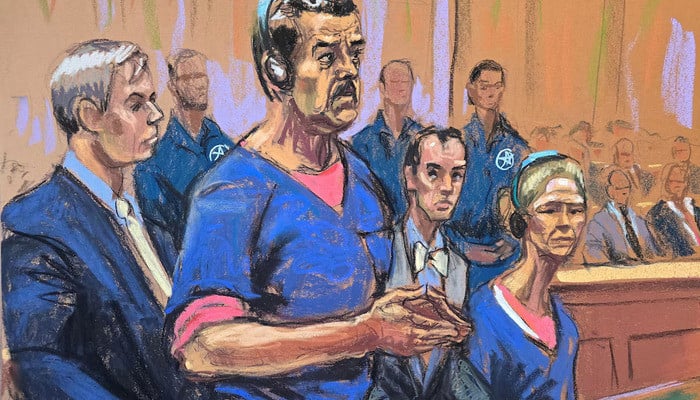
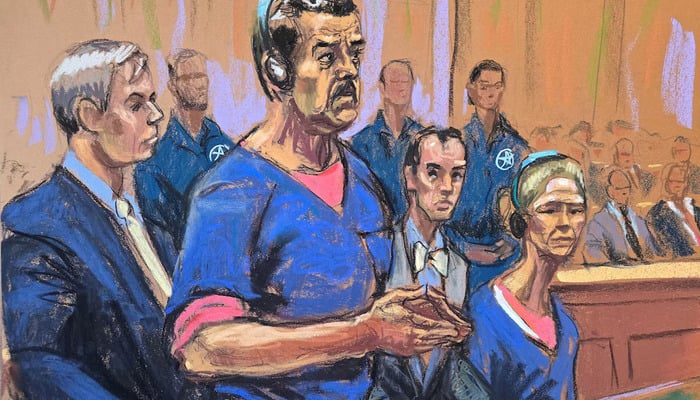
Ousted Venezuelan President Nicolás Maduro returns to a US court on Thursday on criminal charges including narcoterrorism, a statute that has rarely been tested at trial and has a limited record of success.
Maduro, 63, led Venezuela from 2013 through his capture in Caracas by US special forces on January 3. He pleaded not guilty on January 5 to all US charges against him.
The 2006 statute at issue, enacted to target drug trafficking tied to activities the United States considers terrorism, has produced just four trial convictions, a Reuters review of federal court records shows — and two were later overturned over issues stemming from witness credibility.
The mixed record highlights what could be a central challenge for prosecutors in the Maduro case: persuading jurors that evidence from cooperating insiders credibly establishes a knowing link between alleged drug crimes and terrorism.
“The lesson of these two cases is not that the narcoterrorism statute is unworkable,” said Alamdar Hamdani, a partner at law firm Bracewell and former US Attorney in Houston.
“It is that the statute’s most demanding element — proving the defendant’s knowledge of the terrorism nexus — requires a quality of evidence and a standard of prosecutorial diligence that leaves no room for institutional gaps, name-spelling errors, or uncritical acceptance of what your witnesses tell you,” he said.
Prosecutors have yet to disclose who will testify against Maduro. But one former Venezuelan general indicted alongside Maduro has told Reuters he is willing to cooperate.
Maduro accused of helping Colombian rebels
Congress created the narcoterrorism statute 20 years ago to target drug traffickers who finance activities the United States considers terrorism. Since then, 83 people, including Maduro, have been charged with violating it. Thirty-one pleaded guilty to narcoterrorism or lesser charges, eight are awaiting trial, and dozens are not in US custody, according to the review.
The conviction reversals do not affect Maduro’s case, and defendants in those cases faced additional charges that were not overturned. Maduro also faces three other counts, including cocaine importation conspiracy.
Maduro, a socialist, is accused of leading a conspiracy in which officials in his government helped move cocaine through Venezuela in collaboration with traffickers including the Revolutionary Armed Forces of Colombia (FARC), which the US labeled a terrorist organisation from 1997 to 2021. Maduro and his fellow indicted officials have always denied wrongdoing, saying the US charges are part of an imperialist conspiracy to harm Venezuela.
His lawyer, Barry Pollack, did not respond to requests for comment about the narcoterrorism law’s trial record or possible witnesses against Maduro.
A spokesman for the Manhattan US Attorney’s office declined to comment on the same subjects.
Law defines terrorism broadly
Narcoterrorism carries a 20-year mandatory minimum sentence, twice the minimum penalty for ordinary drug trafficking. Both can result in life imprisonment.
The narcoterrorism law defines terrorism as premeditated, politically motivated violence against non-combatants.
“If you take the legal definition of terrorism and terrorist activity, you can paint a pretty broad brush with the kind of activity we’re talking about,” said Shane Stansbury, a professor at Duke University School of Law and former federal prosecutor.
To convict Maduro, prosecutors must show that he knew the drug trafficking he allegedly facilitated resulted in a financial benefit for a group that engaged in activities the United States considered terrorism, even if he had other aims.
“It doesn’t have to be the motivation,” said Artie McConnell, a former federal prosecutor and current partner at law firm BakerHostetler.
In the first narcoterrorism trial in 2008, an Afghan man with alleged ties to the Taliban was convicted of helping a Drug Enforcement Administration informant buy opium and heroin. But in 2021, a judge threw out the narcoterrorism count after an appeals court ruled his lawyer failed to adequately challenge the only witness tying him to the Taliban.
In another case, a jury deadlocked in the 2011 trial of an accused Afghan trafficker. He was convicted at a second trial in 2012, but the narcoterrorism count was thrown out in 2015 after prosecutors acknowledged that a US government agency considered the cooperating witness who linked him to the Taliban a “fabricator.”
The 2015 narcoterrorism trial conviction of a Colombian man for trying to ship cocaine for the FARC and attempting to buy weapons for the group has been upheld.
A fourth narcoterrorism trial resulted in a guilty verdict earlier this week.
Case could rely on cooperating witnesses
Legal experts say the government’s case against Maduro could include testimony from two former Venezuelan generals indicted alongside him in 2020: Cliver Alcalá and Hugo Carvajal. Both have pleaded guilty to charges linked to their dealings with the FARC, but neither agreed to cooperate at the time of their pleas.
In a telephone interview from federal prison in Cumberland, Maryland, Alcalá said he was willing to cooperate. But he said prosecutors had previously insisted that he admit to involvement in drug trafficking, which he denies, as a condition for cooperation.
“I cannot, in order to reduce my sentence, declare myself to be a drug trafficker when I am not,” he said.
Alcalá retired from Venezuela’s military shortly after Maduro took office in 2013. He later became an outspoken critic of Maduro’s government.
Asked whether the charges against Maduro were true, Alcalá said he thought there was “some basis” and said he believed Maduro had ties to a drug trafficker jailed in Caracas. He did not offer specifics.
Alcalá, 64, is serving a nearly 22-year prison sentence after pleading guilty in 2023 to providing material support to the FARC. In court, he admitted supplying the group with weapons — which he says he did under orders from former Venezuelan President Hugo Chavez — but denied helping traffickers move cocaine.
Carvajal’s sentencing is scheduled for April 16. His lawyer declined to comment on whether he would cooperate with prosecutors.


How Cole Hutson is taking a role in the next wave for the Capitals

Iran military may have received chipmaking support from China: US officials

Men’s March Madness live tracker: Updates from every Sweet 16 game Thursday

-

 Fashion1 week ago
Sales at US apparel, clothing accessories stores up 4% YoY in Jan 2026
-

 Fashion1 week ago
Spain’s Inditex FY25 sales rise 3.2% to $46.28 bn amid strong demand
-

 Entertainment1 week ago
Val Kilmer revived 1 year after death through AI
-
 Politics1 week ago
Iran strikes Tel Aviv with cluster-warhead missiles in retaliation of Larijani’s martyrdom
-

 Sports1 week ago
March Madness 2026 – How to watch in SA, start time, schedule, TV channel for NCAA championship basketball tournament
-
 Fashion1 week ago
US’ G-III Apparel’s FY26 sales fall 7% to $2.96 bn
-

 Fashion6 days ago
China’s textile & apparel exports surge 17% to $50 bn in Jan-Feb 2026
-
 Politics1 week ago
US judge directs Trump administration to bring VOA employees back