

Politics
Trump pauses attacks on Iran’s energy plants for ten days

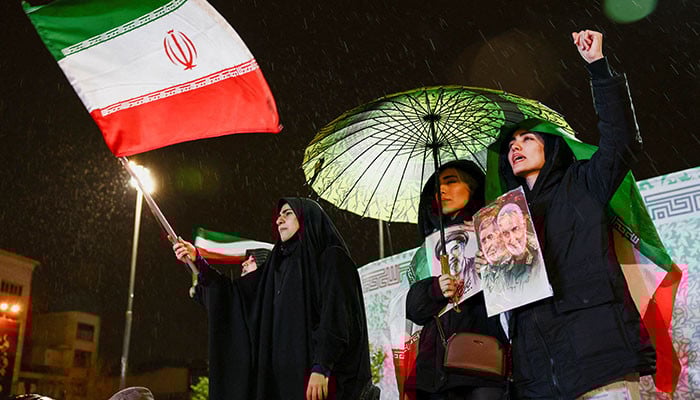
- Trump claims talks with Iran are ‘going very well’.
- Iranian official dismisses US peace proposal as ‘unfair’.
- WSJ cites mediators as saying: Iran hasn’t asked for pause.
DUBAI/TEL AVIV/WASHINGTON: President Donald Trump announced that he will pause attacks on Iran’s energy plants for 10 days at Tehran’s request and said talks with Iran were going “very well,” although an Iranian official dismissed a US proposal for ending the conflict as “one-sided and unfair.”
The war has killed thousands of people, spread to neighbouring nations and hit the global economy with soaring energy prices since the US and Israel launched strikes on February 28, after talks about Tehran’s nuclear programme failed to yield a deal.
On Thursday, Trump threatened during a cabinet meeting at the White House to increase pressure on Iran if it did not make a deal, before later posting on social media that he would pause attacks on Iranian energy plants for 10 days until April 6, 2026 at 2000 EDT (0000 GMT on April 7).
“Talks are ongoing and, despite erroneous statements to the contrary by the Fake News Media, and others, they are going very well,” he added in his Truth Social post.
He later told Fox News’ “The Five” programme that the Iranians had asked for a seven-day pause. There was no immediate reaction from Tehran.
Iran has not asked for a 10-day pause on strikes on its energy plants, the Wall Street Journal cited peace talk mediators as saying.
Drone speedboats
The war has massively disrupted shipping, sending crude oil prices up around 40% and causing a spike of some two-thirds in shipments of liquefied natural gas to Asia. Prices of nitrogen-based fertilisers, critical to food production, have risen by around 50%.
Despite Trump’s upbeat assessment, Iran continued to retaliate against US and Israeli strikes by hitting Israel and US bases; it also struck Gulf states and effectively blocked Middle East fuel exports via the Strait of Hormuz.
The US has deployed uncrewed drone speedboats for patrols as part of its operations against Iran, the Pentagon told Reuters, the first time Washington has confirmed using such vessels in an active conflict.
Trump said the US would become the Islamic Republic’s “worst nightmare” if it did not comply with US demands, which include opening the strait and ending Tehran’s nuclear programme.
He said taking control of Iran’s oil was an option, but gave no details.
The Iranian official told Reuters that a 15-point US proposal, conveyed to Tehran by Pakistan, was reviewed in detail on Wednesday by senior Iranian officials and the representative of Iran’s supreme leader.
While they felt it served only US and Israeli interests, diplomacy had not ended, the official said.
The fighting continued to rage, however.
On Thursday, Iran launched multiple waves of missiles at Israel, striking Tel Aviv, Haifa and other areas, including a Palestinian town in central Israel.
At least one ballistic missile hit Tel Aviv, according to Israel’s military, while others carried cluster munitions that dispersed smaller explosives, damaging homes and cars.
Israel’s ambulance service said a man was killed in Nahariya after Hezbollah fired a rocket barrage at the northern city.
In Iran, strikes hit the southern city of Bandar Abbas and a village on the outskirts of the southern city of Shiraz. A university building in Isfahan was reported to have been hit.
Strait of Hormuz a crucial issue
Trump suggested on Thursday that Iran let 10 oil tankers transit the Strait of Hormuz as a goodwill gesture in negotiations, including some Pakistan-flagged vessels.
The president has sent thousands of troops to the Middle East, some of whom have already arrived, driving expectations of a ground invasion, although details remain scant.
Trump’s special envoy, Steve Witkoff, confirmed that the US had sent a “15-point action list” as a basis for negotiations to end the war.
It includes demands ranging from dismantling Iran’s nuclear programme to curbing its missiles and effectively handing over control of the strait, according to sources and reports.
Pakistan’s foreign minister said “indirect talks” between the US and Iran were taking place through messages relayed by Islamabad, with other states including Turkey and Egypt also supporting mediation efforts.
Any talks look set to be extremely thorny.
Iran has hardened its stance since the war began, demanding guarantees against future military action, compensation for losses, and formal control of the strait, Iranian sources say.
It also told intermediaries that Lebanon must be included in any ceasefire deal, regional sources said.
Trump has not identified with whom the US is negotiating in Iran, with many high-ranking officials among the thousands of people killed in the war across the Middle East.
- Two-decade worship arrangement ended.
- Muslim side plans Supreme Court challenge.
- Critics warn of a grave threat.
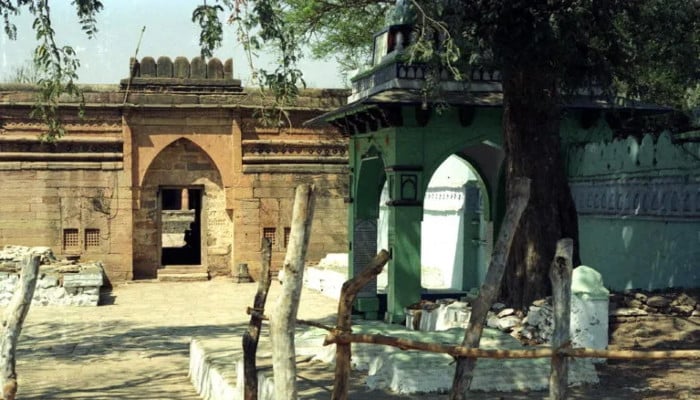
Muslims will no longer be able to offer Friday prayer at a disputed mosque-temple complex in India’s Madhya Pradesh after a court declared the site a Hindu temple and authorities allowed daily Hindu worship there.
An Indian court ruling has ended a two-decade worship arrangement at the Bhojshala-Kamal Maula mosque complex, with the Archaeological Survey of India (ASI) allowing daily Hindu prayers after the site was declared a temple.
The Indore bench of the Madhya Pradesh High Court ruled that the complex in Dhar district was a temple dedicated to goddess Vagdevi, also known as Saraswati, Indian media reported.
Following the ruling, the ASI issued a May 16 order allowing Hindu devotees unrestricted daily worship rights at the site. The order superseded previous directives, including a 2003 arrangement under which Hindus were allowed to worship on Tuesdays and Muslims were allowed to offer Friday prayer.
Advocate Vishnu Shankar Jain, who represented the Hindu petitioners, said Hindus could now visit and worship at the complex “without any restriction”.
The ASI said the site would remain a protected monument under the Ancient Monuments and Archaeological Sites and Remains Act, 1958, while worship timings would be determined by the superintending archaeologist in consultation with the district administration.
The court relied on a 2024 ASI report which said the Bhojshala-Kamal Maula mosque complex was constructed using remnants of earlier temples, with the mosque built centuries later, according to Indian media.
The court also said the Muslim side could approach the state government for land at an alternative site in Dhar district to build a mosque. Dhar city Qazi Waqar Sadiq indicated that the Muslim petitioners would approach the Supreme Court, adding that the Muslim community had no intention of accepting alternative land.
The protected monument has long been contested, with Hindu groups claiming it is a temple dedicated to Saraswati and Muslims maintaining that it is the Kamal Maula mosque.
According to Al Jazeera, the ruling has placed the mosque out of bounds for Muslims in Dhar, where it had been used for prayer for decades.
The decision has drawn criticism from Muslim-side lawyers, historians and politicians, who argue that it threatens protections for Muslim places of worship in India. Lawyer Ashhar Warsi, who argued from the Muslim side, called the verdict “an erroneous judgement” and “a clear violation of the established rule of law”.
Asaduddin Owaisi, a five-time member of parliament, told Al Jazeera that the ruling sent a message of “grave threat” to Muslim places of worship in India. He also said the Babri judgement had “opened the floodgates” for similar claims.
Al Jazeera also quoted historian Audrey Truschke as saying the current trend of targeting mosques in India was part of the “entrenched Islamophobia of Hindu nationalism”.
The dispute comes amid a wider Hindutva push targeting medieval mosques and Islamic-era monuments in India, with campaigners claiming that they were built over Hindu temples. Such claims have gained momentum since Prime Minister Narendra Modi came to power in 2014.
- US shows some flexibility on frozen funds, nuclear activity: sources.
- Adds Washington denies oil sanctions waiver for Iran.
- Fragile ceasefire holds after US-Israeli strikes against Iran.
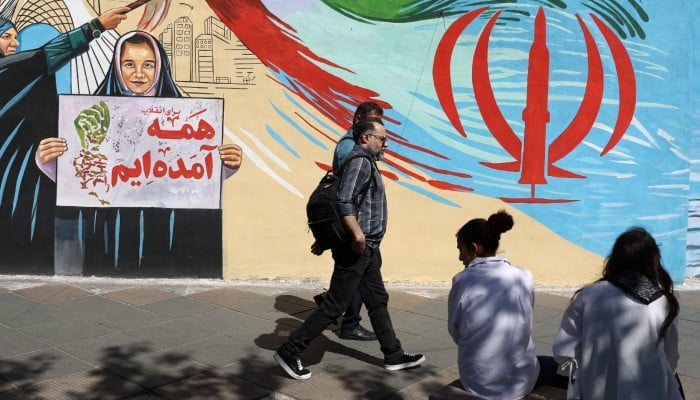
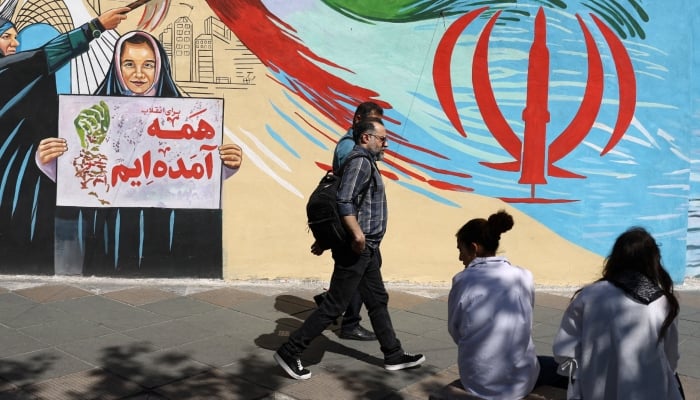
Tehran’s latest peace proposal to the United States involves ending hostilities on all fronts, including Lebanon, the exit of US forces from areas close to Iran, and reparations for destruction caused by the US-Israeli war, state media reported on Tuesday.
In Tehran’s first comments on the proposal, Deputy Foreign Minister Kazem Gharibabadi said Tehran also sought the lifting of sanctions, the release of frozen funds and an end to the US marine blockade on the country, according to IRNA news agency.
The terms as described in the Iranian reports appeared little changed from Iran’s previous offer, which US President Donald Trump rejected last week as “garbage”.
Trump said on Monday he had paused a planned resumption of attacks on Iran after Tehran sent a new peace proposal to Washington, and that there was now a “very good chance” of reaching a deal limiting Iran’s nuclear programme.
Reuters could not determine whether preparations had been made for strikes that would mark a renewal of the war Trump started in late February.
Under pressure to reach an accord that would reopen the Strait of Hormuz — a key supply route for global supplies of oil and other commodities — Trump has previously expressed hope that a deal was close on ending the conflict, and similarly threatened heavy strikes on Iran if Tehran did not reach a deal.
In a social media post, Trump said the leaders of Qatar, Saudi Arabia and the United Arab Emirates had requested that he hold off on the attack because “a Deal will be made, which will be very acceptable to the United States of America, as well as all Countries in the Middle East, and beyond.”
A Pakistani source confirmed that Islamabad, which has conveyed messages between the sides since hosting the only round of peace talks last month, had shared the Iranian proposal with Washington.
Although neither side has publicly disclosed any concessions in negotiations that have been stalled for a month, a senior Iranian official suggested on Monday that Washington may be softening some of its demands.
The source said the US had agreed to release a quarter of Iran’s frozen funds — totalling tens of billions of dollars — held in foreign banks. Iran wants all the assets released.
And the source said Washington had shown more flexibility in agreeing to let Iran continue some peaceful nuclear activity under the supervision of the International Atomic Energy Agency.
- Trump hopes for securing agreement to end the war.
- US president says had prepared a new attack for Tuesday.
- Trump warns of large-scale attack if no agreement reached.
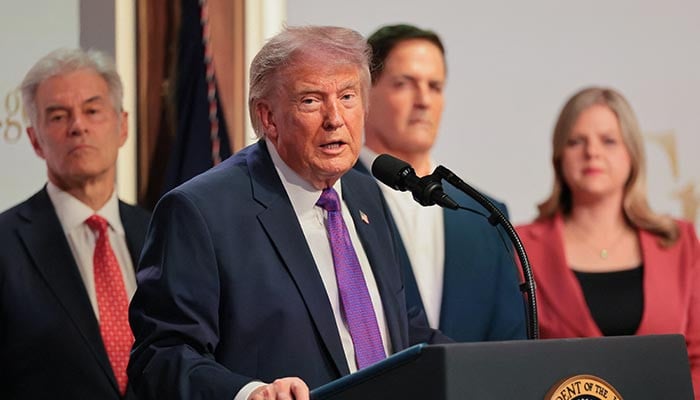
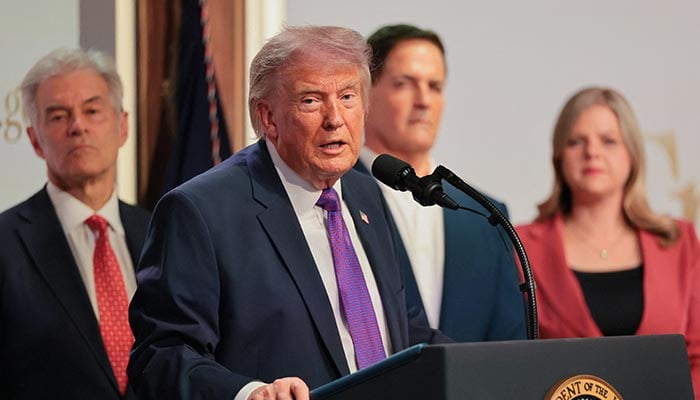
US President Donald Trump said he was planning a major new assault on Iran on Tuesday, but held off as he saw hope for securing a so far elusive agreement to end the war.
Trump said that he stopped his purported attack plan at the urging of Gulf Arab allies, which Iran has threatened with reciprocal attacks if the United States and Israel end a nearly six-week ceasefire.
Trump, who had indefinitely extended the truce and made clear he wants to exit a war that has proven to be a political liability, said he had prepared a new attack for Tuesday after Iran refused his outlines of a deal.
The leaders of Qatar, Saudi Arabia and the United Arab Emirates asked him “to hold off on our planned Military attack of the Islamic Republic of Iran, which was scheduled for tomorrow, in that serious negotiations are now taking place,” Trump wrote on his Truth Social platform.
But Trump added he had instructed the US military to be “prepared to go forward with a full, large scale assault of Iran, on a moment’s notice, in the event that an acceptable Deal is not reached.”
Speaking later at a White House event, Trump said there had been a “very positive development” and that Arab allies said a deal was near that would leave Iran without nuclear weapons, which Tehran denies pursuing.
“There seems to be a very good chance that they can work something out. If we can do that without bombing the hell out of them, I’d be very happy,” Trump said.
Iran has repeatedly rebuffed Trump’s offers and has exerted control over the Strait of Hormuz, the vital waterway into the Gulf, sending global oil prices spiraling.
Iranian foreign ministry spokesman Esmaeil Baqaei confirmed exchanges with the United States through mediator Pakistan and said Tehran made clear its “concerns.”
The Islamic republic, whose supreme leader was killed in the initial strikes on February 28 but has proven resilient, is demanding the release of Iranian assets frozen abroad, the lifting of long-standing sanctions and reparations for the war.
Iranian President Masoud Pezeshkian, considered a moderate in a system increasingly dominated since the war by the hardline Revolutionary Guards, said that speaking with Washington “does not mean surrender” and that Iran would defend its “dignity” and rights.
Iran’s Fars news agency said Sunday that Washington had presented a five-point list, which included a demand for Iran to keep only one nuclear site in operation and transfer its stockpile of highly enriched uranium to the United States.
US authorities had refused to release “even 25%” of Iran’s frozen assets or pay any reparations, Fars said.
But Iran’s Tasnim news agency, citing an unnamed source close to the Iranian negotiating team, said the United States made one new step forward in the latest text by agreeing to waive oil sanctions while negotiations were underway.
New Hormuz body
In an earlier proposal, which was sent last week, Iran had called for an end to the war on all fronts, including Israel’s campaign in Lebanon, as well as a halt to a US naval blockade on Iranian ports in place since April 13.
Fars said the Iranian proposal had emphasised that Tehran would continue to manage the strategic Strait of Hormuz, a vital energy conduit which Iran has largely kept closed since the start of the war.
On Monday, the Persian Gulf Strait Authority, a new body Iran has set up to manage the strait, said it would provide “real-time updates” on the waterway via X.
The Revolutionary Guards also said Monday that internet fiber optic cables passing through the strait could be brought under an Iranian system of permits.
Hoping to control oil prices, the US Treasury extended by 30 days a sanctions waiver for Russian oil cargoes already at sea, continuing to ease the pressure on Moscow since its 2022 invasion of Ukraine.


UK’s clothing exports dip 7.8% to $884 mn in January-March 2026

The AI economy is rewriting the American Dream — and blue-collar workers are poised to win

Italy’s imports grow 4.8% MoM in March amid trade rebound

-

 Entertainment6 days ago
Conan O’Brien hat tricks as Oscar host
-

 Fashion6 days ago
Italy’s Zegna Group’s Q1 growth boosted by strong organic performance
-

 Entertainment1 week ago
Tom Brady gets back at Kevin Hart during Netflix roast
-

 Tech1 week ago
Papa Johns Is Getting Into Drone Delivery—but Not for Pizza
-

 Tech1 week ago
CUDA Proves Nvidia Is a Software Company
-

 Fashion1 week ago
EC clears €5-bn German state aid to back decarbonisation of industry
-
 Business1 week ago
Cyber-crime increasingly coming with threats of physical violence
-
 Tech1 week ago
Chevron Wants a School District Tax Break for a Data Center Power Plant in Texas