

Business
Trump raises new global tariffs to 15% after hitting out at ‘terrible’ Supreme Court

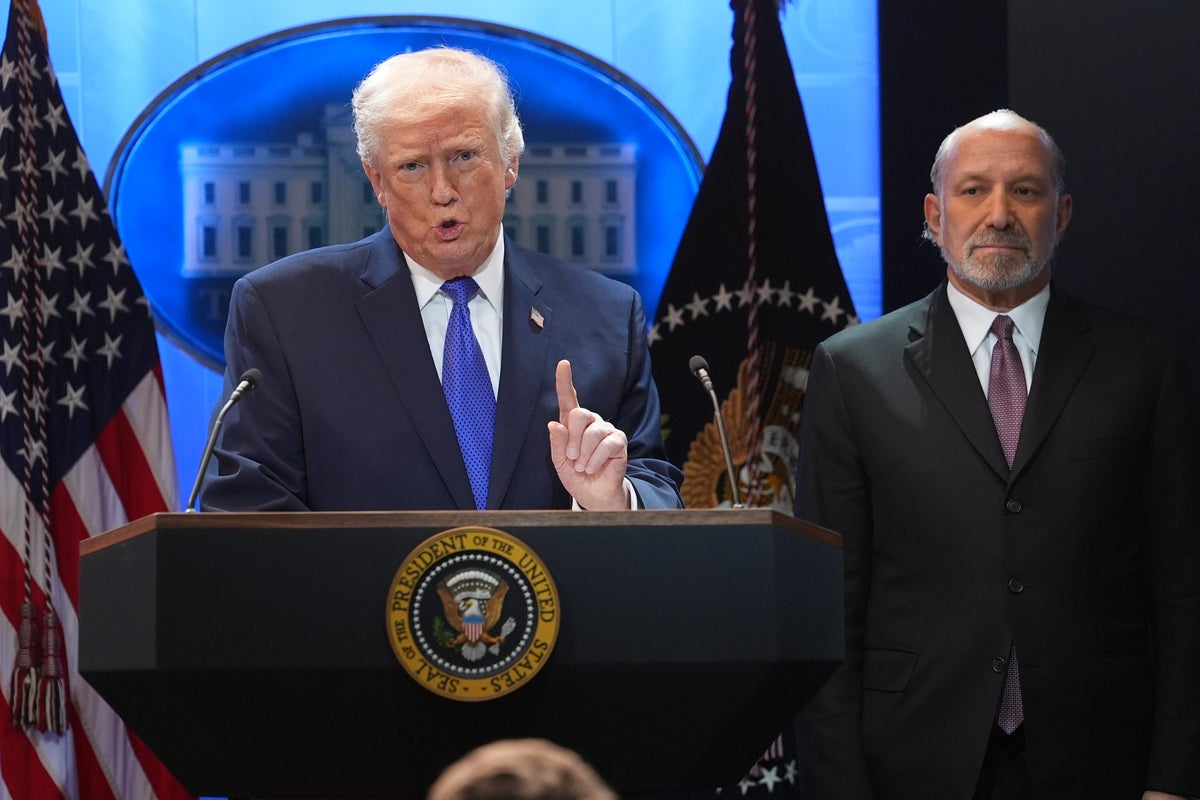
Donald Trump has increased global tariffs to 15 per cent as he hit out at a Supreme Court ruling that struck down his previous import levies, calling the ruling “terrible” and branding the justices who rejected his trade policy as “fools”.
On Friday, the US president said he would replace the tariffs axed by the court with a 10 per cent tax on all goods entering the US. But in a post on Truth Social on Saturday he announced plans to increase this to 15 per cent.
The US president’s “reciprocal tariffs”, imposed on most of the rest of the world last April under an emergency powers law, were overturned by the US Supreme Court on Friday in a major blow to the president’s economic agenda.
But he doubled down on imposing levies following the decision, claiming the court “has been swayed by foreign interests” and other countries were “dancing in the streets, but they won’t be dancing for long, that I can assure you”.
The UK scrambled to respond in the wake of the announcement, with ministers saying they expect the country’s “privileged trading position with the US” to continue following the Supreme Court’s ruling.
The UK received the lowest tariff rate of 10 per cent, and a subsequent deal struck by Sir Keir Starmer and Mr Trump saw further carve-outs for Britain’s steel industry and car manufacturers.
The US president’s latest tariff announcements raise questions over whether those deals still stand, although officials are understood to believe it will not impact on most of the UK’s trade with America, including preferential deals on steel, cars and pharmaceuticals.
Posting on Truth Social on Saturday afternoon, Mr Trump said: “I, as President of the United States of America, will be, effective immediately, raising the 10% Worldwide Tariff on Countries, many of which have been ‘ripping’ the U.S. off for decades, without retribution (until I came along!), to the fully allowed, and legally tested, 15% level.”
It came after a post on Friday evening said: “It is my Great Honor to have just signed, from the Oval Office, a Global 10 per cent Tariff on all Countries, which will be effective almost immediately. Thank you for your attention to this matter! PRESIDENT DONALD J. TRUMP”
He later added in a follow-up post criticising the Supreme Court Justices who ruled against his levies: “Their decision was ridiculous but, now the adjustment process begins, and we will do everything possible to take in even more money than we were taking in before!”
Speaking at the White House earlier, Mr Trump said the Supreme Court decision affirmed his ability to charge more tariffs under different statutes.
He said: “In order to protect our country, a president can actually charge more tariffs than I was charging in the past… period of a year.
“Under the various tariffs authorities, so we can use other of the statutes, other of the tariff authorities, which have also been confirmed and are fully allowed.
“Therefore, effective immediately, all national security tariffs under Section 232 and existing Section 301 tariffs, they’re existing, they’re there, remain in place, fully in place. And in full force.
“Today I will sign an order to impose a 10 per cent global tariff under Section 122, over and above our normal tariffs already being charged.
“And we’re also initiating several Section 301 and other investigations to protect our country from unfair trading practises of other countries and companies.”
A UK government spokesperson said: “This is a matter for the US to determine but we will continue to support UK businesses as further details are announced.
“Under any scenario, we expect our privileged trading position with the US to continue and will work with the administration to understand how the ruling will affect tariffs for the UK and the rest of the world.”

It was an updated version of a statement released earlier in response to the court ruling, but removed a reference to the UK enjoying “the lowest reciprocal tariffs globally”.
In the wake of the announcement, Liberal Democrat leader Sir Ed Davey said the UK government should sue Mr Trump for $100bn for the damage caused to the UK by trade tariffs, arguing it is “the only language he understands”.
He branded Mr Trump the “most dangerous, damaging US president of modern times” as he welcomed the “brilliant” decision by the US Supreme Court on Friday.
It came after Mr Trump said that some trade deals negotiated after he imposed his reciprocal tariffs will no longer be valid after the US Supreme Court ruling.
“Some of them stand. Many of them stand. Some of them won’t, and they’ll be replaced with the other tariffs,” he said.
When he first announced the 10 per cent “global tariff”, the US president said it would be in place for around five months.
“We’re going straight ahead with 10 per cent straight across the board… and then during that period of about five months, we are doing the various investigations necessary to put fair tariffs, or tariffs period, on other countries.
“So we’re doing that, period, but we’re immediately instituting the 10 per cent provision, which we’re allowed to do. And in the end, I think we’re taking more money than we’ve taken in before.”
The US has collected more than $133bn (£98.4bn) since Mr Trump imposed the tariffs, but now faces the prospect of having to refund that money to importers.
Friday’s decision, approved by a 6-3 majority, found that a 1977 law did not give Mr Trump the power to impose tariffs without the approval of the US Congress.
The British Chambers of Commerce (BCC) said the decision did little to “clear the murky waters for business” around US tariffs.
William Bain, head of trade policy at the BCC, said Mr Trump could use other legislation to reimpose tariffs.
He said: “For the UK, the priority remains bringing tariffs down wherever possible. It’s important the UK government continues to negotiate on issues like steel and aluminium tariffs and reduces the scope of other possible duties.”
Campaign group Best for Britain said the decision “underlines the instability of doing deals with Trump’s USA and the importance of forging deeper, more reliable trade with our EU neighbours”.
The platforms have grown in popularity, with some users making bets on global events.
Source link
TV channels for dogs are multiplying but research is mixed on whether dogs are watching.
Source link
The rise in energy prices has hit Asia particularly hard as many nations are heavily reliant on Gulf oil.
Source link


Bangladesh garment exports down, March sees steeper drop

South Korea’s apparel imports rise slightly to $1.9 bn in Jan-Feb

Khamenei says Iran does not want war but ‘criminal agressors’ won’t go unpunished

-
 Business1 week ago
Jaguar Land Rover sees sales recover after cyber attack
-
Uncategorized1 week ago
[CinePlex360] Please moderate: “Trump signals p
-

 Entertainment6 days ago
Joe Jonas shares candid glimpse into parenthood with Sophie Turner
-

 Tech6 days ago
Our Favorite iPad Is $50 Off
-

 Sports6 days ago
UConn Final Four run could trigger a $50M furniture giveaway for Massachusetts-based Jordan’s Furniture
-

 Fashion1 week ago
China’s Anta Sports posts record $11.62 bn revenue in 2025
-

 Entertainment6 days ago
Blake Lively reacts to harassment claims dismissal against Justin Baldoni
-

 Politics7 days ago
Iran can sustain Strait of Hormuz closure for years, will cut US military logistics: Official