

Politics
Trump says ‘hopefully’ no need for military action against Iran


- Iran threatens US bases, aircraft carriers if attacked.
- Trump says speaking with Iran but time running out.
- Iran warns US attack would trigger instant response.
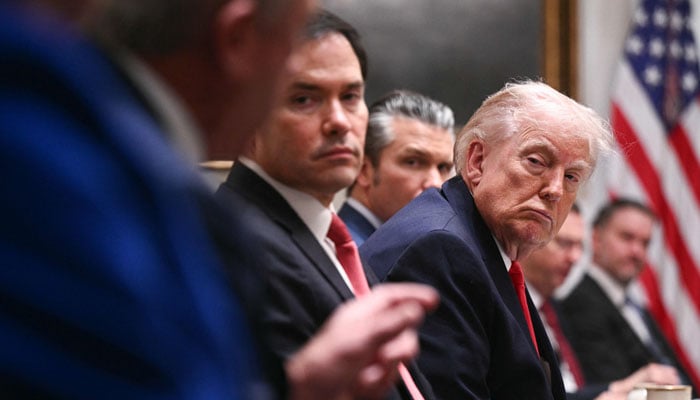
PARIS: US President Donald Trump said on Thursday he hoped to avoid military action against Iran, which has threatened to strike American bases and aircraft carriers in response to any attack.
Trump said he is speaking with Iran and left open the possibility of avoiding a military operation after earlier warning that time was “running out” for Tehran as the United States sends a large naval fleet to the region.
When asked if he would have talks with Iran, Trump told reporters: “I have had, and I am planning on it.”
“We have a group headed out to a place called Iran, and hopefully we won’t have to use it,” the US president added, while speaking to media at the premiere of a documentary about his wife, Melania.
As Brussels and Washington dialled up their rhetoric and Iran issued stark threats this week, UN chief Antonio Guterres has called for nuclear negotiations to “avoid a crisis that could have devastating consequences in the region”.
An Iranian military spokesman warned Tehran’s response to any US action would not be limited — as it was in June last year when American planes and missiles briefly joined Israel’s short air war against Iran — but would be a decisive response “delivered instantly”.
Brigadier General Mohammad Akraminia told state television that US aircraft carriers have “serious vulnerabilities” and that numerous American bases in the Gulf region are “within the range of our medium-range missiles”.
“If such a miscalculation is made by the Americans, it will certainly not unfold the way Trump imagines — carrying out a quick operation and then, two hours later, tweeting that the operation is over,” he said.
Iranian officials have blamed the recent protest wave on the two countries, claiming their agents spurred “riots” and a “terrorist operation” that hijacked peaceful rallies sparked over economic grievances.
Iranian authorities acknowledge that thousands were killed during the protests, giving a toll of more than 3,000 deaths, but say the majority were members of the security forces or bystanders killed by “rioters”.
Billboards and banners have gone up in the capital, Tehran to bolster the authorities’ messages. One massive poster appears to show an American aircraft carrier being destroyed.
An official in the Gulf, where states host US military sites, told AFP that fears of a US strike on Iran are “very clear.”
“It would bring the region into chaos, it would hurt the economy not just in the region but in the US, and cause oil and gas prices to skyrocket,” the official added.
Qatar’s leader Sheikh Tamim bin Hamad Al Thani and Iran’s President Masoud Pezeshkian held a call to discuss “efforts being made to de-escalate tensions and establish stability,” the Qatar News Agency reported.
Trump had threatened military action if protesters were killed in the anti-government demonstrations that erupted in late December and peaked on January 8 and 9.
But his more recent statements have turned to Iran’s nuclear programme, which the West believes is aimed at making an atomic bomb.
On Wednesday, he said “time is running out” for Tehran to make a deal, warning the US naval strike group that arrived in Middle East waters on Monday was “ready, willing and able” to hit Iran
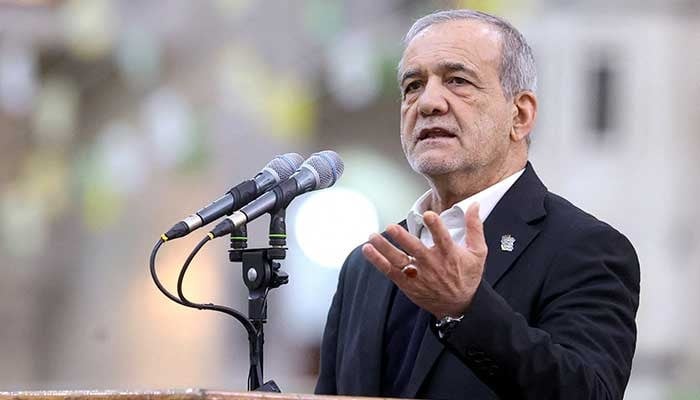
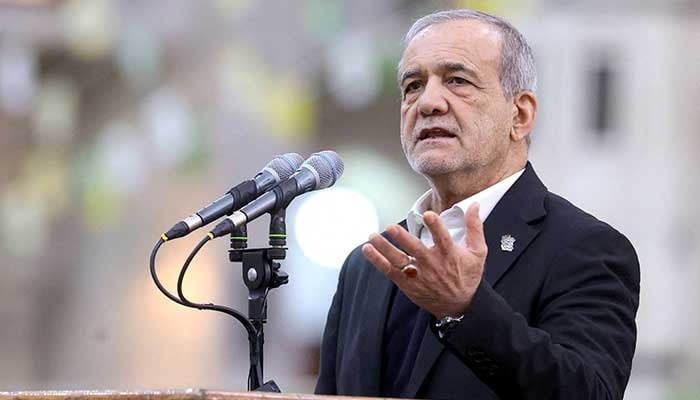
Iran’s president, Masoud Pezeshkian, on Wednesday published an open letter directly to the American public, challenging the rationale behind the ongoing US‑Israeli campaign against Tehran and urging citizens in the United States to reconsider the motives driving Washington’s foreign policy.
In the wide‑ranging message, Pezeshkian questioned longstanding assumptions about Iran as a security threat, traced grievances in bilateral relations back decades, and insisted that Iran’s recent military measures are grounded in self‑defence rather than aggression.
The letter comes as US President Donald Trump prepares to address the nation on the state of the conflict.
Here’s the full text of his letter:
“In the name of God, the Compassionate, the Merciful
“To the people of the United States of America, and to all those who, amid a flood of distortions and manufactured narratives, continue to seek the truth and aspire to a better life:
“Iran — by this very name, character, and identity — is one of the oldest continuous civilisations in human history. Despite its historical and geographical advantages at various times, Iran has never, in its modern history, chosen the path of aggression, expansion, colonialism, or domination. Even after enduring occupation, invasion, and sustained pressure from global powers — and despite possessing military superiority over many of its neighbours — Iran has never initiated a war. Yet it has resolutely and bravely repelled those who have attacked it.
“The Iranian people harbour no enmity toward other nations, including the people of America, Europe, or neighbouring countries. Even in the face of repeated foreign interventions and pressures throughout their proud history, Iranians have consistently drawn a clear distinction between governments and the peoples they govern. This is a deeply rooted principle in Iranian culture and collective consciousness — not a temporary political stance.
“For this reason, portraying Iran as a threat is neither consistent with historical reality nor with present-day observable facts. Such a perception is the product of political and economic whims of the powerful — the need to manufacture an enemy in order to justify pressure, maintain military dominance, sustain the arms industry, and control strategic markets. In such an environment, if a threat does not exist, it is invented.
“Within this same framework, the United States has concentrated the largest number of its forces, bases, and military capabilities around Iran — a country that, at least since the founding of the United States, has never initiated a war. Recent American aggressions launched from these very bases have demonstrated how threatening such a military presence truly is. Naturally, no country confronted with such conditions would forgo strengthening its defensive capabilities. What Iran has done — and continues to do — is a measured response grounded in legitimate self-defence, and by no means an initiation of war or aggression.
“Relations between Iran and the United States were not originally hostile, and early interactions between the Iranian and American people were not marred with hostility or tension. The turning point, however, was the 1953 coup d’etat — an illegal American intervention aimed at preventing the nationalisation of Iran’s own resources. That coup disrupted Iran’s democratic process, reinstated dictatorship, and sowed deep distrust among Iranians toward US policies. This distrust deepened further with America’s support for the Shah’s regime, its backing of Saddam Hussein during the imposed war of the 1980s, the imposition of the longest and most comprehensive sanctions in modern history, and ultimately, unprovoked military aggression — twice, in the midst of negotiations —against Iran.
“Yet all these pressures have failed to weaken Iran. On the contrary, the country has grown stronger in many areas: literacy rates have tripled —from roughly 30 per cent before the Islamic Revolution to over 90pc today; higher education has expanded dramatically; significant advances have been achieved in modern technology; healthcare services have improved; and infrastructure has developed at a pace and scale incomparable to the past. These are measurable, observable realities that stand independent of fabricated narratives.
“At the same time, the destructive and inhumane impact of sanctions, war, and aggression on the lives of the resilient Iranian people must not be underestimated. The continuation of military aggression and recent bombings profoundly affect people’s lives, attitudes, and perspectives. This reflects a fundamental human truth: when war inflicts irreparable harm on lives, homes, cities, and futures, people will not remain indifferent toward those responsible.
“This raises a fundamental question: Exactly which of the American people’s interests are truly being served by this war? Was there any objective threat from Iran to justify such behaviour? Does the massacre of innocent children, the destruction of cancer-treatment pharmaceutical facilities, or boasting about bombing a country ‘back to the stone ages’ serve any purpose other than further damaging the United States’ global standing?
“Iran pursued negotiations, reached an agreement, and fulfilled all its commitments. The decision to withdraw from that agreement, escalate toward confrontation, and launch two acts of aggression in the midst of negotiations were destructive choices made by the US government —choices that served the delusions of a foreign aggressor.
“Attacking Iran’s vital infrastructure — including energy and industrial facilities — directly targets the Iranian people. Beyond constituting a war crime, such actions carry consequences that extend far beyond Iran’s borders. They generate instability, increase human and economic costs, and perpetuate cycles of tension, planting seeds of resentment that will endure for years. This is not a demonstration of strength; it is a sign of strategic bewilderment and an inability to achieve a sustainable solution.
“Is it not also the case that America has entered this aggression as a proxy for Israel, influenced and manipulated by that regime? Is it not true that Israel, by manufacturing an Iranian threat, seeks to divert global attention away from its crimes toward the Palestinians? Is it not evident that Israel now aims to fight Iran to the last American soldier and the last American taxpayer dollar — shifting the burden of its delusions onto Iran, the region, and the United States itself in pursuit of illegitimate interests?
“Is ‘America First’ truly among the priorities of the US government today?
“I invite you to look beyond the machinery of misinformation — an integral part of this aggression — and instead speak with those who have visited Iran. Observe the many accomplished Iranian immigrants — educated in Iran — who now teach and conduct research at the world’s most prestigious universities, or contribute to the most advanced technology firms in the West. Do these realities align with the distortions you are being told about Iran and its people?
“Today, the world stands at crossroads. Continuing along the path of confrontation is more costly and futile than ever before. The choice between confrontation and engagement is both real and consequential; its outcome will shape the future for generations to come. Throughout its millennia of proud history, Iran has outlasted many aggressors. All that remains of them are tarnished names in history, while Iran endures —resilient, dignified, and proud.”
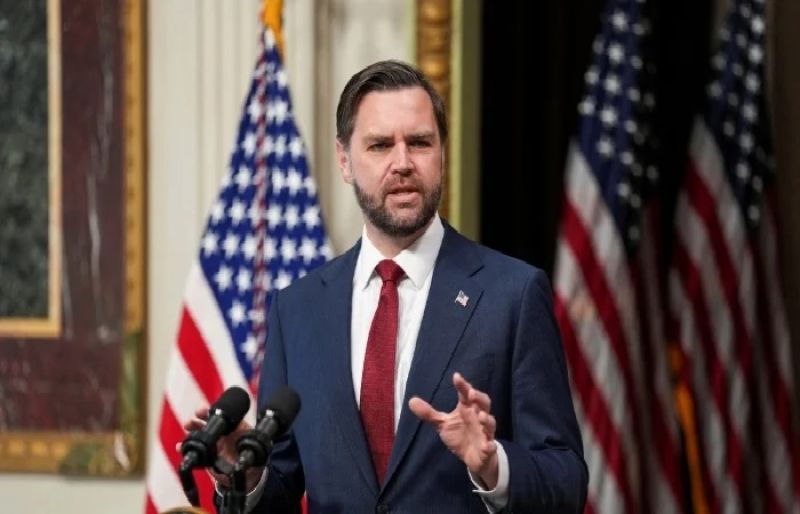
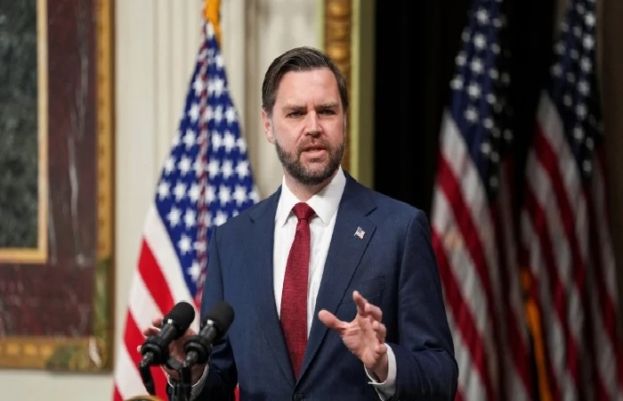
US Vice President JD Vance communicated with intermediaries from Pakistan about the Iran conflict as recently as Tuesday, a person briefed on the matter told Reuters, a sign of his expanding role in efforts to broker an end to the conflict.
At President Donald Trump’s direction, Vance signalled privately that Trump was open to a ceasefire as long as certain US demands were met, the source told Reuters on Wednesday.
Vance also delivered what the source described as a “stern message” that Trump was impatient, warning there would be growing pressure on Iranian infrastructure unless Tehran agreed to a deal.
Pakistan has been acting as an intermediary between the United States and Iran, the source said.
The more than a month-long war between the US, Israel and Iran began on February 28 and has plunged the Middle East into turmoil.
Soon after the initial strikes, Iran blocked the Strait of Hormuz — a key shipping route — and launched retaliatory attacks on Israel and US bases across the region.
The development comes at a time when Pakistan has stepped up its diplomatic push to help end the US-Israel war on Iran.
In this regard, Pakistan hosted key regional ministers — from Saudi Arabia, Turkiye, and Egypt — and relayed messages between Washington and Tehran.
On Tuesday, Pakistan and China also jointly urged the US, Israel, and Iran to stop the strikes and initiate “peace talks as soon as possible”.
The call came following a high-level meeting between Deputy Prime Minister and Foreign Minister Ishaq Dar and China’s Foreign Minister Wang Yi in Beijing.
The meeting’s five-point initiative for peace in the region included the call for an immediate end to hostilities, an urgent start to peace talks, security of non-military targets and shipping lanes, and the primacy of the United Nations Charter.
Vance has taken a greater role in trying to negotiate an end to the war, now in its fifth week. Widely viewed as a potential successor to Trump in the 2028 presidential election, Vance has taken a cautious approach on the conflict, reflecting his long-held skepticism of prolonged US military involvement overseas.
The source said the team that Trump has said are involved in negotiations — Vance, Secretary of State Marco Rubio, and US envoys Steve Witkoff and Jared Kushner — remain involved.
Trump has warned the US would attack Iranian infrastructure, but has delayed launching such attacks on Iran’s power grid until April 6 in hopes of reaching a deal with Tehran.
- Trump first president to attend Supreme Court arguments.
- Babies born in the US are recognised as American citizens.
- Trump’s policy targets children of certain immigrants.
With President Donald Trump present, US Supreme Court justices signalled scepticism on Wednesday toward the legality of his directive to restrict birthright citizenship in the US, part of his hardline immigration approach that would upend the long-held understanding of a key constitutional provision.
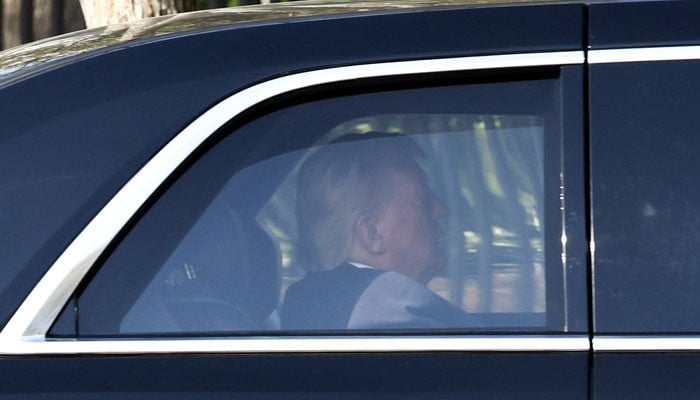
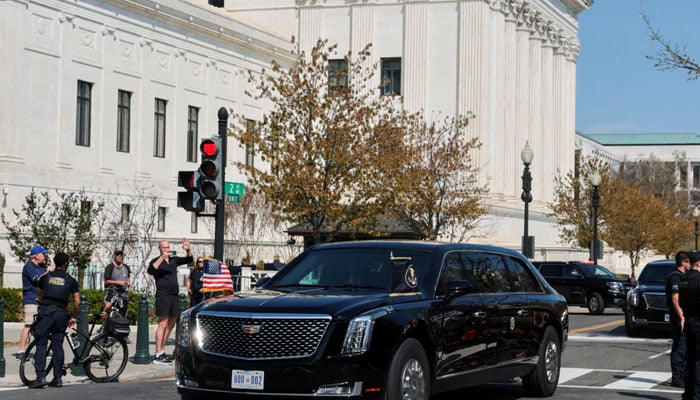
In his historic visit to the top US judicial body, Trump, wearing a red tie and dark suit, sat in the front row of the public gallery of the ornate courtroom after arriving by motorcade from the White House. The Republican president then left midway through the proceedings not long after the Justice Department lawyer arguing for his administration completed his presentation.
Most of the nine justices, conservatives and liberals alike, grilled the lawyer with questions about the legal validity of Trump’s executive order and its practical implications. The court has a 6-3 conservative majority.
The justices heard more than two hours of arguments in the administration’s appeal of a lower court’s decision that blocked his directive. Trump’s order had instructed US agencies not to recognise the citizenship of children born in the United States if neither parent is an American citizen or legal permanent resident, also called a “green card” holder.
Trump became the first sitting president to attend a Supreme Court oral argument, according to Clare Cushman, the Supreme Court Historical Society’s resident historian. Joined by White House Counsel David Warrington, Commerce Secretary Howard Lutnick and Attorney General Pamela Bondi, Trump was at the courthouse for a bit more than an hour and a half.
‘Priceless and profound gift’
US Solicitor General D John Sauer, representing the administration, told the justices that most nations do not grant automatic birthright citizenship.
“It demeans the priceless and profound gift of American citizenship,” Sauer said. “It operates as a powerful pull factor for illegal immigration and rewards illegal aliens who not only violate the immigration laws but also jump in front of those who follow the rules.”
The United States is among 33 countries with automatic birthright citizenship policies, according to the Pew Research Centre. Trump wrote on social media after the arguments that the United States is “STUPID” for having birthright citizenship.
The lower court found that Trump’s directive violated citizenship language in the US Constitution’s 14th Amendment as well as a federal law codifying birthright citizenship rights, acting in a class-action lawsuit by parents and children whose citizenship is threatened by the directive.
The 14th Amendment has long been interpreted as guaranteeing citizenship for babies born in the United States, with only narrow exceptions such as the children of foreign diplomats or members of an enemy occupying force.
The provision at issue, known as the Citizenship Clause, states: “All persons born or naturalised in the United States, and subject to the jurisdiction thereof, are citizens of the United States.”
The administration has asserted that the phrase “subject to the jurisdiction thereof” means that being born in the United States is not enough for citizenship, and excludes the babies of immigrants who are in the country illegally or whose presence is lawful but temporary, such as university students or those on work visas.
Conservative Chief Justice John Roberts told Sauer that his arguments limiting who qualifies for citizenship at birth seemed “quirky.”
Noting that historically the phrase “subject to the jurisdiction thereof” excluded the children of ambassadors or enemies during a hostile invasion, Roberts said Sauer is trying to expand those examples to everyone in the US illegally.
“I’m not quite sure how you can get to that big group from such tiny and sort of idiosyncratic examples,” Roberts said.
Roberts also challenged Sauer to provide evidence for the administration’s stated concern over “birth tourism,” by which foreigners travel to the United States to give birth and secure citizenship for their children.
“Do you have any information about how common that is or how significant a problem it is?” Roberts asked.
“No one knows for sure,” Sauer replied, while citing media reports of birth tourism companies abroad.
The 14th Amendment was ratified in 1868 in the aftermath of the Civil War of 1861-1865 that ended slavery in the United States, and overturned a notorious 1857 Supreme Court decision that had declared that people of African descent could never be US citizens.
Liberal Justice Elena Kagan said the administration’s interpretation of the 14th Amendment is not supported by the provision’s text.
“You’re using some pretty obscure sources to get to this concept,” Kagan told Sauer.
American Civil Liberties Union attorney Cecillia Wang, arguing for the challengers, told the justices Trump’s order was unlawful.
“Ask any American what our citizenship rule is and they will tell you, ‘Everyone born here is a citizen, alike,'” Wang said. “That rule was enshrined in the 14th Amendment to put it out of the reach of any government official to destroy.”


Italy have themselves to blame for third straight World Cup miss

President Masoud Pezeshkian speaks to Americans — read full letter here

Artemis II crew member had heartbreaking talk with daughters before launch

-

 Politics1 week ago
Afghanistan announces release of detained US citizen
-

 Sports1 week ago
Broadcast industry CEO says consolidation is ‘essential’ to compete for NFL soaring media rights prices
-

 Entertainment1 week ago
UN warns migratory freshwater fish numbers are spiralling
-

 Tech1 week ago
Can a Home Appliance Fix the Problem of Soft-Plastic Waste?
-
 Business1 week ago
Property Play: Home flippers see smallest profits since the Great Recession, real estate data firm says
-
 Business1 week ago
Gold prices soar in Pakistan – SUCH TV
-

 Fashion1 week ago
ICE cotton slips on weaker crude, profit booking
-
 Business1 week ago
More women are entering wealth management, but few are in advisory roles, study finds