

Politics
Trump says spoke with Putin, still sees chance for Ukraine peace deal

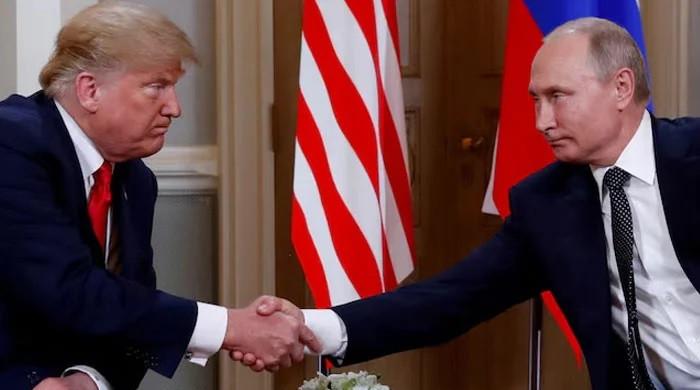
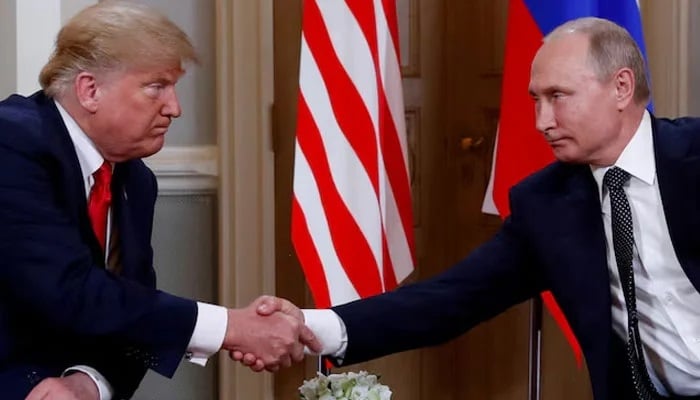
- Trump calls Putin, says talks “good” but fumes at Kyiv strikes.
- Claims Putin avoids Zelensky “because he doesn’t like him.”
- Rubio meets Ukraine, EU allies, backs settlement talks.
Voicing optimism about ending the Ukraine war, US President Donald Trump said Monday he had recently spoken with Russian President Vladimir Putin following his Washington meeting with Volodymyr Zelensky and European leaders.
Trump was last known to have spoken to Putin on August 18, when he interrupted his talks with Zelensky and the Europeans at the White House to call the Russian leader.
“Yes, I have,” Trump told reporters when asked if he had talked to Putin since then.
Asked how the latest talks went, Trump replied: “Every conversation I have with him is a good conversation. And then, unfortunately, a bomb is loaded up into Kyiv or someplace, and I get very angry about it.”
Trump also held a landmark summit with Putin in Alaska on August 15 in a bid to seal a deal to end Russia’s invasion of Ukraine.
After their previous call on August 18, Trump said Putin had agreed to hold a bilateral meeting with Zelensky, but Moscow has since said there are no plans for such talks.
“Because he doesn’t like him,” Trump said when asked why Putin appeared reluctant to meet face-to-face with Zelensky.
Trump said, however, that he still believed a deal to end Russia’s war on Ukraine was in sight.
“I think we’re going to get the war done,” he said.
Following the talks with Zelensky and the Europeans, US Secretary of State Marco Rubio agreed to keep up discussions among allies toward a future settlement.
The State Department said that Rubio spoke Monday in a joint call with Ukraine’s foreign minister as well as their counterparts from Britain, France, Finland, Germany, Italy, Poland and the European Union.
The ministers agreed to “continue cooperation in diplomatic efforts to bring the Russia-Ukraine war to an end through a lasting negotiated settlement,” State Department spokesman Tommy Pigott said.
Foreign Minister Antonio Tajani of Italy, whose right-wing government has worked to unite the United States and fellow Europeans, called again for guarantees to Ukraine inspired by NATO’s promise of collective defence.
Tajani “highlighted the importance of concrete and credible security guarantees for Ukraine, notably in strengthening the Ukrainian armed forces and its defence industry,” he said, according to a foreign ministry statement.
He said Italy was ready to participate in demining operations on land and sea.
Trump last week told Zelensky vaguely of forward movement on security guarantees, but has repeatedly sided with Russia in ruling out Ukraine’s membership in NATO.
- Trump issues threat after ICE officer shot Venezuelan man.
- Says he may deploy military force in Minnesota.
- Minnesota leaders say ICE actions are ‘disgusting and intolerable.
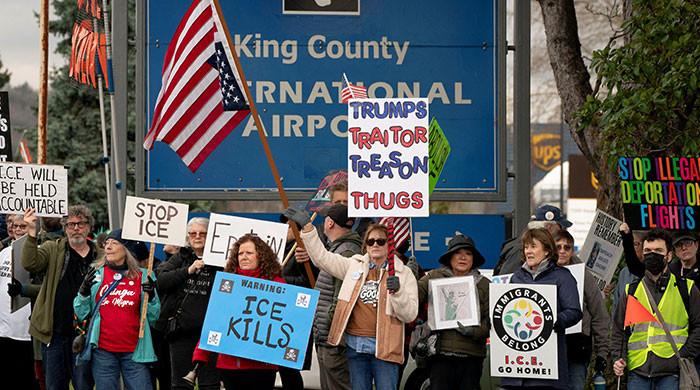
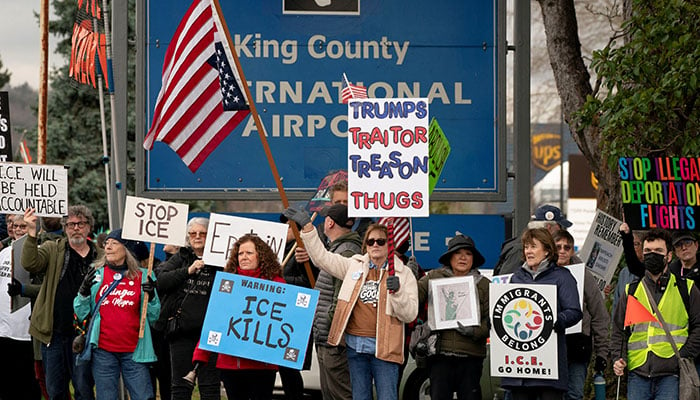
WASHINGTON: US President Donald Trump threatened on Thursday to invoke the Insurrection Act to deploy military forces in Minnesota after days of angry protests over a surge in immigration agents on the streets of Minneapolis.
Confrontations between residents and federal officers have become increasingly tense after an Immigration and Customs Enforcement agent fatally shot a US citizen, Renee Good, in a car eight days ago in Minneapolis, and the protests have spread to other cities. Trump’s latest threat came a few hours after an immigration officer shot a Venezuelan man who the government said was fleeing after agents tried to stop his vehicle in Minneapolis. The man was wounded in the leg.
“If the corrupt politicians of Minnesota don’t obey the law and stop the professional agitators and insurrectionists from attacking the Patriots of ICE, who are only trying to do their job, I will institute the INSURRECTION ACT,” Trump wrote on social media.
Trump, a Republican, has for weeks derided the state’s Democratic leaders and called people of Somali origin there “garbage” who should be “thrown out” of the country.
He has already sent nearly 3,000 federal officers into the Minneapolis area, who have carried guns through the city’s icy streets, wearing military-style camouflage gear and masks that hide their faces.
They have been met day and night by loud, often angry protests by residents, some blowing whistles or banging tambourines. On Wednesday night, crowds of nearby residents gathered near the area where the Venezuelan man was shot. Some shouted in protest, and federal officers ignited flash-bang grenades and released clouds of tear gas.
Later, after most of the residents had been dispersed, a small group vandalised a car they believed belonged to the federal officers, one person daubing it with red graffiti saying: “Hang Kristi Noem,” in reference to the Homeland Security secretary who oversees ICE.
Since the surge began, agents have arrested both immigrants and protesters, at times smashing windows and pulling people from their cars, and have been shouted at for stopping Black and Latino US citizens to demand identification.
‘Disgusting and intolerable’
The US Department of Homeland Security, which is overseeing Trump’s immigration crackdown, identified the man its officer shot as Julio Cesar Sosa-Celis. He had been allowed into the US by the administration of Trump’s predecessor, Joe Biden, in 2022 through the government’s humanitarian parole programme. The Trump administration has since revoked the parole granted to Venezuelans and others admitted under Biden.
In its statement, DHS called him a convicted criminal under Minnesota law after being caught driving without a licence and giving a false name to a police officer. Court records of those cases reviewed by Reuters show he was only convicted of “petty misdemeanours”, which Minnesota state law says do “not constitute a crime”, and for which the maximum punishment is a $300 fine.
According to the DHS account, federal officers tried to stop Sosa-Celis in his vehicle. He fled the scene in his vehicle, crashed into a parked car, and then ran away on foot, the DHS said.
One officer caught him and while the two were “in a struggle on the ground”, two other Venezuelan men came out of a nearby apartment and “attacked the law enforcement officer with a snow shovel and broom handle”, the statement said.
Sosa-Celis got loose and began hitting the officer with “a shovel or a broomstick”, and so the officer “fired defensive shots to defend his life”, the DHS statement said.
Reuters was not able to verify the account given by DHS. The men fled into the apartment and all three were arrested after officers went in, DHS said. Sosa-Celis and the officer were recovering in hospital from injuries, according to the department and city officials.
The Trump administration and Minnesota leaders have each blamed the other for stoking anger and violence.
In a late-night press conference, Mayor Jacob Frey called the ICE surge an invasion and said he had seen “conduct from ICE that is disgusting and is intolerable”.
“We cannot be at a place right now in America where we have two governmental entities that are literally fighting one another,” Frey said, calling for peace.
Trump supporters divided over immigration enforcement
The Insurrection Act of 1807 is a law allowing the president to deploy the military or federalise soldiers in a state’s National Guard to quell rebellion, an exception to laws that prohibit soldiers being used in civil or criminal law enforcement.
It has been used 30 times in US history, according to New York University’s Brennan Centre for Justice. The Supreme Court has ruled that the president alone can determine if the act’s conditions have been met.
Trump has already taken the unusual step of federalising National Guard soldiers to help with immigration law enforcement in Democrat-run cities over the objections of state governors, including in Los Angeles last year, which a judge ruled in December was unconstitutional.
Trump’s aggressive moves in Minnesota have divided his supporters: 59% of Republicans favoured a policy prioritising arrests by immigration officers even if people get hurt, while 39% said officers should focus on not harming people even if it means fewer arrests, according to a Reuters/Ipsos survey released on Thursday.
If Trump sends soldiers to Minnesota, he would almost certainly face legal challenges by the state. The Minnesota attorney general’s office has already sued the Trump administration this week, saying ICE agents were engaged in a “pattern of unlawful, violent conduct”, including racial profiling and forced entry into residents’ homes without warrants. The American Civil Liberties Union also filed a similar lawsuit against the Trump administration on Thursday.
At a brief hearing on Wednesday, Minnesota asked US District Judge Kate Menendez to issue a temporary order restraining the ICE surge.
Menendez ordered the Trump administration to respond by Monday, saying she would rule after that, calling the issues raised by Minnesota’s lawsuit “enormously important”.
- Treasury dept accuses forces of being architects of crackdown.
- US says tracking Iranian leaders’ funds being wired to banks.
- Trump questions Reza Pahlavi’s ability garner support in Iran.
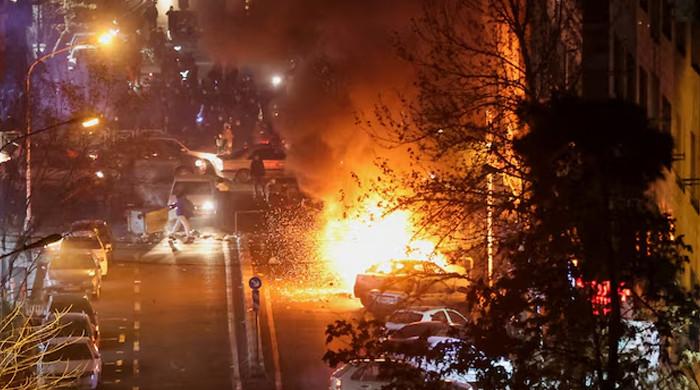
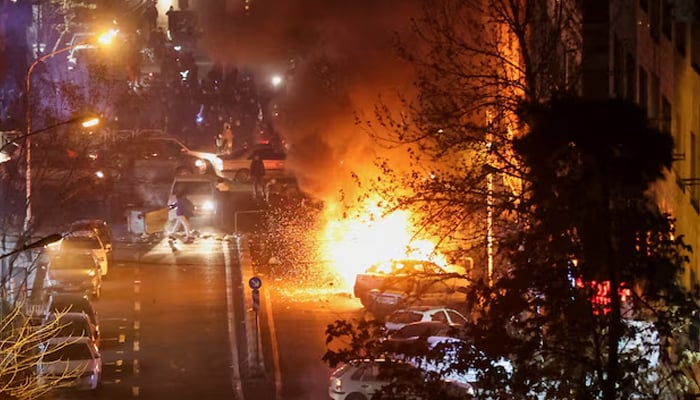
The United States on Thursday imposed sanctions on five Iranian officials it accused of being behind the crackdown on protests and warned it was tracking Iranian leaders’ funds being wired to banks around the world, as US President Donald Trump’s administration increases pressure on Tehran.
The US Treasury Department, in a statement, said it imposed sanctions on the Secretary of the Supreme Council for National Security as well as Islamic Revolutionary Guard Corps and law enforcement forces commanders, accusing them of being architects of the crackdown.
Treasury Secretary Scott Bessent, in a video on Thursday, said Washington’s message to Iran’s leaders was clear: “US Treasury knows, that like rats on a sinking ship, you are frantically wiring funds stolen from Iranian families to banks and financial institutions around the world. Rest assured, we will track them and you.”
“But there’s still time, if you choose to join us. As President Trump has said, stop the violence and stand with the people of Iran.”
The unrest in Iran started with protests over soaring prices before turning into one of the biggest challenges to the establishment since the 1979 Islamic Revolution.
Trump has repeatedly threatened to intervene on behalf of protesters in Iran, where the establishment has cracked down hard on nationwide unrest since December 28.
“The United States stands firmly behind the Iranian people in their call for freedom and justice,” Bessent said in the statement. “Treasury will use every tool to target those behind the regime’s tyrannical oppression of human rights.”
The Treasury also imposed sanctions on 18 people it accused of involvement in laundering the proceeds of Iranian petroleum and petrochemical sales to foreign markets as part of “shadow banking” networks of sanctioned Iranian financial institutions.
Thursday’s action is the latest move targeting Tehran since Trump restored his “maximum pressure” campaign on Iran, which includes efforts to drive its oil exports to zero and help prevent Tehran from developing a nuclear weapon.
Trump questions Pahlavi’s ability to lead Iran
Separately, Trump — in an exclusive Reuters interview in the Oval Office — said that Iranian opposition figure Reza Pahlavi “seems very nice” but expressed uncertainty over whether Pahlavi would be able to muster support within Iran to eventually take over.
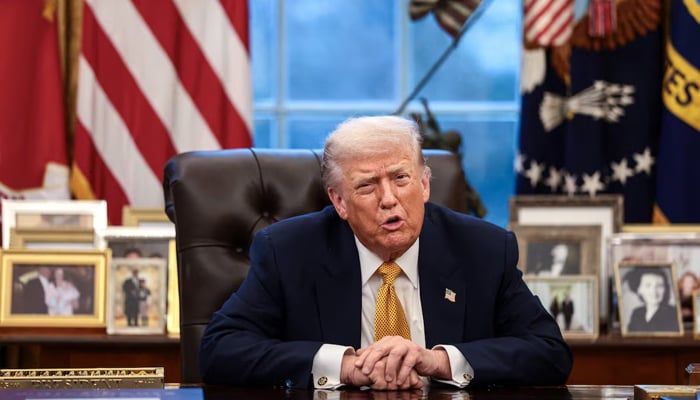
“He seems very nice, but I don’t know how he’d play within his own country,” Trump said. “And we really aren’t up to that point yet.
“I don’t know whether or not his country would accept his leadership, and certainly if they would, that would be fine with me.”
Trump’s comments went further in questioning Pahlavi’s ability to lead Iran, after he said last week that he had no plans to meet with him.
The US-based Pahlavi, 65, has lived outside Iran since before his father was toppled in the 1979 Islamic Revolution and has become a prominent voice in the protests.
Echoing Trump’s caution, Sanam Vakil, deputy director of Chatham House’s Middle East and North Africa Program, said Pahlavi had gained prominence among some protesters and had helped mobilise them to some extent. “But I wouldn’t overstate it. It’s very hard to see how much support he has or how much support any figure has in Iran,” she said.
Trump said it is possible the government in Tehran could fall due to the protests but that in truth “any regime can fail.”
“Whether or not it falls or not, it’s going to be an interesting period of time,” he said.
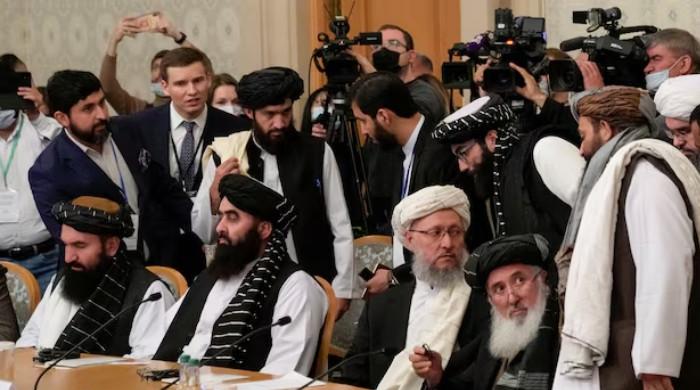
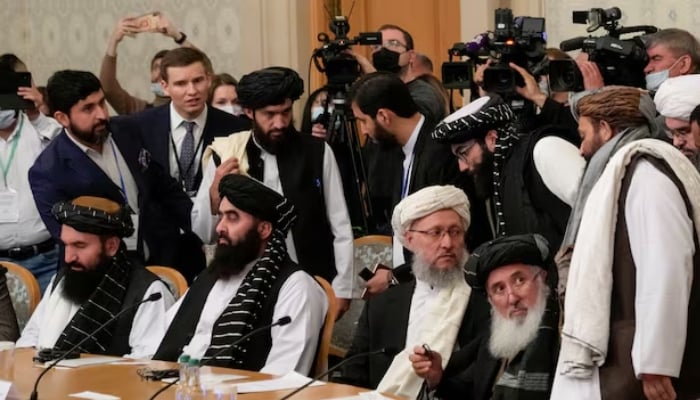
Four years into their rule in Afghanistan, the Afghan Taliban regime has reportedly been rocked by internal rifts, with key leaders pitted against each other.
The Taliban declared the war in Afghanistan was over after they took control of the presidential palace in Kabul on August 15, 2021, and the United States withdrew its forces from the war-ravaged country.
However, rifts have emerged within the Afghan Taliban ranks, with Supreme Leader Hibatullah Akhundzada warning that internal disagreements could bring them all down.
The BBC, citing an audio leak it obtained, reported that Akhundzada had voiced his concerns over division within the Taliban ranks.
In the leaked clip, purportedly from one of his speeches at a religious seminary in Kandahar in January 2025, Akhundzada can be heard warning that “the emirate will collapse and end” as a result of the ongoing divisions.
The publication, citing insiders, stated that the Afghan Taliban have been divided into two distinct groups: the Kandahar group and another based in the capital Kabul.
The Kandahar group remains loyal to Akhundzada, who is operating from his base in Kandahar, where leaders loyal to him control every aspect of the Afghan society.
The group includes Afghanistan Prime Minister Mohammad Hassan Akhund, Chief Justice Abdul Hakim Haqqani and Higher Education Minister Neda Mohammad Nadim.
The group is working towards the Taliban supreme leader’s vision of a strict Emirate that is isolated from the modern world.
The second group, comprising powerful Taliban members, is largely based in Kabul and advocates for engagement with the outside and allows girls and women access to education.
Afghanistan Deputy Prime Minister Abdul Ghani Baradar, Interior Minister Sirajuddin Haqqani, and Defence Minister Mohammad Yaqood Mujahid make up the Kabul group.
The BBC, citing a Taliban insider, described the situation as “the Kandahar house versus Kabul”.
According to the publication, the conflict between the two groups became evident in September last year, following the Taliban supreme leader’s directive to suspend internet and mobile phone services.
However, the services were restored three days later without any explanation given by the Afghan Taliban regime.
Citing Taliban insiders, BBC reported that the Kabul group went against Akhundzada’s orders and restored the services, an act described as “nothing short of a rebellion”.
The publication stated that the group restored the services as the move directly threatened officials’ privileges and financial resources.
Meanwhile, the Taliban supreme leader reportedly moved key departments to Kandahar — including distribution of weapons, which had been previously managed by Haqqani and Yaqoob, who are members of the Kabul group.
The group has recently struggled to secure meetings with Akhundzada, with Kabul-based ministers reportedly told to travel to Kandahar only if they receive an official invitation, the report said.
The situation appears contained as of early 2026, though underlying tensions persist.
Afghan Taliban regime spokespersons have downplayed the disagreement as a mere difference of opinion; however, the ideological rift continues through public statements.


National Startup Day 2026: How India’s Startups Are Shaping The Future

U.S. names sporting events athletes exempt from visa ban

Trump to attend College Football Playoff championship game in Miami with Rubio

-

 Politics1 week ago
UK says provided assistance in US-led tanker seizure
-

 Entertainment1 week ago
Does new US food pyramid put too much steak on your plate?
-
 Entertainment1 week ago
Why did Nick Reiner’s lawyer Alan Jackson withdraw from case?
-
 Business1 week ago
Trump moves to ban home purchases by institutional investors
-
 Sports5 days ago
Clock is ticking for Frank at Spurs, with dwindling evidence he deserves extra time
-
 Sports1 week ago
PGA of America CEO steps down after one year to take care of mother and mother-in-law
-
 Business1 week ago
Bulls dominate as KSE-100 breaks past 186,000 mark – SUCH TV
-
Sports6 days ago
Commanders go young, promote David Blough to be offensive coordinator