

Politics
Trump says Ukraine ‘gotta make a deal’ after summit with Putin yields no ceasefire

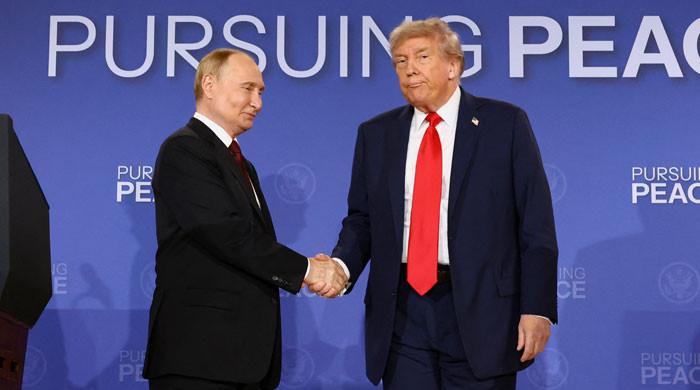
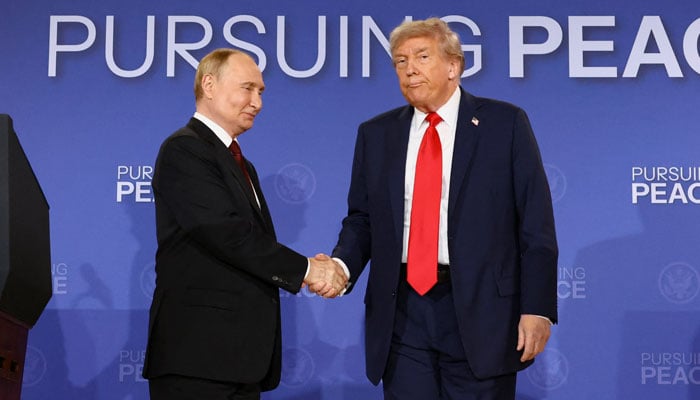
- Trump, Putin cite progress but offer no detail.
- Trump says Zelenskiy ‘gotta make a deal’.
- Zelenskiy says he’s willing to meet Trump and Putin.
US President Donald Trump said on Saturday Ukraine should agree a deal to end the war with Russia because “Russia is a very big power, and they’re not”, after holding a summit with President Vladimir Putin that failed to yield a ceasefire.
“It was determined by all that the best way to end the horrific war between Russia and Ukraine is to go directly to a Peace Agreement, which would end the war, and not a mere Ceasefire Agreement, which often times do not hold up,” Trump said in a post on Truth Social.
Trump’s comments came after he met Putin for nearly three hours in Alaska on Friday at the first US, Russia summit since Moscow launched its full-scale invasion of Ukraine in February 2022.
The war — the deadliest in Europe for 80 years — has killed or wounded well over a million people from both sides, including thousands of mostly Ukrainian civilians, according to analysts.
Trump said he would hold talks at the White House with Ukrainian President Volodymyr Zelenskiy on Monday, adding: “If all works out, we will then schedule a meeting with President Putin. Potentially, millions of people’s lives will be saved.”
Zelenskiy said after a lengthy conversation with Trump following the Alaska summit that Ukraine was ready for constructive cooperation, and he supported the idea of a trilateral meeting.
“Ukraine reaffirms its readiness to work with maximum effort to achieve peace,” he wrote on social media.
But Putin made no mention of meeting Zelenskiy when speaking to reporters earlier. Russian state news agency TASS quoted Putin’s foreign policy aide Yuri Ushakov as saying the possibility of a three-way summit including Zelenskiy had not been discussed.
Security guarantees
In a post-summit interview with Fox News’ Sean Hannity, Trump signalled that he and Putin had discussed potential land swaps and security guarantees for Ukraine.
“I think those are points that we negotiated, and those are points that we largely have agreed on,” Trump said.
“I think we’re pretty close to a deal,” he said, adding: “Ukraine has to agree to it. Maybe they’ll say no.”
When asked by Hannity what he would advise Zelenskiy, Trump said: “Gotta make a deal.”
“Look, Russia is a very big power, and they’re not. They’re great soldiers,” he added.
Zelenskiy has repeatedly underlined the importance of security guarantees for Kyiv as part of any deal, to deter Russia from launching a new invasion at some point in the future.
“We also discussed positive signals from the American side regarding participation in guaranteeing Ukraine’s security,” he said after his call with Trump.
Before the summit, Trump had set the goal of agreeing on a ceasefire in the war and said he would not be happy without it.
Putin signaled no movement in Russia’s long-held positions on the war, but said he agreed with Trump that Ukraine’s security must be “ensured”.
“We are ready to work on this. I would like to hope that the understanding we have reached will allow us to get closer to that goal and open the way to peace in Ukraine,” Putin said at a brief media appearance after the summit where neither leader took questions.
He added: “We expect that Kyiv and the European capitals will perceive all of this in a constructive manner and will not create any obstacles. That they will not attempt to disrupt the emerging progress through provocation or behind-the-scenes intrigue.”
For Putin, the very fact of sitting down face-to-face with the U.S. president represented a diplomatic victory. The Kremlin leader had been ostracized by Western leaders since the start of the war, and just a week earlier had been facing a threat of new sanctions from Trump.
‘1-0 for Putin’
Some commentators, especially in Europe, were scathing in their reaction.
“Putin got his red carpet treatment with Trump, while Trump got nothing. As feared: no ceasefire, no peace,” Wolfgang Ischinger, an ex-German ambassador to the United States, posted on X.
“No real progress — a clear 1-0 for Putin — no new sanctions. For the Ukrainians: nothing. For Europe: deeply disappointing.”
Tatiana Stanovaya, a senior fellow at the Carnegie Russia Eurasia Center, said: “Now Trump seems to be shifting most of the responsibility to Kyiv and Europe, but reserving some role for himself.”
She said, however, that Putin had apparently not succeeded as far as he had hoped in getting Trump to publicly side with him and put pressure on Kyiv.
Cold War historian Sergey Radchenko wrote: “Putin is a determined opponent, and, yes, he basically won this round because he got something for nothing. Still, Trump did not sell out Ukraine.”
After Trump returned to Washington, the White House said he spoke to NATO leaders following the lengthy conversation with Zelenskiy.
Espen Barth Eide, foreign minister of NATO member Norway, told reporters in Oslo: “We must continue to put pressure on Russia, and even increase it.”
Czech Defence Minister Jana Cernochova said the summit had not yielded significant progress toward ending the war but “confirmed that Putin is not seeking peace, but rather an opportunity to weaken Western unity and spread his propaganda.”
‘Next time in Moscow’
Both Russia and Ukraine carried out overnight air attacks, a daily occurrence in the 3-1/2-year war.
Russia launched 85 attack drones and a ballistic missile targeting Ukraine’s territory, Ukraine’s Air Force said on Saturday. It said its air defence units destroyed 61 of them.
The General Staff of Ukraine’s Armed Forces said 139 clashes had taken place on the front line over the past day. Russia said its air defences intercepted and destroyed 29 Ukrainian drones overnight.
Trump told Fox that he would hold off on imposing tariffs on China for buying Russian oil after making progress with Putin. He did not mention India, another major buyer of Russian crude, which has been slapped with a total 50% tariff on US imports that includes a 25% penalty for the imports from Russia.
“Because of what happened today, I think I don’t have to think about that now,” Trump said of Chinese tariffs. “I may have to think about it in two weeks or three weeks or something, but we don’t have to think about that right now.”
Trump ended his remarks on Friday by telling Putin, “I’d like to thank you very much, and we’ll speak to you very soon and probably see you again very soon.”
“Next time in Moscow,” a smiling Putin responded in English. Trump said he might “get a little heat on that one” but that he could “possibly see it happening.”


DUBAI: Dubai has announced a major new metro project, with authorities saying the “Golden Line” will cost 34 billion dirhams ($9.25 billion) and is expected to be completed by September 9, 2032.
The planned “Golden Line” will run about 40 metres underground and connect 15 key areas across the emirate, according to details shared by the emirate’s ruler Sheikh Mohammed bin Rashid Al Maktoum on social media.
The project is expected to serve around 1.5 million people and support 55 major real estate developments currently under construction.
Dubai said the new line would expand the total length of its metro network by 35%, as part of broader efforts to improve transport infrastructure and accommodate population and urban growth.
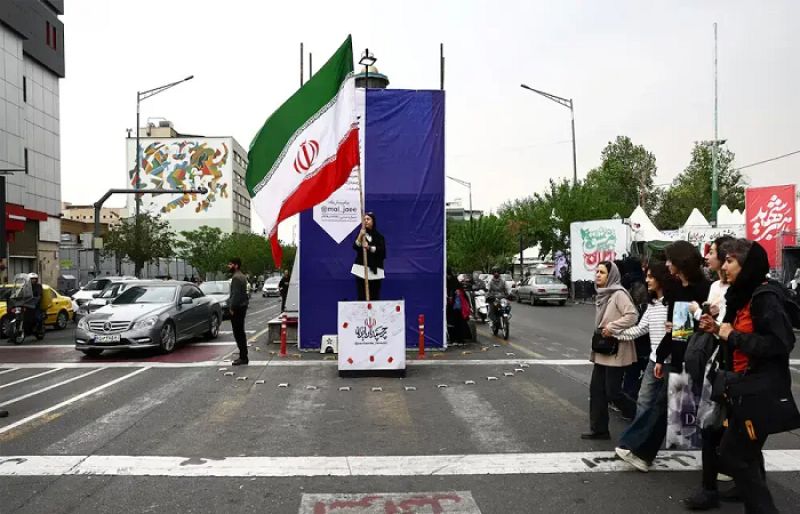
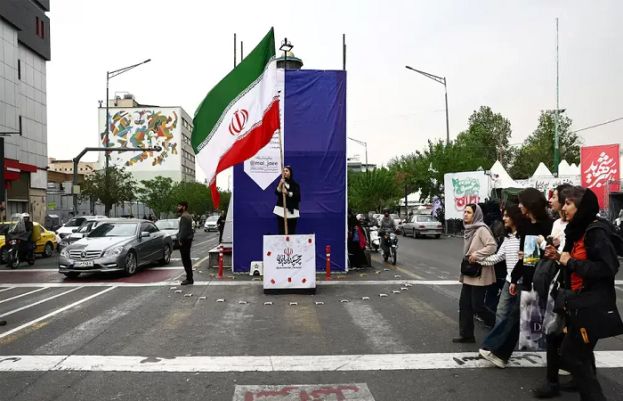
Iran’s agriculture minister said a US naval blockade has had little impact on the country’s ability to supply basic goods and food, citing strong domestic production and alternative import routes.
“Despite the US naval blockade, we have no problem in supplying basic goods and food because, due to the size of the country, it is possible to import from different borders,” Agriculture Minister Gholamreza Nouri said on Tuesday.
“About 85 percent of agricultural products and basic goods are produced domestically, so the country’s food security is established,” he added, according to the official IRNA news agency.
The United States imposed a naval blockade on Iran’s ports and coasts on April 13, days after a ceasefire was announced that paused its war with Iran.
Iran has strongly criticised the blockade, describing it as a violation of the ceasefire.

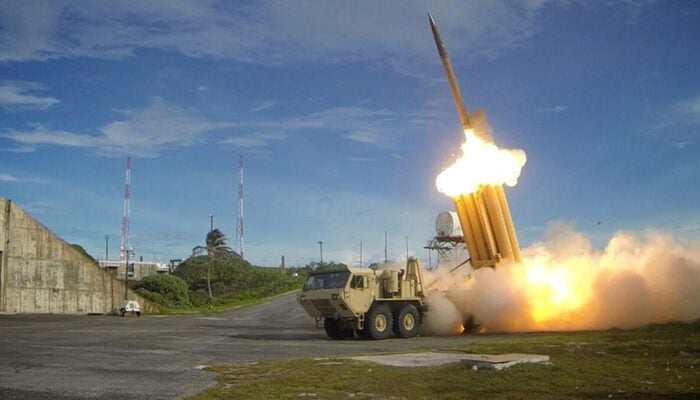
The United States military used up nearly half of its Patriot interceptor missile stockpile during its seven-week campaign against Iran, according to an analysis by the Center for Strategic and International Studies (CSIS).
A report by Washington-based outlet The Hill highlighted significant depletion across several key munitions, citing the CSIS analysis, and raised concerns about Washington’s preparedness for a potential conflict with China.
According to the CSIS study released on Tuesday, US forces fired almost 50% of their Patriot missiles during the operation. More than half of Terminal High Altitude Area Defence (THAAD) interceptors were also used, alongside over 45% of Precision Strike Missiles (PrSMs), during the air and missile campaign in Iran.
The analysis further found that more than 20% of Joint Air-to-Surface Standoff Missiles (JASSMs), over 30% of SM-3 interceptors and at least 10% of SM-6 missiles were expended as part of Operation Epic Fury.
CSIS warned that rebuilding stockpiles — including Tomahawk cruise missiles and JASSMs — to pre-operation levels could take between one and four years. These weapons, it noted, would be vital in any future conflict in the Western Pacific.
“Even before the Iran war, stockpiles were deemed insufficient for a peer competitor fight. That shortfall is now even more acute and building stockpiles to levels adequate for a war with China will take additional time,” the report’s authors wrote.
While the US is still likely to retain enough munitions to continue operations against Iran, the remaining inventory would fall short in a confrontation with a major adversary such as China, the report added.
Amid these concerns, the United States Central Command (Centcom), which led the Iran campaign, said its forces are actively rebuilding capacity during the ceasefire. In a social media message, CENTCOM said its “forces remain ready”.
Speaking alongside US Defence Secretary Pete Hegseth, Centcom commander Admiral Brad Cooper said: “We are rearming. We’re retooling, and we’re adjusting our tactics, techniques and procedures.”
“There is no military in the world that adjusts like we do, and that’s exactly what we’re doing right now during the ceasefire,” he added.
The findings come as President Donald Trump earlier held talks with leading defence contractors in March, after which he said production of “exquisite class” weapons would be increased fourfold.
Responding to the report, Pentagon chief spokesperson Sean Parnell defended the military’s capabilities, telling The Hill that the US remains fully equipped.
“The US military is the most powerful in the world and has everything it needs to execute missions at the time and place of the President’s choosing,” he said.
“As Secretary [Pete] Hegseth has highlighted numerous times, it took less than 10% of American naval power to control traffic in and out of the Strait of Hormuz. Since President Trump took office, we have executed multiple successful operations across combatant commands while ensuring the US military possesses a deep arsenal of capabilities to protect our people and our interests,” Parnell said in a statement. “Attempts to alarm Americans over the Department’s munitions stockpiles are both ill-informed and dishonourable.”
Meanwhile, Pentagon comptroller Jules ‘Jay’ Hurst said officials are planning to expand multi-year munitions contracts to as long as seven years, aimed at strengthening supply chains and encouraging sustained investment. The move forms part of the administration’s proposed $1.5 trillion defence budget.
“Once Operation Epic Fury ends, the naval assets sent to the Middle East will return to the Pacific. Munitions inventories will start to recover, but restoring depleted stockpiles and then achieving the desired inventory levels will take many years,” the report’s authors, Mark F. Cancian and Chris H. Park, wrote.


US’ Gap & FIT launch programme to mentor fashion students

Nasa unveils new space telescope to probe mysteries of ‘dark energy’

Dubai to build $9.25bn ‘Golden Line’ metro, completion set for 2032

-

 Fashion6 days ago
France’s LVMH Q1 revenue falls 6%, shows resilience amid Iran war
-

 Entertainment7 days ago
Is Claude down? Here’s why users are seeing errors
-

 Fashion1 week ago
Asia claims largest share of markets on Kearney FDI Confidence Index
-

 Tech1 week ago
The Deepfake Nudes Crisis in Schools Is Much Worse Than You Thought
-

 Sports1 week ago
PSL 11: Peshawar Zalmi win toss, opt to field first against Quetta Gladiators
-

 Tech1 week ago
Bremont Is Sending a Watch to the Moon’s Surface
-

 Tech1 week ago
Human-machine teaming dives underwater
-
 Business1 week ago
BP sees ‘exceptional’ oil trading result as Iran war sends crude costs soaring