

Politics
Trump says US not likely to accept new Iran peace proposal

- Iran submits 14-point proposal via Pakistan to end conflict.
- Dispute continues over Iran’s nuclear programme, enrichment rights.
- US hints at possible military action if Iran “misbehaves” again.
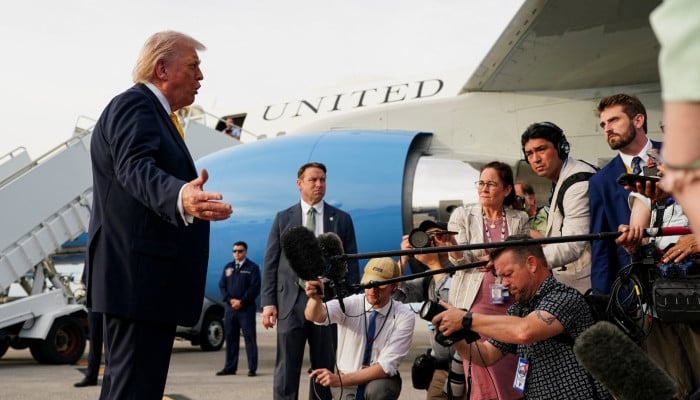
US President Donald Trump said Saturday he will review a new Iranian peace proposal, but cast doubt over its prospects as he left open the possibility of future attacks on Iran.
Negotiations between the two countries have been deadlocked since a ceasefire came into effect on April 8, with one round of peace talks to end the more than two-month war having failed in Pakistan.
The dour outlook came after Iran’s Tasnim and Fars news agencies reported Tehran submitted a 14-point proposal to mediator Islamabad. Details included ending the conflict on all fronts and enacting a new framework for the crucial Strait of Hormuz, Tasnim said.
“I will soon be reviewing the plan that Iran has just sent to us, but can’t imagine that it would be acceptable, in that they have not yet paid a big enough price for what they have done to Humanity and the World, over the last 47 years,” Trump said on his Truth Social platform.
In a brief interview with reporters in West Palm Beach, Florida, he declined to specify what could trigger new military action against the Islamic republic.
“If they misbehave, if they do something bad, but right now, we´ll see,” he said. “But it’s a possibility that could happen, certainly.”
On Saturday, Mohammad Jafar Asadi, a senior figure in the Iranian military’s central command, said “a renewed conflict between Iran and the United States is likely.”
“Evidence has shown that the United States is not committed to any promises or agreements,” he added, according to Fars news agency.
Deputy foreign minister Kazem Gharibabadi told diplomats in Tehran “the ball is in the United States’ court to choose the path of diplomacy or the continuation of a confrontational approach.”
Iran, he said, was “prepared for both paths.”
‘Hypocritical’
US news site Axios reported earlier in the week that Trump’s envoy Steve Witkoff had asked for Tehran’s nuclear program to be put back on the negotiating table.
Iran’s mission to the UN pointed to the massive US nuclear arsenal, accusing Washington on Saturday of “hypocritical behavior” towards Iran’s own atomic ambitions.
There was no legal “restriction on the level of uranium enrichment, so long as it is conducted under the IAEA’s supervision, as was the case with Iran,” it said, using the abbreviation for the UN nuclear watchdog.
Iran has maintained a stranglehold on the Strait of Hormuz since the war began, choking off major flows of oil, gas and fertiliser to the world economy, while the United States has imposed a counter-blockade on Iranian ports.
Oil prices are about 50 percent above pre-war levels.
The vice speaker of Iran’s parliament, Ali Nikzad, said that under draft legislation being considered for managing the waterway, 30 percent of tolls collected would go towards military infrastructure, with the rest earmarked for “economic development.”
“Managing the Strait of Hormuz is more important than acquiring nuclear weapons,” he said.
Fighting meanwhile continued Saturday in Lebanon, where Israel has carried out deadly strikes despite a separate truce with the Iran-backed armed group Hezbollah.
The Israeli military said it had struck dozens of Hezbollah targets across southern Lebanon following evacuation warnings for nine villages.
Lebanon’s state-run National News Agency reported three deaths in the attacks.
Hezbollah, for its part, claimed several attacks targeting Israeli troops.
The Israeli strikes included one in the village of Yaroun on what its military called a “religious building,” which was damaged.
The French Catholic charity L’Oeuvre d’Orient said the troops had “destroyed” a convent belonging to the Salvatorian Sisters, a Greek-Catholic religious order with which the charity is affiliated.
Iran’s economic toll
In Washington, lawmakers were wrestling over whether Trump had breached a deadline to seek congressional approval for the war.
Administration officials argue the ceasefire paused a 60-day clock, after which congressional authorisation would be required — a claim disputed by opposition Democrats.
In Iran, the war’s economic toll is deepening, with oil exports crimped and inflation surging past 50 percent.
“Everyone is trying to endure it, but… they are falling apart,” 40-year-old Amir, a Tehran resident, told an AFP reporter based outside the country.
“We still have not seen much of the economic effects because everyone had a bit of savings. They had some gold and dollars for a rainy day. When they run out, things will change.”
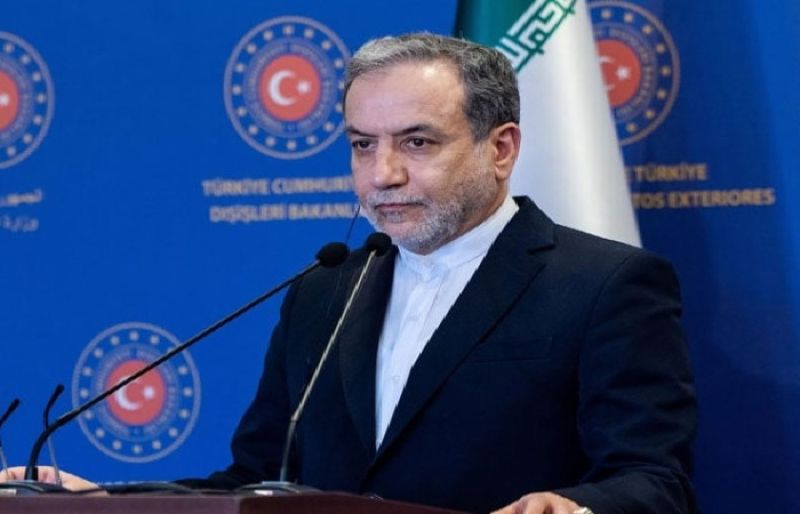
Iranian Foreign Minister Abbas Araghchi on Monday night said talks with the United States were making progress with Pakistan’s “gracious effort,” while cautioning Washington against being drawn into further escalation amid a standoff over the Strait of Hormuz.
The statement comes after US and Iran launched new attacks in the Gulf on Monday as they wrestled for control over the Strait of Hormuz with duelling maritime blockades, shaking a fragile truce.
US President Donald Trump launched a new effort to get stranded tankers and other ships through the strait, the vital energy-trade chokepoint that has been virtually closed since the US and Israel began attacks on Iran in February, a war that has killed thousands of people across the region.
Trump gave scant details about his new effort, which he called “Project Freedom,” to help stuck ships travel through the strait when he announced it on social media, two days after a legal deadline under US law had passed for him to get authorisation from Congress for the war. Trump told Congress the war was “terminated” and the deadline was moot, a claim disputed by some lawmakers.
It was the first apparent attempt to use military force since last month’s ceasefire announcement to unblock the world’s most important energy shipping route, which Iran’s Islamic Revolutionary Guard Corps has said can only happen with its permission.
The cost of shipping insurance has also rocketed. For weeks, the US Navy has blockaded Iran’s trade by sea, which Iran says is itself an act of war.
But Trump’s latest move, at least initially, appeared to have backfired, bringing no surge of merchant ship traffic while provoking a promised show of force from Iran, which has threatened to respond to any escalation with new attacks on its neighbours hosting US soldiers. Major shipping companies said they were likely to wait for an agreed end to hostilities before trying to cross the strait.
Meanwhile, Iranian FM Araghchi said Monday’s events showed there was no military solution to the crisis. He said peace talks were progressing with Pakistan’s mediation while warning the US and the UAE against being drawn into a “quagmire by ill-wishers.”
Criticising the US initiative aimed at escorting vessels through the Strait of Hormuz, Araghchi said: “Project Freedom is Project Deadlock.”
Nonetheless, the US military said two US merchant ships made it through the strait, without saying when, with the support of Navy guided-missile destroyers. While Iran denied any crossings had taken place in recent hours, Maersk said the Alliance Fairfax, a US-flagged ship, exited the Gulf via the Strait of Hormuz accompanied by the US military on Monday.
The commander of U.S. forces in the region said his fleet had destroyed six small Iranian boats, which Iran also denied. Admiral Brad Cooper said he “strongly advised” Iranian forces to keep clear of U.S. military assets carrying out the mission.
Iranian authorities released a map of what they said was an expanded sea area now under their control, extending far beyond the strait to include long stretches of the UAE’s coastline.
‘Dialogue and diplomacy’
A day earlier, Deputy Prime Minister and Foreign Minister Ishaq Dar held a telephonic conversation with his Iranian counterpart, during which both sides discussed the evolving regional situation and Pakistan’s ongoing diplomatic efforts.
According to the Foreign Office, Araghchi appreciated Pakistan’s constructive role and mediation efforts, while Dar reaffirmed Islamabad’s commitment to promoting dialogue and engagement.
He stressed that diplomacy remained the only viable path to achieving lasting peace and stability.
Negotiations between Washington and Tehran have remained stalled since a ceasefire took effect on April 8, with tensions centred on Iran’s blockade of the Strait of Hormuz following US-Israeli strikes. The move has disrupted global flows of oil, gas and fertiliser, while the United States has responded by imposing a counter-blockade on Iranian ports.
Pakistan has emerged as a key intermediary in efforts to revive dialogue, hosting high-level engagements between the two sides in Islamabad last month, though a second round of talks has yet to materialise.
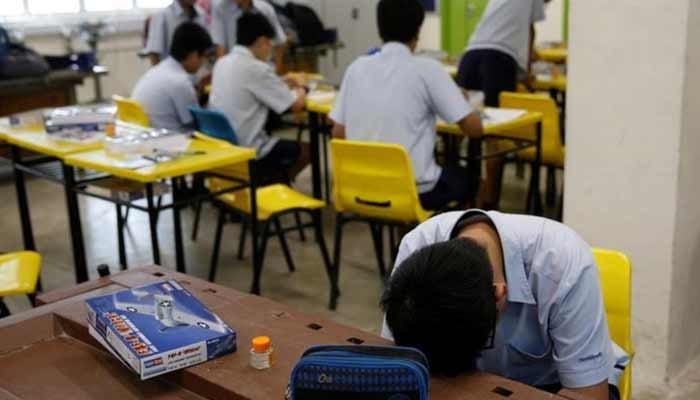
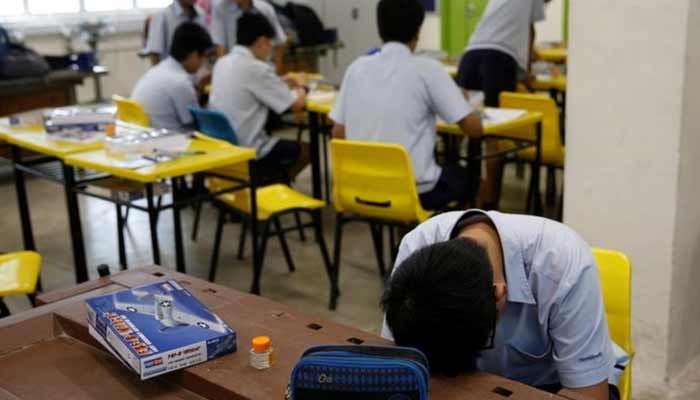
School bullies in Singapore face caning under new guidelines, but the education minister said on Tuesday it would be meted out only as a last resort with strict safeguards.
Human rights groups regularly criticise Singapore for the use of corporal punishment, which remains part of both the school system and criminal justice, but authorities have defended it as a deterrent to crime and serious misconduct.
Caning was discussed in parliament on Tuesday after legislators asked how it would be used in relation to bullying in schools.
The debate followed stricter guidelines against serious student misconduct, including bullying, unveiled by the education ministry last month.
Under the guidelines, offenders could face between one and three strokes of the cane.
“Our schools use caning as a disciplinary measure if all the other measures are inadequate, given the gravity of the misconduct,” Education Minister Desmond Lee said Tuesday.
“They follow strict protocols to ensure safety for the student. For instance, caning must be approved by the principal and administered only by authorised teachers,” he said.
“Schools will consider factors such as the maturity of the student and if caning will help the student learn from his mistake and understand the gravity of what he has done.”
The punishment is given only to boys, per “the Criminal Procedure Code, which states that women shall not be punished with caning”, Lee said.
Caning in Singapore is a legacy from British colonial rule, but Britain has long abolished corporal punishment.
After the caning is meted out, the school will “monitor the student’s wellbeing and progress”, including providing counselling, Lee said.
According to a World Health Organisation (WHO) report last year “there is now overwhelming scientific evidence that corporal punishment of children carries multiple risks of harm and has no benefits”.
- Iran dismisses US escort plan as counterproductive initiative.
- Dar reiterates diplomacy as only path forward.
- Tehran reviews US response via Pakistani mediators.
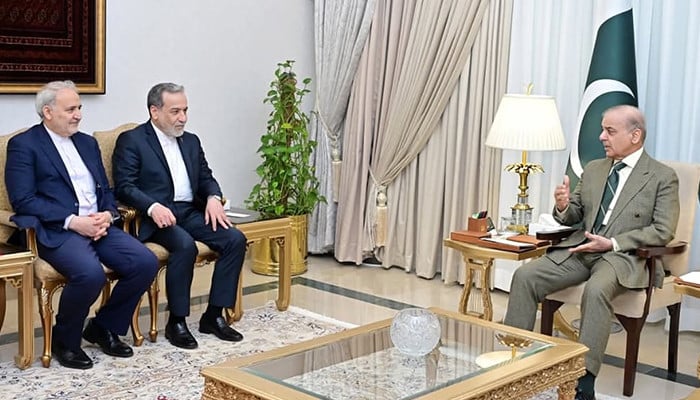
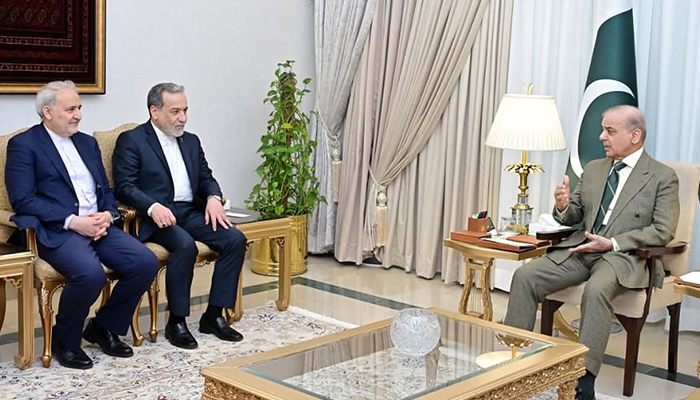
Iranian Foreign Minister Abbas Araghchi on Monday night said talks with the United States were making progress with Pakistan’s “gracious effort,” while cautioning Washington against being drawn into further escalation amid a standoff over the Strait of Hormuz.
The statement comes after US and Iran launched new attacks in the Gulf on Monday as they wrestled for control over the Strait of Hormuz with duelling maritime blockades, shaking a fragile truce.
US President Donald Trump launched a new effort to get stranded tankers and other ships through the strait, the vital energy-trade chokepoint that has been virtually closed since the US and Israel began attacks on Iran in February, a war that has killed thousands of people across the region.
Trump gave scant details about his new effort, which he called “Project Freedom,” to help stuck ships travel through the strait when he announced it on social media, two days after a legal deadline under US law had passed for him to get authorisation from Congress for the war. Trump told Congress the war was “terminated” and the deadline was moot, a claim disputed by some lawmakers.
It was the first apparent attempt to use military force since last month’s ceasefire announcement to unblock the world’s most important energy shipping route, which Iran’s Islamic Revolutionary Guard Corps has said can only happen with its permission.
The cost of shipping insurance has also rocketed. For weeks, the US Navy has blockaded Iran’s trade by sea, which Iran says is itself an act of war.
But Trump’s latest move, at least initially, appeared to have backfired, bringing no surge of merchant ship traffic while provoking a promised show of force from Iran, which has threatened to respond to any escalation with new attacks on its neighbours hosting US soldiers. Major shipping companies said they were likely to wait for an agreed end to hostilities before trying to cross the strait.
Meanwhile, Iranian FM Araghchi said Monday’s events showed there was no military solution to the crisis. He said peace talks were progressing with Pakistan’s mediation while warning the US and the UAE against being drawn into a “quagmire by ill-wishers.”
Criticising the US initiative aimed at escorting vessels through the Strait of Hormuz, Araghchi said: “Project Freedom is Project Deadlock.”
Nonetheless, the US military said two US merchant ships made it through the strait, without saying when, with the support of Navy guided-missile destroyers. While Iran denied any crossings had taken place in recent hours, Maersk said the Alliance Fairfax, a US-flagged ship, exited the Gulf via the Strait of Hormuz accompanied by the US military on Monday.
The commander of U.S. forces in the region said his fleet had destroyed six small Iranian boats, which Iran also denied. Admiral Brad Cooper said he “strongly advised” Iranian forces to keep clear of U.S. military assets carrying out the mission.
Iranian authorities released a map of what they said was an expanded sea area now under their control, extending far beyond the strait to include long stretches of the UAE’s coastline.
‘Dialogue and diplomacy’
A day earlier, Deputy Prime Minister and Foreign Minister Ishaq Dar held a telephonic conversation with his Iranian counterpart, during which both sides discussed the evolving regional situation and Pakistan’s ongoing diplomatic efforts.
According to the Foreign Office, Araghchi appreciated Pakistan’s constructive role and mediation efforts, while Dar reaffirmed Islamabad’s commitment to promoting dialogue and engagement.
He stressed that diplomacy remained the only viable path to achieving lasting peace and stability.
Negotiations between Washington and Tehran have remained stalled since a ceasefire took effect on April 8, with tensions centred on Iran’s blockade of the Strait of Hormuz following US-Israeli strikes. The move has disrupted global flows of oil, gas and fertiliser, while the United States has responded by imposing a counter-blockade on Iranian ports.
Pakistan has emerged as a key intermediary in efforts to revive dialogue, hosting high-level engagements between the two sides in Islamabad last month, though a second round of talks has yet to materialise.
— With additional input from Reuters


Climate is now in the cost sheet

Dolly Parton shares health update after canceling Las Vegas residency
[CinePlex360] Please moderate: “Hundreds in Teh

-

 Tech1 week ago
A Brain Implant for Depression Is About to Be Tested in Humans
-
 Business1 week ago
‘I had £20,000 stolen and had to fight a 13-month fraud reporting rule to get it back’
-

 Tech1 week ago
Almost 90% of women leave tech industry within 10 years | Computer Weekly
-

 Sports1 week ago
Pro wrestling star Steph De Lander reveals how colleague’s advice helped lead her to title triumph at ACW
-

 Entertainment1 week ago
Norway joins Type 26 Frigate Programme to boost NATO naval power
-

 Entertainment1 week ago
Melania Trump says ABC should ‘take a stand’ on late-night host Kimmel
-

 Tech1 week ago
This Ambitious Laptop Doesn’t Leave Much Room for Your Hands
-
 Business6 days ago
PSX plunges over 4,800 points | The Express Tribune