

Politics
Trump scraps India visit amid escalating trade tensions: report

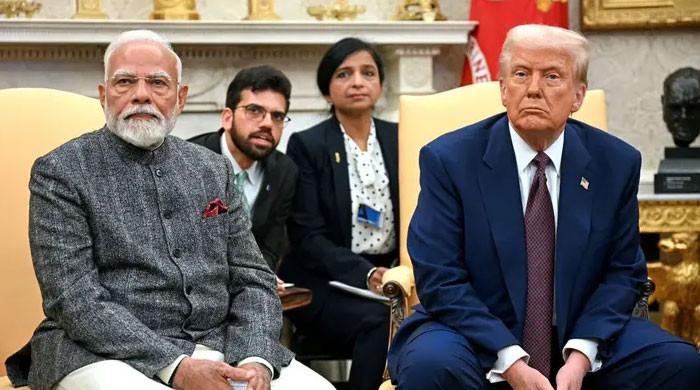
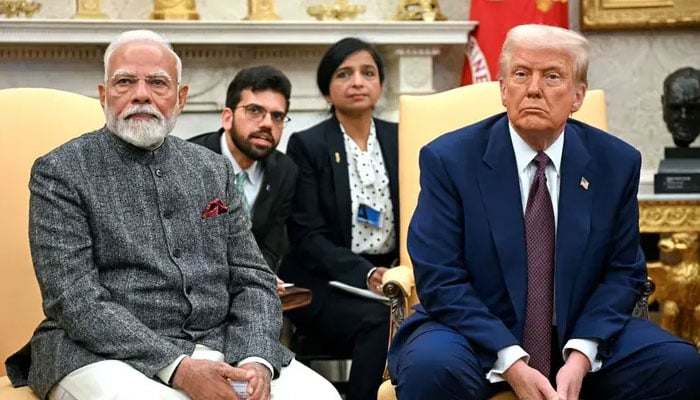
- Trump was earlier scheduled to attend Quad summit in India.
- Tensions between Trump, Modi deepened after June phone call.
- Modi since shifted focus toward alternative partnerships.
US President Donald Trump has dropped plan to visit India later this year, as trade frictions and political disagreements strain relations between Washington and New Delhi, the New York Times reported, citing people familiar with the matter.
The development comes after months of escalating tensions, with both sides struggling to make progress on trade talks. In recent weeks, the United States doubled tariffs on Indian goods to as high as 50% over India’s continuing imports of Russian oil.
A punitive 25% tariff, imposed due to India’s purchases of Russian oil, was added to Trump’s prior 25% tariff on many imports from the South Asian nation. It takes total duties as high as 50% for goods as varied as garments, gems and jewellery, footwear, sporting goods, furniture and chemicals — among the highest imposed by the US and roughly on par with Brazil and China.
According to people familiar with the matter, Trump had earlier assured Prime Minister Narendra Modi that he would attend a Quad summit in India later this year. However, the visit has now been removed from his schedule.
The cancellation reflects a sharp downturn in the relationship between the two leaders, who once publicly celebrated their partnership at mass rallies in Houston and Gujarat.
Tensions between Trump and Modi deepened after a June phone call, during which the US president claimed personal credit for defusing military hostilities between India and Pakistan earlier this year.
Trump said that Pakistan was set to nominate him for the Nobel Peace Prize and implied that India should consider doing the same. Modi rejected the claim, insisting that the ceasefire had been arranged directly between New Delhi and Islamabad without American mediation.
The disagreement coincided with worsening trade friction. Indian officials had hoped to finalise a limited trade deal to ease tariff pressure, but talks collapsed amid growing mistrust.
Washington’s measures have unsettled New Delhi, where Trump’s actions are increasingly seen as heavy-handed. One senior Indian official described the approach as “bullying.”
Modi has since shifted focus toward alternative partnerships. He arrived in China today to meet President Xi Jinping and Russian President Vladimir Putin, signalling India’s intent to balance ties as relations with Washington sour.
The White House has maintained that the two leaders retain a “respectful relationship” and remain in communication. However, the absence of a US presidential visit is widely viewed as a setback for bilateral ties at a time when both nations face crucial economic and security challenges.
- Airline shares stabilise after significant losses.
- Skies over swathes of Middle East still empty.
- Worst crisis for global travel industry since Covid-19.
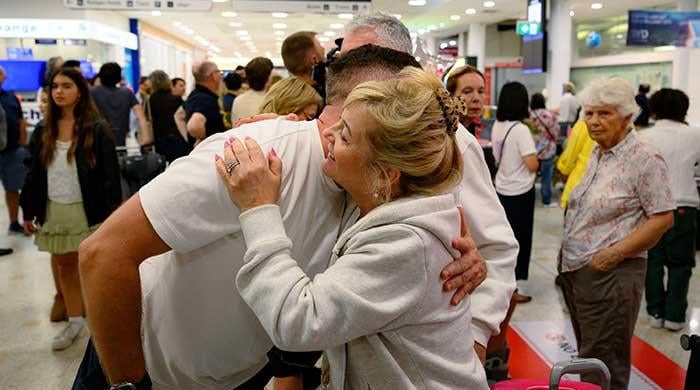
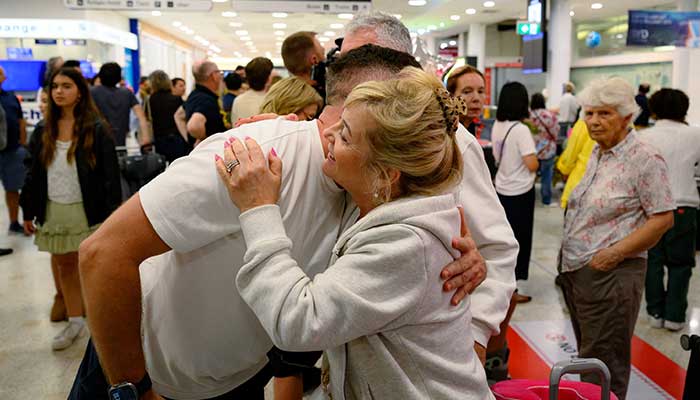
Dozens of repatriation flights were due to depart from the Middle East on Wednesday as governments hurried to bring tens of thousands of stranded citizens home in the midst of an intensifying US and Israeli conflict with Iran.
Skies over most of the Middle East remained empty of commercial planes on Wednesday, with major Gulf hubs, including the world’s busiest international airport in Dubai, largely shut for a fifth day, in the biggest travel disruption since the Covid-19 pandemic.
The first repatriation flights were due to leave for Britain and France on Wednesday, and the United Arab Emirates opened special corridors to allow some citizens to return home. Normally, thousands of commercial flights would take off from the region daily.
Marooned tourists and some expatriates have also tried to find their own way out.
“We’re doing this cautiously,” said French Finance Minister Roland Lescure. The French government said several repatriation flights for its citizens, around 400,000 of whom are in the region, were planned for Wednesday.
A British chartered flight will leave Oman on Wednesday evening, prioritising vulnerable UK nationals, the British Foreign Office said.
Emirates, the world’s largest international carrier, said all routes to and from Dubai remain suspended until March 7 and it was operating a “limited” flight schedule from Dubai International and from Maktoum International.
The New Zealand government said it expected a total of 121 repatriation flights to depart from Dubai International Airport on Wednesday.
Qantas, meanwhile, was running extra flights to bring British people stuck in Australia back home, but would have to route them via a refuelling stop in Singapore as an alternative to the normal Middle East hubs.
With airspace severely constrained, many airlines are carrying extra fuel or making additional refuelling stops to guard against sudden rerouting or longer flight paths through safer corridors.
Airline shares were less volatile on Wednesday after double-digit percentage drops in the past few days, which wiped tens of billions of dollars from airlines’ market value.
Lufthansa was up 3% at 1306 GMT, while Qantas closed down 2.7% lower, having lost more than 10% of their value so far this week. BA-owner ICAG was up 2%, having fallen more than 13% in the past three days.
Airline executives have said that crew and pilots are now scattered across the world, complicating the process of resuming flights when airspace reopens. Soaring prices of oil will also add to carriers’ costs.
Analysts said flights will become more expensive if longer routes become the only options for international carriers.
The Gulf is also a major hub for air cargo, putting further pressure on international trade routes following the disruption of Red Sea shipping routes.
Asian airline stocks
Shares of US carriers United Airlines, American Airlines and Delta Air Lines were all up about 1% in pre-market trading, while Southwest Airlines shares were marginally lower.
Most Asian airline shares pared losses from earlier this week, though Korean Air Lines shares fell 7.9% after dropping 10.3% on Tuesday.
South Korea’s stock market was closed on Monday when most airline and travel stocks bore the brunt of the impact from the conflict.
Oil prices have risen sharply this week, with Brent crude oil up around 14% since the US-Israeli strikes on Iran, potentially pushing up fuel costs for airlines.
Hedging is expected to help mitigate some of the cost increases.
“Recent guidance indicates that the airlines have hedged around 50% of their jet fuel needs. In general, they should be able to pass through the balance of the price rise to passengers,” Lorraine Tan, director of equity research for Asia at Morningstar, said.


DUBAI: Dubai Police have issued a fresh warning that spreading rumours, false information or sharing content that contradicts official announcements is a criminal offence punishable by up to two years in prison and a fine of at least 200,000 dirhams.
In a statement on Wednesday, Dubai Police urged the public not to circulate images or information except those released through official channels by the Government of Dubai.
Authorities said publishing or forwarding unverified material, particularly content that could incite panic or fear among the public, would be treated as a violation of the law.
“Your social media post may seem ordinary to you, but for others it could be intelligence,” officials said, warning users to act responsibly online.
Under the regulations, offenders face a minimum of two years’ imprisonment and a fine starting from 200,000 dirhams (approximately Rs 15.2 million).
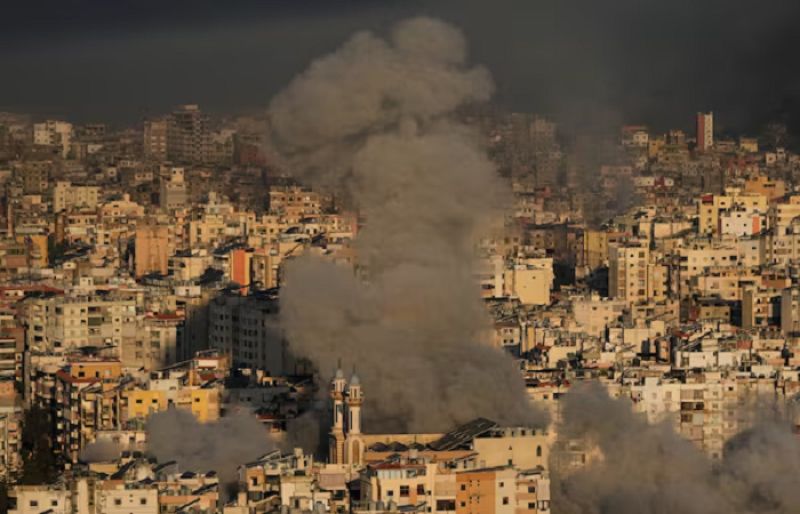

Israel carried out an airstrike on a headquarters belonging to Al-Jamaa Al-Islamiya, an ally of Hezbollah and Hamas, in the southern Lebanese city of Sidon, according to Lebanese state media.
Reports said the strike targeted the group’s office in the coastal city on Tuesday.
Rescue teams and emergency responders rushed to the site following the air raid.
Escalating Regional Tensions
The attack comes amid heightened tensions across the Middle East following expanding military confrontations in the region.
Israel has previously accused Hezbollah and allied groups of coordinating activities with Hamas.
Sidon, one of Lebanon’s major coastal cities, had largely avoided heavy bombardment during the last Israel-Hezbollah conflict.
Background
A November 2024 ceasefire had sought to end the previous war between Israel and Hezbollah.
However, the latest strike indicates renewed tensions and the possibility of further escalation in southern Lebanon.
Authorities have not yet released detailed casualty figures from the attack.


Rupee falls to all-time low of 92.05 against dollar as oil surge, foreign outflows rattle markets – The Times of India

Stephen A Smith calls Zion Williamson a ‘food addict,’ suggests Pelicans ‘encouraged’ him to rip NBA star

US launches military operations in Ecuador amid ongoing Iran War

India Us Trade Deal: Fresh look at India-US trade deal? May be ‘rebalanced’ if circumstances change, says Piyush Goyal – The Times of India

Households set for lower energy bills amid price cap shake-up

US arrests ex-Air Force pilot for ‘training’ Chinese military

-
Business5 days ago
India Us Trade Deal: Fresh look at India-US trade deal? May be ‘rebalanced’ if circumstances change, says Piyush Goyal – The Times of India
-
Business1 week ago
Households set for lower energy bills amid price cap shake-up
-
 Politics6 days ago
US arrests ex-Air Force pilot for ‘training’ Chinese military
-

 Politics6 days ago
What are Iran’s ballistic missile capabilities?
-
 Business6 days ago
Attock Cement’s acquisition approved | The Express Tribune
-

 Fashion6 days ago
Policy easing drives Argentina’s garment import surge in 2025
-

 Sports1 week ago
Top 50 USMNT players of 2026, ranked by club form: USMNT Player Performance Index returns
-

 Sports6 days ago
Sri Lanka’s Shanaka says constant criticism has affected players’ mental health