

Politics
Trump sets 10-15 day deadline for Iran nuclear deal

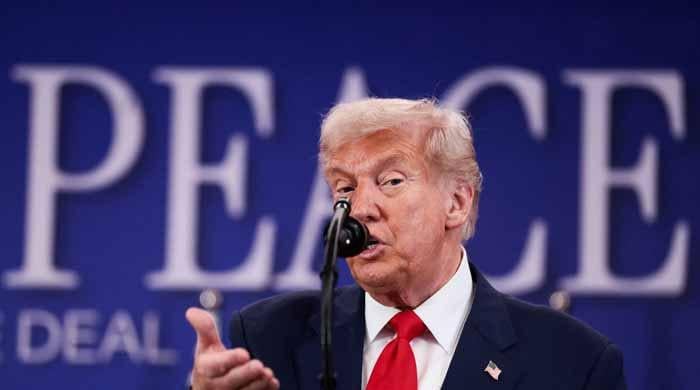
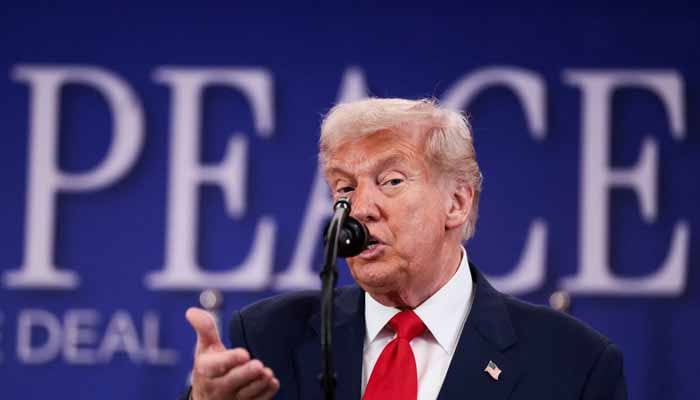
- Trump warns Iran of ‘really bad things’ if no deal is reached.
- Signals possible US action if talks fail on nuclear enrichment.
- Says Iran’s nuclear potential had been ‘decimated’ in June strikes.
WASHINGTON: President Donald Trump has warned that Iran has no more than 10 to 15 days to strike a “meaningful” deal over its nuclear programme, or face what he described as “really bad things”.
Speaking in Washington, Trump signalled that the US could take action if talks fail, sharpening the stakes in an already tense stand-off.
His remarks come amid a major US military build-up in the Middle East, underscoring the urgency of the deadline and raising fears of fresh escalation if diplomacy falls short.
Amid a massive US military build-up in the Middle East that has fuelled fears of a wider war, Trump said negotiations with Iran to end the tense stand-off were going well but insisted Tehran has to reach a “meaningful” agreement.
“Otherwise bad things happen,” Trump, who has repeatedly threatened to attack Iran, told the first meeting of his Board of Peace in Washington.
Trump spoke of the US air strikes carried out in June, saying Iran’s nuclear potential had been “decimated”, adding “we may have to take it a step further or we may not.”
“You’ll be finding out over the next probably 10 days,” he said. Asked later to elaborate, he told reporters aboard Air Force One: “I would think that would be enough time, 10, 15 days, pretty much maximum.”
But he declined to be specific, except to warn again of “really bad things” and insist that Iran would have to make a deal one way or another.
‘Good talks’: Trump
Trump’s threats to bomb Iran, with the two sides far apart in talks on Tehran’s nuclear programme, have pushed up oil prices, and a Russian corvette warship on Thursday joined planned Iranian naval drills in the Gulf of Oman, a vital sea route for global energy.
Iranian and US negotiators met on Tuesday and Iranian Foreign Minister Abbas Araqchi said they had agreed on “guiding principles”. White House press secretary Karoline Leavitt said on Wednesday, however, that the two sides remained apart on some issues.
Trump said “good talks are being had”, and a senior US official said Iran would make a written proposal on how to address US concerns.
Trump called on Tehran to join the US on the “path to peace”.
“They can’t have a nuclear weapon, it’s very simple,” he said. “You can’t have peace in the Middle East if they have a nuclear weapon.”
Iran has resisted making major concessions on its nuclear programme, though insisting it is for peaceful purposes. The US and Israel in the past have accused Tehran of trying to develop a nuclear bomb.
Trump’s latest sabre-rattling came as he talked himself up as a man of peace in a long, meandering speech while hosting world leaders at the launch of his Board of Peace. He proposed the body in September when he announced his plan to end Israel’s war against Hamas in Gaza. He later expanded the board’s remit to tackle conflicts worldwide, prompting many key Western allies to stay away.
Earlier on Thursday, Russia warned against an “unprecedented escalation of tension” around Iran and urged restraint amid the US military build-up in the region, which a senior American official said should be complete by mid-March.
Threat of war
Trump has sent aircraft carriers, warships and jets to the region, raising the prospect of another attack on the Islamic Republic.
The United States and Israel bombed Iran’s nuclear facilities and some military sites last June. US Secretary of State Marco Rubio will meet Israeli Prime Minister Benjamin Netanyahu to discuss Iran on February 28, the senior US official said.
Washington wants Iran to entirely give up uranium enrichment, a process used to create fuel for atomic power plants but that can also provide material for a warhead.
The US and ally Israel also want Iran to give up long-range ballistic missiles, stop supporting groups around the Middle East and stop using force to quell internal protests.
Iran says it refuses to discuss issues beyond the atomic file, calling efforts to limit its missile arsenal a red line.
Satellite pictures have tracked both Iranian work to repair and fortify sites since last summer, showing work at both nuclear and missile sites, as well as preparations at US bases across the Middle East over the past month.
Iran’s joint exercise with Russia came days into an extended series of Iranian naval drills in the Gulf of Oman, with Iranian state television showing special forces units deployed on helicopters and ships.
In a sign of growing concern over the increased tensions, Poland on Thursday became the latest European country to urge its citizens to leave Iran, with Prime Minister Donald Tusk saying Poles may only have hours to evacuate.
Trump began threatening strikes on Iran again in January as Iranian authorities crushed widespread protests with deadly violence that left thousands dead across the country.
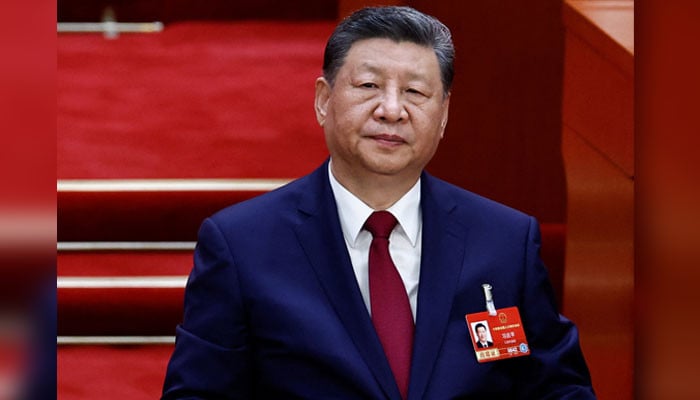
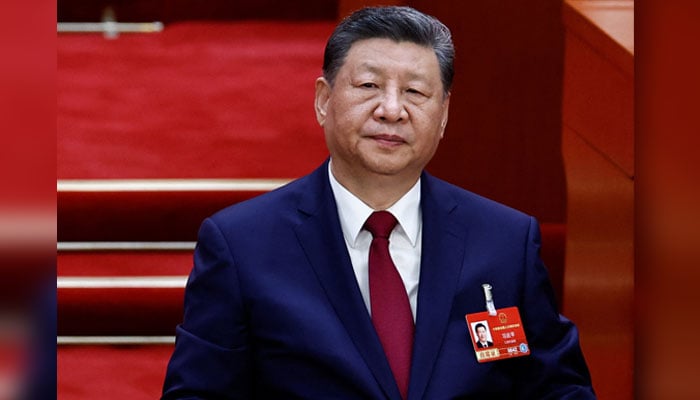
- President Xi Jinping urges safeguards for China’s energy security.
- Says Party Central Committee advances energy security strategy.
- China must stay committed to low-carbon development, he adds.
BEIJING: Chinese President Xi Jinping has called for accelerated planning and construction of a new energy system to safeguard the country’s energy security, weeks into the Iran war that has triggered global energy shocks.
The leader of the world’s second-largest economy also emphasised hydropower development and ecological protection, while urging the safe and orderly expansion of nuclear power, according to state broadcaster CCTV on Monday.
“The Party Central Committee has gained a profound grasp of global energy development trends and made major decisions by advancing the new energy security strategy in depth,” he said, referring to the ruling Communist Party’s centre of authority.
Xi did not directly mention the war in his remarks cited by CCTV.
The United States and Iran have been weighing a Pakistani-brokered plan that could end their five‑week-old conflict, even as Tehran pushed back against pressure to swiftly reopen the Strait of Hormuz.
Role of coal and greener energy
Analysts have pointed out that China is relatively better-positioned to absorb the higher oil prices.
Coal accounts for more than half of its energy mix, while it has ample oil stockpiles and imports via the Strait of Hormuz represent only around 5% of total energy consumption.
“The path we took in being the first to develop wind and solar power has now proven to be forward-looking. At the same time, coal-fired power remains the foundation of our energy system and must continue to play its supporting role,” Xi said.
China operates more than half of the world’s coal-fired power capacity, making it the top carbon emitter, which Western-led climate initiatives have long contended with. The country continues to position coal power as a reliability backbone and flexible backup system, even as it accelerates renewables.
Although he underscored the role of coal in China’s energy mix, the president said the country—the world’s largest consumer of coal—must stay committed to clean, low-carbon development.
“A greener, more diversified and resilient new energy system will provide a strong guarantee for China’s energy security and economic development,” CCTV said.
Last July, China began construction of what will be the world’s largest hydropower dam on the eastern rim of the Tibetan Plateau.
Construction on a solar thermal power plant by China General Nuclear Power Group at an altitude of 4,550 metres in Tibet has also begun on Monday, according to state Xinhua News Agency.
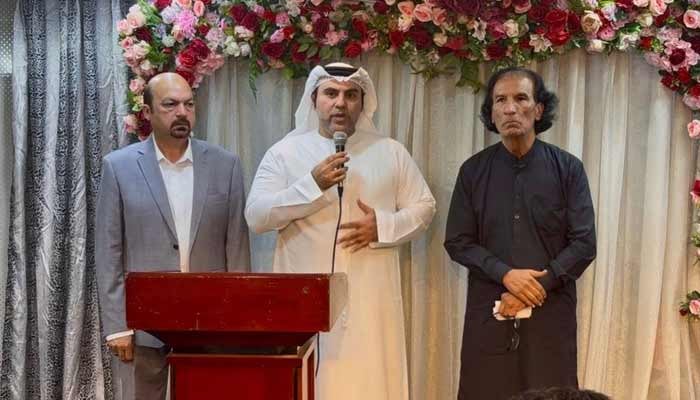
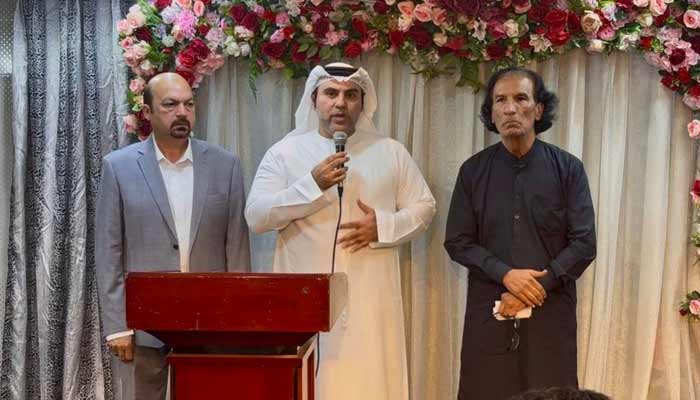
DUBAI: Pakistani expatriates in the United Arab Emirates (UAE) have reaffirmed their support for the host country, offering to volunteer their services if required, in a strong show of unity during ongoing regional tensions.
At a community event held in Dubai under the “One Nation, One Family” campaign, speakers said Pakistanis living in the UAE consider it their home and are committed to standing by the country in challenging times.
“The UAE supported our dreams. Now we are ready to return that support in full force,” a participant said, reflecting the mood of the gathering.
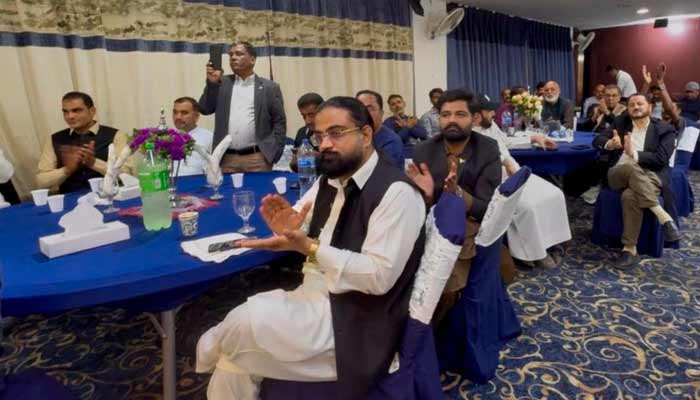
Several attendees described themselves as “sons of the soil” and said they were ready to assist authorities in any capacity. “We are waiting for directions and are prepared to serve wherever needed,” one speaker added.
Prominent Emirati entrepreneur and businessman, Bu Abdullah, attending as a guest of honour, said all residents were part of one national family and called for unity and adherence to rules during the current situation.
Event organiser Mian Munir Hans thanked the UAE leadership for ensuring the country’s security and praised its continued commitment to peace and tolerance.
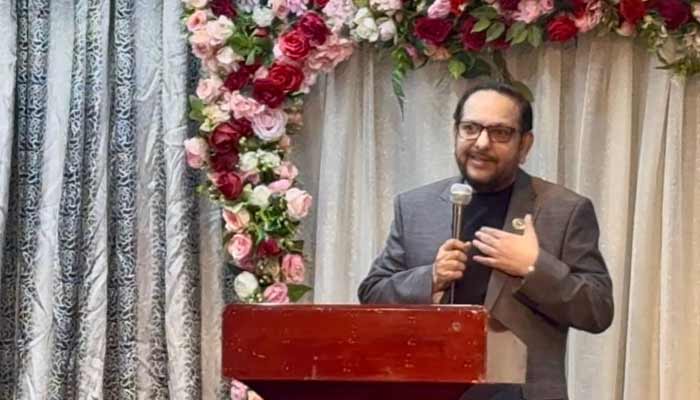
Overseas Pakistani representative Malik Aslam said that many Pakistanis have come to the UAE, built their lives, and achieved their dreams, adding that the community remains grateful and will continue to stand by the UAE leadership in all circumstances.
Overseas Pakistanis, including long-time resident Qadir Magsi and business leader Mohammad Saleem, expressed emotional attachment to the UAE, saying they were ready to fulfil any responsibility if called upon.
The event was organised by the Pakistan Peoples Party Middle East and attended by members of the Pakistani community, business groups and political representatives, who collectively expressed solidarity with the UAE and appreciation for the opportunities the country has provided.
- Plan to be agreed on Monday, says source.
- Two-stage deal envisaged, ceasefire then final agreement.
- Final deal in 15–20 days with nuclear curbs, sanctions relief.
Iran and the United States have received a Pakistan-formulated plan to end hostilities that could come into effect soon and reopen the Strait of Hormuz, a source aware of the proposals said on Monday.
A framework to end hostilities has been put together by Pakistan and exchanged with Iran and the US overnight, the source said, outlining a two-tier approach with an immediate ceasefire followed by a comprehensive agreement.
“All elements need to be agreed today,” the source said, adding the initial understanding would be structured as a memorandum of understanding finalised electronically through Pakistan, the sole communication channel in the talks.
Axios first reported on Sunday that Pakistan, along with other regional mediators, was engaged in intense diplomatic efforts to broker a potential 45-day ceasefire between Iran and the United States that could lead to a permanent end to the war.
The source told Reuters that Chief of Army Staff (COAS) and Chief of Defence Forces (CDF), Field Marshal Asim Munir, has been in contact “all night long” with US Vice President JD Vance, special envoy Steve Witkoff and Iranian Foreign Minister Abbas Araghchi.
Under the proposal, a ceasefire would take effect immediately, reopening the Strait of Hormuz, with 15–20 days to finalise a broader settlement.
The deal, tentatively dubbed the “Islamabad Accord,” would include a regional framework for the strait, with final in-person talks in Islamabad.
Meanwhile, senior Iranian official told Reuters that Tehran had received Pakistan’s proposal for an immediate ceasefire and was reviewing it, adding that Tehran does not accept being pressured to accept deadlines and make a decision.
Iran won’t reopen the Strait of Hormuz in exchange for a “temporary ceasefire”, the official said, adding that Tehran views Washington as lacking the readiness for a permanent ceasefire.
Iranian officials have previously told Reuters that Tehran was seeking a permanent ceasefire with guarantees they will not be attacked again by the US and Israel. They have said Iran has received messages from mediators including Pakistan, Turkiye and Egypt.
The final agreement is expected to include Iranian commitments not to pursue nuclear weapons in exchange for sanctions relief and the release of frozen assets, the source said.
Two Pakistani sources said Iran has yet to commit despite intensified civilian and military outreach.
“Iran has not responded yet,” one source said, adding proposals backed by Pakistan, China and the United States for a temporary ceasefire have drawn no commitment so far.
There was no immediate response from Chinese officials to requests for comment.
The latest diplomatic push comes amid escalating hostilities that have raised concerns over disruption to shipping through the Strait of Hormuz, a critical artery for global oil supplies.
US President Donald Trump has in recent days publicly pressed for a rapid end to the conflict, warning of consequences if a ceasefire is not reached within a short timeframe.
The conflict has heightened volatility in energy markets, with traders closely watching any developments that could affect flows through the strait.


Vietnam’s economy up 7.83% YoY in Q1 2026: NSO

Artemis II: Everything We Know as Its Crew Approaches the Far Side of the Moon

David Henrie and wife Maria announce surprise 4th pregnancy

-

 Sports1 week ago
USMNT handed reality check by Doku, Belgium ahead of World Cup
-

 Sports1 week ago
2026 NCAA men’s hockey tournament: Schedule, results
-
Uncategorized4 days ago
[CinePlex360] Please moderate: “Trump signals p
-
Uncategorized1 week ago
[CinePlex360] Please moderate: “Further tariff
-

 Entertainment3 days ago
Joe Jonas shares candid glimpse into parenthood with Sophie Turner
-

 Tech3 days ago
Our Favorite iPad Is $50 Off
-

 Sports1 week ago
Man City show why they are worthy WSL title winners as tired United wilt
-

 Entertainment1 week ago
Demystifying the PTI