

Fashion
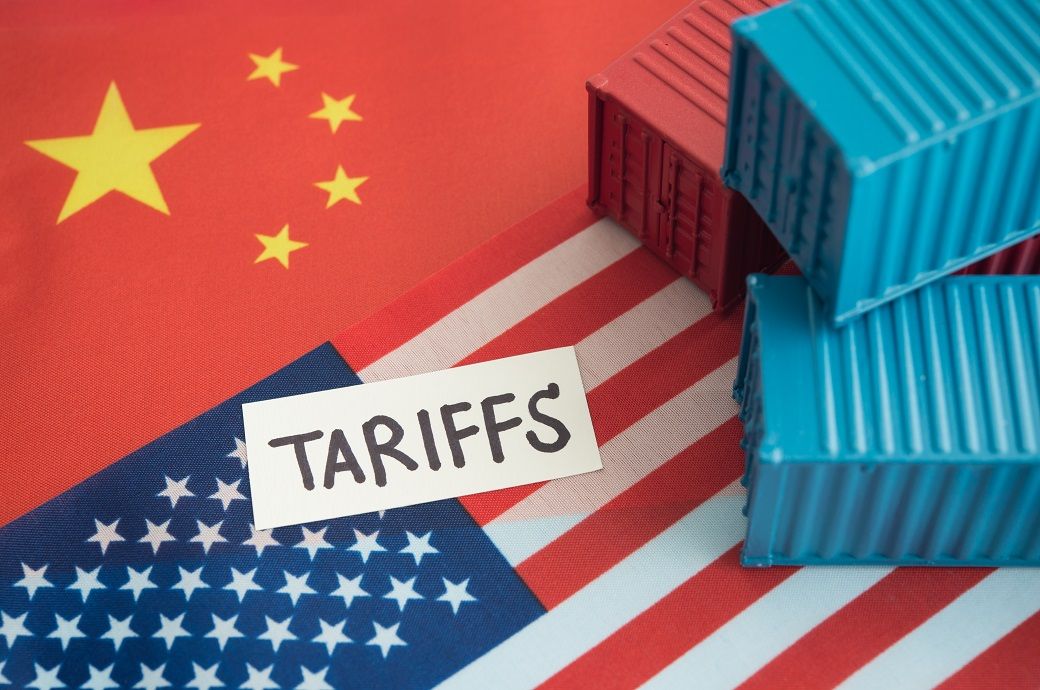
Trump tariffs cut into China sales of US firms: AmCham Shanghai survey

However, China’s efforts to demonstrate its continued openness to global business have yielded significant improvements in metrics related to the regulatory environment, it noted.
Seventy-one per cent of respondents were profitable in 2024, an improvement from 2023’s record low of 66 per cent. Profitability varied widely by sector; 80 per cent of manufacturers and 69 per cent of retailers were profitable.
Volatility in US-China trade ties has dragged optimism in the business environment, headquarter prioritisation of the China market and future revenue expectations to record lows, a survey by AmCham Shanghai found.
Just 45 per cent of respondents expect revenue to rise in 2025.
Forty-one per cent of them are optimistic about the five-year business outlook, with the rate lowest for manufacturers.
Fifty-seven per cent of respondents saw higher revenue in 2024 than in 2023, up from 50 per cent in the previous survey.
Sixty-four per cent of companies expect new US-China tariffs to drag on their 2025 revenue performance. As a result, just 45 per cent anticipate revenue to increase this year. This would be a record low if realised.
For the fourth consecutive year, the rate of respondents optimistic about the five-year business outlook in China hit another historic low. Now, 41 per cent of respondents express any optimism, with the rate lowest for manufacturers (36 per cent) and highest for retailers (51 per cent).
Twelve per cent of respondents ranked China as their headquarters’ top investment destination, also the lowest in the survey’s history.
Forty-eight per cent of respondents said that the regulatory environment was transparent, a 13-percentage point (pp) jump from last year. When asked about obstacles from regulatory challenges, members reported less hindrance across all options.
Over a third of respondents say that Chinese government policies and regulations toward foreign companies have improved in the past few years, 4 pp higher than 2024. Accordingly, 41 per cent say they are confident in China opening up further, a jump from 22 per cent last year.
Members continued to rank the US-China relationship or geopolitical tensions more broadly as the biggest challenge to their China operations and to China’s economic growth. Trade turbulence is weighing on willingness to invest in China and leading firms to double down on risk mitigation strategies, a release from the chamber said.
Forty-eight per cent of respondents urged the US government to completely remove all tariffs and non-tariff barriers on Chinese goods. Another 33 per cent want the removal of April’s reciprocal tariffs and other additional tariffs like the 20-per cent fentanyl tariff.
Members also oppose retaliatory duties, with 42 per cent calling on the Chinese government to remove all tariffs and non-tariff barriers on US imports and an additional 34 per cent hoping for a return to the most favoured nation rate.
If the US revokes China’s Permanent Normal Trade Relations status, 69 per cent of members anticipate negative effects. Companies in the manufacturing sector would bear the brunt, with 78 per cent expecting adverse effects compared to 59 per cent for retail.
Twenty-three per cent increased investments while a record-high 26 per cent cut investments in China. This year, 22 per cent are expecting to raise their China investments and 25 per cent will reduce that.
More companies are limiting their investment exposure to China in response to the changing geopolitical and economic situation; only 39 per cent will not have any China investment limits, down from 45 per cent last year and 50 per cent in 2023.
Companies are shock-proofing supply chains and bifurcating US and non-US strategies in response to global trade tensions. Of those with supply chains, nearly half are making significant adjustments in response to recent tariffs by shifting the sources of US-bound products or building in redundancy.
In the past year, 47 per cent of companies have redirected planned investments away from China, the highest level since this question was first asked in 2017. Southeast Asia remains the top destination for rerouted investment as well as for operations that are moved out of China.
Fibre2Fashion News Desk (DS)












The textile trade narrative is shifting from tariff optics to execution realities.
While Bangladesh gains a conditional US access lever, structural constraints limit immediate upside.
India, though exposed in the US, holds strategic resilience via EU diversification.
The next cycle will be decided not by policy announcements, but by supply chain adaptability and shipment reliability.
Source link

Richard Li, group head of global chinese at Standard Chartered, said, “The solution promotes the use of RMB that can deliver tangible benefits, including lower foreign exchange costs, improved working capital efficiency and better alignment of cash flows.” He added that the solution enables small entrepreneurs engaged in Sino-Africa trade to manage multiple currencies, access reliable financing, and navigate complex regulatory environments.
Originally launched in China in 2006, the initiative reflects the bank’s continued commitment to supporting SMEs in their international expansion. Bernard Kombo, head of SME Banking at Standard Chartered Kenya, noted that businesses can achieve up to two per cent annual savings by using RMB for working capital financing.
Kombo further highlighted that the corridor leverages a cross-border international payments system, enabling settlement within 15 seconds, significantly faster than traditional methods that take one to two days.
Fibre2Fashion News Desk (JP)

On March **, ****, India’s Directorate General of Foreign Trade (DGFT) issued Notification No. **/****–**, amending Para *.** of the Foreign Trade Policy and removing the long-standing ****;** lakh (about $**,***) per-consignment cap on courier exports. From April *, exporters can send consignments of any value through courier mode instead of splitting higher-value orders into smaller parcels.
For textiles and apparel, this is more than a procedural tweak. The sector is no longer driven only by large container-based orders from global retailers. It is increasingly shaped by samples, capsule drops, repeat orders, customised runs, premium home textiles, craft-led fashion, and direct-to-consumer cross-border fulfilment. In that world, courier flexibility matters.


Swinton Business offers tailored policies to suit your needs

Spoiler alert! Historic “Survivor” episode

Trump’s war could see fuel rationing and global recession within months, experts warn

-

 Fashion1 week ago
Ho Chi Minh City bizs adjust production plans, seek new supply chains
-

 Fashion1 week ago
India’s Gen Z to drive half of fashion market by 2030: Reedseer
-

 Fashion1 week ago
Japan’s apparel imports rise 22.9% to $2 bn in February 2026
-

 Entertainment1 week ago
Space company plans bold landing on fast-moving asteroid passing near Earth
-

 Entertainment1 week ago
Andrew holds breath as King Charles plans bombshell move amid probe
-
 Business1 week ago
Co-op boss quits after ‘toxic culture’ claims reported by BBC
-
 Business6 days ago
How do you spot a fake online review?
-

 Sports1 week ago
2026 NBA draft stock watch: Which NCAA prospects are rising?