

Politics
Trump warns Britain on China ties as Starmer hails progress in Beijing

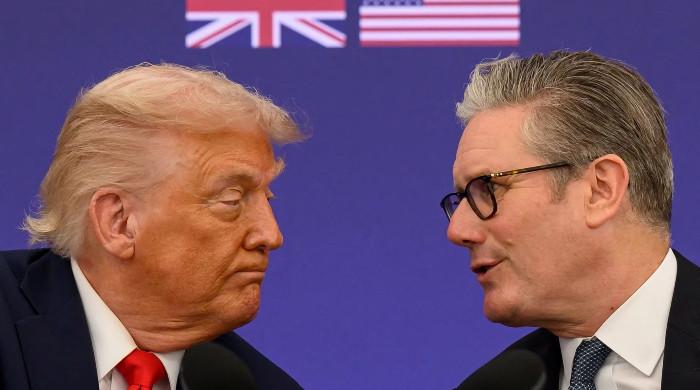
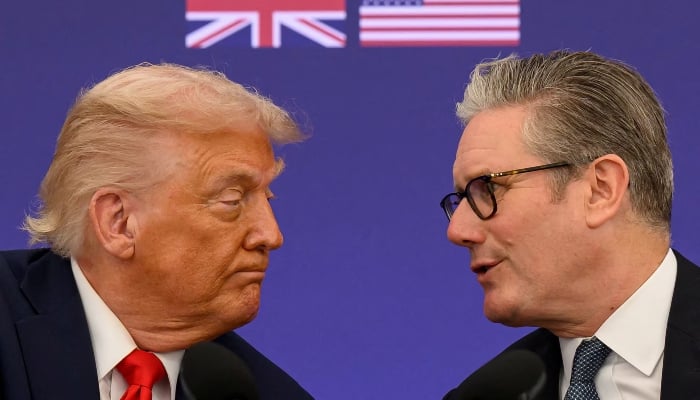
- Starmer, Xi signaled reset in summit talks on Thursday.
- Starmer becomes first British PM to visit China since 2018.
- Latest Western leader engaging in flurry of China diplomacy.
US President Donald Trump said it was dangerous for Britain to be getting into business with Beijing, as Prime Minister Keir Starmer lauded the economic benefits of resetting relations with China during a visit there on Friday.
As Western leaders reel from Trump’s unpredictability, Starmer is the latest to head to China.
In three-hour talks with President Xi Jinping on Thursday, the British leader called for a “more sophisticated relationship” with improved market access, lower tariffs and investment deals while also discussing soccer and Shakespeare.
In Washington, however, replying to questions about the closer ties, Trump said: “Well, it’s very dangerous for them to do that.” He was speaking to reporters ahead of the premiere of the film “Melania” at the Kennedy Centre.
He did not elaborate.
Trump, who plans to travel to China in April, threatened last week to impose tariffs on Canada after Prime Minister Mark Carney struck economic deals with Beijing on a recent visit.
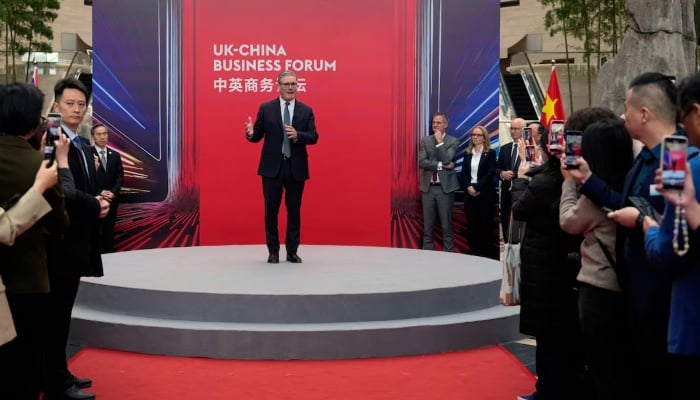
While a Downing Street spokesperson and China’s foreign ministry did not immediately respond to requests for comment, British trade department minister Chris Bryant said Trump was “wrong” to say what the UK was doing was dangerous.
“Of course, we enter into our relationship with China with our eyes wide open,” he told the BBC on Friday.
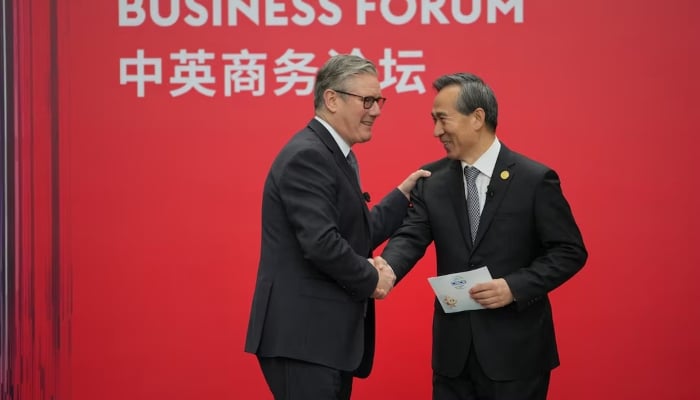
Around the time of Trump’s comments, Starmer told a meeting of the UK-China Business Forum in the Chinese capital that his “very warm” meetings with Xi had provided “real progress”.
Starmer hailed deals on visa-free travel and lower whisky tariffs as “really important access, symbolic of what we’re doing with the relationship”.
“That is the way that we build the mutual trust and respect that is so important,” Starmer said.
Before heading for the financial hub of Shanghai, he met Chinese business leaders, such as Yin Tongyue, chief executive of carmaker Chery, which plans to open a research and development centre for its commercial vehicle arm in the English city of Liverpool, a city official said during Starmer’s visit.
Not choosing between US and China
Starmer’s centre-left Labour government has struggled to deliver on promises of boosting Britain’s economic growth since taking power in July 2024, and he has made improving relations with the world’s second-largest economy a priority.
His visit to China comes amid Trump’s on-off threats of trade tariffs and pledges to grab control of Greenland, an autonomous territory of Denmark, which have rattled long-standing US allies, Britain among them.
Speaking to reporters on the airplane en route to China, Starmer said Britain could continue to strengthen economic ties with Beijing because of his country’s long history of working closely with the US
“The relationship we have with the United States is one of the closest … we hold,” he said, enumerating areas such as defence, security, intelligence and trade.
Starmer said London would not have to choose between closer ties with the United States or China, highlighting Trump’s September visit to Britain that unveiled £150 billion of US investment into the country.
Washington also received advanced notice of Starmer’s objectives on his China trip, a British government official said on condition of anonymity due to the sensitivity of the matter.
Starmer, who normally avoids criticising Trump, has been more willing to defy the US president in recent weeks.
He urged Trump to apologise for his “frankly appalling” remarks last week that some Nato troops avoided frontline combat and said he would not yield to his demands to annex Greenland.
Tough export market
German Chancellor Friedrich Merz is also expected to visit China soon, and Carney was preceded by French President Emmanuel Macron in December, when Xi accompanied him on a rare trip outside Beijing.
“To all world leaders meeting with Xi Jinping: China sells nothing but cheap products and cheap friendships,” the Republican-led US House Foreign Affairs Committee said on X on Thursday.
Before Trump’s comments on the closer ties, his Commerce Secretary Howard Lutnick said it was unlikely that Starmer’s efforts with China would pay off.
“The Chinese are the greatest exporters and they are very, very difficult when you’re trying to export to them,” he told reporters. “So good luck if the British are trying to export to China … it’s just unlikely.”
Asked if Trump would threaten Britain with tariffs as he did Canada, Lutnick said: “Unless the prime minister of Britain sort of takes on the United States and says very difficult things, I doubt it.”
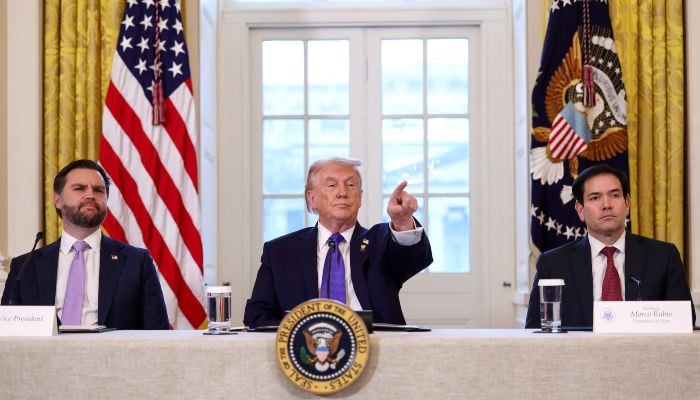
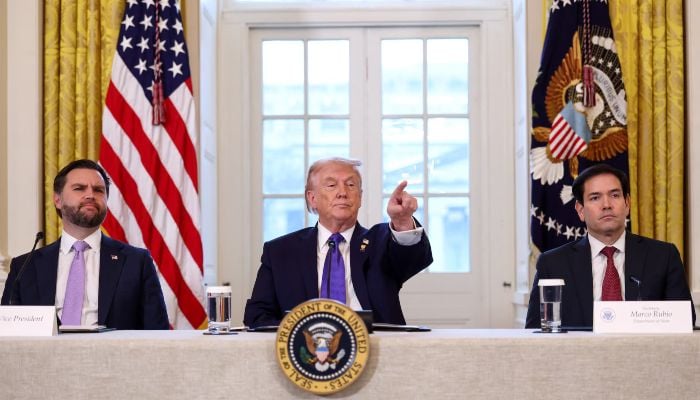
WASHINGTON: As the war in Iran threatens to imperil President Donald Trump’s legacy, the political stakes also are rising for two of his top lieutenants: Vice President JD Vance and Secretary of State Marco Rubio.
The pair, widely viewed as potential successors to Trump, have been thrust into still-developing negotiations to end the war at a moment when the Republican Party is already weighing its post-Trump future.
Vance has taken a cautious approach, reflecting his scepticism toward prolonged US military involvement, while Rubio has aligned himself closely with Trump’s hawkish stance and emerged as one of the administration’s most vocal defenders of the campaign.
Trump has said both men were involved in efforts to force Iran to accept US demands to dismantle its nuclear and ballistic missile programs and allow oil traffic to pass freely through the Strait of Hormuz.
With the next presidential election due in 2028 and term limits barring Trump from running again, the president has been putting the succession question to allies and advisers in private, asking “JD or Marco?” two people familiar with his views said.
The outcome of the US military operation now in its fifth week could shape the two men’s 2028 prospects, political analysts and Republican officials said. A swift end to the war that favours the US might bolster Rubio, who also serves as Trump’s national security adviser and could be seen as a steady hand during a crisis. A prolonged conflict could give Vance space to argue he reflected the anti-war instincts of Trump’s base without openly breaking with the president.
Trump’s own standing is also at stake. His approval rating fell in recent days to 36%, its lowest point since he returned to the White House, hit by a surge in fuel prices and widespread disapproval of the Iran war, a four-day Reuters/Ipsos poll completed last week found.
Some Republicans say they are watching closely for which senior aide Trump appears to favour as the Iran conflict unfolds. Some see signs of Trump leaning toward Rubio but note he could change his mind quickly.
“Everyone is watching the body language that Trump makes on Rubio and not seeing the same on Vance,” a Republican with close ties to the White House said.
The White House rejected the idea that Trump is signalling a preference.
“No amount of crazed media speculation about Vice President Vance and Secretary Rubio will deter this administration’s mission of fighting for the American people,” spokesman Steven Cheung said.
From Trump rivals to likely heirs
Vance, 41, a former Marine who served in Iraq, has long argued against US entanglements in foreign wars. His public comments on Iran have been limited and calibrated, and Trump has noted the two have “philosophical differences” on the conflict.
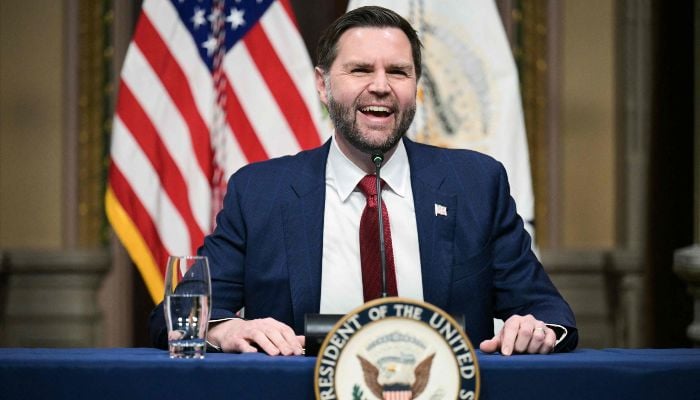
Once a self-described “never-Trumper,” Vance wrote an opinion piece in the Wall Street Journal in 2023 saying Trump’s best foreign policy was not starting any wars during his first four years in office between 2017 and 2021.
The White House has downplayed any rift between the president and vice president. Standing alongside Trump in the Oval Office earlier this month, Vance said he supported Trump’s handling of the war and agreed with him that Iran should not obtain a nuclear weapon.
Vance could take on a more direct role in negotiations if Trump’s special envoy Steve Witkoff and son-in-law Jared Kushner make sufficient progress, a person with knowledge of the matter said.
“Vice President Vance is proud to be a part of a highly effective team that, under President Trump’s bold leadership, has had incredible success in making America safer, more secure and more prosperous,” a Vance spokeswoman said.
A senior White House official, who like others in this story was granted anonymity to speak freely about a sensitive topic, said Trump tolerates ideological differences as long as aides remain loyal, adding that Vance’s sceptical views have helped inform Trump about where part of his voter base stands.
A person familiar with Vance’s views told Reuters the vice president will wait until after the November midterm elections before deciding on whether to run in 2028.
Rubio, 54, has said he will not run for president if Vance does, and sources familiar with Rubio’s views say he would be content as Vance’s running mate.
But any perceived vulnerability for Vance could encourage Rubio and other Republicans eyeing bids.
“Trump has a long memory,” said Republican strategist Ron Bonjean. “And he may call out Vance for his lack of allegiance. And if Trump remains popular with the MAGA base, that could hurt him by not getting the endorsement of the president.”
Trump has floated the idea of Vance and Rubio running together, suggesting they would be hard to beat.
“Trump doesn’t want to anoint anyone,” the senior White House official said.
A March Reuters/Ipsos poll found that 79% of Republicans have a favourable view of Vance, while 19% viewed him negatively. Some 71% had a positive view of Rubio, while 15% viewed him unfavourably.
In comparison, 79% of Republicans viewed Trump favourably and 20% unfavourably.
Rubio, whose 2016 presidential aspirations were snuffed out after a bitter confrontation with Trump, has long since set aside any frictions with the president.
State Department spokesman Tommy Pigott said Rubio “has a great relationship, both professionally and personally” with Trump’s team.
Rubio and the White House were forced into damage control after he angered some of Trump’s conservative backers when he suggested that Israel pushed the United States into the war. But in the weeks since, Trump has praised Rubio’s efforts.
Asked whether Rubio was concerned that a protracted war might damage his political future, a senior State Department official said, “He has not spent a second thinking about this.”
Differences on display
Matt Schlapp, a conservative leader who runs the Conservative Political Action Conference, said the Iran campaign will have big political consequences.
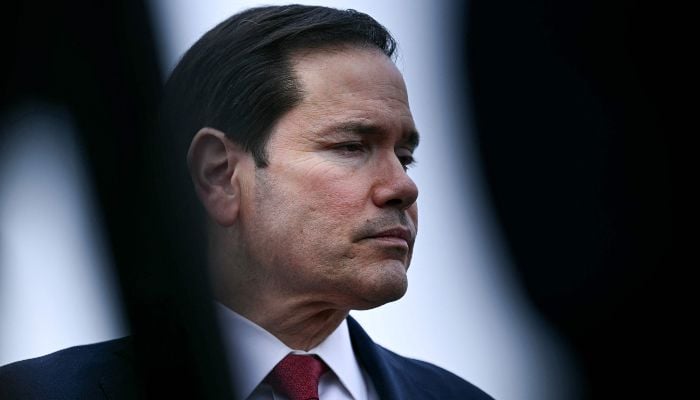
“If it is seen as successful at getting the job done…I think people will be politically rewarded for doing the right thing,” Schlapp said. “If it goes on and on and on… I think the politics are tough.”
Republicans remain broadly supportive of the US military strikes against Iran, with 75% approving compared to just 6% of Democrats and 24% of independents, Reuters/Ipsos polling showed.
At a televised Cabinet meeting on Thursday, the contrast between Rubio and Vance was on display.
Rubio gave a full-throated defence of Trump’s attack on Iran. “He’s not going to leave a danger like this in place,” the secretary of state said.
Vance was more measured, focusing on options for depriving Iran of a nuclear weapon. He closed by wishing Christians and US troops in the Gulf a blessed Holy Week and Easter.
“We continue to stand behind you,” he said to servicemembers, “and continue to support you every step of the way.”


CARACAS: Ousted Venezuelan president Nicolas Maduro and his wife, captured by US forces in a nighttime raid in January, said Saturday that they feel “steadfast” and “serene” in their first social media post from prison.
Maduro and his wife Cilia Flores have been held in a Brooklyn jail for almost three months, after American commandos snatched the pair from their compound in Caracas, and they have reportedly been without access to the internet or newspapers.
“We are well, steadfast, serene and in constant prayer,” the pair said in a message shared on Maduro’s X account, though it was unclear who made the post on their behalf.
“We have received your communications, your messages, your emails, your letters and your prayers. Every word of love, every gesture of affection, every expression of support fills our souls and strengthens us spiritually.”
A source close to the Venezuelan government told AFP that Maduro reads the Bible and is referred to as “president” by some of his fellow detainees in Brooklyn’s Metropolitan Detention Centre, a federal prison known for unsanitary conditions.
He is only allowed to communicate by phone with his family and lawyers for a maximum of 15 minutes per call, the source added.
His son, Nicolas Maduro Guerra, known as “Nicolasito,” has said in public appearances that his father is well, calm, and even exercising in prison.
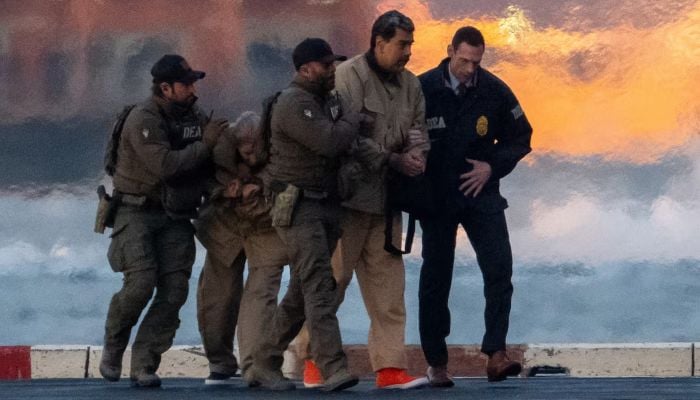
Maduro, who has declared himself a “prisoner of war,” had not spoken since being arraigned in New York on January 5.
“We feel a deep admiration for our people’s ability to remain united in difficult times, to express love, awareness, and solidarity, within Venezuela and beyond our borders,” the couple added in Saturday’s post.
During a one-hour hearing on Thursday, the judge rejected a defence motion over Maduro and his wife’s apparent inability to afford their legal bill without aid from the Venezuelan government. Neither spoke during the court appearance.
Maduro has pleaded not guilty to charges of “narco-terrorism” conspiracy, cocaine importation conspiracy, possession of machine guns and destructive devices and conspiracy to possess machine guns and destructive devices.

The January operation deposed Maduro, who had led Venezuela since 2013, forcing the oil-rich country to largely bend to US President Donald Trump’s will.
Delcy Rodriguez, who had been Maduro’s vice president since 2018, is now at the helm and grappling with leading a country saddled with the world’s largest proven oil reserves but an economy in shambles.
Since Maduro’s ouster, Rodriguez has enacted a historic amnesty law to free political prisoners jailed during his tenure and reformed oil and mining regulations in line with US demands for access to her country’s vast natural wealth.
This month, the State Department said it was restoring diplomatic ties with Venezuela in a sign of thawing relations.
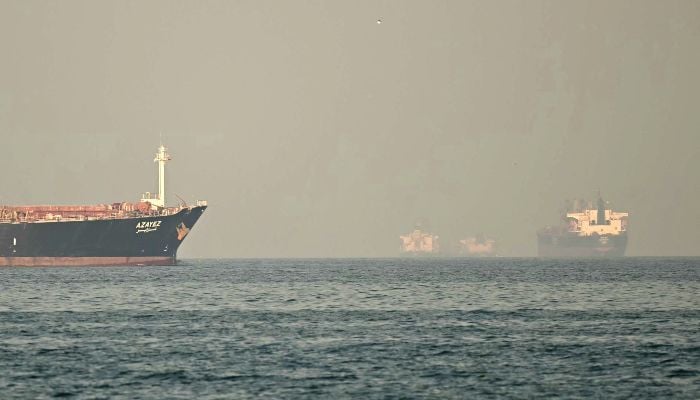
LONDON: Seafarers’ helplines say they are overwhelmed with messages from crews stuck in the Gulf by the Middle East war, desperately seeking repatriation, compensation and onboard supplies.
“Writing to urgently inform you that our vessel is currently facing a critical situation regarding provisions and one crew health conditions,” read an email from one seafarer on March 24 to the International Transport Workers’ Federation (ITF)’s Seafarer Support team.
“Immediate supply of food, drinking water, basic necessities is required to sustain the crew,” said the message to the team’s helpline.
The ITF said it had received more than 1,000 emails and messages from seafarers stuck around the Strait of Hormuz and the wider region since the war erupted with US-Israeli strikes on Iran on February 28.
Bomb strikes
Some sought to clarify what their rights are while navigating a war zone, while others sent videos of bombings striking next to their ship and asked the federation for help to get off board, according to ITF documents seen by AFP.
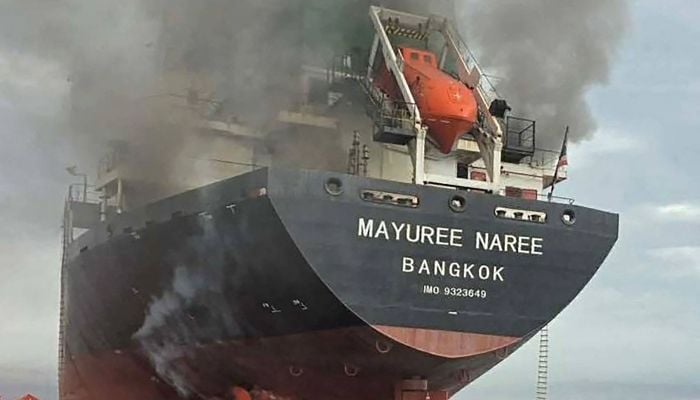
“It is an extraordinary situation, there is a lot of panic,” Mohamed Arrachedi, ITF’s Network Coordinator for the Arab World and Iran, in charge of handling requests from seafarers in the region, told AFP, describing the situation as “really shocking”.
“I get calls from seafarers at two o’clock, three o’clock in the morning. They call me the minute they have access to the internet,” Arrachedi said on Wednesday by telephone from Spain.
“One seafarer called in a panic, saying: ‘We are here bombed. We don’t want to die. Please help me, sir. Please get us from here.”
About 20,000 seafarers are currently stuck in the Gulf, according to the UN’s maritime body, known as the IMO, and at least eight seafarers or dock workers have died in incidents in the region since February 28.
All correspondence was shared with AFP on condition of anonymity, as the helpline guarantees confidentiality to seafarers.
War zone rights
The International Bargaining Forum (IBF), a global maritime labour body, has declared the area a war zone.
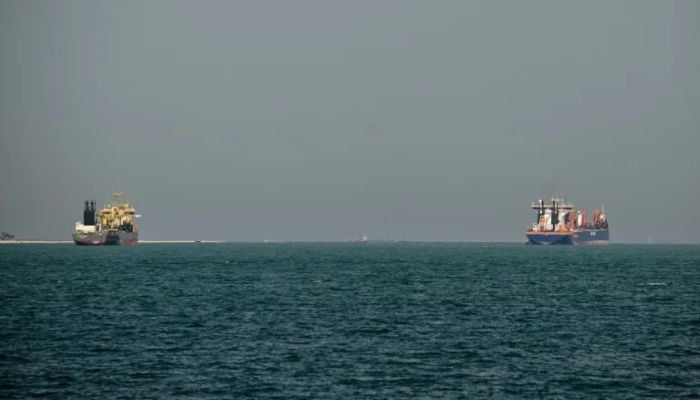
This normally gives seafarers exceptional rights, including repatriation at the company’s cost and double pay for those working on ships covered by IBF agreements — around 15,000 vessels worldwide, according to the ITF.
Despite this, many seafarers — especially on ships without such labour agreements — are reporting difficulties with getting repatriated.
In one email sent to the ITF on March 18, a seafarer said the ship’s operator was ignoring crews’ requests to leave, arguing that there were no flights from Iraq and refusing alternative routes.
“They are forcing us to continue to do cargo operations and STS (ship-to-ship operations) even (when) we raise our concerns about our safety and we are in war like area. They are keeping us in a position with no options,” read the email seen by AFP.
The International Seafarers’ Welfare and Assistance Network (ISWAN), another organisation operating a helpline, told AFP on Wednesday that it had seen “a 15-20% increase in calls and messages” since the start of the war, with a third relating to repatriation difficulties.
$16 a day
Another major concern is compensation.
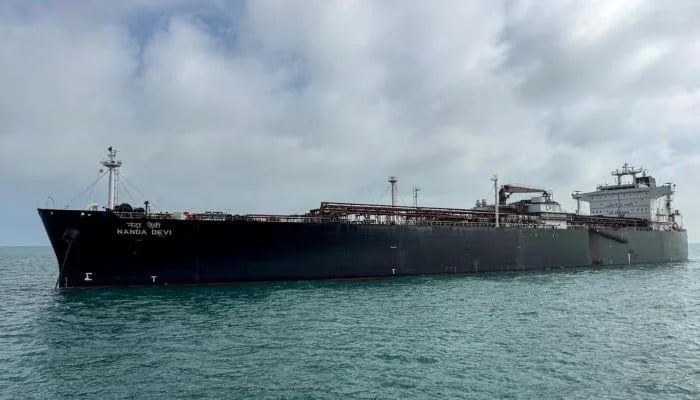
“About 50% of emails we receive concern pay,” Lucian Craciun, one of five members of ITF’s support team processing requests at the organisation’s headquarters in London, told AFP.
He said many seafarers choose to stay on board despite the dangerous conditions because they cannot afford to leave.
One email seen by AFP came from a seafarer asking to confirm whether his salary would go from $16 a day to $32 because he was in a designated war zone.
The ITF says such low salaries indicate that the shipowners do not have labour agreements in place to ensure decent pay.
Seafarers working under such arrangements are particularly at risk because their contracts often do not cover operations in war zones, and owners tend not to respond to requests from organisations such as the ITF, according to the support team.
When that happens, the ITF reaches out to the flag states and, if that does not work, to the state port authority where the vessel is located.
Arrachedi said that many such cases in the Gulf are still unresolved, with seafarers desperately awaiting responses from operators.


Tyrell Fortune wins UFC debut after score error reversal, years after being pronounced dead

Airlines must offer 60% seats free from April 20, DGCA says amid row over seat selection charges – The Times of India

Michael Jordan on NASCAR, life after basketball and the one title he won’t claim

-
 Business1 week ago
Flipkart group CFO to leave co amid IPO plans – The Times of India
-

 Fashion1 week ago
China’s textile & apparel exports surge 17% to $50 bn in Jan-Feb 2026
-

 Sports1 week ago
Rating Adidas’ 2026 World Cup away shirts: Argentina, Spain, Mexico and more
-

 Sports1 week ago
American Conference Commissioner Tim Pernetti thanks Trump for Army-Navy game executive order
-

 Tech1 week ago
Gamers Hate Nvidia’s DLSS 5. Developers Aren’t Crazy About It, Either
-

 Entertainment5 days ago
UN warns migratory freshwater fish numbers are spiralling
-

 Sports1 week ago
How to watch 2026 NCAA swimming and diving championships
-
 Business5 days ago
Property Play: Home flippers see smallest profits since the Great Recession, real estate data firm says