

Politics
Trump warns Iran as protests spread nationwide despite internet blackout

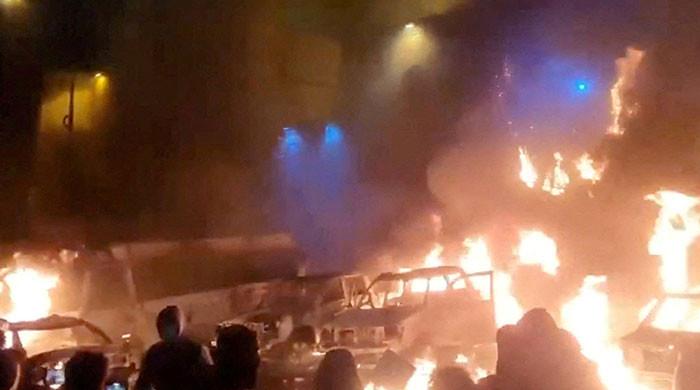
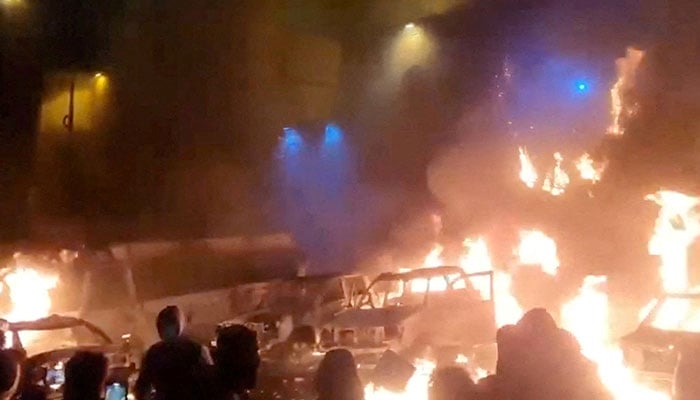
- Trump says Iran should not start shooting at protesters.
- Warns US will respond in case Iran open fires at protesters.
- Rights groups report at least 62 deaths in two weeks of unrest.
DUBAI: US President Donald Trump issued a new warning to Iran’s leaders on Friday as videos showed anti-government protests raging across the country, and authorities blacked out the internet to curb growing unrest.
Rights groups have documented dozens of deaths of protesters in nearly two weeks and, with Iranian state TV showing clashes and fires, the semi-official Tasnim news agency reported that several police officers had been killed overnight.
Trump, who bombed Iran last summer and warned Tehran last week the US could come to the protesters’ aid, issued another warning on Friday, saying: “You better not start shooting because we’ll start shooting too.”
“I just hope the protesters in Iran are going to be safe, because that’s a very dangerous place right now,” he added.
However, Trump said on Thursday he was not inclined to meet Reza Pahlavi, the US-based crown prince and son of the late Shah of Iran, a sign that he was waiting to see how the crisis plays out before backing an opposition leader.
In a televised address, Iran’s Supreme Leader Ayatollah Ali Khamenei vowed not to back down, accusing demonstrators of acting on behalf of opposition groups abroad and the United States, and a public prosecutor threatened death sentences.
Iran’s Ministry of Information and Communications Technology said the decision to shut down the internet was made “by the competent security authorities under the prevailing circumstances of the country.”
Pakistan sets up desk to facilitate Pakistanis in Iran
Pakistan has established a special help desk at its embassy in Tehran to assist citizens as the ongoing unrest continues without any letup.
Muhammad Mudassir Tipu, the country’s ambassador to Iran, said the desk will provide guidance and support round the clock to Pakistanis in need, with dedicated phone numbers shared for immediate contact and facilitation.
Mr. Farhan Ali, 00989107648298
Mr. Faizan, 00989906824496
Mr. Kashif Ali, 00989938983309
Landline
00982166941388
00982166944888
Dozens killed in two weeks of protest
The protests pose the biggest internal challenge in at least three years to Iran’s rulers, who look more vulnerable than during past bouts of unrest amid a dire economic situation and after last year’s war with Israel and the United States.
While the initial protests focused on the economy, with the rial losing half its value against the dollar last year and inflation topping 40% in December, they have morphed to include slogans aimed directly at the authorities.
Iranian rights group HRANA said on Friday it had documented at least 62 deaths, including 14 security personnel and 48 protesters, since demonstrations began on December 28.
The leaders of France, Britain and Germany issued a joint statement on Friday condemning the killing of protesters and urged the Iranian authorities to refrain from violence.
UN spokesperson Stephane Dujarric said the United Nations was very disturbed by the loss of life.
“People anywhere in the world have a right to demonstrate peacefully, and governments have a responsibility to protect that right and to ensure that that right is respected,” he said.
The internet blackout has sharply reduced the amount of information flowing out of Iran and phone calls to the country were not getting through. At least 17 flights between Dubai and Iran were cancelled, Dubai Airport’s website showed.
Images published by state television showed what it said were burning buses, cars and motorbikes as well as fires at underground railway stations and banks.
Iranian rights group Hengaw reported that a protest march after Friday prayers in Zahedan, where the Baluch minority predominates, was met with gunfire that wounded several people.
Authorities have tried a dual approach – describing protests over the economy as legitimate while condemning what they call violent rioters and cracking down with security forces.
Last week, President Masoud Pezeshkian urged authorities to take a “kind and responsible approach”, and the government offered modest financial incentives to help counter worsening impoverishment as inflation has soared.
But with unrest spreading and clashes appearing more violent, the Supreme Leader, the ultimate authority in Iran above the elected president and parliament, used much tougher language on Friday.
“The Islamic Republic came to power through the blood of hundreds of thousands of honourable people. It will not back down in the face of vandals,” he said, accusing those involved in unrest of seeking to please Trump.
Iran’s United Nations ambassador accused Washington of “destabilising practices” and blamed it for “the transformation of peaceful protests into violent, subversive acts.”
Tehran’s public prosecutor said those committing sabotage or engaging in clashes with security forces would face the death penalty.
Fragmented opposition
Iran’s fragmented external opposition factions called for more protests and Pahlavi told Iranians on social media: “The eyes of the world are upon you. Take to the streets.”
“The sense of hopelessness in Iranian society is something today that we haven’t seen before. I mean, that sense of anger has just deepened over the years and we are at record new levels in terms of how Iranian society is upset,” said Alex Vatanka of Washington’s Middle East Institute.
However, the extent of support inside Iran for the monarchy or for the MKO, the most vocal of emigre opposition groups, is disputed.
Iranian Foreign Minister Abbas Araqchi said on Friday the chance of foreign military intervention was “very low”. He said the foreign minister of Oman, which has often interceded in negotiations between Iran and the West, would visit on Saturday.
Iran has weathered repeated past bouts of major unrest, including student protests in 1999, over a disputed election in 2009, against economic hardships in 2019, and the 2022 Woman, Life, Freedom protests.
The 2022 protests, sparked by the killing of a young woman in the custody of the police, drew men and women, old and young, rich and poor onto the streets.
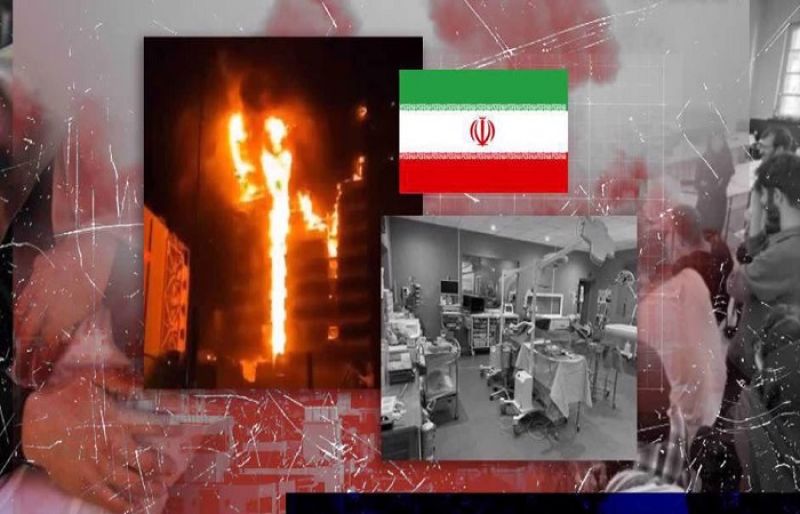

The air at the bombed-out Tehran hospital room hung thick with dust and the metallic tang of recent destruction carried out by the United States and the Israeli regime.
Against a backdrop of shattered concrete, two newborns clung precariously to life. Their breaths were being measured by the rhythmic beep of monitors connected by vital wires.
Amid the dust-choked room following the dastardly US-Israeli aggression, Iranian Red Crescent personnel worked to sever the fragile connection to the damaged infrastructure, to take the infants out of the wreckage.
The Gandhi Hospital in central Tehran, along with a nearby residential building, sustained catastrophic damage from strikes carried out by the United States and Israel late Sunday night, a day after the aggression was launched without provocation.
Immediately following the attack, harrowing footage depicted medical personnel urgently transferring the tiny newborns from their compromised incubators to ambulances.
Hope for new life, IVF centre targeted
The tragedy deepened with confirmation from hospital authorities later about the massive damage incurred by a specialized IVF center there, which lay in ruins.
The IVF centre was a sanctuary where hundreds of hopeful couples had invested their futures, their deepest desires for parenthood.
The US-Israeli aggression destroyed their dreams for future generations that had been painstakingly planned.
“The ledger of violated human rights in this war will be written in blood and shame,” Hossein Kermanpour, Health Ministry spokesman, wrote in a post on his X account.
“For the first time in my life, I am witnessing something I never even saw during the Iran-Iraq War. Patients being carried in their caregivers’ arms, fleeing into smoke-filled streets after missiles exploded beside their hospital,” Kermanpour added.
The assault was not limited to Gandhi Hospital. Reports confirmed that Khatam al-Anbiya Hospital and Motahari Hospital were also directly targeted in Tehran.
Furthermore, several missiles struck near Abuzar Hospital in the southern city of Ahvaz, forcing the immediate evacuation of 21 patients, including those in intensive care, requiring 30 ambulances to reroute them to other centers.
Images from Ahvaz captured the evacuation under dire circumstances. Emergency personnel were moving the sick through the thick plumes of smoke while the terrifying sounds of aerial bombardment still echoed overhead.
The American and Israeli regimes also targeted three emergency medical bases in Sarab, Chabahar, and Hamedan following the Abuzar attack.
A member of the Iranian Parliament said five hospitals and medical centers have been damaged or destroyed during the US-Israeli terrorist attacks on the Islamic Republic.
“Unfortunately, this illegal act of aggression resulted not only in the destruction of the buildings of hospitals and medical centers but also the injury of a number of students and local residents,” Fatemeh Mohammad Beigi, a member of the Parliament’s Health and Treatment Commission, said in a statement on Monday.
She added that a number of these medical centers have been evacuated in fear of more attacks.
Assault on life itself
Iranian President Masoud Pezeshkian denounced the US-Israeli strikes on civilian infrastructure, stating that the attacks on medical facilities “affect life itself and assaults on educational centers jeopardize the future of a nation.”
He made this reference following a US-Israeli strike on an elementary school in the southern Hormozgan Province that killed 171 girls.
He added that “targeting patients and children blatantly violates humanitarian principles.”
The Iranian president called upon the international community to censure the atrocities.
The Director-General of the World Health Organization (WHO), Tedros Adhanom Ghebreyesus, expressed extreme concern over the damage to Gandhi Hospital in Tehran.
Following the bombing, he posted on X, stating, “Reports of Tehran’s Gandhi Hospital being damaged during today’s bombardment of the Iranian capital are extremely worrying.”
Ghebreyesus reiterated that “all efforts must be taken to prevent health facilities from being caught up in the ongoing conflict,” emphasizing that “Health facilities are protected under international humanitarian law” with the hashtag “#healthisnotatarget.”
Strike on hospitals, a pattern
However, this event is part of a disturbing pattern. This is not the first time Israel has attacked medical facilities in the Islamic Republic. During the 12-day military aggression in June, nearly a dozen hospitals were targeted in clear violation of international conventions.
The Geneva Conventions, long considered the bedrock of humanitarian protection in wartime, have been repeatedly flouted by both the US and Israel.
In Gaza, an entire health system has been systematically crippled, and doctors have been killed while on duty since the genocidal war was launched in October 2023.
According to chilling WHO figures, 94 percent of hospitals in Gaza were destroyed by Israel during its two-year-long genocide.
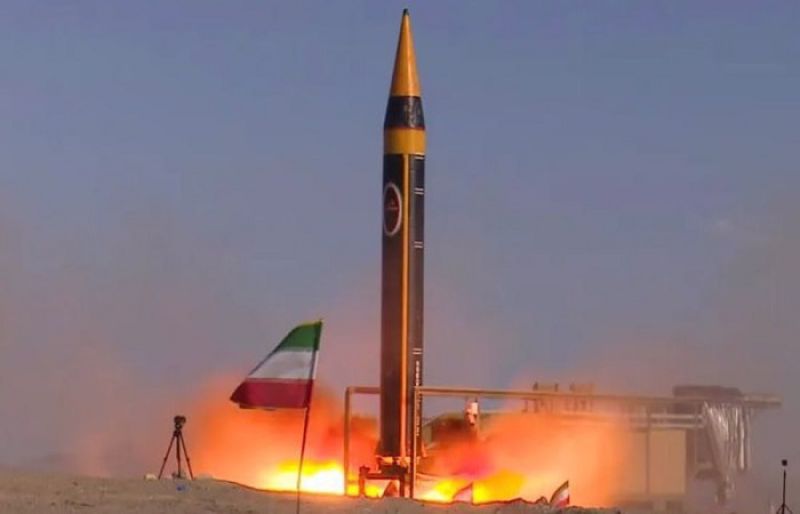

The Islamic Revolution Guards Corps (IRGC) announced early Wednesday that its aerospace force targeted the critical Israeli military infrastructure with heavy Khorramshahr-4 ballistic missiles in the 19th wave of True Promise 4 Operation.
In a statement, the IRGC said the super-heavy missiles, each fitted with a one-ton class warhead, were launched in the pre-dawn hours.
The targets of the strike were central Tel Aviv, Ben-Gurion Airport and Squadron 27 of the Israeli Air Force at the airport, according to the statement.
It said the strategic salvo was preceded by attack drones and that the strike package penetrated “seven layers” of regional and domestic air defenses to reach its objectives.
Khorramshahr-4 is one of Iran’s most advanced weapons, a roughly 13-metre missile with a boost weight of nearly 30 tonnes and a maneuverable re-entry warhead (MaRV) capable of carrying over 1,000 kilograms of explosive payload.
The IRGC statement also said that in the previous wave its forces had successfully struck some 20 US military targets across Bahrain, the United Arab Emirates and Kuwait.
The statement described the strikes as part of coordinated, multi-axis action by Iran’s armed forces that exceeded US and Israeli expectations and had altered the operational calculus of the ongoing war imposed on the Islamic Republic.
In the statement, the IRGC further said American troops were fleeing regional bases and seeking shelter in hotels in host countries, while decrying the US military for using civilian facilities in Persian Gulf states as cover for military activity.
The statement also warned that such movements are under constant intelligence surveillance and that Iranian forces remain prepared to target aggressor troops.
The IRGC says at least 560 American troops have been killed in retaliatory operations and many more injured since Saturday.
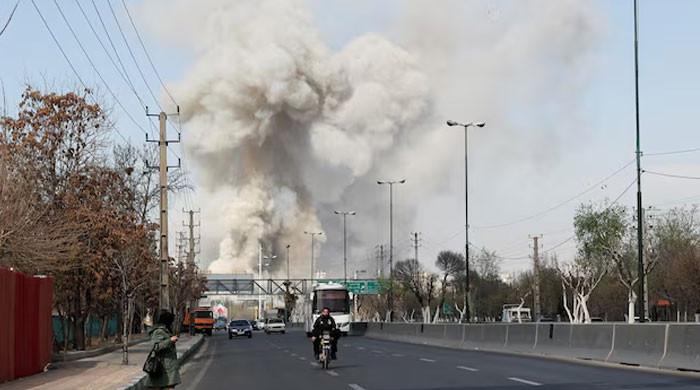
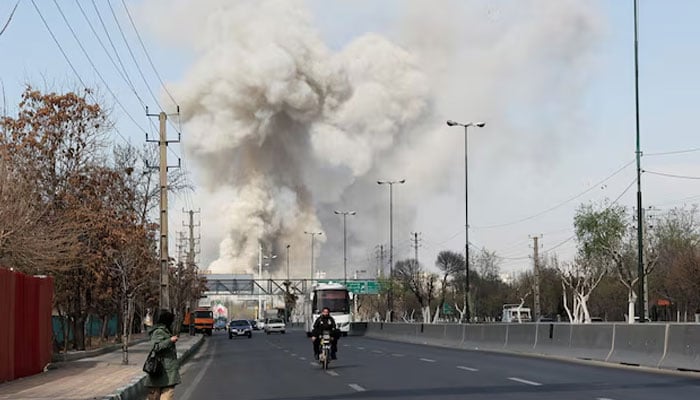
- Focus on bunkers storing ballistic missiles, equipment.
- One underground site struck overnight, says military.
- Analysts differ on Iran’s remaining stockpile.
Israel’s war in Iran is entering a second phase that will see its fighter jets attacking ballistic missile sites buried deep underground, two sources familiar with Israel’s military campaign said.
The joint air assault with the US in Iran is nearing the end of its first week after opening salvos killed the country’s leaders and set off a regional war with Iranian attacks in Israel, the Gulf and Iraq, and Israeli attacks in Lebanon.
Israel’s military says it has hit hundreds of Iranian missile launchers above ground that could target Israeli cities. The second phase will include bunkers storing ballistic missiles and equipment, said the sources, who spoke on condition of anonymity because of the sensitivity of the subject.
One said Israel aimed to neutralise Iran’s ability to launch aerial attacks at Israel by the end of the war, which was also focused on taking out the Islamic Republic’s leadership.
A military spokesperson did not immediately respond to a request for comment on its attack plans. The military has previously asserted that it and the US military took control of much of Iran’s airspace in the opening days of the attacks.
In a statement on Thursday, the military said that, overnight, the Air Force struck “an underground infrastructure site used by the Iranian regime to store ballistic missiles and storage sites for missiles intended for use against aircraft.”
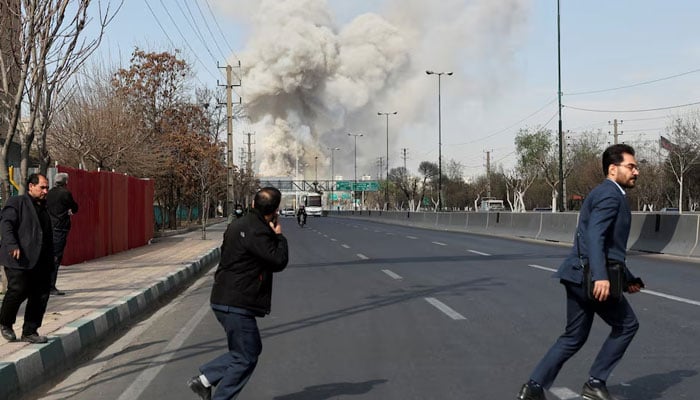
The military has not previously announced attacks on underground missile facilities, according to a review of its public statements since the start of the joint US-Israeli attacks on Saturday.
Estimates of Iran’s missile stockpile vary widely, from roughly 2,500 before the war, according to Israel’s military, to around 6,000 according to other analysts. The extent of what remains could prove critical to how the war develops. Tehran has continued to carry out missile attacks on Israel and across the region.
Douglas Barrie of the UK-based International Institute for Strategic Studies said on Wednesday that the think tank assesses Iran still possesses some land-attack cruise missiles, precision-guided weapons that fly low to evade radar detection.
Israel’s Air Force fighter jets have carried out near-constant sorties since Saturday, accelerating further in pace after Lebanon’s Hezbollah fired rockets at Israel, drawing heavy Israeli airstrikes as far north as Beirut.
In some cases, the same Israeli warplanes have struck both Iran and Lebanon in a single operation: bombing targets in Tehran or western Iran on the way out, and striking Hezbollah sites on the way back, one of the sources familiar with the plans and an Israeli security source said.
Israeli and US officials say ballistic missile and drone launches from Iran have declined since Saturday, a decrease that they attribute in part to US and Israeli strikes on Iranian launch sites and related military infrastructure.
The Israeli military has said that the decrease could also reflect an effort by Tehran to preserve its missile stocks as it prepares for a drawn-out war of attrition.
Eran Lerman, a former Israeli deputy national security adviser, said the hope from the initial week of strikes was that Iran’s ruling system would “begin to disintegrate earlier, more quickly”.
“But this has yet to happen and as long as it doesn’t, the system needs to be further and further degraded,” Lerman said.


The Controversies Finally Caught Up to Kristi Noem

FDA official calls UniQure’s gene therapy a ‘failed’ treatment for Huntington’s disease

Here’s what it plans to do

Attock Cement’s acquisition approved | The Express Tribune

What are Iran’s ballistic missile capabilities?

India Us Trade Deal: Fresh look at India-US trade deal? May be ‘rebalanced’ if circumstances change, says Piyush Goyal – The Times of India

-
Business1 week ago
Attock Cement’s acquisition approved | The Express Tribune
-
 Politics1 week ago
What are Iran’s ballistic missile capabilities?
-
Business7 days ago
India Us Trade Deal: Fresh look at India-US trade deal? May be ‘rebalanced’ if circumstances change, says Piyush Goyal – The Times of India
-
 Politics1 week ago
US arrests ex-Air Force pilot for ‘training’ Chinese military
-

 Fashion1 week ago
Policy easing drives Argentina’s garment import surge in 2025
-
 Business1 week ago
Households set for lower energy bills amid price cap shake-up
-

 Sports1 week ago
Sri Lanka’s Shanaka says constant criticism has affected players’ mental health
-

 Sports6 days ago
LPGA legend shares her feelings about US women’s Olympic wins: ‘Gets me really emotional’