

Politics
Trump warns Iraq against reinstating Maliki as PM

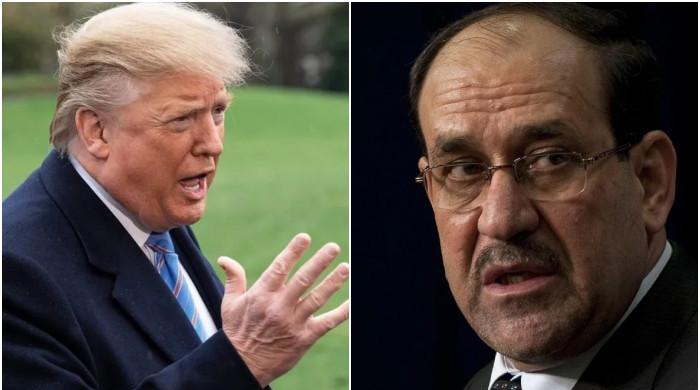
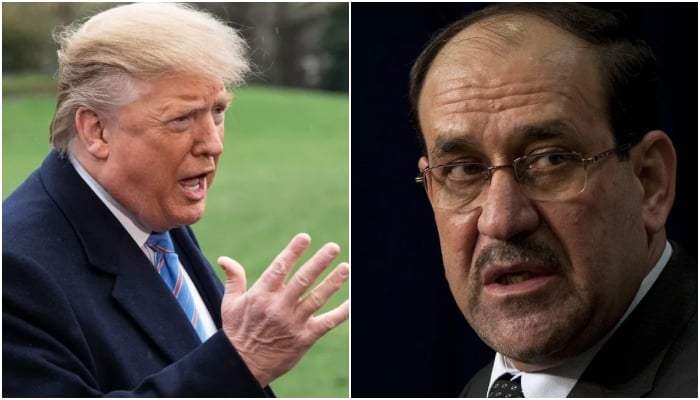
WASHINGTON: President Donald Trump on Tuesday threatened to end US support for Iraq if Nouri al-Maliki, a former prime minister with ties to Iran, returns to the post.
Trump, in his latest blatant intervention in another country’s politics, said that Iraq would make a “very bad choice” with Maliki.
“Last time Maliki was in power, the country descended into poverty and total chaos. That should not be allowed to happen again,” Trump wrote on his Truth Social platform.
“Because of his insane policies and ideologies, if elected, the United States of America will no longer help Iraq,” he said.
“If we are not there to help, Iraq has ZERO chance of success, prosperity, or freedom. MAKE IRAQ GREAT AGAIN!” he wrote.
Maliki left power in 2014 following pressure from the United States, which blamed his nakedly sectarian agenda for giving rise to the Islamic State group of extremists.
The United States wields key leverage over Iraq as the country’s oil export revenue is largely held at the Federal Reserve Bank in New York, in an arrangement reached after the 2003 US invasion that toppled Saddam Hussein.


Chinese authorities have banned entombing cremated remains in cheap apartments, a practice that had gained popularity as mourners took advantage of the subdued housing market to dodge rising funeral costs.
“Bone-ash apartments” are units in often barely occupied residential complexes used by some families as resting places for their loved ones’ remains.
They can be cheaper than a public cemetery plot, according to local media, as well as giving families more control over the site.
Acquiring one “kills two birds with one stone”, Carsten Herrmann-Pillath from Germany’s Erfurt University told AFP.
“It’s an investment and eases the (process of carrying out) ritual practices.”
But regulations that came into force on Monday explicitly ban “the use of residential dwellings specifically for the interment of ashes”.
Bone-ash apartments are often identifiable by sealed-off windows or closed curtains, according to Chinese media reports.
A resident quoted by the Communist Party-run Legal Daily newspaper described peeking inside an apartment in his estate to see two candlesticks around a black box and a black-and-white portrait, a typical arrangement in China for commemorating the dead.
The ban comes days before the Qingming Festival, also known as Tomb Sweeping Day, when families traditionally visit relatives´ graves to tidy them and make ritual offerings.
Human remains are only permitted to be buried in designated areas such as public cemeteries, according to the State Council, China’s cabinet.
Demand for cemetery plots is increasing though, as China´s population ages and deaths outpace births.
In 2020, funerals cost nearly half of the country’s average annual salary, according to a survey by British insurance firm SunLife.
On Tuesday, China’s market watchdog announced new rules to tackle fraud and a lack of transparency in funeral pricing to “reduce the burden of funerals on the masses”.
The price of apartments meanwhile has continued to fall as consumer confidence remains low and a long-running property sector crisis lingers.
Debt and stalled construction have plagued leading firms since 2020, when curbs on excessive borrowing and speculation dramatically narrowed access to credit.
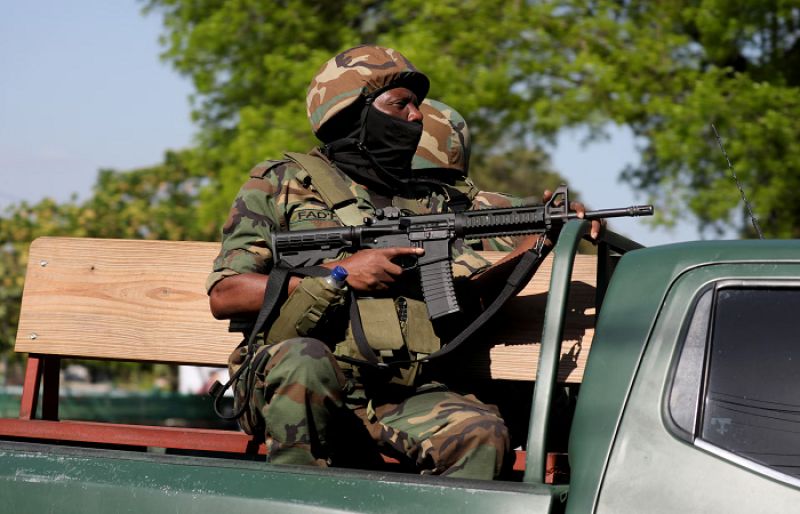
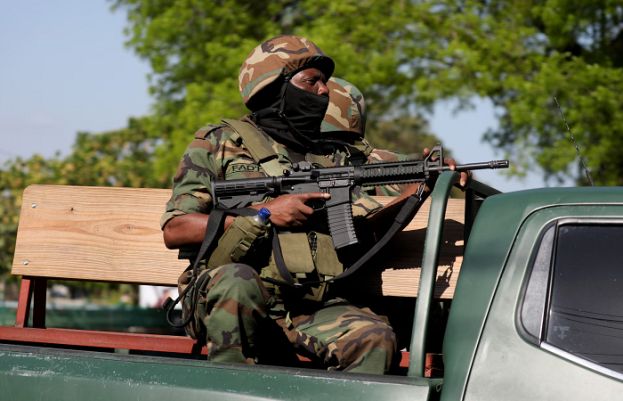
At least 70 people were killed and 30 injured in an attack near Petite-Rivière in Haiti’s breadbasket Artibonite region, a human rights group said Monday, far higher than official estimates, which put the death toll at around 16.
Residents and officials told local media the attack began in the early hours of Sunday in rural communities around Jean-Denis, and continued into the early hours of Monday, with gang members storming the area and setting homes on fire.
The Defenseurs Plus rights group said it estimated the violence had displaced 6,000 people. The UN estimated that more than 2,000 people left their homes in the days following raids by armed gangs nearby.
Police initially reported 16 dead and 10 injured, while a preliminary report from civil protection authorities said 17 had died and 19 were wounded, mostly men.
A spokesperson for the UN Secretary-General told a press briefing that the organisation’s office in Haiti, BINUH, was closely monitoring the events and that estimates ranged from 10 to 80 people killed. He called for a thorough investigation.
“The lack of a security response and the abandonment of Artibonite to armed groups demonstrate a complete abdication of responsibility by the authorities,” Defenseurs Plus said in a joint statement with the Collective to Save the Artibonite.
An audio message circulated on social media was attributed to Gran Grif leader Luckson Elan. In the message, Elan appears to say the attack was retaliation for attacks on their base in Savien by a rival armed group.
The Artibonite department, a key agricultural area, has seen some of Haiti’s worst violence. Gang conflict has extended beyond the capital, Port-au-Prince, despite more aggressive policing and promises of more foreign support for Haiti’s security forces.
Ongoing operation
Haiti’s National Police said it deployed three armoured vehicles, which were slowed by holes that gang members had dug in the road.
Officials said the armed group was fleeing the area when police arrived, and several houses were already burned down.
The injured were then taken to a local hospital, and the dead to two morgues, said police, adding they have launched an operation to track down the gang members who fled.
Defenseurs Plus estimated 50 houses were burned down.
Close to 20,000 people have been killed in Haiti since 2021, according to a recent UN report, with the death toll rising each year, as increasingly independent and powerful armed gangs have clashed with security forces and local vigilante groups.
Gran Grif and Viv Ansanm, which groups hundreds of gangs in the capital, have been designated terrorist organisations by Washington.
The groups have been accused of mass killings, gang rapes, arson, theft and trafficking guns, drugs and organs.
This month, the US offered a reward of up to $3 million for information on their financial activities.
The weekend’s attack marks the latest of a series of massacres in the area, largely attributed to Gran Grif.
In October 2024, a Gran Grif attack on the nearby town of Pont-Sonde left 115 dead, as armed men shot residents door to door.
More than 1.4 million people – around 12% of the Caribbean’s most populous nation – have been displaced by the conflict with armed gangs, worsening an economic crisis and access to food.
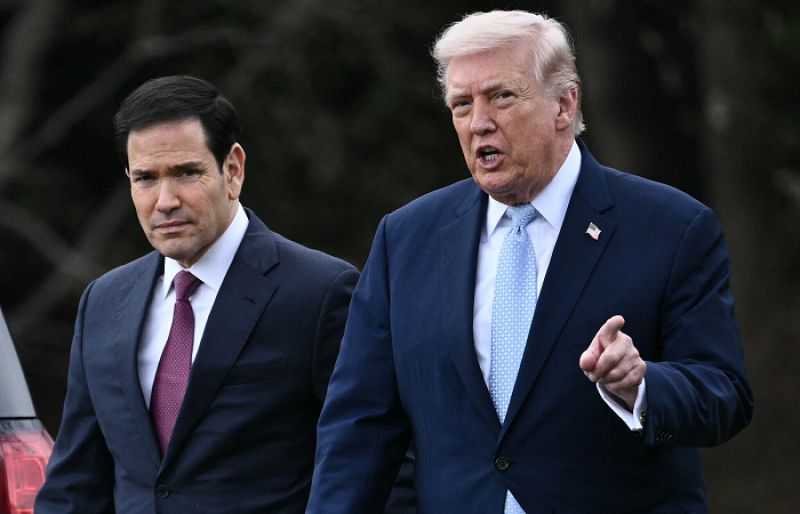
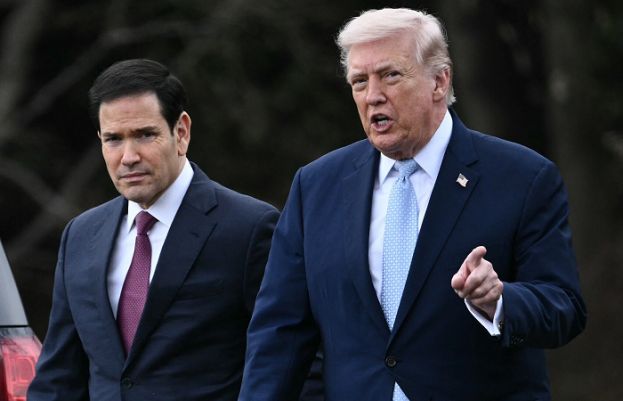
The White House has indicated that US President Donald Trump may call on Arab nations to help cover the soaring costs of the United States’ ongoing war with Iran, which is estimated to run into tens of billions of dollars.
Speaking to reporters on Monday, White House press secretary Karoline Leavitt suggested the idea is under consideration, drawing parallels to the funding model used during the Gulf War.
“I think it’s something the president would be quite interested in calling them to do,” Leavitt said, while noting she would not pre-empt Trump’s official position.
She added that the proposal is one the president has previously considered and may address publicly in the near future.
“It’s an idea that I know that he has and something that I think you’ll hear more from him on,” Leavitt said in response to a reporter’s question about the idea.
His administration requested an additional $200 billion in funding for the war.
The request faces stiff opposition in the US Congress, which must approve new spending.
During the Gulf War, the US led a broad international coalition to repel Iraq’s invasion of Kuwait, with allied and regional partners — including Germany and Japan —contributing approximately $54 billion toward the effort.
In contrast, the current conflict with Iran was luanched unilaterally by the United States and Israel, without a multinational coalition or financial backing from regional allies.
Earlier in the month, conservative commentator Sean Hannity, a close ally of Trump, proposed that any ceasefire agreement should require Iran to compensate the US, suggesting repayment in oil for the full cost of military operations.
Iran, however, has adopted an opposing stance, demanding compensation from the United States for war-related damages.
According to US media reports, officials briefed Congress that the first six days of the war cost approximately $11.3 billion.
Estimates from the Centre for Strategic and International Studies suggest costs rose to $16.5 billion by day 12, with the total expected to be significantly higher as the conflict enters its second month.
The White House is seeking at least $200 billion in additional military funding from Congress to sustain operations and replenish Pentagon stockpiles.
In addition, the war has also disrupted global energy markets.
Iran’s closure of the Strait of Hormuz — a critical route for global oil shipments — has caused hike in fuel prices worldwide.
In the United States, average gasoline prices have surged to $3.99 per gallon, more than a dollar increase since the conflict began.
Despite the economic impact, the Trump regime maintains that the long-term strategic benefits outweigh short-term costs.
Leavitt emphasised that price increases are temporary and necessary to counter what the US sees as a threat from Iran.
Iranian officials, meanwhile, argue that they were attacked during ongoing diplomatic discussions and deny posing a threat to the United States or the broader region.


King Charles important annual tradition hit with setback as warning issued

This App Makes Even the Sketchiest PDF or Word Doc Safe to Open
‘I sent eight letters’: Drivers hope for payout from car finance redress scheme

-

 Politics7 days ago
Afghanistan announces release of detained US citizen
-

 Sports7 days ago
Broadcast industry CEO says consolidation is ‘essential’ to compete for NFL soaring media rights prices
-

 Entertainment7 days ago
UN warns migratory freshwater fish numbers are spiralling
-
 Business7 days ago
Property Play: Home flippers see smallest profits since the Great Recession, real estate data firm says
-

 Tech1 week ago
Can a Home Appliance Fix the Problem of Soft-Plastic Waste?
-
 Business1 week ago
Gold prices soar in Pakistan – SUCH TV
-

 Fashion7 days ago
ICE cotton slips on weaker crude, profit booking
-
 Business7 days ago
More women are entering wealth management, but few are in advisory roles, study finds