

Politics
Trump’s new H-1B order targets cheap foreign labour, puts India’s tech industry at risk

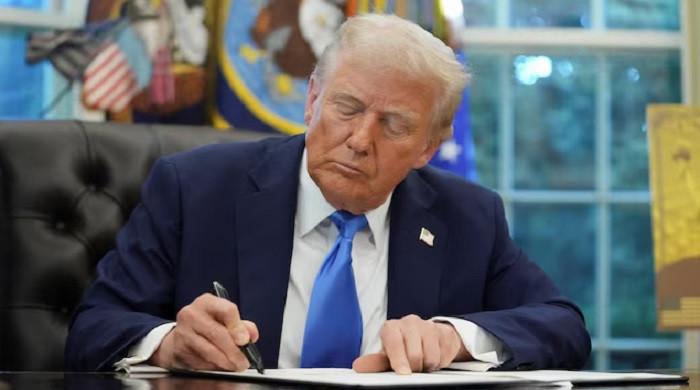
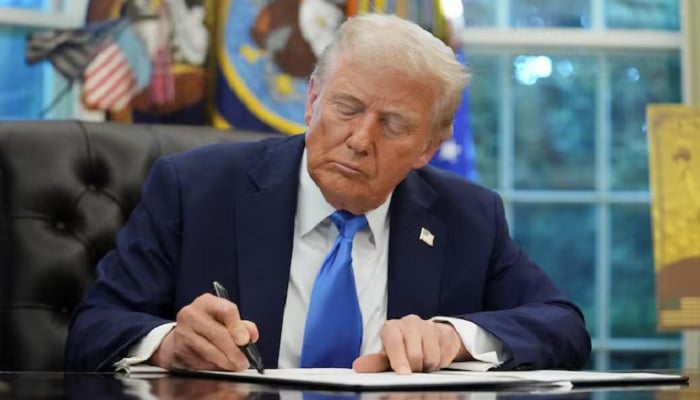
- White House says policy protects US jobs, limits national-security risks.
- India, source of 71% of approved H-1B petitions, faces major disruption.
- Homeland Security, State Dept to deny entry sans extra payment proof.
US President Donald Trump on Friday issued a new executive order tightening rules for the H-1B visa programme, a move that threatens India’s IT industry and other sectors heavily reliant on skilled foreign workers.
India is the largest beneficiary of the H-1B programme, which allows US companies to hire skilled foreign workers. Industry analysts said the new restrictions could slow hiring, raise costs, and disrupt projects in the IT and technology sectors, potentially affecting thousands of Indian professionals currently working in the United States.
Under the new order, applications for H-1B visas will only be considered valid if the sponsoring company pays an additional $100,000 per application. The restriction takes effect on September 21, 2025, and will initially remain in place for 12 months.
The Department of Homeland Security and the State Department have been instructed to block entry to any candidate whose application is not accompanied by this payment and to tighten oversight to prevent the misuse of B visas for unauthorised employment entry.
The White House justified this move by stating that certain companies, particularly in the IT sector, have been misusing the H-1B programme, replacing American workers with cheaper foreign labour.
This, it argues, has not only suppressed wages but also created national security risks. According to the administration, the policy shift aims to give American students and graduates better job opportunities and to ensure that companies hire only the most skilled and high-value foreign professionals.
Official figures show that in fiscal year 2024, a total of 219,659 H-1B visas were issued worldwide, with India accounting for the overwhelming majority.
According to USCIS data, 71% of approved H-1B petitions were for Indian nationals, while China ranked second at 11.7%. The remaining eight countries combined made up a far smaller share.
The top 10 countries and their respective numbers were:
1. India — 283,397 (71.0%)
2. China — 46,680 (11.7%)
3. Philippines — 5,248 (1.3%)
4. Canada — 4,222 (1.1%)
5. South Korea — 3,983 (1.0%)
6. Mexico — 3,333 (<1%)
7. Taiwan — 3,099 (<1%)
8. Pakistan — 3,052 (<1%)
9. Brazil — 2,638 (<1%)
10. Nigeria — 2,273 (<1%)
These figures, drawn directly from the official USCIS annual report Characteristics of H-1B Specialty Occupation Workers, FY 2024, clearly show that India stands to be the most severely impacted by this executive order.
The same report reveals that 64% of approved H-1B cases are concentrated in the computer/software sector, followed by engineering/architecture at 10%, education at 6%, administrative specialisations at 5%, and healthcare at 4%.
This indicates that while the tech industry will bear the brunt of the new policy, education, engineering, and healthcare sectors will also feel its ripple effects.
Dallas-based immigration attorney Naeem Sukhia explains that the executive order applies to all H-1B holders, but its impact will vary by sector.
While the order was technically applicable to all specialty occupations, he said, the heaviest pressure would fall on IT and technology companies, which the government believes have been the primary abusers of the programme.
Sukhia noted that critical healthcare roles such as nursing and medical positions may qualify for national interest exemptions to prevent staff shortages in hospitals, but sponsors will need to provide strong evidence to secure such exemptions.
Regarding Pakistan, Sukhia states that most Pakistani professionals on H-1B visas also come from the computer, software, and engineering fields, with a smaller yet significant presence in healthcare, education, and administrative roles.
The new $100,000 fee and stricter vetting will also affect Pakistani IT professionals and the companies that sponsor them. Engineering and education roles may also face increased barriers, though hospitals and medical systems could potentially secure exemptions by proving local workforce shortages, which could limit the impact on healthcare.
Sukhia emphasised that this policy was primarily a challenge for countries like India and China, which together accounted for more than 80% of all H-1B petitions.
India, as the world’s largest supplier of IT professionals, is directly in the crosshairs.
He said the executive order would deliver a major blow to India’s tech industry, and its timing was especially striking given that Modi and Trump publicly displayed a close relationship on social media.
“This shows that while political optics may suggest warmth, the reality of economic and immigration policy is moving in an entirely different direction,” Sukhia remarked.
For Pakistan, the impact will be far smaller than for India, but sponsorship for professionals in IT, engineering, and education will become more expensive and difficult.
Only Pakistani professionals who can clearly demonstrate that they are highly skilled and essential are likely to succeed.
Hospitals and healthcare systems, however, may provide some relief for Pakistani doctors and nurses if they can secure national interest exemptions, allowing them to continue filling critical roles in the US healthcare sector.
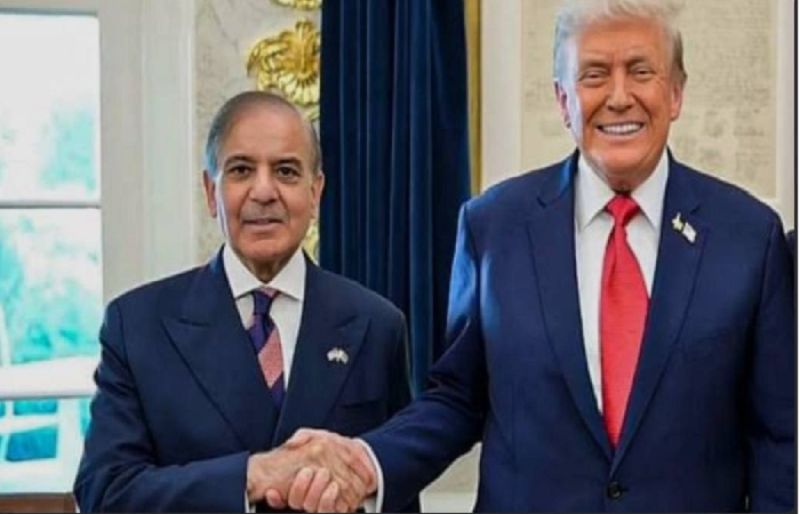
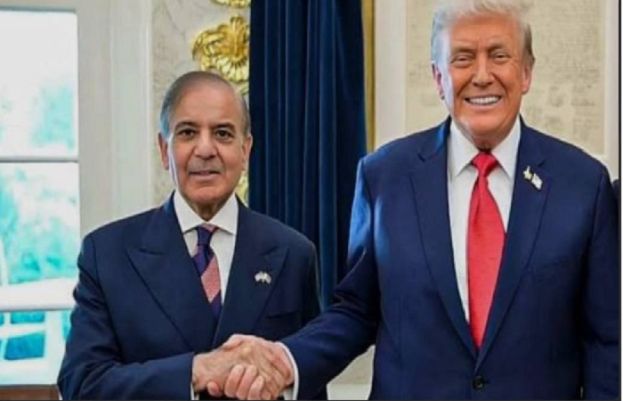
US President Donald Trump has reiterated his claim of having stopped a war between Pakistan and India, while also saying that Pakistan Prime Minister Shehbaz Sharif thanked him for saving at least 10 million lives.
He made the remarks at the renaming of Southern Boulevard to Donald J Trump Boulevard in Washington on Friday.
“In a year, we made eight peace deals and ended the conflict in Gaza. We have peace in the Middle East…We stopped India and Pakistan from fighting, two nuclear nations…The Pakistani Prime Minister said Donald Trump saved at least 10 million people, and it was amazing,” he said.
The US president further recalled that the Pakistani prime minister’s remarks were an honour for him.
Trump cited his administration’s foreign policy record and repeated assertions of brokering peace between the two nuclear-armed neighbours.
Trump has made similar claims multiple times since May 10 last year, arguing that US pressure helped defuse tensions between India and Pakistan.
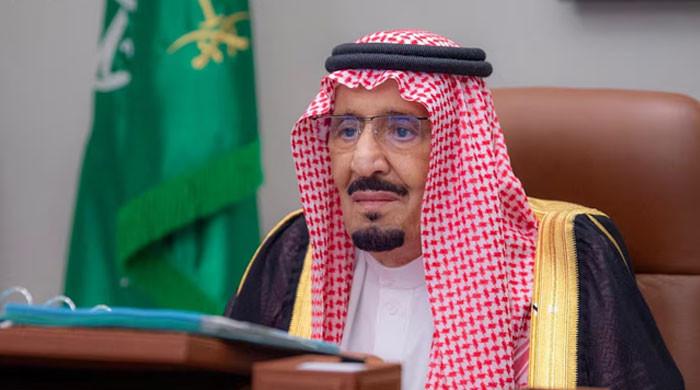
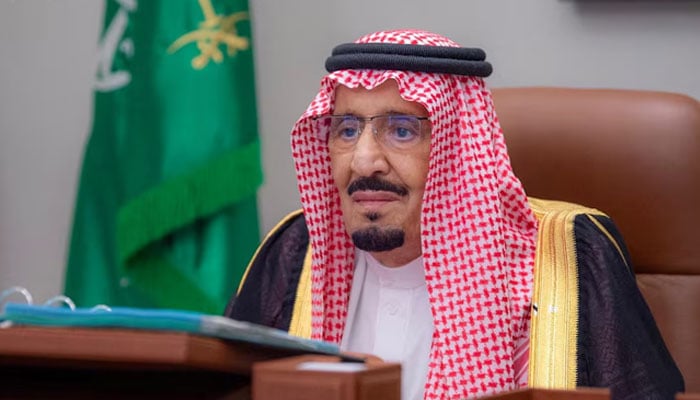
Saudi Arabia’s 90-year-old King Salman was discharged from hospital after undergoing medical tests in the capital Riyadh, the kingdom’s Royal Court said on Friday, adding that the results were “reassuring”.
The monarch “left the King Faisal Specialist Hospital in Riyadh today (Friday) after undergoing medical tests that proved reassuring”, the royal court said in a statement shared on state media, having announced his admission earlier in the day.
Saudi Arabia, the world’s biggest crude oil exporter, has for years sought to quell speculation over King Salman’s health.
He has been on the throne since 2015, though his son Mohammed bin Salman was named crown prince in 2017 and acts as de facto ruler.
The monarch’s well-being is rarely discussed, but he has been admitted for surgery and tests on multiple occasions in recent years.
In 2024, the Royal Court said he suffered from lung infections, which he recovered from.
He was hospitalised in May 2022, when he went in for a colonoscopy and stayed for just over a week for other tests and “some time to rest”, the official Saudi Press Agency reported at the time.
He was also admitted to hospital in March 2022 to undergo what state media described as “successful medical tests” and to change the battery of his pacemaker.
In 2020, he underwent surgery to remove his gall bladder.
- Trump says Iran cancelled mass hangings of protesters.
- Thanks Tehran, calls move ‘greatly respected’.
- Claims more than 800 executions were scheduled.
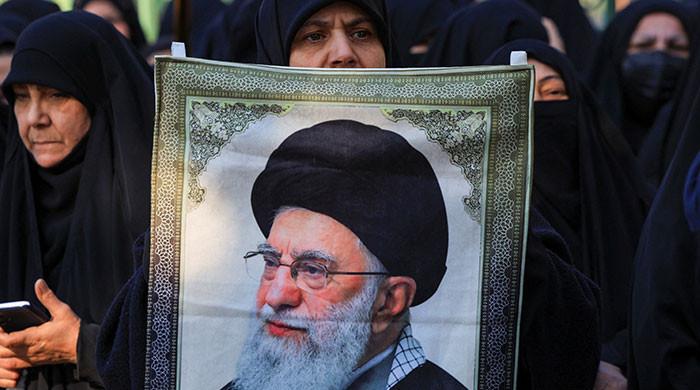
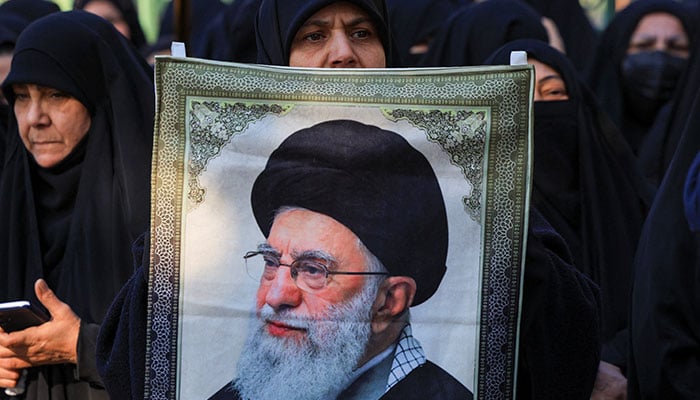
DUBAI: US President Donald Trump has thanked Iran’s leaders for cancelling what he said were hundreds of planned executions of protesters after a crackdown.
Taking to his social media platform, he said the mass hangings had been called off and praised Tehran for the move, as deadly unrest across the country appears to be easing after a harsh crackdown.
US President Donald Trump, whose repeated threats to act had included a vow to “take very strong action” if Iran executed protesters, said Tehran’s leaders had called off mass hangings.
“I greatly respect the fact that all scheduled hangings, which were to take place yesterday (Over 800 of them), have been cancelled by the leadership of Iran. Thank you!” he posted on social media.
Iran has not publicly announced plans for such executions or said it had cancelled them.
The protests erupted on December 28 over economic hardship and swelled into widespread demonstrations calling for the end of present rule, culminating in mass violence at the end of last week. According to opposition groups and an Iranian official, more than 2,000 people were killed in the worst domestic unrest since Iran’s 1979 Islamic Revolution.
But several residents of Tehran reached by Reuters said the capital had now been comparatively quiet for four days. Drones were flying over the city, but there had been no sign of major protests on Thursday or Friday. Another resident in a northern city on the Caspian Sea said the streets there also appeared calm. The residents declined to be identified for their safety.
Prospect of US attack retreats
The prospect of a US attack has retreated since Wednesday, when Trump said he had been told killings in Iran were easing. But more US military assets were expected to arrive in the region, showing the continued tensions.
US allies, including Saudi Arabia and Qatar, conducted intense diplomacy with Washington this week to prevent a US strike, warning of repercussions for the wider region that would ultimately impact the United States, a Gulf official said.
Israel’s intelligence chief David Barnea was also in the US on Friday for talks on Iran, according to a source familiar with the matter, and an Israeli military official said the country’s forces were on “peak readiness”.
As an internet blackout eased this week, more accounts of the violence have trickled out.
One woman in Tehran told Reuters by phone that her daughter was killed a week ago after joining a demonstration near their home.
“She was 15 years old. She was not a terrorist, not a rioter. Basij forces followed her as she was trying to return home,” she said, referring to a branch of the security forces often used to quell unrest.
The US is expected to send additional offensive and defensive capabilities to the region, but the exact make-up of those forces and the timing of their arrival was still unclear, a US official said, speaking on condition of anonymity.
The US military’s Central Command declined to comment, saying it does not discuss ship movements.
Pahlavi calls for increased pressure
Reza Pahlavi, the US-based son of Iran’s last shah who has gained increasing prominence as an opposition figure, on Friday urged the international community to ramp up pressure on Tehran to help protesters overthrow the present setup.
“The Iranian people are taking decisive action on the ground. It is now time for the international community to join them fully,” said Pahlavi, whose level of support inside Iran is hard to gauge.
Trump this week appeared to downplay the idea of US backing for Pahlavi, voicing uncertainty that the exiled royal heir who has courted support among Western countries could muster significant backing inside Iran. Pahlavi met US envoy Steve Witkoff last weekend, Axios reported.
Iranian-Kurdish rights group Hengaw said that there had been no protest gatherings since Sunday, but “the security environment remains highly restrictive”.
“Our independent sources confirm a heavy military and security presence in cities and towns where protests previously took place, as well as in several locations that did not experience major demonstrations,” Norway-based Hengaw said in comments to Reuters.
Reports of sporadic unrest
There were, however, still indications of unrest in some areas. Hengaw reported that a female nurse was killed by direct gunfire from government forces during protests in Karaj, west of Tehran. Reuters was not able to independently verify the report.
The state-affiliated Tasnim news outlet reported that rioters had set fire to a local education office in Falavarjan County, in central Isfahan Province, on Thursday.
An elderly resident of a town in Iran’s north-western region, where many Kurdish Iranians live and which has been the focus for many of the biggest flare-ups, said sporadic protests had continued, though not as intensely.
Describing violence earlier in the protests, she said: “I have not seen scenes like that before.”
Video circulating online, which Reuters was able to verify as having been recorded in a forensic medical centre in Tehran, showed dozens of bodies lying on floors and stretchers, most in bags but some uncovered. Reuters could not verify the date of the video.
The state-owned Press TV cited Iran’s police chief as saying calm had been restored across the country.
A death toll reported by US-based rights group HRANA has increased little since Wednesday, now at 2,677 people, including 2,478 protesters and 163 people identified as affiliated with the government.
Reuters has not been able to independently verify the HRANA death toll. An Iranian official told the news agency earlier this week that about 2,000 people had been killed.
The casualty numbers dwarf the death toll from previous bouts of unrest that have been suppressed by the state, including in 2009 and 2022.


Venezuela interim leader sacks industry minister allied with ousted president Maduro

Bangladesh, Nepal agree to fast-track proposed PTA

Michelle Pfeiffer, Kurt Russell to lead ‘Yellowstone’ spinoff ‘The Madison’

-

 Tech4 days ago
New Proposed Legislation Would Let Self-Driving Cars Operate in New York State
-

 Sports6 days ago
Clock is ticking for Frank at Spurs, with dwindling evidence he deserves extra time
-
Sports1 week ago
Commanders go young, promote David Blough to be offensive coordinator
-

 Fashion6 days ago
South India cotton yarn gains but market unease over US tariff fears
-

 Entertainment4 days ago
X (formerly Twitter) recovers after brief global outage affects thousands
-
 Fashion6 days ago
China’s central bank conducts $157-bn outright reverse repo operation
-
 Business1 week ago
SoftBank reduces Ola Electric stake to 13.5% from 15.6% – The Times of India
-

 Sports6 days ago
US figure skating power couple makes history with record breaking seventh national championship