

Politics
Turkish F-16 jet crash kills pilot: state media

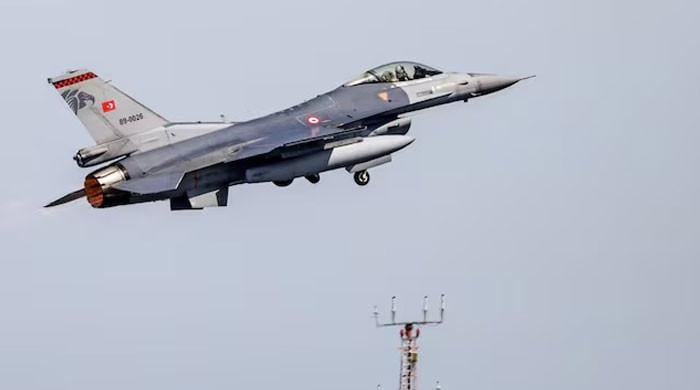
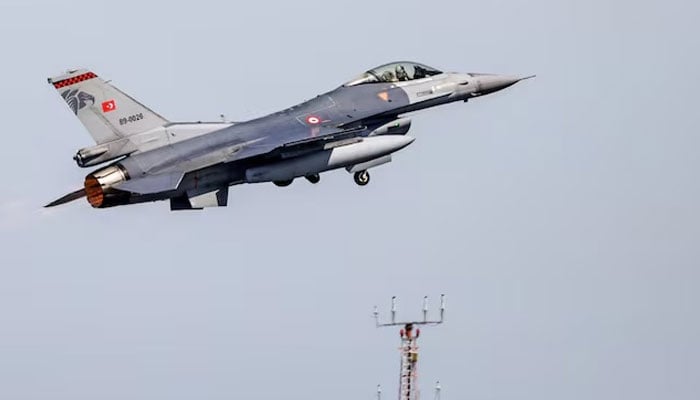
ISTANBUL: A Turkish fighter jet crashed shortly after takeoff early Wednesday, killing the pilot, state media reported, citing the defence ministry.
Radio and tracking information with the aircraft, which took off from Balikesir at 12:56am (2156 GMT Tuesday), was lost soon after departure, the ministry said, according to the official Anadolu Agency.
A search and rescue operation was launched, and the wreckage was located.
“Our pilot was martyred. The cause of the accident will be determined following an investigation by the crash examination team,” the ministry said, offering condolences to the pilot’s family.
In November, Turkiye suspended flights by its C-130 cargo planes after one crashed in neighbouring Georgia while returning from Azerbaijan, killing all 20 people aboard.
Other F-16s, manufactured by US firm Lockheed Martin, have crashed in recent months.
In January, a Taiwanese F-16 crashed into the sea during a routine mission. Its pilot, who ejected offshore, was reported missing.
In Poland, an F-16 crashed in August while rehearsing for an air show, killing its pilot.
- Trump announces naval blockade of Strait of Hormuz.
- Democratic senator questions US president’s strategy.
- Trump’s approval rating slump since war on Iran began.
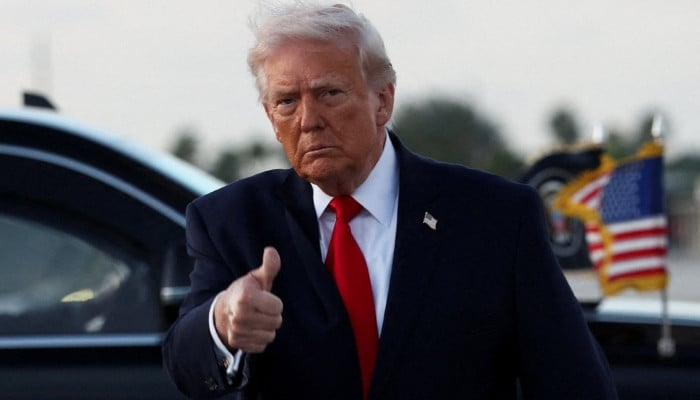
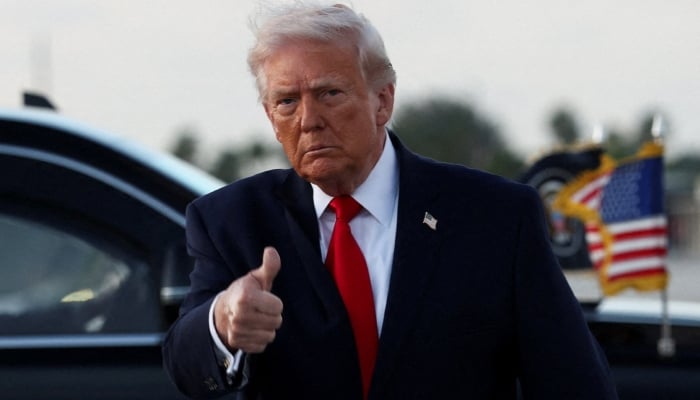
US President Donald Trump on Sunday said that the price of oil and gasoline may remain high through November’s midterm elections, a rare acknowledgement of the potential political fallout from his decision to attack Iran six weeks ago.
“It could be, or the same, or maybe a little bit higher, but it should be around the same,” Trump, who is in Miami for the weekend, told Fox News‘ “Sunday Morning Futures With Maria Bartiromo” when asked whether the cost of oil and gas would be lower by the fall.
The average price for regular gas at US service stations has exceeded $4 per gallon for most of April, according to data from GasBuddy. Trump’s comments on Sunday came after weeks of asserting that the spike in prices is a short-term phenomenon, though his top advisers are cognisant of the war’s economic impacts, officials have said.
Earlier on Sunday, Trump announced on social media that the US Navy would blockade the Strait of Hormuz and intercept any ship that paid a crossing fee to Iran, after marathon talks between the US and Iran in Pakistan over the weekend did not yield a peace deal.
“No one who pays an illegal toll will have safe passage on the high seas,” he wrote on Truth Social.
Any US blockade is likely to add more uncertainty to the eventual resolution of the conflict, which is currently subject to a tenuous two-week ceasefire. The new tactic is in response to Iran’s own closure of the strait’s critical shipping lanes, which has caused global oil prices to skyrocket about 50%.
Unpopular war hits Trump’s approval
The war began on February 28, when the US launched a joint bombing campaign with Israel against Iran. The scope quickly expanded as Iran and its allies attacked nearby countries, while Israel targeted Hezbollah with massive strikes in Lebanon.
The war has buffeted global financial markets and caused thousands of civilian deaths, mostly in Iran and Lebanon.
Trump’s political standing at home has suffered, with polls showing the war is unpopular among most Americans, who are frustrated by rising gasoline prices.
The president’s approval rating has hit the lowest levels of his second term in office, raising concern among Republicans that his party is poised to lose control of Congress in the midterm elections. A Democratic majority in either chamber could launch investigations into the Trump administration while blocking much of his legislative agenda.
US Senator Mark Warner of Virginia, the ranking Democrat on the Senate Intelligence Committee, questioned the strategy behind Trump’s planned blockade.
“I don’t understand how blockading the strait is going to somehow push the Iranians into opening it,” he told CNN’s “State of the Union” on Sunday.
In a separate appearance on CBS’s “Face the Nation,” Warner said the blockade would not undermine Iranian control of the waterway.
“The Iranians have hundreds of speedboats where they can still mine the strait or put bombs against tankers in closing the strait,” he said. “How is that going to ever bring down gas prices?”
Although Trump has repeatedly said that the war would be over soon, Republican US Senator Ron Johnson of Wisconsin told ABC News‘ “This Week” on Sunday that achieving US aims in Iran “could take a long time.”
“It’s going to be a long-term project,” said Johnson, who was not asked about Trump’s proposed blockade. “I never thought this would be easy.”
- Iran, US fail to reach deal in Islamabad peace talks.
- JD Vance says US makes “final and best offer” to Iran.
- Dispute over Hormuz control stalls US-Iran agreement.
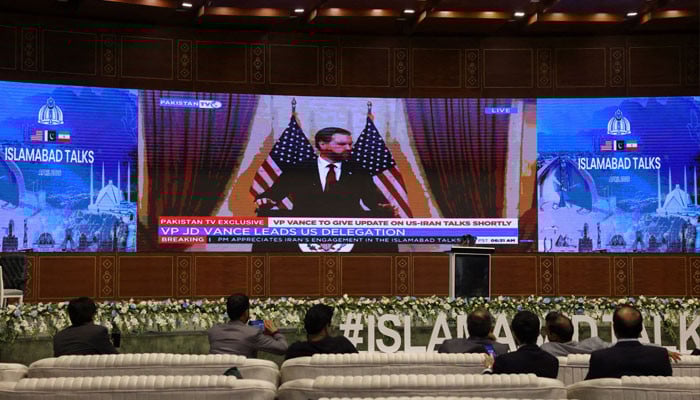
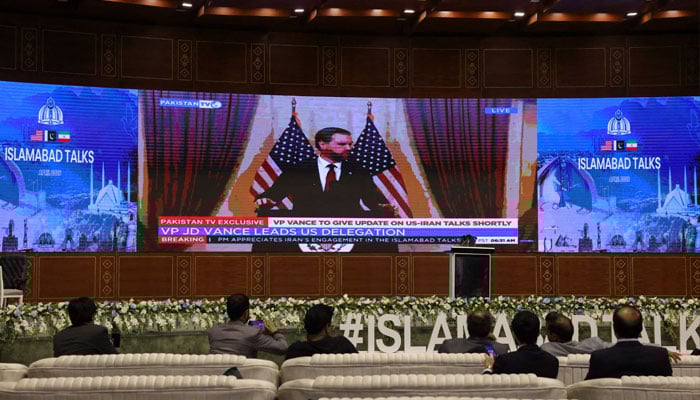
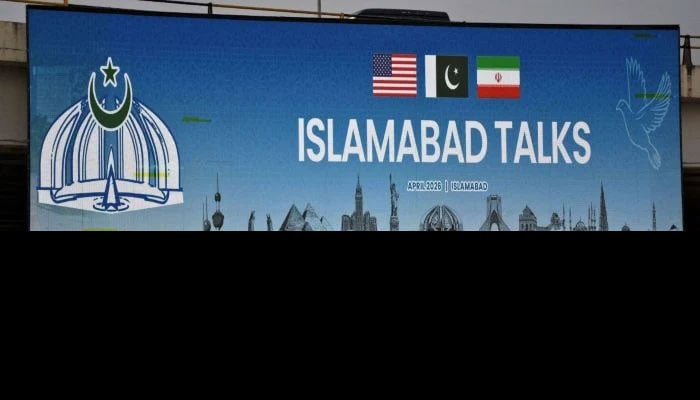
Iran and the United States failed to strike a deal Sunday to end the war in the Middle East, but there was no immediate return to hostilities, and world leaders quickly urged both sides to pursue the diplomatic route to peace.
US Vice President JD Vance left Pakistan after the talks — the highest-level meeting between the two sides since 1979 — and warned that Washington had made Tehran its “final and best offer” for a deal.
“We leave here with a very simple proposal,” he said. “We’ll see if the Iranians accept it.”
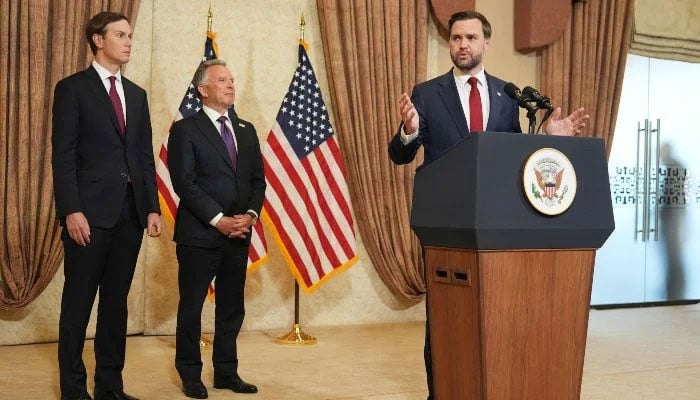
Iran’s parliamentary speaker, Mohammad Bagher Ghalibaf, said his negotiating team had “put forward constructive initiatives but ultimately the other side was unable to gain the trust of the Iranian delegation in this round of negotiations”.
Iranian and US reports said the two sides were unable to agree on who would control the Strait of Hormuz skipping lane, nor whether Tehran would have the right to enrich uranium under any deal.
As talks ended without a deal in Islamabad, world figures urged the United States and Iran to keep negotiating to end the war in the Middle East.
Pakistan’s Foreign Minister Ishaq Dar, whose government hosted the talks and acted as a mediator, said that it is imperative that the parties continue to uphold their commitment to the ceasefire.
“Pakistan has been and will continue to play its role to facilitate engagement and dialogue between the Islamic Republic of Iran and the United States of America in the days to come,” he said in a brief statement broadcast by state media.
Diplomacy is “essential” to resolve the war in the Middle East, a European Union spokesman said.
Noting failed US-Iranian talks hosted by Pakistan, EU foreign affairs spokesman Anouar El Anouni said “we salute Pakistan for its mediation efforts” and added Brussels would contribute to further efforts to reach a settlement in coordination with its partners.
Russian President Vladimir Putin told his Iranian counterpart Masoud Pezeshkian that he was ready to help mediate efforts to achieve peace in the Middle East, the Kremlin said.
“Vladimir Putin emphasised his readiness to further facilitate the search for a political and diplomatic settlement to the conflict, and to mediate efforts to achieve a just and lasting peace in the Middle East,” the Kremlin said in its readout of the call.
UK health minister Wes Streeting said: “It’s obviously disappointing that we haven’t yet seen a breakthrough in negotiations and an end to this war in Iran that is a sustainable one.”
“As ever in diplomacy, you´re failing until you succeed. So while these talks may not have ended in success, [it] doesn’t mean there isn´t merit in continuing to try,” he added.
Australian Foreign Minister Penny Wong said that the “priority now must be to continue the ceasefire and return to negotiations,” adding it was “disappointing that the Islamabad talks between the United States and Iran have ended without agreement”.
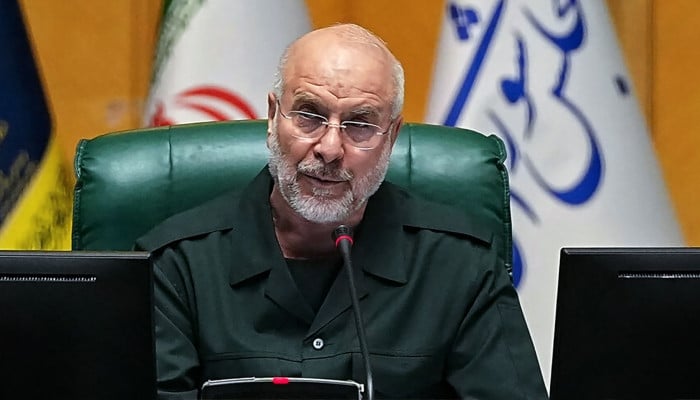
- No trust in US due to experiences of previous wars: Ghalibaf.
- Says Iranian delegation “raised forward-looking” initiatives.
- US has to decide whether it can earn Iran’s trust in talks: Ghalibaf.
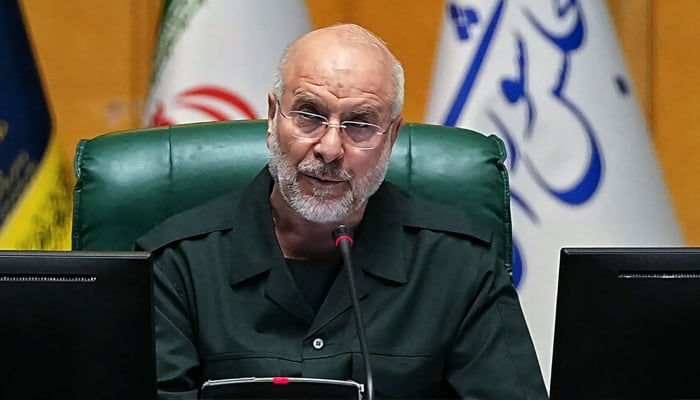
Iran’s Parliament Speaker Mohammad Bagher Ghalibaf, who was part of peace talks with the United States this weekend, on Sunday said that Washington was “unable” to win Tehran’s trust during the discussions.
“My colleagues in the Iranian delegation… put forward constructive initiatives but ultimately the other side was unable to gain the trust of the Iranian delegation in this round of negotiations,” Ghalibaf said in a post on X.
Delegations from the US and Iran held more than 20 hours of high-stakes talks in Islamabad starting Saturday, with Pakistan mediating after brokering a two-week ceasefire.
The talks ended without a deal, with US Vice President JD Vance stating that Tehran rejected Washington’s terms, which Iranian state media labelled “unreasonable”.
Addressing a press conference following the talks, Vance said negotiations with Iran covered a range of critical issues.
“The bad news is that we have not reached an agreement, and I think that’s bad news for Iran much more than it’s bad news for the United States of America,” Vance said.
“So we go back to the United States having not come to an agreement. We’ve made very clear what our red lines are,” he added.
Iran’s foreign ministry spokesman Esmail Baghaei later said that no one had expected Tehran and Washington to reach an agreement in a single meeting.
Meanwhile, Ghalibaf said that Iran had no trust in the “opposing side” before entering the negotiations due to the experiences of the previous two wars.
Ghalibaf maintained that Washington now faces a decisive moment. “America has understood our logic and principles, and now it’s time for it to decide whether it can earn our trust or not.”
He vowed that the Iranian delegation “will not for a moment cease” its efforts to consolidate Iran’s achievements during the six-week war.
Ghalibaf also acknowledged Pakistan’s crucial role in facilitating the talks and extended his regards to the Pakistani public.
He concluded his statement by praising both the Iranian public and negotiating team, citing public support and the intensity of the discussions.
“To my colleagues in these intense 21-hour negotiations, I say: well done… Long live and enduring be our dear Iran,” he said.
The conflict, which began on February 28 following joint US-Israeli strikes targeting Iran’s leadership and infrastructure, has resulted in more than 2,000 deaths and widespread regional instability.
Tehran responded with retaliatory operations, including the disruption of shipping through the Strait of Hormuz and attacks on Israeli and US bases in the region.
A ceasefire was announced on April 8, with Pakistan playing a central role in mediation between the two sides.
Washington then proposed a 15-point framework focusing on nuclear and missile issues, sanctions relief and reopening of the Strait of Hormuz, while Tehran has presented a 10-point plan seeking greater control over the Strait of Hormuz, transit fees, and comprehensive sanctions removal.


NBA intel: What execs, coaches, scouts are watching this postseason

Illinois star freshman Keaton Wagler to declare for NBA draft

Pete Davidson shares bad habit comic left after daughter’s birth

-

 Fashion6 days ago
India’s exports face reset as EU links trade to carbon metrics: EY
-
 Politics1 week ago
Trump confirms rescue of airman whose F-15 was downed in Iran
-

 Tech6 days ago
A Single Strike Won’t Shut Off the Gulf’s Desalination System
-

 Entertainment5 days ago
Queen Elizabeth II emotional message for Archie, Lilibet sparks speculation
-

 Fashion5 days ago
ICE cotton hits 11-month high on drought concerns, demand boost
-

 Sports1 week ago
Transfer rumors, news: Arsenal eye Bayer Leverkusen forward
-

 Tech4 days ago
This AI Button Wearable From Ex-Apple Engineers Looks Like an iPod Shuffle
-

 Entertainment1 week ago
Netflix renews ‘Love on the Spectrum’ for season 5