

Politics
Two security officials killed, 30 injured as enraged protesters open fire in Iran

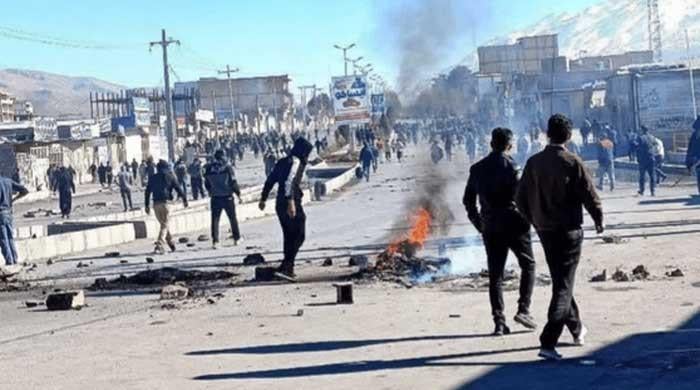
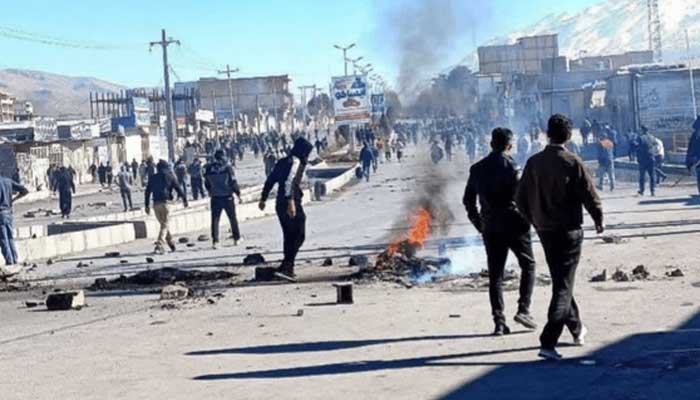
Two security officials were killed and 30 others were left wounded by firing of armed protesters as violence erupted in Lordegan city in Iran’s Chaharmahal and Bakhtiari province, according to Iranian media.
Nationwide protests over economic grievances have entered their 11th day in parts of Iran, with the latest demonstrations reported in Lordegan and Bojnord in the northeastern province of North Khorasan.
According to Iran’s Fars news agency, the unrest began when around 300 shopkeepers closed their businesses at about 10pm on Wednesday and gathered in several streets near the Khardoun neighbourhood and Shirouni Bridge, chanting slogans.
Authorities said tensions escalated after certain individuals infiltrated the gathering and provoked clashes with police. During the confrontation, some protesters allegedly pelted security personnel with stones.
Fars reported that armed individuals within the crowd opened fire on police using “various military-grade and hunting weapons”, leaving two dead and at least 30 others injured.
The report added that demonstrators also vandalised the governor’s office and several other administrative buildings in Lordegan during the clashes.
Separately, a shop was set on fire in the city of Bojnord in Iran’s northeastern border province of North Khorasan, while a civilian’s vehicle was narrowly saved from being torched by protesters, Iranian officials said.
Furthermore, a pro-government demonstration was held in Iran’s western province of Hamedan, where participants chanted slogans against economic pressure on the country.
Protesters were seen carrying posters of Supreme Leader Ayatollah Ali Khamenei and Iran’s national flag, while also staging a protest against Israel.
The demonstrators expressed strong opposition to what they described as attempts to spread violence, insecurity and chaos within the country.
New protests
According to videos published by rights groups on social media, new protests took place at different points across the country on Wednesday, with streets thronged with protesters in some cases.
Norway-based rights group IHR published a video of people massing in the streets of Bojnurd in the north-east of the country, shouting slogans including “an Iranian can die but will not accept humiliation”.
The Tasnim news agency reported that rioters had attacked a mosque and a shop selling religious books.
Another protest was reported in the upscale Shemiran district of Tehran, with protesters shouting “death to the dictator” and “freedom”, IHR said.
The US-based HRANA group posted a video of a crowd demonstrating in the Gulf port of Bandar Abbas, with people shouting slogans including “don’t be spectators, join us” and “this is the final battle, Pahlavi will come back”, referring to the dynasty of the deposed shah.
Large numbers of protesters also took to the streets in Aligudarz in western Iran, with people chanting slogans including “this is the year of blood, Seyyed Ali will be toppled” in reference to Ayatollah Ali Khamenei, according to footage broadcast by the Iran International channel, which is based outside the country.
Iran’s Fars news agency, meanwhile, reported deadly clashes in the country’s south-west that killed two people and wounded 30.
Fars said that shopkeepers were protesting in Lordergan when “rioters began throwing stones at the police”.
“Among them, there were individuals with military and hunting weapons who suddenly opened fire on the police,” the agency added.
It said the two dead were police officers.
Nationwide, protests have spread to 25 of Iran’s 31 provinces, according to an AFP tally based on official statements and local media.
President urges restraint
In a video released by the news agency Mehr after a cabinet meeting, Vice President Mohammad Jafar Ghaempanah said Pezeshkian had “ordered that no security measures be taken against the demonstrators”.
“Those who carry firearms, knives and machetes and who attack police stations and military sites are rioters, and we must distinguish protesters from rioters,” Ghaempanah added.
Security forces have now killed at least 27 protesters, including five people under the age of 18, the Norway-based NGO Iran Human Rights (IHR) said on Tuesday.
Iranian media outlets, relaying official announcements, have reported 15 deaths, including members of the security forces and a policeman who was shot dead on Tuesday.
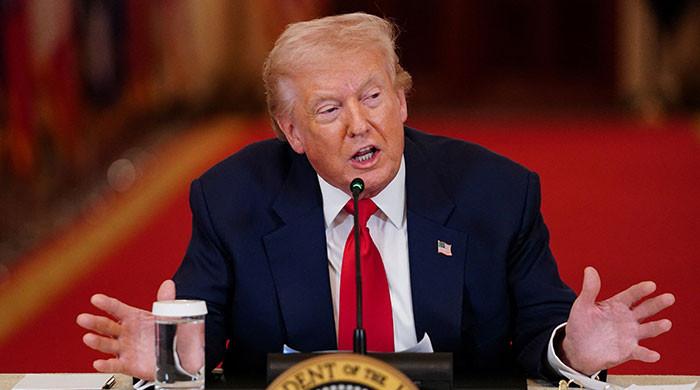
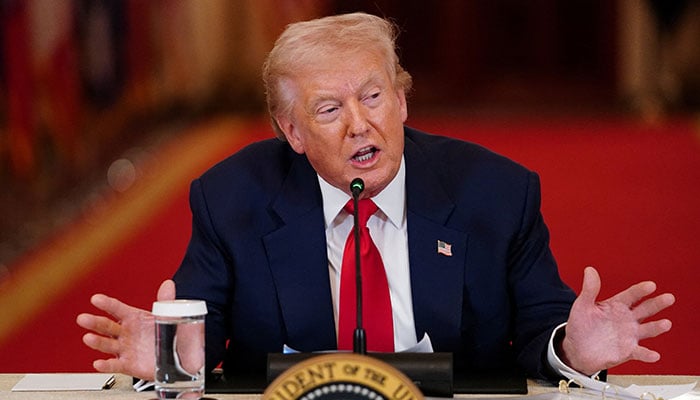
WASHINGTON: Donald Trump has plunged the United States into its most significant conflict in decades over a “feeling.” It’s not his political opponents saying this, but the White House itself.
Throughout the first week of the war with Iran, the US president has prioritised impulse and emotion over explanations and reasoning.
“I hope you’re impressed,” Trump, a former reality TV host, told an ABC News reporter on Thursday. “How do you like the performance?”
Official government accounts are posting clips on social media that present the military operation like a video game, often with sharp captions that would suit a blockbuster war film.
“This could be the first war ever launched based on vibes,” joked American comedian and talk show host Jimmy Fallon this week.
Journalists on Wednesday bombarded White House press secretary Karoline Leavitt with questions about what motivated US military intervention — which Trump oversaw from his luxury Mar-a-Lago residence in Florida.
She replied that the president had acted because he “had a good feeling that the Iranian regime was going to strike US assets and our personnel in the region.”
‘Incoherent, immoral, arrogant’
Experts said the Trump administration has taken a new approach in how it has sought to justify and communicate the military action to the public.
Sean Aday, a public relations professor at George Washington University, said he has “never seen worse messaging in wartime from a US administration.”
“It´s been a combination of incoherent, immoral, arrogant, amateurish, and at times trafficked in outright fabrication,” he told AFP.
Aday contrasted it with ex-president George W Bush’s attempts to justify the 2003 US invasion of Iraq, whose administration spent “nearly a year and a half trying to persuade the public it was necessary.”
Richard Haass, a former US diplomat, pointed to how Trump has largely ignored formal national security processes, “having spent the better part of the last year hollowing out the national security apparatus.”
The National Security Council, a body that helps the president shape his diplomatic and military strategy, has been significantly downsized since Trump returned to power in January 2025.
Marco Rubio now combines the roles of secretary of state and national security adviser — positions that were previously separate.
Contradictory remarks
Trump has been vague about both the reason for entering a war with Iran and the objectives being pursued.
Instead of holding press conferences he has given several short phone interviews with reporters, producing a mosaic of contradictory comments.
And while his cabinet members state Washington is not seeking regime change, the US president has insisted that he should be involved in choosing Iran’s next supreme leader after the martyrdom of Ayatollah Ali Khamenei.
Trump has also brushed aside economic concerns from the conflict which has driven up the price of gasoline — a potential vulnerability for his Republican party ahead of midterm elections this year.
A poll released Wednesday by NBC shows that 52% of US voters oppose the military action in Iran.
By contrast, the start of the war in Afghanistan in 2001 was met with strong approval, and the public initially supported the offensive launched in Iraq.
But on both Afghanistan and Iraq, negative opinions grew as the conflicts dragged on.
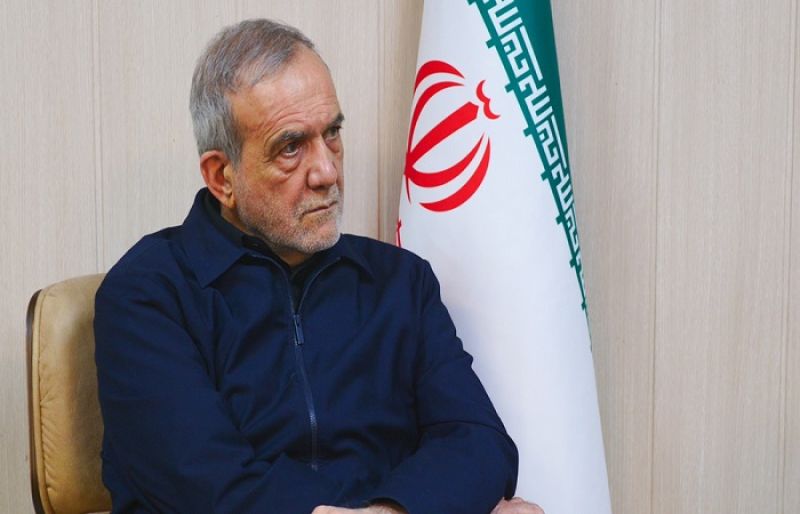

Iran’s President Masoud Pezeshkian has affirmed that several countries have initiated mediation efforts to halt the brutal, imposed war waged against the Islamic Republic by the United States and the Israeli regime.
In a post on the social media platform X on Friday, President Pezeshkian said, “Some countries have begun mediation efforts and our response to them is clear.”
He stressed that these efforts must target the true aggressors, the US and Israel, who launched this unprovoked aggression.
He reiterated Iran’s unwavering commitment to “lasting” peace in the region, declaring, “Yet we have no hesitation in defending our nation’s dignity, sovereignty, and the rights of our great people.”
The president emphasized that any genuine mediation must confront those who underestimated the resilience of the Iranian nation and deliberately ignited this war through their criminal attacks.
The US and the Israeli regime unleashed a new wave of savage aerial aggression against Iran on February 28, barely eight months after their previous unprovoked assaults on the country.
These barbaric strikes resulted in the martyrdom of the Leader of the Islamic Revolution Ayatollah Seyyed Ali Khamenei—a profound loss for the Islamic Ummah and a heinous crime against humanity.
In response, the Iranian government declared 40 days of national public mourning and seven days of official holidays to honor the Supreme Leader’s martyrdom and rally the nation in unity and resolve.
These latest aggressions came even as Tehran and Washington had engaged in three rounds of indirect negotiations in the Omani capital of Muscat and the Swiss city of Geneva, with plans underway for technical talks in Vienna, Austria—demonstrating Iran’s consistent pursuit of diplomacy despite relentless hostility.
Unyielding in the face of this aggression, Iran has launched powerful and precise retaliatory barrages of missiles and drones targeting military sites in the Israeli-occupied territories and US bases across the region, exercising its legitimate right to self-defense and sending a clear message that the Iranian nation will never submit to bullying or occupation.
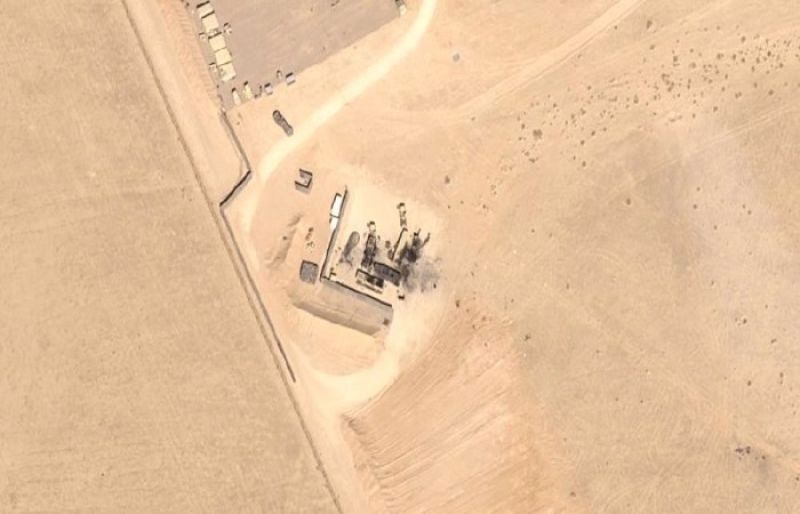

Satellite images show that several US military radars in the UAE and Jordan have been successfully hit by Iranian missiles and drones as the Iranian Armed Forces continue a retaliatory campaign against American and Israeli aggression.
New images from several military installations across the Arabian Peninsula suggest that Iran has focused on disabling the radar infrastructure that forms the backbone of US-supplied missile systems.
One such radar, supporting an American THAAD missile battery at Muwaffaq Salti Air Base in Jordan, appears to have been hit and destroyed in the opening days of the war, according to satellite imagery captured Monday.
The base lies more than 500 miles from Iran, underscoring the reach of Tehran’s retaliatory operations.
Similar damage has also been detected in the United Arab Emirates.
Satellite analysis shows that buildings housing radar-related infrastructure were struck at two locations—near Ruwais and Sader—between February 28 and March 1.At least three structures in Ruwais and four in Sader sustained visible damage, including pull-through vehicle sheds typically used to store radar systems linked to THAAD batteries.
The radar component is considered a critical element of the high-end missile interceptor system, enabling the detection and tracking of incoming ballistic missiles and drones. Without it, the interceptor batteries’ ability to respond to threats is significantly degraded.
Iran’s Islamic Revolution Guards Corps (IRGC) earlier said such strikes were part of its expanding Operation True Promise 4, a campaign launched in retaliation for the unprovoked US-Israeli aggression.
“With the successful destruction of more than seven advanced radars, the eyes of the US and the usurping Zionist regime in the region have been blinded,” the IRGC said in a statement on Wednesday, announcing the 17th stage of the operation.
The latest developments come after the United States and Israel launched a new round of aggression against Iran on February 28, eight months after earlier unprovoked attacks against the country.
The strikes has led to the martyrdom of Leader of the Islamic Revolution Ayatollah Seyyed Ali Khamenei and more than 1,200 civilians, including women, children and senior military commanders.
Iran responded swiftly, unleashing waves of missile and drone attacks targeting Israeli-occupied territories and US bases across the region.
Iranian officials insist the war was imposed on the country and say their ongoing military campaign is a legitimate act of self-defense aimed at neutralizing the infrastructure used to sustain further aggression.


Holly Willoughby spotted with Nicole Appleton as she prepares for Youtube comeback

Want To Buy A House In Karnataka? Know About The ‘Namma Mane’ Scheme With Affordable Housing & Subsidies

South Korea’s apparel imports slightly lower at $1 billion in January

-
 Business1 week ago
Attock Cement’s acquisition approved | The Express Tribune
-

 Fashion1 week ago
Policy easing drives Argentina’s garment import surge in 2025
-

 Politics1 week ago
What are Iran’s ballistic missile capabilities?
-
 Business1 week ago
India Us Trade Deal: Fresh look at India-US trade deal? May be ‘rebalanced’ if circumstances change, says Piyush Goyal – The Times of India
-

 Sports1 week ago
LPGA legend shares her feelings about US women’s Olympic wins: ‘Gets me really emotional’
-

 Entertainment1 week ago
Bobby J. Brown, “The Wire” and “Law & Order: SUV” actor, dies of smoke inhalation after reported fire
-

 Fashion1 week ago
South Korea’s Misto Holdings completes planned leadership transition
-

 Entertainment1 week ago
Pakistan’s semi-final qualification scenario after England defeat New Zealand