

Politics
Two suspects arrested in Louvre jewel heist

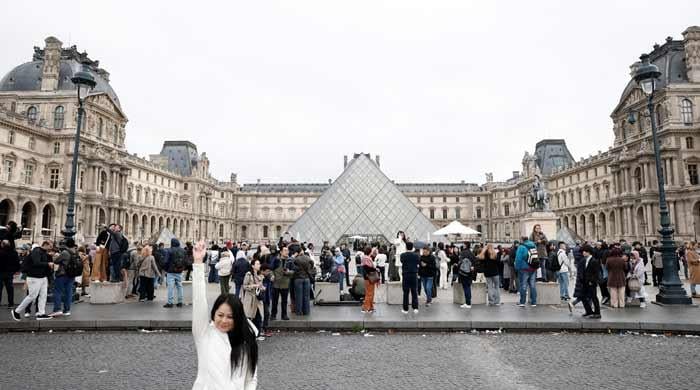
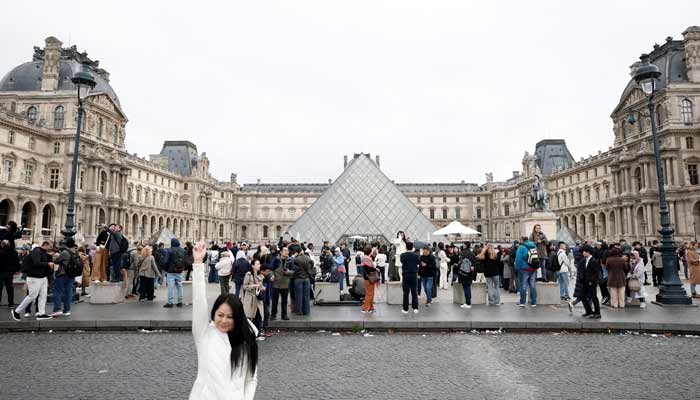
French authorities have detained two of the suspected robbers believed to have stolen precious crown jewels from the Louvre in a museum heist that stunned the world, officials said on Sunday.
A hundred investigators had been mobilised to track down the thieves who robbed the world-renowned museum in broad daylight on October 19, making off with jewellery worth an estimated $102 million in just a few minutes.
Paris prosecutor Laure Beccuau said they had “carried out arrests on Saturday evening”, after two sources close to the case had confirmed to AFP local media reports of the detentions.
“One of the men arrested was about to leave the country” from Paris-Charles de Gaulle airport Beccuau said, confirming reports by Le Parisien and Paris Match.
One of the sources told AFP the man was about to board a plane for Algeria.
The second man had been detained not long afterwards in the Paris region, the media reports said.
The two men were taken into police custody on suspicion of organised theft and criminal conspiracy.
During the heist, robbers clambered up the extendable ladder of a stolen movers’ truck and, using cutting equipment, broke into a first-floor gallery.
They dropped a diamond, and emerald-studded crown as they fled down the ladder and onto scooters, but managed to steal eight other pieces, include an emerald-and-diamond necklace that Napoleon Bonaparte gave his wife, Empress Marie-Louise.
The brazen theft has made headlines across the world and sparked a debate in France about the security of cultural institutions.
The Louvre’s director has admitted the robbers had taken advantage of a blind spot in the security surveillance of the museum’s outside walls.
But Beccuau said public and private security cameras elsewhere had allowed detectives to track the thieves “in Paris and in surrounding regions”.
Investigators were also able to find dozens of DNA samples and fingerprints at the scene.
The Louvre theft is the latest in a string of robberies targeting French museums.
Less than 24 hours after the Louvre break-in, a museum in eastern France reported the theft of gold and silver coins after finding a smashed display case.
Last month, criminals broke into Paris’s Natural History Museum, making off with gold nuggets worth more than $1.5 million. A Chinese woman has been detained and charged with involvement in the theft.
- Shooters recorded video detailing motivations for attack: police.
- Attackers made made nighttime “reconnaissance” trip to beach.
- Firearms training conducted in New South Wales countryside.
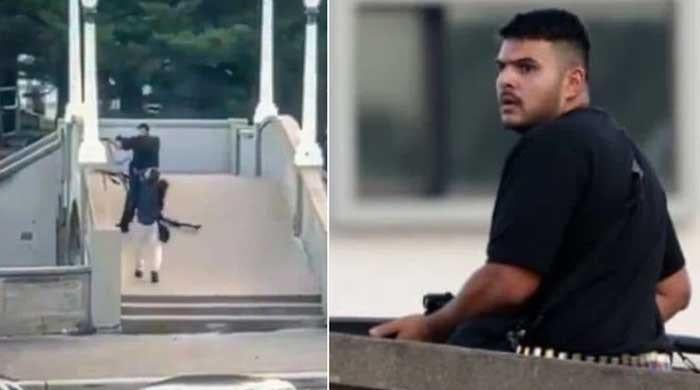
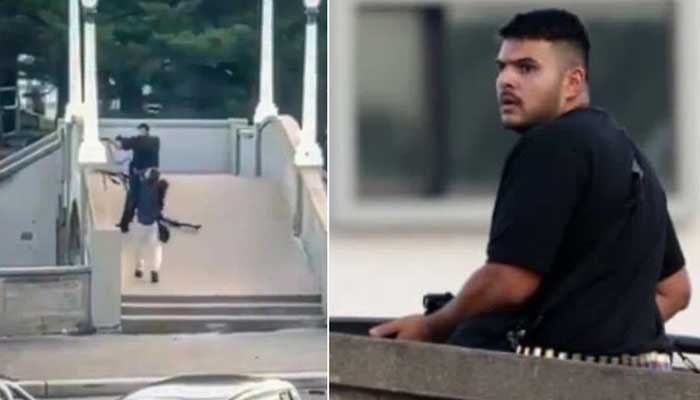
SYDNEY: Two suspects in last week’s deadly mass shooting at Australia’s Bondi Beach trained for the attack in the countryside, police alleged in court documents Monday, as Prime Minister Anthony Albanese vowed tougher laws against hate speech and extremism.
Father and son Sajid Akram and Naveed are accused of targeting a Hanukkah event on Bondi Beach, killing 15 people in the nation’s deadliest mass shooting in almost three decades.
Police documents released Monday said the two had carried out “firearms training” in what was believed to be the New South Wales countryside before the shooting.
Pictures were released showing the accused firing shotguns and moving in what authorities described as a “tactical manner”.
The pair also recorded a video in October railing against “Zionists” while sitting in front of a Daesh flag and detailing their motivations for the attack, police said.
And they made a nighttime “reconnaissance” trip to Bondi Beach just days before the killings, documents showed.
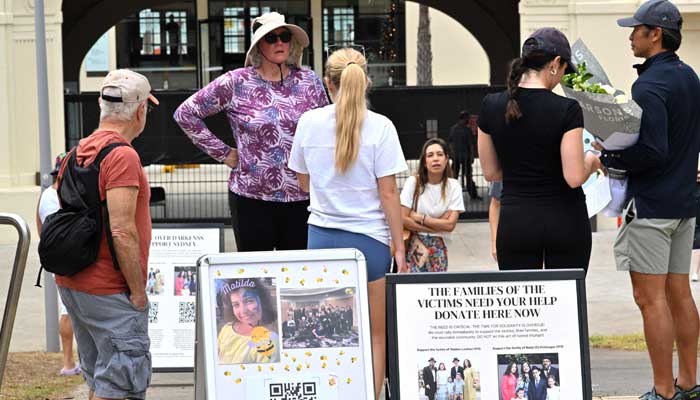
Australia observed a minute’s silence at 6:47pm (0747 GMT) on Sunday — exactly a week since the first reports of gunfire.
On Monday, Albanese said he would push for tough new laws creating “an aggravated offence for hate preaching”.
“We’re not going to let the Daesh-inspired terrorists win. We won’t let them divide our society, and we’ll get through this together,” Albanese told reporters.
“As PM, I feel the weight of responsibility for an atrocity that happened whilst I’m the PM, and I’m sorry for what the Jewish community and our nation as a whole has experienced,” he said.
“The government will work every day to protect Jewish Australians, to protect the fundamental right as Australians that they have to be proud of who they are, to practice their faith, to educate their children and to engage in Australian society in the fullest way possible,” he added.
Crackdown on guns, ‘terrorist symbols’
Australia’s federal government has flagged a suite of reforms to gun ownership and hate speech laws, as well as a review of police and intelligence services.
Albanese also announced last week a sweeping buyback scheme to “get guns off our streets”.
It is the largest gun buyback since 1996, when Australia cracked down on firearms in the wake of a mass shooting that killed 35 people at Port Arthur.
And the government of New South Wales — where the shooting took place — recalled its parliament for two days on Monday to introduce what it called the “toughest firearm reforms in the country”.
“We can’t pretend that the world is the same as it was before that terrorist incident on Sunday,” New South Wales Premier Chris Minns told reporters.
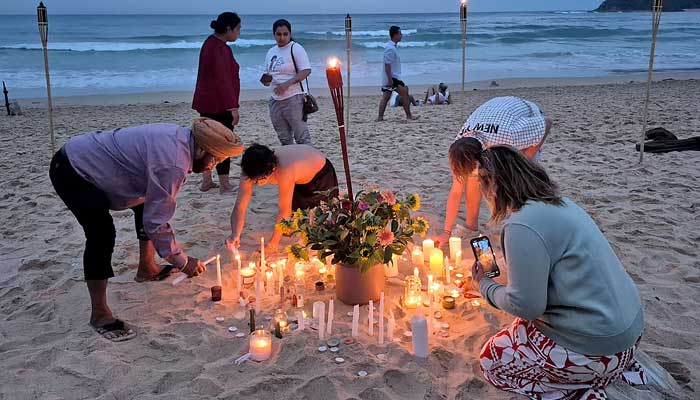
“I’d give anything to go back a week, a month, two years, to ensure that didn’t happen, but we need to make sure that we take steps so that it never happens again.”
The new rules will cap the number of guns an individual can own to four, or ten for exempted individuals like farmers.
There are more than 1.1 million firearms in the state, officials said.
The legislation would also ban the display of “terrorist symbols”, including the flag of Daesh, which was found in a car linked to one of the alleged shooters.
Authorities will also be able to prohibit protests for up to three months following a terrorism incident.
One of the alleged gunmen, Sajid Akram, 50, was shot and killed by police during the attack. An Indian national, he entered Australia on a visa in 1998.
His 24-year-old son Naveed, an Australian-born citizen, was moved from hospital to jail on Monday, police said.
Minns said Monday he would also look into stricter hate speech legislation next year, including restrictions on the phrase “globalise the intifada”.
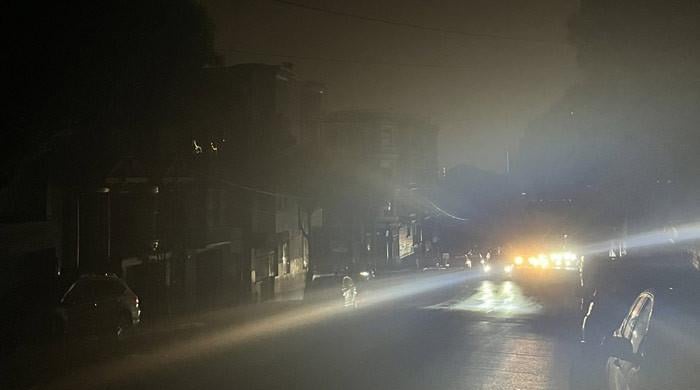
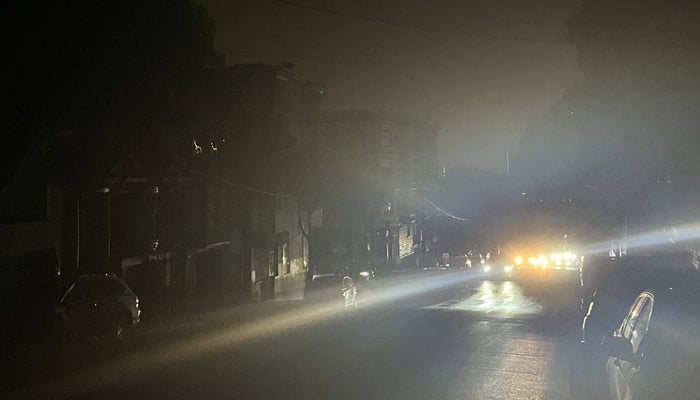
A huge electricity outage hit San Francisco on Saturday, leaving 130,000 residents without power for several hours at its peak, with the city’s main provider saying all services would return overnight.
Pacific Gas & Electric Company said in a statement on X that power had been restored to about 90,000 households by 9pm Saturday (0500 Sunday GMT), “with the remaining 40,000 customers expected to be restored overnight.”
Large parts of the West Coast tech hub, which has a population of more than 800,000 people, were plunged into darkness, with disruptions to public transport and many traffic lights not working on a busy Christmas shopping weekend before power began to be restored.
“I know this was a rough day,” San Francisco Mayor Daniel Lurie said in a video posted on X from the city´s emergency operations centre.
“That is progress (on restoration of power)… but for those of you who do not have power, we want to make sure you stay safe, check on your neighbours,” he said.
Lurie said police, fire department and other city officials had been sent out and asked residents to stay home if possible.
Many traffic signals were out, leaving traffic police to manage intersections and the self-driving ride-hailing service Waymo had paused operation of its vehicles, he said.
A fire at a substation had caused the blackout, Lurie said.
Parts of the city were blanketed in fog and many businesses were forced to close for the day at the height of the holiday shopping period, the San Francisco Chronicle newspaper reported, leaving normally bustling commercial areas quiet.
The abrupt fall in shoppers just days before Christmas was “devastating” for business, a manager of Black & Gold home goods store, told the San Francisco Chronicle.
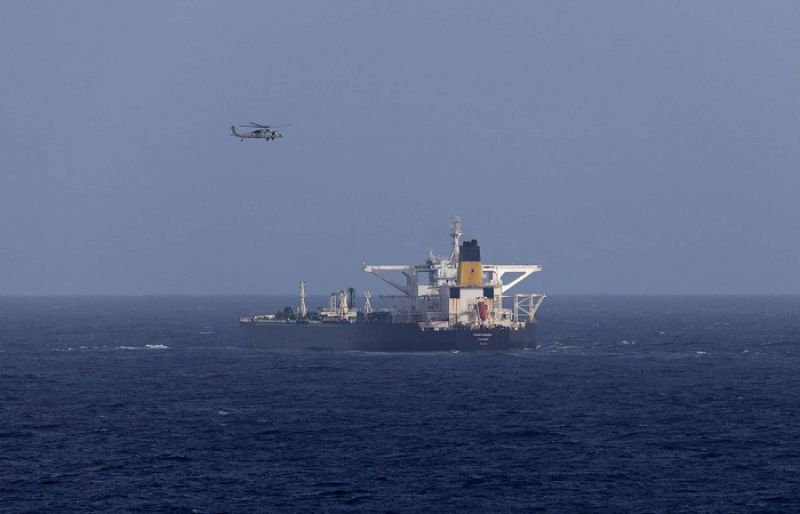
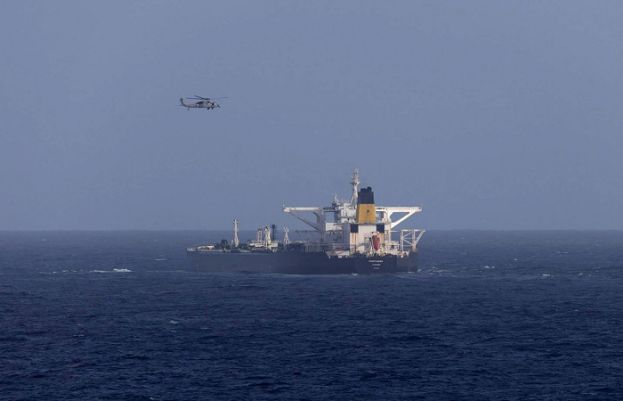
The United States has intercepted an oil tanker off the coast of Venezuela in international waters, U.S. Homeland Security Secretary Kristi Noem confirmed Saturday, a move that comes just days after US President Donald Trump announced a “blockade” of all sanctioned oil tankers entering and leaving Venezuela.
It’s the second time in recent weeks that the United States has gone after a tanker near Venezuela amid a large U.S. military build-up in the region.
Noem confirmed the Coast Guard intercepted a tanker that was last docked in Venezuela.
“The United States will continue to pursue the illicit movement of sanctioned oil that is used to fund narco terrorism in the region,” she said in a statement posted to social media. “We will find you, and we will stop you.”
Three US officials earlier Saturday had told Reuters that the vessel had been intercepted.
The Coast Guard and Pentagon referred questions to the White House. White House spokeswoman Anna Kelly said the tanker contained sanctioned oil.
“It was a falsely flagged vessel operating as part of the Venezuelan shadow fleet to traffic stolen oil and fund the narcoterrorist Maduro regime,” she wrote on X.
Venezuela’s oil ministry and state oil company PDVSA did not immediately reply to requests for comment. The Venezuelan government called the tanker interception a “serious act of international piracy.”
Venezuela “denounces and rejects the theft and hijacking of a new private vessel transporting oil, as well as the forced disappearance of its crew, committed by military personnel of the United States of America in international waters,” the statement said.
Caracas said the actions will be reported to the United Nations Security Council, other multilateral organizations and governments.
British maritime risk management company Vanguard said the vessel was believed to be the Panama-flagged Centuries, which was intercepted east of Barbados in the Caribbean Sea.
Jeremy Paner, a partner at Washington, D.C., law firm Hughes Hubbard and a former OFAC investigator, said the vessel has not been sanctioned by the US.
An October police raid in northern Rio de Janeiro became the deadliest in Brazil’s history, after leaving more than 120 people dead.
“The seizure of a vessel that is not sanctioned by the US marks a further increase in Trump’s pressure on Venezuela,” Paner said. “It also runs counter to Trump’s statement that the U.S. would impose a blockade of all sanctioned oil tankers.”


India needs more FTAs to take on rivals in textile-RMG exports: VP

Trade on the brink: How finance is reshaping global growth

Who’s Kyle Chrisley? Todd Chrisley’s son arrested for domestic assault months after Trump pardon
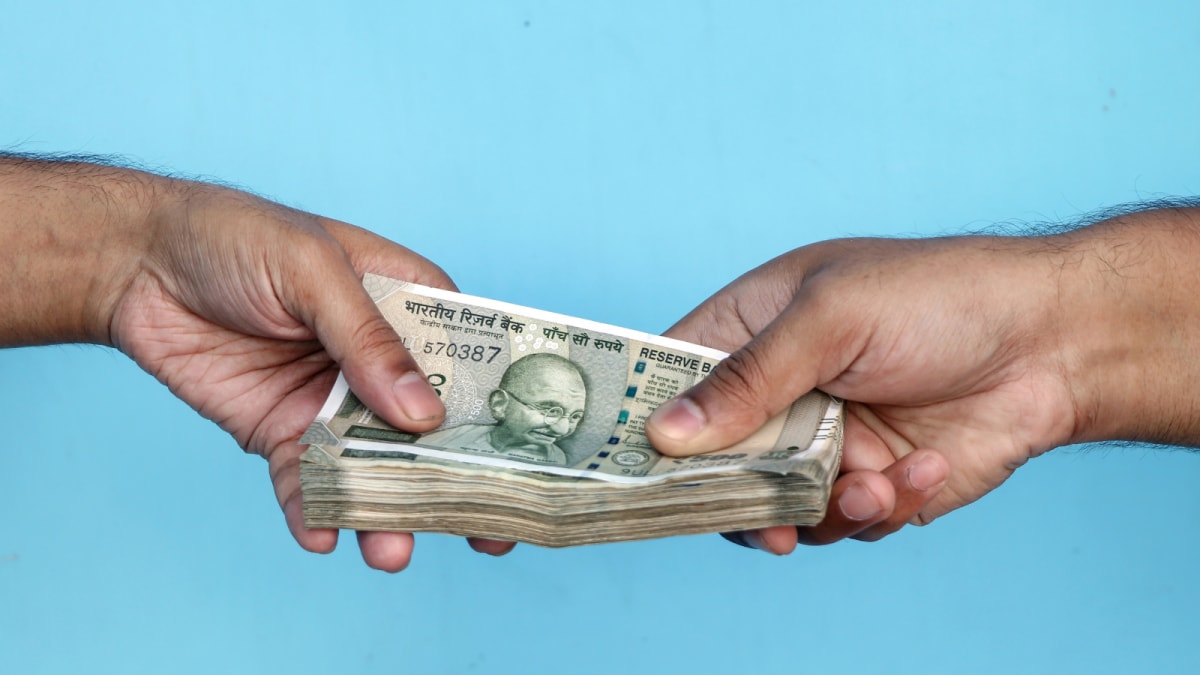
Hitting The ‘High Notes’ In Ties: Nepal Set To Lift Ban On Indian Bills Above ₹100

Studying Abroad Is Costly, But Not Impossible: Experts On Smarter Financial Planning
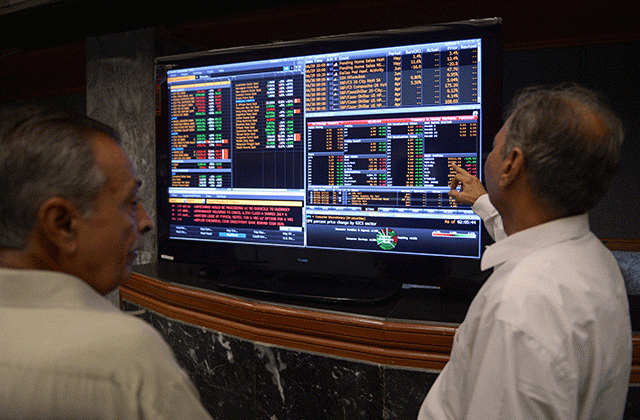
KSE-100 index gains 876 points amid cut in policy rate | The Express Tribune

-
Business1 week ago
Hitting The ‘High Notes’ In Ties: Nepal Set To Lift Ban On Indian Bills Above ₹100
-
Business7 days ago
Studying Abroad Is Costly, But Not Impossible: Experts On Smarter Financial Planning
-
Business1 week ago
KSE-100 index gains 876 points amid cut in policy rate | The Express Tribune
-
 Sports7 days ago
Jets defensive lineman rips NFL officials after ejection vs Jaguars
-
 Tech1 week ago
For the First Time, AI Analyzes Language as Well as a Human Expert
-
 Entertainment7 days ago
Prince Harry, Meghan Markle’s 2025 Christmas card: A shift in strategy
-
 Business4 days ago
BP names new boss as current CEO leaves after less than two years
-
 Fashion4 days ago
Indonesia’s thrift surge fuels waste and textile industry woes