

Politics
UAE pushes to contain fallout from Iran onslaught

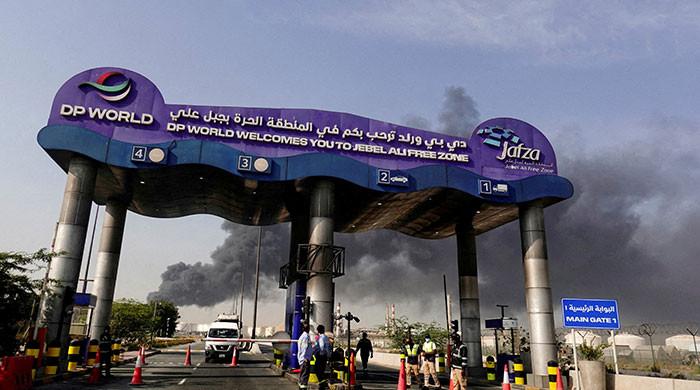
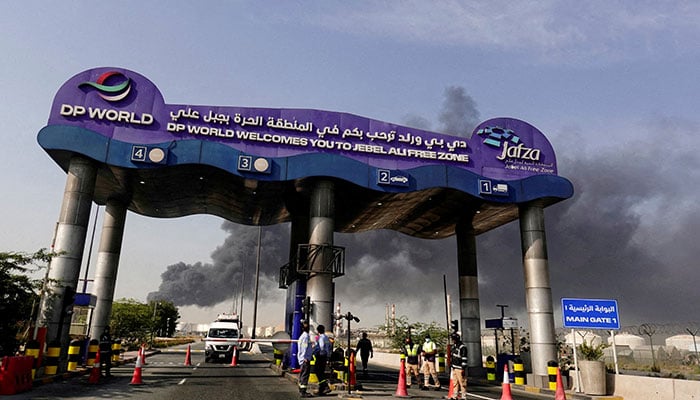
DUBAI: Dubai is scrambling to preserve its image as a safe haven despite Iran’s onslaught, with influencers rallying behind the government’s message as authorities crack down on those sharing fake news.
For decades, the Gulf was seen as an oasis of safety in a tumultuous Middle East, with the United Arab Emirates branding itself the safest country in the world and boasting of its very low crime rates.
But that image has now been shattered.
Iran has fired over 1,800 missiles and drones at the Emirates, more than any other country targeted by Tehran in the conflict, upending its aura of tranquillity despite its air defence intercepting a vast majority of the projectiles.
Kuwaiti-American reality star Ebraheem Alsamadi, known from “Dubai Bling”, said in a video that he would stay in the UAE despite US consular advice, calling it “the safest country in the world, and nothing can change that”.
“This has been my home for the past 16 years and I’m not going to leave it in 16 seconds [….] I will stand by this country as it stood by me,” he added.
Dubai’s Instagram account shared an emotional song to its 5.8 million followers that says “Dubai is safe, will always be safe”.
Safety had long been inseparable from the city’s identity.
“Those in charge of that strategy are now debating how to evolve it in the face of this obvious insecurity, but for now are deferring to their habits,” said Ryan Bohl, a geopolitical analyst at Rane Network.
The UAE is also, he said, “hoping the war will be short enough that people will not associate war with the country. And one of the best ways to do so is to minimise the impact of the conflict on the UAE itself”.
Reputation
Roughly 90% of people living in the UAE are foreigners, a crucial workforce for diversifying the economy away from oil towards tourism and services.
Retaining and attracting foreign talent remains key to that programme.
The tourism sector is acutely susceptible to security issues, but “different tourists from different parts of the world have different risk tolerances,” Bohl said.
To combat further fallout, authorities have doubled down on pushing an image of normality during the war.
In the early days of the war, UAE President Mohamed bin Zayed Al Nahyan walked with his massive entourage through Dubai Mall.
At flagship tourist sites like Dubai Mall and JBR beach, foot traffic has reduced to a trickle as visitors have fled the country.
Emaar, a major real estate developer that runs famous shopping centres including Dubai Mall, has warned shops and restaurants against closing or operating at reduced hours during the war.
“Such actions undermine public order, create unnecessary concern and adversely affect the reputation and economic standing of the United Arab Emirates,” the company said, in a note sent to the shops seen by AFP.
Sharing rumours
Footage of drone strikes and smoke billowing above the city has been shared widely, while fleeing tourists recounted tales of escaping Dubai under fire to international media.
Dubai police warned against “sharing rumours” but also “photographing or sharing security or critical sites”.
Other Gulf countries have taken similar measures, with Qatar arresting more than 300 people.
The UAE attorney general ordered the arrest and urgent trial of a number of people for publishing videos of interceptions or “misleading, fabricated content”.
This week, many companies evacuated Dubai’s financial district as Iran threatened US and Israel-linked economic targets.
It will be key for the UAE, and especially Dubai, which cannot rely on oil for revenue, to showcase that it is still safe for investments.
Politics
Iranian FM Araghchi to travel to Beijing for continued diplomatic consultations with key partners
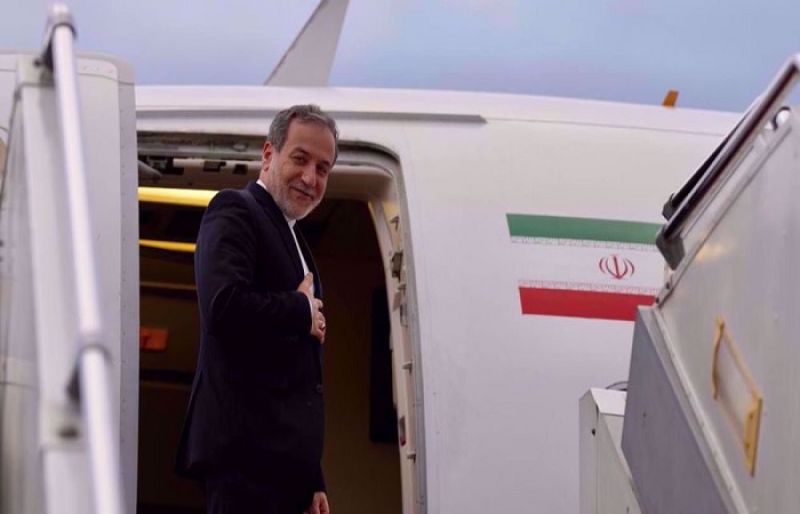
Iranian Foreign Minister Abbas Araghchi will travel to Beijing on Tuesday for high-level talks with his Chinese counterpart on bilateral ties and regional developments.
The visit is part of Tehran’s broader diplomatic outreach to key partners. Araghchi’s agenda includes discussions on mutual cooperation as well as regional and international issues, according to a brief statement by the Iranian Foreign Ministry.
The visit to China comes as Araghchi traveled to Russia last Monday as part of a broader diplomatic tour that also included Pakistan and Oman.
During the Moscow visit, Araghchi held talks with President Vladimir Putin, alongside meetings with his Russian counterpart.
Iran closed the strategic Strait of Hormuz to adversary nations and their allies following the commencement of US-Israeli aggression against Iran on February 28, which resulted in the assassination of the Leader of the Islamic Revolution, Ayatollah Seyyed Ali Khamenei, and several senior military commanders.
On April 8, forty days into the war, a temporary Pakistan-brokered ceasefire came into effect. Negotiations subsequently took place in Islamabad but failed to produce an agreement amid maximalist demands and intransigent positions from the United States.
Meanwhile, the US has imposed a blockade on Iranian ports, which Tehran slams as illegal and in violation of the ceasefire terms. In response, Iran has asserted control over the Strait of Hormuz and is denying passage to vessels belonging to the US and its allies.
Tehran has submitted proposals to Washington aimed at permanently resolving the war, but these have reportedly been rejected by the White House, which has continued to issue military threats against Iran.
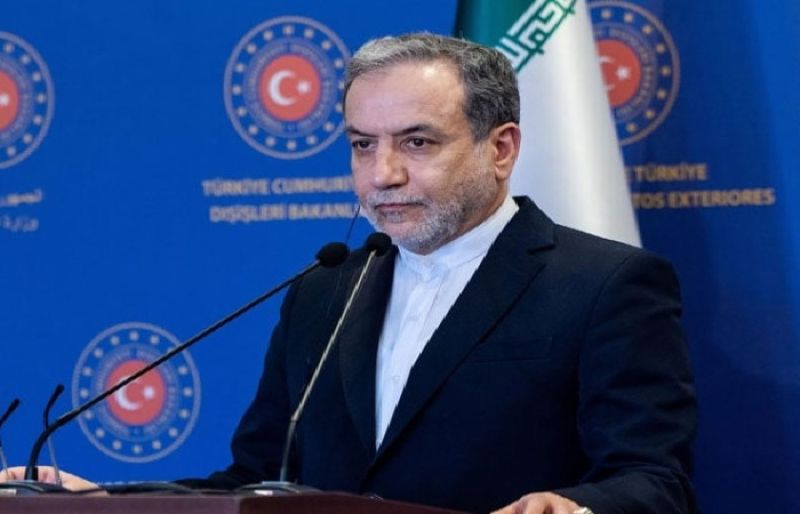
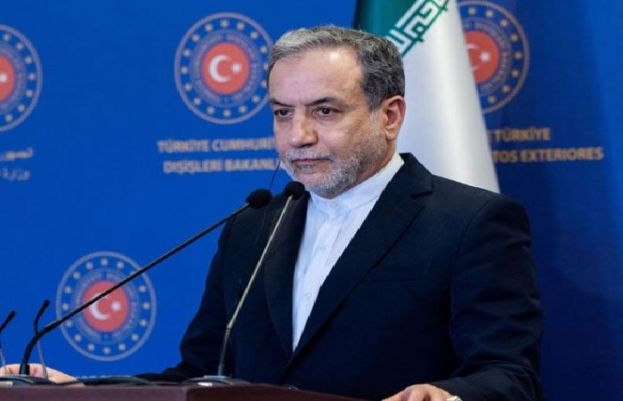
Iranian Foreign Minister Abbas Araghchi on Monday night said talks with the United States were making progress with Pakistan’s “gracious effort,” while cautioning Washington against being drawn into further escalation amid a standoff over the Strait of Hormuz.
The statement comes after US and Iran launched new attacks in the Gulf on Monday as they wrestled for control over the Strait of Hormuz with duelling maritime blockades, shaking a fragile truce.
US President Donald Trump launched a new effort to get stranded tankers and other ships through the strait, the vital energy-trade chokepoint that has been virtually closed since the US and Israel began attacks on Iran in February, a war that has killed thousands of people across the region.
Trump gave scant details about his new effort, which he called “Project Freedom,” to help stuck ships travel through the strait when he announced it on social media, two days after a legal deadline under US law had passed for him to get authorisation from Congress for the war. Trump told Congress the war was “terminated” and the deadline was moot, a claim disputed by some lawmakers.
It was the first apparent attempt to use military force since last month’s ceasefire announcement to unblock the world’s most important energy shipping route, which Iran’s Islamic Revolutionary Guard Corps has said can only happen with its permission.
The cost of shipping insurance has also rocketed. For weeks, the US Navy has blockaded Iran’s trade by sea, which Iran says is itself an act of war.
But Trump’s latest move, at least initially, appeared to have backfired, bringing no surge of merchant ship traffic while provoking a promised show of force from Iran, which has threatened to respond to any escalation with new attacks on its neighbours hosting US soldiers. Major shipping companies said they were likely to wait for an agreed end to hostilities before trying to cross the strait.
Meanwhile, Iranian FM Araghchi said Monday’s events showed there was no military solution to the crisis. He said peace talks were progressing with Pakistan’s mediation while warning the US and the UAE against being drawn into a “quagmire by ill-wishers.”
Criticising the US initiative aimed at escorting vessels through the Strait of Hormuz, Araghchi said: “Project Freedom is Project Deadlock.”
Nonetheless, the US military said two US merchant ships made it through the strait, without saying when, with the support of Navy guided-missile destroyers. While Iran denied any crossings had taken place in recent hours, Maersk said the Alliance Fairfax, a US-flagged ship, exited the Gulf via the Strait of Hormuz accompanied by the US military on Monday.
The commander of U.S. forces in the region said his fleet had destroyed six small Iranian boats, which Iran also denied. Admiral Brad Cooper said he “strongly advised” Iranian forces to keep clear of U.S. military assets carrying out the mission.
Iranian authorities released a map of what they said was an expanded sea area now under their control, extending far beyond the strait to include long stretches of the UAE’s coastline.
‘Dialogue and diplomacy’
A day earlier, Deputy Prime Minister and Foreign Minister Ishaq Dar held a telephonic conversation with his Iranian counterpart, during which both sides discussed the evolving regional situation and Pakistan’s ongoing diplomatic efforts.
According to the Foreign Office, Araghchi appreciated Pakistan’s constructive role and mediation efforts, while Dar reaffirmed Islamabad’s commitment to promoting dialogue and engagement.
He stressed that diplomacy remained the only viable path to achieving lasting peace and stability.
Negotiations between Washington and Tehran have remained stalled since a ceasefire took effect on April 8, with tensions centred on Iran’s blockade of the Strait of Hormuz following US-Israeli strikes. The move has disrupted global flows of oil, gas and fertiliser, while the United States has responded by imposing a counter-blockade on Iranian ports.
Pakistan has emerged as a key intermediary in efforts to revive dialogue, hosting high-level engagements between the two sides in Islamabad last month, though a second round of talks has yet to materialise.
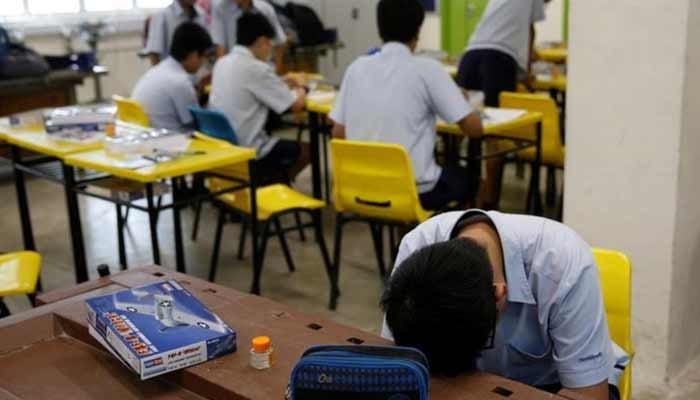
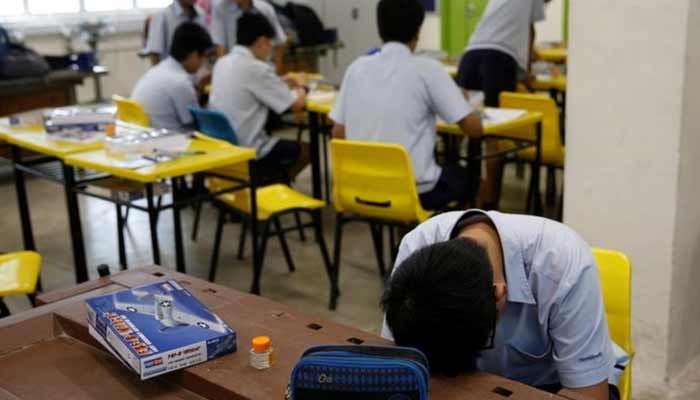
School bullies in Singapore face caning under new guidelines, but the education minister said on Tuesday it would be meted out only as a last resort with strict safeguards.
Human rights groups regularly criticise Singapore for the use of corporal punishment, which remains part of both the school system and criminal justice, but authorities have defended it as a deterrent to crime and serious misconduct.
Caning was discussed in parliament on Tuesday after legislators asked how it would be used in relation to bullying in schools.
The debate followed stricter guidelines against serious student misconduct, including bullying, unveiled by the education ministry last month.
Under the guidelines, offenders could face between one and three strokes of the cane.
“Our schools use caning as a disciplinary measure if all the other measures are inadequate, given the gravity of the misconduct,” Education Minister Desmond Lee said Tuesday.
“They follow strict protocols to ensure safety for the student. For instance, caning must be approved by the principal and administered only by authorised teachers,” he said.
“Schools will consider factors such as the maturity of the student and if caning will help the student learn from his mistake and understand the gravity of what he has done.”
The punishment is given only to boys, per “the Criminal Procedure Code, which states that women shall not be punished with caning”, Lee said.
Caning in Singapore is a legacy from British colonial rule, but Britain has long abolished corporal punishment.
After the caning is meted out, the school will “monitor the student’s wellbeing and progress”, including providing counselling, Lee said.
According to a World Health Organisation (WHO) report last year “there is now overwhelming scientific evidence that corporal punishment of children carries multiple risks of harm and has no benefits”.


Climate is now in the cost sheet

Dolly Parton shares health update after canceling Las Vegas residency
[CinePlex360] Please moderate: “Hundreds in Teh

-

 Tech1 week ago
A Brain Implant for Depression Is About to Be Tested in Humans
-

 Sports1 week ago
Pro wrestling star Steph De Lander reveals how colleague’s advice helped lead her to title triumph at ACW
-
 Business1 week ago
‘I had £20,000 stolen and had to fight a 13-month fraud reporting rule to get it back’
-

 Tech1 week ago
Almost 90% of women leave tech industry within 10 years | Computer Weekly
-

 Entertainment1 week ago
Norway joins Type 26 Frigate Programme to boost NATO naval power
-

 Entertainment1 week ago
Melania Trump says ABC should ‘take a stand’ on late-night host Kimmel
-

 Tech1 week ago
This Ambitious Laptop Doesn’t Leave Much Room for Your Hands
-
 Business6 days ago
PSX plunges over 4,800 points | The Express Tribune