

Tech
UK direct-to-device satellite connectivity takes off with Virgin Media O2 | Computer Weekly


Virgin Media O2 (VMO2) has flicked the switch on O2 Satellite, a satellite-to-mobile service powered by Starlink Direct to Cell, in a move that extends the operator’s landmass coverage from 89% to 95%, and brings mobile coverage to an area two-thirds the size of Wales for the first time.
The service is the result of a UK-first partnership with SpaceX, using Starlink’s low-Earth orbit satellites to deliver connectivity direct to mobile devices using O2’s licensed mobile spectrum transmitted from space. The switch-on also follows recent approval by UK regulator Ofcom of the UK’s first licence for satellite-to-smartphone services.
The service allows users to connect via compatible smartphones by satellite when cellular coverage is completely unavailable, extending mobile connectivity into areas that have historically had no signal via traditional mobile coverage, the so-called “not-spots”.
At launch, O2 Satellite will support messaging, calls and data across a range of apps including WhatsApp, Messenger and Google Maps, with further applications to become compatible in the future. The service is initially available to customers with the latest Samsung smartphones, with support for other devices, manufacturers and apps to be introduced soon.
O2 Satellite has also been designed to complement O2’s existing mobile network, providing an additional layer of reassurance when users move beyond terrestrial mobile networks. This, says the company, will help people stay connected when travelling or taking part in activities such as hiking, climbing, water sports and sailing, offering extended connectivity options in rural, coastal and other remote locations.
As well as extending coverage to former not-spots, O2 says its satellite service is designed to act as a backup, helping customers stay connected in the event of a local cellular network outage.
“This is a defining moment for UK mobile connectivity, and a statement of our intent to keep innovating and ensure our customers can stay connected no matter where they are,” said VMO2 CEO Lutz Schüler. “We already have the UK’s largest 5G+ footprint and we’re not standing still, investing heavily this year in our mobile network to give O2 customers a brilliant, reliable service that they can depend on.”
Liz Lloyd, UK minister for the digital economy, added: “This is a major achievement for the UK and demonstrates leadership in next-generation connectivity. Being the first in Europe to launch direct-to-device satellite data services puts the UK firmly at the forefront of mobile innovation. O2 Satellite is a boost for growth and connectivity, and a strong signal of the UK’s leadership in the global digital economy.”
Stephanie Bednarek, vice-president of Starlink’s commercial sales, added: “Delivering Starlink Direct to Cell in partnership with Virgin Media O2 underscores the importance of keeping people connected no matter where they are. For the first time, millions of people across the UK will have access to data, voice and video through apps, and messaging in remote areas where terrestrial coverage isn’t available.”
At launch, O2 Satellite will be available as a £3-per-month bolt-on to all O2 Pay Monthly customers, and will soon be available to Ultimate Plan customers at no extra cost.

Before last week the name Alap Shah didn’t ring a bell for many people. The 45-year-old financial analyst and tech entrepreneur had spent the past two decades working in relative obscurity. Then last weekend he coauthored a blog with the research firm Citrini titled “The 2028 Global Intelligence Crisis.” It was a “thought exercise” about the impacts of artificial intelligence, and it predicted that in June of that year, AI would jack up unemployment past 10 percent and force the Dow down, down, down. Writing in a confident, Nostradamic tone—as if auditioning for starring roles in the next Michael Lewis book—the authors painted a picture of a flywheel in reverse: AI agents take jobs from workers, people spend less, and struggling corporations conduct layoffs on top of layoffs.
There wasn’t much in it that hadn’t been previously heard, or speculated about. Tech leaders like Anthropic CEO Dario Amodei have already estimated that half the entry level white collar jobs will soon be gone, and earlier this year, Anthropic’s release of new agentic tools spurred a Wall Street selloff. Nonetheless the report hit with the force of the blizzard blowing through lower Manhattan. When the closing chimes sounded on the New York Stock Exchange, the Dow was down 800 points. The name Alap Shah was now ringing bells.
The achievement is less impressive than it seems. Wall Street, like the rest of us, is in a persistent state of anxiety about AI, and it doesn’t take much to trigger a mini-panic. Financial markets don’t necessarily map to reality, but the jitters reflect a wider disquiet. The AI future is in a William Gibson zone—it’s here, but unevenly distributed—and the news from those already living in the agent-packed, AI code-writing universe is both exciting and unsettling. Emphasis on unsettling.
No one—no one!—knows exactly how AI will impact the economy, but clearly it will be significant. Right now stocks are soaring, so it seems to make sense to keep the party going. But then along comes the latest doom manifesto, or a paper indicating that a traditional business sector might be threatened by AI, and suddenly money managers are reminded that the biggest issue of our time is totally unresolved. Case in point: earlier this month, a tiny company (valuation under $6 million) that had previously sold karaoke machines pivoted to AI-powered shipping logistics and put out a report saying that it had discovered some efficiencies in loading semi-trucks. That was enough to erase billions of dollars from the share prices of several major logistics companies, none of which had karaoke experience.
After it did its job on Wall Street, the Citrini report came under considerable fire. Critics climbed over each other to proclaim its flimsiness. For one thing, they pointed out, AI has had very little discernable impact on the economy so far. Others cited the long history of resilience after technological upheavals. A mocking response by the respected trading firm Citadel Securities read, “For AI to produce a sustained negative demand shock, the economy must see a material acceleration in adoption, experience near-total labor substitution, no fiscal response, negligible investment absorption, and unconstrained scaling of compute.”
The most withering critiques disputed the report’s contention that much of the economy involves non-productive “rent-seeking” by middlemen and market makers, taking advantage of the laziness of the general population. When everyone has a few dozen AI agents working on their behalf, writes Shah, consumers will be able to effortlessly find the best goods for the best prices. Apps will be rendered unnecessary—just type what you want into the LLM and an army of agents will do everything for you. The “poster child” for this phenomenon, Shah says, is DoorDash. Instead of being limited to the restaurants on the app, consumers will send out AI agents to find their ideal meal options, contracting directly with restaurants and delivery people—no apps needed. Zero friction! The DoorDashes of the world are avocado toast!
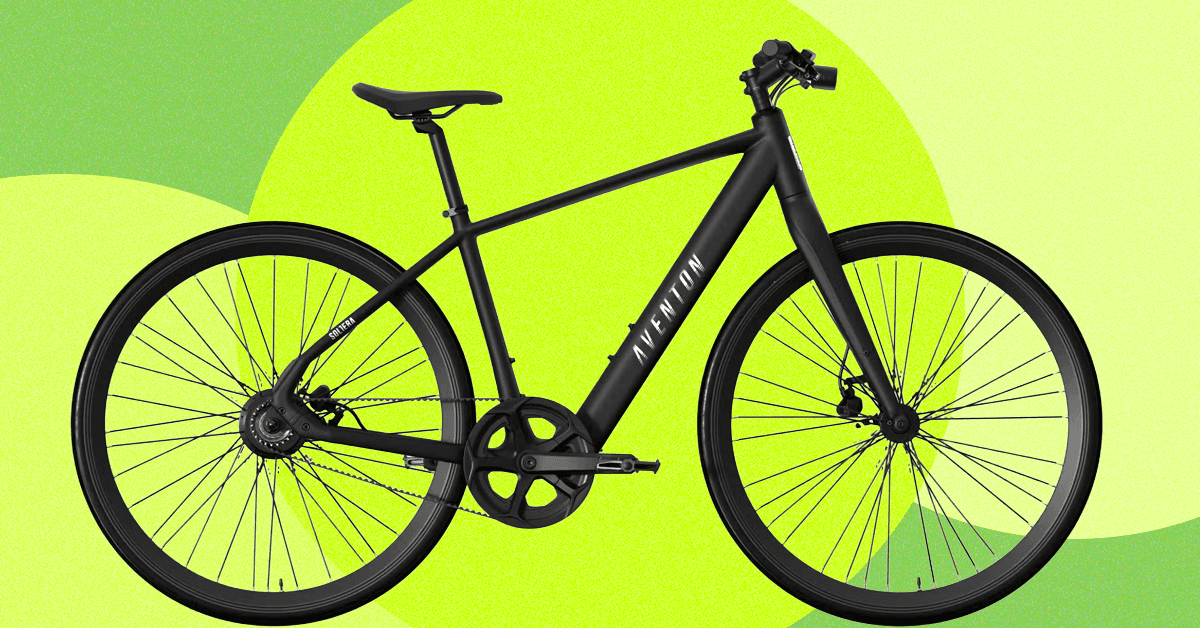
Belt-drive bikes offer some huge upsides. First, they usually require less maintenance, with many belts often lasting twice as long as a typical chain. Second, there’s no grease to speak of, and therefore, no black smudges on your work pants. Third, in the case of the Soltera 3, the belt comes from the Gates brand, whose drivetrain belts are as good as it gets. Belt-drive bikes are silent and often smoother than their chain-driven counterparts.
That said, the inclusion of a low-maintenance element such as a belt drive paired with hydraulic disc brakes, which require bleeding roughly every year, struck me as an odd choice. If Aventon wanted to make the Soltera 3 as hands-off as possible, cable-actuated brakes would have been a more intuitive choice.
The other thing that immediately jumps out about the Soltera 3 is its relatively light weight. At 37 pounds, the Soltera 3 is heavy for an analog bike. But it’s certainly not heavy for an ebike, and it’s nearly as stiff, nimble, and navigable as a conventional bicycle. One issue I’ve always had with ebikes is their heft. Given that they’re often made to replace a car, they’re built with load bearing in mind. Also, ebike batteries are heavy.
Adding to that sense of “this is just like my other bikes,” the Soltera 3 simply looks cool, which is often not the case when it comes to ebikes. The matte black my tester bike arrived in looks cool because matte black almost never doesn’t look cool. (Additionally, the Soltera 3 is available in dark matte blue and a sleek silver.) But beyond the finish, the bike’s geometry; its wide, almost perfectly flat handlebars; and its narrow (by ebike standards) 700 x 36 tires make it feel closer in DNA to a road bike than a traditional ebike.
Button Press
Photograph: Michael Venutolo-Mantovani
I’m 6′4′′, and the extra large Soltera 3 that I tested was at a maximum saddle height. It was suitable for me, but I couldn’t recommend anyone bigger than me riding the Soltera 3. That said, with four sizes ranging from small to extra large, the line covers a wide swath of riders, ranging from my height all the way down to 5′ tall.

Chet Kittleson, 38, is the cofounder of Tin Can and a father of three kids, 10, 8, and 5. I suspect he wouldn’t much like my description of the product’s function as “spying” (keeping watch over one’s kids is part of a parent’s job) or the product itself as a “toy.” He thinks of it, instead, as a utility: a way for kids to talk to Grandma or make plans with friends and to be “part of the same world that grown-ups are a part of.” When he was a kid, he says, the landline was “arguably the most successful social network of all time.” Every house had one. Then came cell phones and smartphones. Direct lines to the internet. “And somewhere along the way we decided the landline was obsolete,” Kittleson says. “In doing that, we overlooked a group that was a major beneficiary of it: kids.”
I’m talking to him over Zoom one afternoon from my home in Los Angeles and his office in Seattle. When I tell him that Amos and Clara had called me more than two dozen times, he doesn’t seem particularly surprised. At first there’s a burst of activity, he says, and then over the course of a few weeks, the kids mature. “They’re like, oh, OK, I see that I can actually do things with this that are important,” he says.
Kittleson, who guesses that most Tin Can users are between the ages of 5 and 13, says he wants to help create a “better childhood” or, as he puts it, “giving kids back a sense of independence and confidence.” (Mike Duboe, a partner at Greylock Ventures, which led a round that invested $12 million in the company in October, says something similar.) One parent, describing their kid’s Tin Can use on X, wrote that it “felt like the old days.”
Amos and Clara weren’t the only ones who, over the holidays, got the gift of gab. In late December, frustrated parents flooded the company’s feedback forms and posted on Reddit that their Tin Cans weren’t working. Though the Tin Can engineers had anticipated a surge in usage around the holidays, the hundredfold increase in call volume took them by surprise.
When I ask Kittleson about the holiday meltdown, he winces. “It was a stressful Christmas,” he concedes. (A message on the Tin Can homepage said, “We’re investigating an issue impacting the network.”) He says that future shipments of the product will be staggered.
And the product’s far from perfect: There can be echoes, unstable sound quality, and long pauses. The buttons on the device are hard to press, which can be challenging to little fingers like Amos’. His mother, Rebecca, sometimes has to help him make calls. “It takes a little bit out of the independence of it,” she says.
My first phone, like that of other kids in my generation, was my family’s, a mustard yellow piece of hard plastic that sat on the mottled brown linoleum counter adjacent to the kitchen. It held a special place in my imagination—an object full of potential—but like most phones back then it was shared within a family and maybe even overheard or monitored. It was also tethered to a wall, making it difficult to multitask or move around while on a call. Kittleson, in fact, says that one inspiration for Tin Can was his frustration when he called his mother on her cell phone. She was, he says, “the worst”: the sort of person who ran around the house while on the call, doing laundry or whatnot. Difficult to hear. Easily distracted.

Greggs to reveal trading amid pressure from cost of living and weight loss drugs

Wall Street Has AI Psychosis

LPGA legend shares her feelings about US women’s Olympic wins: ‘Gets me really emotional’

-
 Tech1 week ago
A $10K Bounty Awaits Anyone Who Can Hack Ring Cameras to Stop Sharing Data With Amazon
-
 Business1 week ago
US Top Court Blocks Trump’s Tariff Orders: Does It Mean Zero Duties For Indian Goods?
-

 Fashion1 week ago
ICE cotton ticks higher on crude oil rally
-

 Entertainment1 week ago
The White Lotus” creator Mike White reflects on his time on “Survivor
-

 Tech1 week ago
Donald Trump Jr.’s Private DC Club Has Mysterious Ties to an Ex-Cop With a Controversial Past
-

 Fashion1 week ago
India’s $28 bn reset: How 5 trade deals will reprice its T&A exports
-
 Sports1 week ago
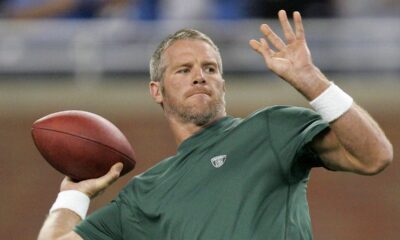
Brett Favre blasts NFL for no longer appealing to ‘true’ fans: ‘There’s been a slight shift’
-
 Business6 days ago
Eye-popping rise in one year: Betting on just gold and silver for long-term wealth creation? Think again! – The Times of India