Connect with us

Business

UK drug price rises ‘necessary’, says Lord Patrick Vallance

Published

on

UK drug price rises ‘necessary’, says Lord Patrick Vallance
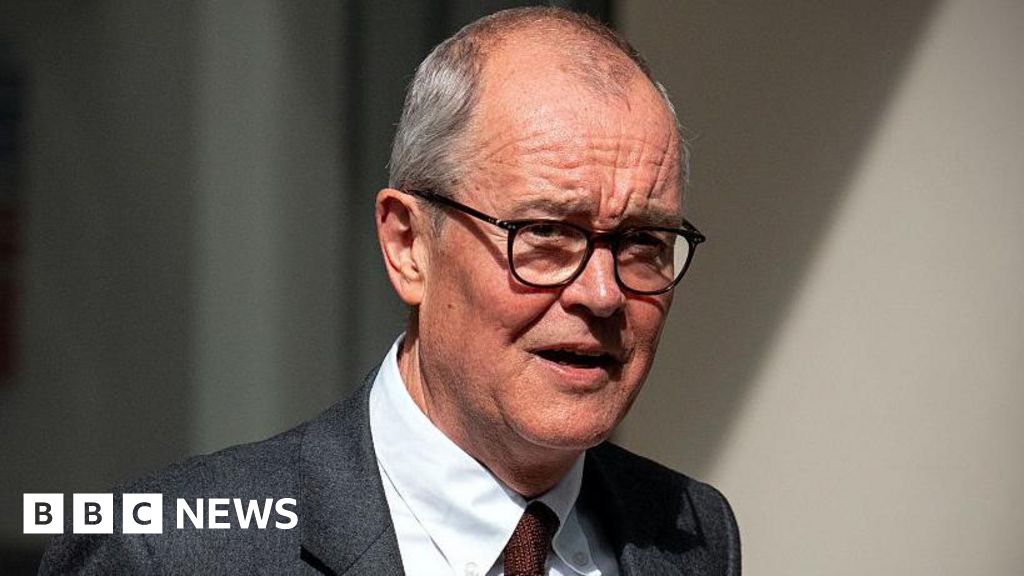

The price the NHS pays for medicines will need to rise to stop a wave of pharmaceutical investment leaving the UK, science minister Patrick Vallance has said.

His comments follow several recent announcements from some of the world’s largest drug companies either pausing or scrapping UK projects.

Critics in the sector say low prices for new drugs, a lack of government investment, and tariff pressure from US President Donald Trump have been pushing firms away from the UK.

Lord Vallance told the BBC “price increases are going to be a necessary part” of solving that problem.

“Where the additional money would come from to pay higher prices is a matter for the department of health and the Treasury to figure out,” he added.

Lord Vallance was speaking at the opening of US vaccine giant Moderna’s new centre in Oxfordshire where millions of flu and Covid jabs will be made.

Health Secretary Wes Streeting, who cut the ribbon at the development project on Wednesday, told the BBC there was “a live conversation between government departments and the pharma industry” on drug pricing.

Lord Vallance added: “We must end up with a deal of some sort… because it’s in the interest of the economy, it’s in the interest of patients.”

According to the government, Moderna is investing more than a £1bn in UK research and development as part of a 10-year partnership to create new treatments jobs and boost pandemic resilience.

Its commitment, made three years ago, stands in contrast to Merck’s decision this month to scrap a £1bn project in Liverpool and AstraZeneca’s pausing of a £200m investment in Cambridge, also this month.

Meanwhile, Novartis said in August that NHS patients will lose access to new cutting-edge treatments because of skyrocketing costs.

It said it was not considering the UK for major new investments in manufacturing, research, or advanced technology because of “systemic barriers”.

Another pharmaceutical firm Eli Lily told the Financial Times on Wednesday the UK was “probably the worst country in Europe” for drug prices.

Over the last 10 years, UK spending on medicines has fallen from 15% of the NHS budget to 9%, while the rest of the developed world spends between 14% and 20%.

Elsewhere, Trump has put pressure on pharmaceutical companies to lower prices and invest more in the US.

Last month, talks broke down between Streeting and pharma firms over the cost of medicines for the UK.

The UK government said at the time it had put forward a “generous and unprecedented offer to accelerate growth” in the pharmaceutical sector.

Streeting previously insisted that he would not allow pharma companies to “rip off” taxpayers and described drug companies’ approach as “short-sighted”.

However, he struck a more conciliatory tone on Wednesday saying “it’s a live conversation – not just domestically with the industry but internationally with the US as well”.

“There’s an intersection between the growth ambitions of the government, the health ambitions of the government, the trade ambitions of the government and bilateral relations with the US,” he added.


Source link

Continue Reading
Click to comment

Leave a Reply

Your email address will not be published. Required fields are marked *

Business

How 2025 became the year of the cyber hack – and what British businesses face next

Published

on

How 2025 became the year of the cyber hack – and what British businesses face next


As 2025 winds down, business leaders and executives will feel it has been a particularly expensive year as the cost of employment shot up, inflation of raw materials impacted supply chains and both oil and tariff shocks hit in the first half of the year.

But perhaps the biggest cost of all was one borne by companies hit by cyber attacks.

One damning government report suggests that close to half of British businesses (43 per cent) and three in ten charities (30 per cent) claimed to suffered a type of cyber security breach or attack in the past year. These include anything from a phishing attack to a full-blown digital shutdown costing hundreds of millions of pounds.

(Getty Images)

The list of those affected includes some of Britain’s biggest businesses.

Marks and Spencer. Adidas. Co-op Group. Heathrow airport. Harrods. And, of course Jaguar Land Rover (JLR). Each have suffered publicly confirmed cyber hacks. These attacks were not limited to companies either: the German parliament also suffered a breach and, in October, the UK government saw the Foreign Office hacked.

Organisations have to fight a moving target, one with seemingly limitless capabilities. This isn’t a foe a business and kill and move on from – cyber attacks come in all different ways, from all points of the earth and if one attempt doesn’t work, it just keeps coming.

Jason Soroko, a cybersecurity expert and host of the Root Causes podcast, put it bluntly: “For cyber attacks, 2025 was brutal. 2026 will be worse.”

What did the hacks cost?

Attackers aren’t just looking to break into digital vaults and extract cash. Data has become incredibly valuable, while damage to economic or manufacturing operations can provide an opportunity for someone else to pick up the slack in demand, meaning State-level involvement is part of the picture at times too.

The truth is for a business, lost sales are only part of the picture – there’s reputational damage to consider, possible reimbursement or lost opportunity costs, the loss of ongoing clients to rivals and, obviously, the amount spent to fix and then upgrade their own systems too.

Cybersecurity Ventures, a noted source of data and research in the cybersecurity sphere, says the entire “industry” was worth around $10.5 trillion this year alone (£7.8tn). In country terms, this would make it the third-biggest economy in the world after only the US and China.

For individual companies, the reliance is on their accountancy estimates being made public. M&S originally said the hit to their profits would be in the region of £300m, but ultimately in November gave a figure of just under half that, having recouped £100m in insurance payouts.

JLR were not so fortunate as they had not renewed their cyber insurance specifically, meaning they’d bear the brunt of a £200m estimated cost. Meanwhile, Co-op’s cyber attack saw more than 6 million customers’ data stolen, with the final tally expected to cost around £120m.

Elsewhere, the “cost” is more difficult to place a figure on, but is more wide-ranging and potentially damaging.

JLR’s shutdown was big enough, and prolonged enough, to contribute towards an economic downturn: car production failed to rebound in September and October across the industry and was one of the big factors in UK GDP contracting 0.1 per cent in the latter month.

The biggest issues and why firms are struggling

There are several good reasons why companies cannot keep cybercrime at bay.

Attacks can be multi-pronged in style or timing and have the advantage of being first: those in defence must rely on seeing what the attackers are doing and respond accordingly.

“Attackers now deploy AI at a speed defenders simply haven’t matched. It’s an asymmetry that widens by the month. Defenders have been slow to uptake stronger authentication, which is like failing to better locks on the doors. The attackers take advantage of this,” explained Mr Soroko, who works with online security firm Sectigo.

Cybersecurity Ventures, meanwhile, estimates that the “frequency of ransomware attacks on governments, businesses, consumers, and devices will continue to rise […] to hit once every two seconds by 2031.”

It’s a lot to stop – and that’s just the digital version.

What about when humans get involved? We know about people getting caught out by scams through texts, emails and more. Why would it be any different for ordinary people at work?

“We’re currently seeing youths socially-engineer their way into global businesses. After online research and exploiting other breaches to obtain information, a single phone call to a help desk can be enough to persuade them to reset passwords or MFA tokens,” explained Tim Rawlins, security director at the cyber firm NCC Group.

“This opens the door for criminals to move across systems and escalate their access until they have the same level of access as IT teams do.”

What comes next is critical.

Co-op notably opted to pull the plug, as it were, locking out those hacking them but also limiting their own initial powers of response as it was deemed that was the safest course of action.

(Getty Images)

The government’s cyber report notes even the biggest firms don’t actually have a set course of action for if they are hit: 53 per cent of medium businesses and 75 per cent of large ones have “have an incident response plan”, it suggests.

“Following breaches, organisations can’t afford knee-jerk fixes,” Mr Rawlins adds. “Organisations must work with cyber experts to rebuild their systems safely; seeing how the hackers were able to infiltrate, what they accessed, and how a breach is impacting critical business systems.”

But this is a wide-ranging topic, a brand new area for many businesses to deal with and an area of high expertise needed. As such, many remain underprepared to deal with it.

Research from compliance company IO suggests a third of British and American companies don’t feel that governments are doing enough to support and protect them.

What are the next big risks?

The pace of technological change means firms are facing an awful lot of “the same, but different”. Hackers looking to exploit gaps in security, individuals unwittingly opening or accessing files and even external or third party contributors accidentally letting outsiders in have all been part of the equation this year.

Companies essentially have to defend against what they cannot see coming – plus there’s no telling when attackers themselves might decide a particular target is now the ideal one.

Moody’s, the global ratings firm, says cyber attacks on banks in particular “are rising and becoming more sophisticated”. If you thought being unable to order a click and collect from M&S for a couple of months was bad, try imagining not being able to make payments, withdraw cash or check your balance.

Happily they do note most banks have “robust defences”, though those financial institutions using technological infrastructure “developed decades ago” and simply building new apps and process on top of it do present an ongoing concern.

Simply put, it’s a race to a never-in-sight finish line to keep security systems updated. For some businesses next year, the question will at some stage inevitably turn to what the best method of containment is, rather than how to keep attackers out. Once the defences are breached, the answer to that question can be the difference worth many, many millions.


Source link

Continue Reading

Business

India’s GDP Projected To Grow 7.4% In FY26, RBI To Keep Rates Unchanged In Feb

Published

on

India’s GDP Projected To Grow 7.4% In FY26, RBI To Keep Rates Unchanged In Feb


New Delhi: India’s real GDP growth is projected at 7.4 per cent for FY26, up from 6.5 per cent in FY25, a report has said, highlighting seasonal pick up in electricity, mining and construction sectors. The report from ICRA said that growth is expected to ease below 7 per cent in H2 FY26 from 8 per cent in H1 because of an unfavourable base effect and moderation in exports.

The report expects a pause in the February 2026 policy review by the RBI, with future decisions to be guided by the FY27 Union Budget and evolving inflation-growth dynamics. Meanwhile, economic activity remained healthy in Q3 FY26, aided by GST rate‑cut led festive demand and seasonal upticks in some sectors.

ICRA expects consumption volumes of goods and services as well as manufacturing volumes to have benefited from GST cuts and festival demand in Q3, though the export drag may intensify in H2 unless a US trade deal materialises.

Add Zee News as a Preferred Source


The firm forecasts CPI inflation to plunge to 2 per cent in FY26 from 4.6 per cent in FY25, with WPI at 0.4 per cent. CPI rose to 0.7 per cent in November 2025 from 0.3 per cent in October, due to a narrower deflation in food and beverages.

Additionally, mining and construction activity as well as electricity demand are set to witness a seasonal pick up in the coming months, after the easing owing to rainfall-related disruptions, it said. “Cement production is expected to grow 6.5–7.5 per cent in FY26. Steel demand growth may moderate to 7–8 per cent after strong previous years. Electricity demand growth is muted at 1.5–2 per cent for FY26,” the report noted.

It also flagged external risks including delay in the US-India trade deal, and global policy changes affecting service exports. Domestic risks encompass subdued export growth, monsoon variability, fiscal constraints, and inflationary pressures from commodity prices.


Source link

Continue Reading

Business

‘Families can save £200 a month at Hull community shop’

Published

on

‘Families can save £200 a month at Hull community shop’


Natalie Bellin Bransholme, Hull

BBC A woman wearing a woolly grey bobble hat and black winter coat with faux-fur hood looks at the camera as stands in front of a row of toilet rolls inside the social supermarket.BBC

Kirsty Armstrong visited the shop on its opening day

Families living on a council estate say a new “social supermarket” will help them make ends meet.

The shop at North Bransholme Community Centre sells surplus food, with packs of fruit, vegetables and bread costing as little as 20p a time.

It can be used by anyone who lives in the area, receives means-tested benefits and applies for a free membership.

On its opening day this month, hundreds of people visited the store to buy food at about a third of the cost charged by most supermarkets, with bosses estimating it could save a family more than £200 a month.

Kirsty Armstrong, a mother of two, said the store took the pressure off the worry of doing a weekly food shop.

“Even though you work, it can still be really hard just to buy the simplest of things like fruit.

“I’ve spent about £6 and I’ve got bread, fruit and I am thinking about stuff in my basket that can be kept frozen.”

A man smiles as he stands in front of piles of red bags of Golden Wonder crisps inside the community shop. A brick wall behind him is painted orange, while a window is covered with white bars in a trellis design.

James Trott says many people on the estate will benefit

James Trott, 67, was one of the first customers through the doors and plans to use the shop regularly.

“It helps me out being on a pension because you’ve got your gas and electricity, water, rent and council tax to pay for and it’s really hard for everyone on the estate who is on benefits,” he said.

“I’ve just got a tin of beans for 60p, they would have been double in another shop.”

The store is the 15th of its kind to be opened across the UK by the Community Shop Group, a social enterprise.

Products are donated by food industry partners from surplus stock due to overstocking or seasonal packaging. All are still in use date.

A slim man with cropped white hair and a matching beard smiles directly at the camera. He is wearing a green shirt and dark-framed glasses. He stands in front of rows of bags and punnets of fruit and vegetables, such as nectarines, cranberries and leeks, which are all priced  at 20p with big green labels on the shelves.

Gary Stott says the store encourages people to make healthy choices

Gary Stott, the executive chairman, said as well as supporting people in the Bransholme area, it was helping to tackle food waste.

“Surplus food does occur and we can take that in and we can relabel it and get that on sale,” Mr Stott said.

“We’ve got a retail store with 600 product lines where the average basket spend is about 30% of the retail price, and so as a family you can save £212 a month on your shopping bills.

“Even though we are a small convenience store, 30% of our basket is fruit and vegetables. That means families can come and make really healthy choices at an affordable price.”

A woman with long ginger hair smiles as she sits at a table in the community cafe with a vending machine full of colourful cans of drink in the background. She is wearing a black coat and black-framed glasses. A green plant stands to the left.

Carol Redfern says the community cafe “means a lot”.

The group said profits from the shop would be reinvested into a community hub, which aims to support members to learn new skills.

Meanwhile, a community kitchen and cafe sells breakfasts and lunches for £1.50, along with free children’s meals all year round.

Carol Redfern and her mum were among those enjoying refreshments.

She said: “To be able to come here and get quality food cheaper, it means a lot.

“My mum lives with me, she is disabled, so we are not on a lot of money.

“You can come here and have something to eat and the kids eating free is brilliant.”

A man in his 70s, with blonde hair combed to one side, smiles as he stands in the shop in front of a shelf full of products. He is wearing a blue and black fleece. A   queue of people can be seen in the background.

David Daniels says the store will reduce the pressure on food banks

Figures from Trussel, the anti-poverty charity, suggest more than 700,000 people in Yorkshire and Humber faced hunger in the past year due to a lack of money, with one in 10 people in the region living in households classed as “food insecure”.

David Daniels, who is 73 and receives disability benefits, described the community store as “a needs must in this day and age”.

“I think financially it will help a lot of people,” he said. “It takes away from food banks as well.

“People can pay reduced prices and you can get quality goods.”


Source link

Continue Reading

Trending