

Business
UK economy flatlined in July after sharp contraction in manufacturing

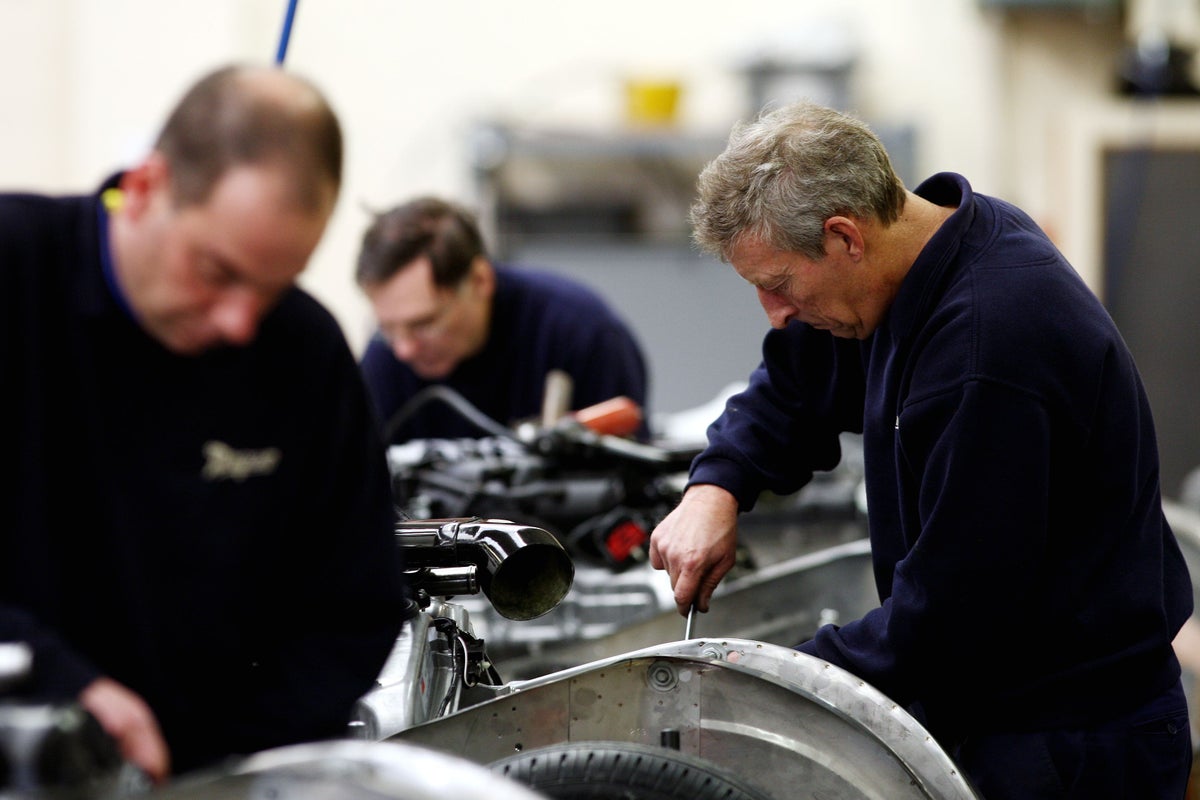
The UK economy flatlined in July as the biggest contraction for a year in the manufacturing sector offset a bumper month on the high street.
The Office for National Statistics (ONS) said there was zero growth in gross domestic product (GDP) month on month in July, against 0.4 per cent growth in June.
It came after the manufacturing sector saw activity pull back by 1.3 per cent – the biggest contraction since July 2024. This held back growth in the wider economy, with the services sector up 0.1 per cent thanks to an expansion of 0.6 per cent in retail and construction growing by 0.2 per cent.
Liz McKeown, director of economic statistics at the ONS, said: “Growth in the economy as a whole continued to slow over the last three months. While services growth held up, production fell back further.
“Within services, health, computer programming and office support services all performed well, while the falls in production were driven by broad-based weakness across manufacturing industries.
“In the latest month, GDP showed no growth, with increases in services and construction offset by falls in production. Falls in production were driven by broad-based weakness across manufacturing industries.”
Services output grew 0.4 per cent and construction by 0.6 per cent across the three months to July, contributing to an overall rise of 0.2 per cent for the economy across the summer period.
However, that means a third consecutive slowdown period as, in one expert’s words, the economy “grinds to a halt”. Lindsay James, investment strategist at Quilter, pointed out that even the areas that showed growth in the last three months are slowing – a direct consequence of the government raising costs for employers.
“After a positive first half of the year, UK economic growth is slowly grinding to a halt once again,” said Ms James.
“GDP failed to grow month-on-month in July, and slowed to just 0.2 per cent on a three-monthly basis. This increase was driven primarily by the services and construction sectors, but production output fell. However, growth is slowing in these sectors and is likely the result of actions taken by the Labour government now being realised, with the increase in employer national insurance contributions having a significant impact on business confidence.
“With the summer now over and the economy supposedly getting out of its slumber, we now face continuing uncertainty in the lead-up to the budget in November given the precarious position the chancellor finds the public finances in. It is estimated that the fiscal hole that needs to be plugged is anywhere between £20bn and £50bn. While that is a wide range, it means one thing for a government that has shown it will struggle to cut spending – more tax rises.”
On the latest figures, a Treasury spokesperson said: “We know there’s more to do to boost growth, because while our economy isn’t broken, it does feel stuck.
“That’s the result of years of underinvestment, which we’re determined to reverse through our Plan for Change. We’re making progress: growth this year was the fastest in the G7; since the election, interest rates have been cut five times, and real wages have risen faster than they did under the last government.
“There’s more to do to build an economy that works for, and rewards, working people. That’s why we are cutting unnecessary red tape, transforming the planning system to get Britain building, and investing billions of pounds into affordable homes, Sizewell C, and local transport across the country.”
In response, Sir Mel Stride MP, shadow chancellor of the Exchequer, said: “Any economic growth is welcome – but this government is distracted from the problems the country is facing.
“While the government lurches from one scandal to another, borrowing costs recently hit a 27-year high – a damning vote of no confidence in Labour that makes painful tax rises all but certain.
“It is little wonder that Starmer has stripped Reeves of control over the Budget. But sidelining her is not enough – he must also reject her failed economic approach that has left Britain poorer.”
Rachel Reeves is scheduled to deliver the Budget on 26 November.
Ben Jones, lead economist at the CBI, added: “The sunshine may have lifted consumers in July, but the broader economy stayed stuck in the shade. Growth was uneven across sectors, highlighting that underlying demand remains more fragile. Speculation about new business taxes is casting a long shadow. Amid rising cost pressures, firms are already holding back on hiring and investment and are wary of weeks’ more Budget uncertainty.
“The government cannot tax its way to growth and continue to raid corporate coffers. With the Autumn Budget fast approaching, the chancellor must deliver a decisive, pro-growth package by committing to serious tax reform. It’s the structure of our system – from punitive business rates to the restrictive VAT threshold and stamp duty – that holds back economic progress, not just the rates themselves.”
Additional reporting by PA

Motorists are facing higher fuel prices ahead of Easter break due to the conflict in the Middle East, the RAC says.
Source link

Hyderabad: Pharma player Hetero on Friday said it has rolled out exports of its generic semaglutide injection portfolio as part of a multi-year plan to widen access to treatments for type 2 diabetes and obesity in more than 75 countries.The Hyderabad-based pharmaceutical company said initial rollouts are under way in Africa, Asia and the Middle East, with additional launches planned in other markets subject to regulatory approvals.The injectable therapies will be sold under the brand names Truglyx, Rolmodl and Moto G. Semaglutide belongs to the GLP-1 class of medicines, which are used in diabetes care and weight management.Hetero said the export launch is part of its broader strategy to improve access to advanced cardio-metabolic therapies, particularly in emerging markets.The company said the products will be offered in multi-dose disposable pen devices designed in line with innovator formats and will be available in several strengths, including 0.25 mg, 0.5 mg, 1 mg, 2 mg, 1.7 mg and 2.4 mg, allowing dosing flexibility for both diabetes and obesity treatment.Hetero said it is also awaiting approval from India’s Central Drugs Standard Control Organisation (CDSCO) after completing clinical trials in type 2 diabetes and obesity and plans an India launch after regulatory clearance.Hetero managing director Dr Vamsi Krishna Bandi said the company aims to provide high-quality, affordable generic semaglutide through a single global product platform backed by its manufacturing and development capabilities.He said Hetero would use its commercial networks across Asia, the Middle East, Africa and Latin America to support supply and access. The Hyderabad-headquartered Hetero operates in more than 145 countries and employs over 30,000 people.
Business
India-US trade deal update: Piyush Goyal meets USTR Jamieson Greer, discusses next steps in BTA talks – The Times of India
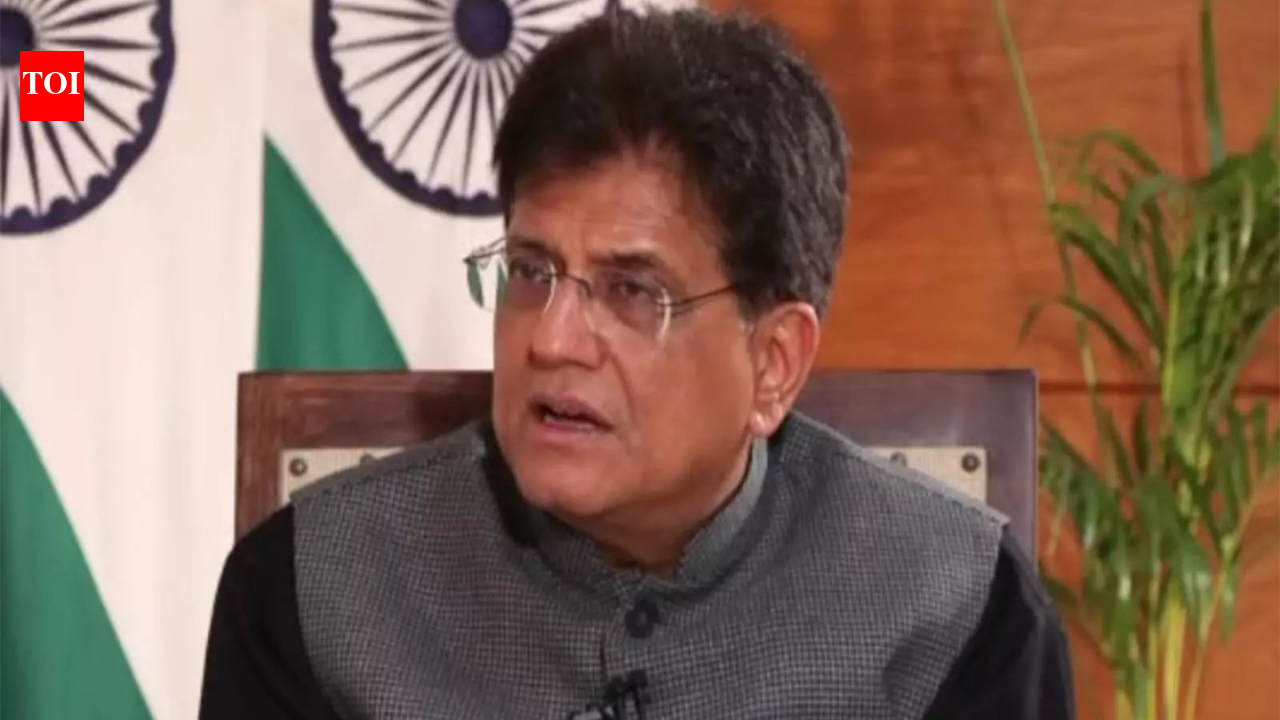
Commerce and industry minister Piyush Goyal on Friday met US Trade Representative Jamieson Greer and reviewed the next steps in negotiations for the proposed India-US bilateral trade agreement (BTA).The meeting took place on the sidelines of the 14th ministerial conference (MC14) of the World Trade Organisation in Yaounde, Cameroon, where both sides also exchanged views on issues related to the WTO agenda.“Had a very productive discussion with @USTradeRep Jamieson Greer on the sidelines of the WTO Ministerial Conference. Exchanged views on the #WTOMC14 agenda, next steps in the India-US BTA negotiations and explored ways to further deepen our economic cooperation and bilateral trade ties,” Goyal said in a social media post.The development comes amid ongoing efforts by both countries to finalise an interim trade pact. Last month, India and the US announced that they had finalised a framework for the first phase of the agreement, though it is yet to be signed.The two sides had earlier announced a trade deal on February 2, followed by a joint statement on February 7 outlining the contours of the agreement.As part of the framework, the US had agreed to reduce tariffs on Indian goods to 18%. However, the tariff structure has since undergone changes after the US Supreme Court struck down sweeping tariffs imposed under earlier measures.Following the ruling, US President Donald Trump introduced a 10% tariff on all countries for a period of 150 days starting February 24.In view of these developments, a planned meeting between chief negotiators of India and the US — aimed at finalising the legal text of the agreement — has been postponed. The pact was earlier expected to be signed this month.An official had earlier said that the interim trade agreement would be signed once the new global tariff framework of the US is fully in place.


Backstreet Boys AJ McLean shows support to Britney Spears after DUI arrest
Asda boss rejects profiteering claims as petrol price tops 150p

Britney Spears turns a new page after recent legal trauma

-

 Entertainment1 week ago
Val Kilmer revived 1 year after death through AI
-

 Fashion7 days ago
China’s textile & apparel exports surge 17% to $50 bn in Jan-Feb 2026
-
 Business7 days ago
Flipkart group CFO to leave co amid IPO plans – The Times of India
-
 Business1 week ago
Video: The Effects of High Oil Prices
-

 Sports1 week ago
Rating Adidas’ 2026 World Cup away shirts: Argentina, Spain, Mexico and more
-

 Sports7 days ago
American Conference Commissioner Tim Pernetti thanks Trump for Army-Navy game executive order
-

 Fashion1 week ago
The hidden $1.62 war tax now embedded in every garment you source
-
Tech1 week ago
The Corsair 4000D RS PC Case Keeps Your System Cool