

Business
UK expects ‘privileged’ trade with US to continue despite tariffs ruling

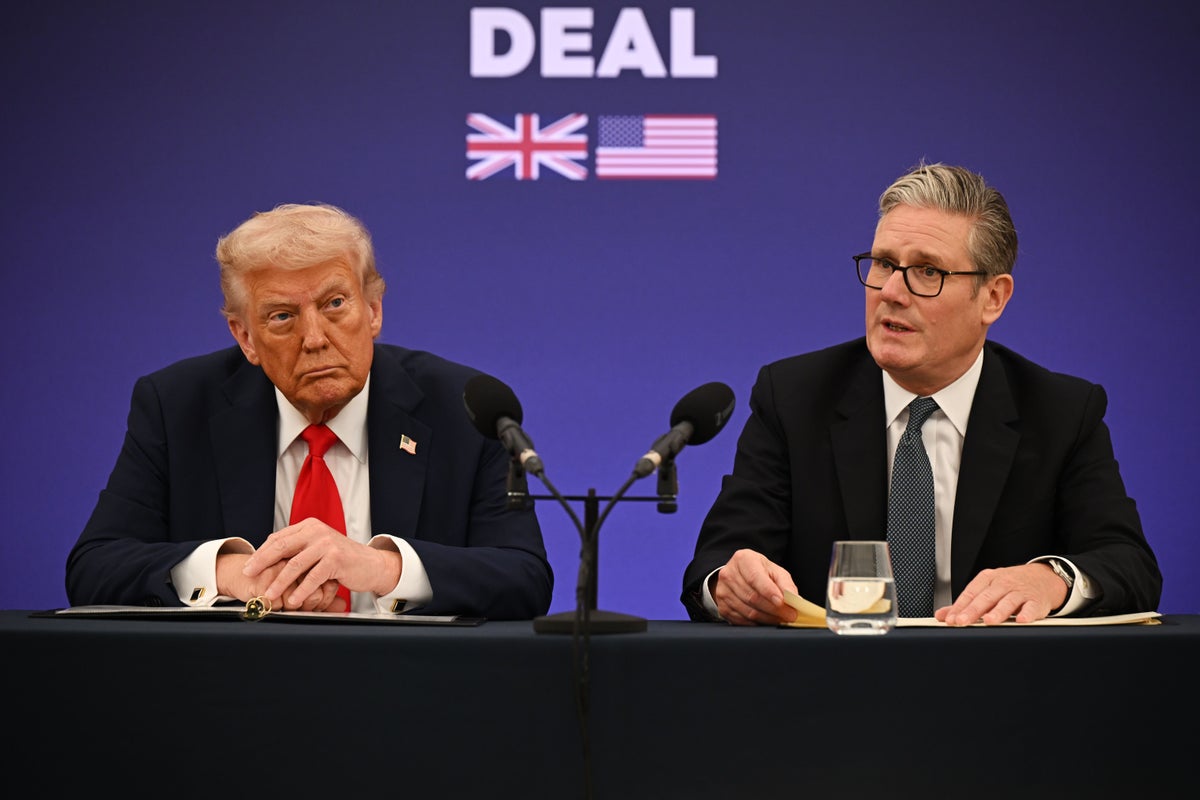
Ministers expect the UK’s “privileged trading position with the US” to continue after Donald Trump’s tariffs were struck down by the country’s supreme court.
Mr Trump’s “reciprocal tariffs”, imposed on most of the rest of the world last April under an emergency powers law, were overturned by the US Supreme Court on Friday in a major blow to the president’s economic agenda.
The UK received the lowest tariff rate of 10%, and a subsequent deal struck by Sir Keir Starmer and Mr Trump saw further carve-outs for Britain’s steel industry and car manufacturers.
Friday’s decision raises questions over whether those deals still stand, although officials are understood to believe it will not impact most of the UK’s trade with America, including preferential deals on steel, cars and pharmaceuticals.
A Government spokesman said: “This is a matter for the US to determine but we will continue to support UK businesses as further details are announced.
“The UK enjoys the lowest reciprocal tariffs globally, and under any scenario we expect our privileged trading position with the US to continue.
“We will work with the Administration to understand how the ruling will affect tariffs for the UK and the rest of the world.”
Speaking to reporters in Scotland, Conservative leader Kemi Badenoch said she was “thrilled” by the decision, adding: “Tariffs are expensive for both sides.
“The consumer in the US pays more, as does the supplier in the UK or in other countries, so I hope that this holds.”
The US has collected more than 133 billion dollars (£98.4 billion) since Mr Trump imposed the tariffs, but now faces the prospect of having to refund that money to importers.
Friday’s decision, approved by a 6-3 majority, found that a 1977 law did not give Mr Trump the power to impose tariffs without the approval of the US Congress.
The British Chambers of Commerce (BCC) said the decision did little to “clear the murky waters for business” around US tariffs.
William Bain, head of trade policy at the BCC, said Mr Trump could use other legislation to re-impose tariffs.
He said: “For the UK, the priority remains bringing tariffs down wherever possible. It’s important the UK Government continues to negotiate on issues like steel and aluminium tariffs and reduces the scope of other possible duties.”
Campaign group Best for Britain said the decision “underlines the instability of doing deals with Trump’s USA and the importance of forging deeper, more reliable trade with our EU neighbours”.

ChatGPT developer OpenAI has halted plans for a significant UK data centre project, citing high energy costs and regulatory challenges as barriers to investment.
The US technology giant had intended to establish its “Stargate” data centre initiative within a new artificial intelligence growth zone in the north-east of England.
The venture was slated for multiple sites, including Cobalt Park near Newcastle and Blyth.
However, OpenAI said the plans are now on hold, awaiting “the right conditions” to facilitate long-term infrastructure investment across the UK.
A spokesman for OpenAI said: “We see huge potential for the UK’s AI future. London is home to our largest international research hub, and we support the Government’s ambition to be an AI leader.
“AI compute is foundational to that goal – we continue to explore Stargate UK and will move forward when the right conditions such as regulation and the cost of energy enable long-term infrastructure investment.”
The reference to energy costs come at a time when prices are being pushed higher by the US and Israel’s war with Iran.
The International Monetary Fund (IMF) said in March that the UK was one of the nations particularly exposed to soaring wholesale costs because of its reliance on gas-fired power, as opposed to sources such as nuclear and renewable energy.
Data centres are powered by very large amounts of energy so are more likely to be exposed to volatile prices.
OpenAI added: “In the meantime, we are investing in talent and expanding our local presence, while also delivering on the commitments under our MOU (memorandum of understanding) with the Government to adopt frontier AI in UK public services.”
Its Stargate project aims to invest billions of dollars into AI infrastructure in the US, with funding from OpenAI, SoftBank, Oracle and MGX and partnering with tech giants including Nvidia and Microsoft.
Building it into the UK came as part of a landmark tech deal between Britain and the US, announced last September amid President Donald Trump’s second state visit.
The deal also included a 30 billion US dollar (£22.3 billion) pledge from Microsoft, the largest ever made by the company in the UK, to fund the expansion of Britain’s AI infrastructure.
Conservative MP and shadow science minister Ben Spencer said: “When global firms cite high energy costs and regulatory uncertainty as reasons to walk away, it tells you everything about the direction of travel.
“For too long, Labour have prioritised courting big tech headlines while neglecting our domestic start-ups, but also the fundamentals that actually attract investment at home.”
Importers are in line for tariff refunds. But whether everyone who paid the for the tariffs will get money back is a trickier question.
Source link

Somerset councillor Heather Shearer said: “One thing the Crisis Resilience Fund wants us to do is not just support people in crisis, it also wants us to work in our community, give more strength and support for the organisations who already support our families.”


This Bayern are special and a force to be reckoned with in Germany and Europe

US container imports steady despite Iran conflict: NRF

Transfer rumors, news: Arsenal look to raise £100m from double exit

-
 Business1 week ago
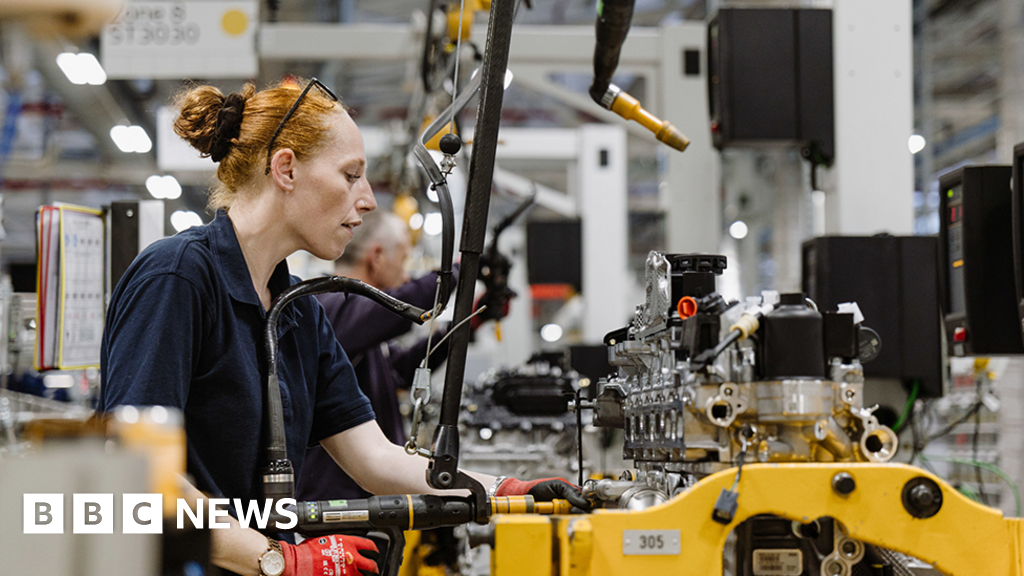
Jaguar Land Rover sees sales recover after cyber attack
-
Uncategorized1 week ago
[CinePlex360] Please moderate: “Trump signals p
-

 Entertainment7 days ago
Joe Jonas shares candid glimpse into parenthood with Sophie Turner
-

 Tech7 days ago
Our Favorite iPad Is $50 Off
-

 Sports6 days ago
UConn Final Four run could trigger a $50M furniture giveaway for Massachusetts-based Jordan’s Furniture
-

 Entertainment7 days ago
Blake Lively reacts to harassment claims dismissal against Justin Baldoni
-

 Politics7 days ago
Iran can sustain Strait of Hormuz closure for years, will cut US military logistics: Official
-
 Business1 week ago
Gold prices in Pakistan Today – April 3, 2026 | The Express Tribune