

Fashion
UK growth outlook cautious despite marginal CEI rebound


The Conference Board (TCB) Leading Economic Index (LEI) for the United Kingdom edged down by 0.1 per cent in October 2025 to 74.1 (2016=100), marking a second consecutive monthly decline after a similar fall in September. As a result, the UK LEI contracted by 0.8 per cent over the six-month period from April to October 2025.
The UK Leading Economic Index fell 0.1 per cent in October 2025, extending its decline and signalling continued weakness in forward-looking indicators.
Over six months, the LEI contracted 0.8 per cent, though less sharply than earlier in the year.
Meanwhile, the Coincident Economic Index rose marginally, but its six-month growth slowed sharply, indicating softer underlying economic momentum.
While this indicates continued softening in forward-looking economic signals, the pace of decline was notably slower than the 1.5 per cent contraction recorded between October 2024 and April 2025, suggesting some moderation in downside momentum, TCB said in a release.
In contrast, the Conference Board Coincident Economic Index (CEI) for the UK rose by 0.1 per cent in October 2025 to 108.1 (2016=100), reversing a 0.1 per cent decline in September. Despite this monthly improvement, overall growth in current economic activity remained subdued.
The CEI increased by just 0.2 per cent between April and October 2025, well below the 1 per cent expansion seen in the previous six-month period from October 2024 to April 2025.
Fibre2Fashion News Desk (HU)






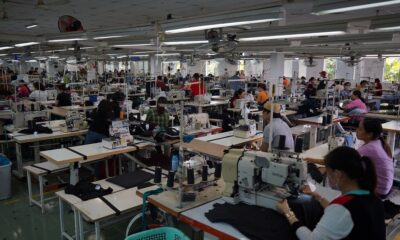






“President Trump’s leadership is forging a new direction for trade that promotes partnership and prosperity in Latin America, further strengthening the American economy, supporting American workers, and protecting our national security interests,” said Ambassador Greer in a USTR release.
USTR Jamieson Greer and Guatemala’s Minister of Economy Adriana Gabriela Garcia recently signed the US-Guatemala Agreement on Reciprocal Trade.
The agreement addresses trade barriers facing American workers and producers, expands and solidifies markets for US exports and strengthens strategic economic ties in the Western Hemisphere, Greer said.
US trade body NCTO welcomed the signing.
The agreement addresses trade barriers facing American workers and producers, expands and solidifies markets for US exports and strengthens strategic economic ties in the Western Hemisphere, he said.
“This agreement builds on our long-standing trade relationship and shared interest in reinforcing regional supply chains,” he added.
The key terms of the agreement includes breaking down non-tariff barriers for US industrial and exports, advancing trade facilitation and sound regulatory practices; protecting and enforcing intellectual property; preventing barriers for digital trade; improving labour standards; strengthening environmental protection; strengthening economic security alignment; and confronting state-owned enterprises and subsidies.
Guatemala has committed to take steps to restrict access to central level procurement covered by its free trade agreement commitments for suppliers from non-free trade agreement partners, permitting exemptions as necessary, in a manner comparable to US procurement restrictions.
Welcoming the announcement, National Council of Textile Organizations (NCTO) president and chief executive officer Kim Glas said the agreement marks an important step toward strengthening the US textile supply chain.
“Guatemala is a key partner in the CAFTA-DR [Dominican Republic-Central America-United States Free Trade Agreement] region, with nearly $2 billion in two-way textile and apparel trade. Together, the region operates as an integrated co-production platform that is essential to the US textile supply chain,” he noted.
The US-Western Hemisphere textile and apparel supply chain remains ‘a critical strategic alternative’ to China and other Asian producers, he added.
Fibre2Fashion (DS)

Canada could boost long-term economic output by nearly 7 per cent if it dismantles policy-related barriers that restrict the movement of goods, services, and labour across provinces, according to new analysis by the International Monetary Fund (IMF).
Despite being one of the world’s most open economies globally, Canada’s internal market remains fragmented, with non-geographic barriers equivalent to an average 9 per cent tariff nationwide.
Canada could raise long-term GDP by nearly 7 per cent by removing internal trade barriers that restrict interprovincial movement of goods, services, and labour, new analysis shows.
Policy-related frictions act like a 9 per cent internal tariff nationwide.
Liberalising high-impact sectors could deliver productivity-led gains worth about C$210 billion (~$153.04 billion).
Model-based estimates suggest that fully removing these barriers could add around C$210 billion (~$153.04 billion) to real GDP over time, driven largely by productivity gains rather than short-term demand, IMF said in a release.
While full liberalisation will be gradual, targeted reforms in high-impact sectors could deliver sizable benefits and improve economic resilience. Analysts argue that stronger federal–provincial coordination, wider mutual recognition of standards and credentials, and transparent benchmarking of internal trade barriers will be key to turning Canada’s fragmented domestic market into a more integrated national economy.
Fibre2Fashion News Desk (HU)
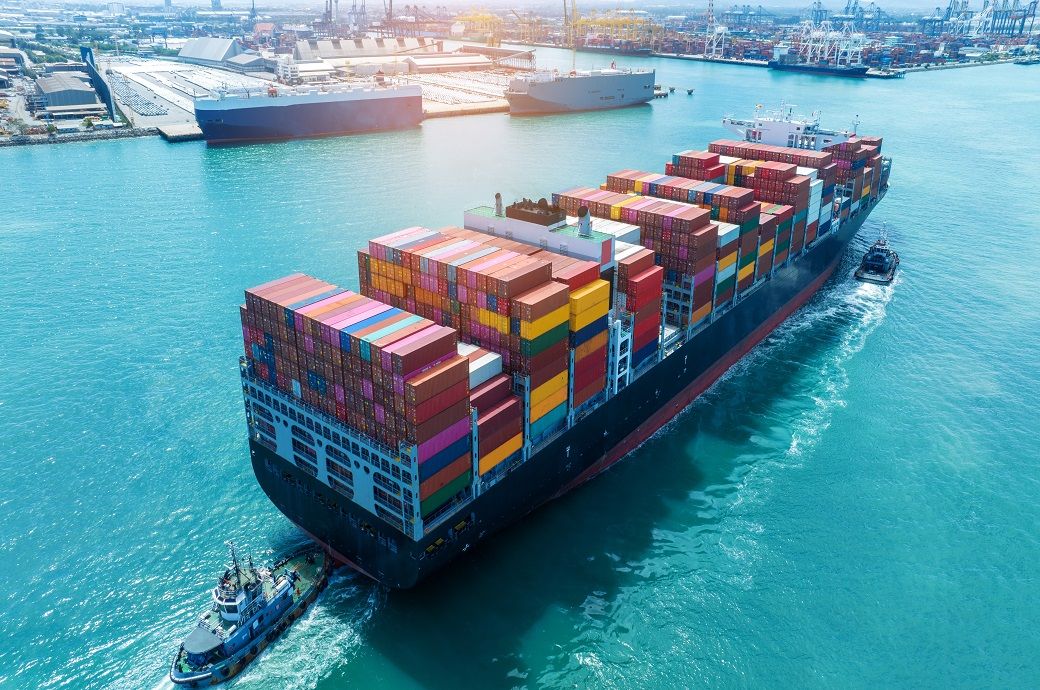
While rates initially jumped in early January, weak underlying demand and the potential return of vessels to the Suez Canal are creating a volatile environment for shippers, it noted.
Carriers pushed through general rate increases (GRIs) in early January this year, briefly lifting China-to-US West Coast rates above $3,000 per forty-foot equivalent unit (FEU). However, these hikes were largely unsustainable due to weak volumes, with rates quickly correcting to the $1,800-$2,200 range by mid-month, the logistics and supply chain market research firm said in an insights brief.
Asia’s ocean freight market is navigating short-term seasonal surges and long-term structural overcapacity, Ti said.
Asia’s air freight market is seeing a significant ‘post-peak’ correction following a record-breaking end to 2025.
Warehousing capacity in the Asia-Pacific is under severe strain in late January as manufacturing slows and labour shortages emerge ahead of the Lunar New Year.
Seasonal demand ahead of the Lunar New Year (starting mid-February 2026) has pushed North Europe rates to roughly $2,700 per FEU as of mid-January. This is a significant recovery from the October 2025 lows of $1,300 per FEU.
Despite a peak ahead of the holiday, Intra-Asia rates have begun to ‘cool’ in mid-January, settling at an average of $661 per 40-feet container as new services and capacity entered the market.
The Asian air freight market is witnessing a significant ‘post-peak’ correction following a record-breaking end to 2025. While rates have dropped sharply from their December highs, demand remains resilient in key high-tech sectors, and a ‘mini-peak’ is expected in late January ahead of the Lunar New Year.
Spot rates from major hubs like Hong Kong and Shanghai fell significantly in early January as year-end peak season demand evaporated.
Despite the rate correction, global air cargo tonnages jumped by 26 per cent in the first full week of January 2026 compared to the end-of-year slump, with the Asia-Pacific region seeing an 8 per cent year-on-year (YoY) increase in chargeable weight.
Volumes from Southeast Asia to the United States rose by 10 per cent YoY in early January, driven by importers continuing to diversify sourcing away from China.
Warehousing capacity in the Asia-Pacific is under severe strain in late January as manufacturing slows and labour shortages emerge ahead of the Lunar New Year.
India closed 2025 with 36.9 million sq ft of warehouse leasing (16-per cent YoY growth), a trend continuing into early 2026 with high demand in Delhi National Capital Region and Chennai.
After a period of oversupply, development pipelines are expected to drop by a third by 2027, making 2026 a critical ‘inflection point’ for occupiers to secure quality space before terms tighten again.
Fibre2Fashion (DS)


Fulham to revisit USMNT’s Ricardo Pepi transfer in summer – sources

Budget eases PF, ESI deduction rules for employers, allows relief for delayed deposits – The Times of India

Hollywood stars remember life and legacy of Catherine O’Hara

-

 Sports6 days ago
PSL 11: Local players’ category renewals unveiled ahead of auction
-

 Entertainment6 days ago
Claire Danes reveals how she reacted to pregnancy at 44
-

 Tech1 week ago
ICE Asks Companies About ‘Ad Tech and Big Data’ Tools It Could Use in Investigations
-
 Business6 days ago
Banking services disrupted as bank employees go on nationwide strike demanding five-day work week
-

 Fashion1 week ago
Spain’s apparel imports up 7.10% in Jan-Oct as sourcing realigns
-

 Sports6 days ago
College football’s top 100 games of the 2025 season
-

 Politics1 week ago
Fresh protests after man shot dead in Minneapolis operation
-

 Politics6 days ago
Trump vows to ‘de-escalate’ after Minneapolis shootings