

Fashion
UK introduces improvements to rules of origin under DCTS


These changes are designed to make it easier for eligible developing countries to trade with the UK by creating new regional cumulation groups for Africa and Asia; and make rules of origin for garment exports more flexible for enhanced preference tier countries.
The UK has introduced improvements to the rules of origin under the Developing Countries Trading Scheme.
These changes will make it easier for eligible developing countries to trade with the UK by creating new regional cumulation groups for Africa and Asia; and make rules of origin for garment exports more flexible for 16 enhanced preference tier countries.
Businesses in the United Kingdom and in DCTS partner countries can now benefit from the changes, which apply to goods imported to the former under the DCTS from January 1, 2026, a UK government release said.
The scheme was introduced on June 19, 2023, granting preferential market access to 65 developing countries.
For the first time, Africa has a DCTS regional cumulation group and the two Asia groups have been merged and expanded. This means businesses in DCTS countries can source inputs from a wider range of countries in the region, strengthening regional trade, the release said.
Comprehensive Preference tier countries, or least developed countries, in the Africa Regional Cumulation Group can now more easily source input from Association Agreement countries with the removal of case-by-case applications.
Enhanced preference countries in the Africa Regional Cumulation Group can source input from all African DCTS, Economic Partnership Agreement and Association Agreement countries.
Six additional countries—Afghanistan, Uzbekistan, Kyrgyzstan, Tajikistan, Mongolia and Timor-Leste—are now part of the DCTS Asia regional cumulation group for the first time.
All countries in the Asia Regional Cumulation Group can now benefit from one-way cumulation with Vietnam.
Sixteen Enhanced Preference tier countries will now be able to benefit from more flexible rules of origin on garments. Key changes include the ability to source up to cent per cent of inputs (depending on the garment) from other countries for further manufacture; fewer mandatory processing steps like dyeing, printing or bleaching; and only one significant manufacturing process must take place in a DCTS country.
These changes mean Enhanced Preference tier countries now follow the same product-specific rules for garments under Chapters 61 and 62 as Comprehensive Preference tier countries. This will also benefit LDCs that are due to graduate to the Enhanced Preference tier.
Fibre2Fashion (DS)











The Philippines’ economic growth for the third quarter (Q3) of 2025 has been revised slightly lower, with gross domestic product (GDP) expanding 3.9 per cent year on year (YoY), down from the preliminary estimate of 4 per cent.
Gross national income growth for the quarter was also revised to 5.4 per cent from 5.6 per cent, while net primary income from the rest of the world was adjusted to 16.2 per cent from 16.9 per cent.
The Philippine Statistics Authority has revised down the country’s third-quarter 2025 GDP growth to 3.9 per cent from an earlier estimate of 4 per cent.
Gross national income growth was also lowered to 5.4 per cent, while net primary income from abroad eased to 16.2 per cent.
The PSA said the adjustments reflect its standard, internationally aligned revision policy.
The Philippine Statistics Authority said the revisions were made in line with its approved revision policy, which follows international standards for national accounts updates.
Fibre2Fashion News Desk (HU)
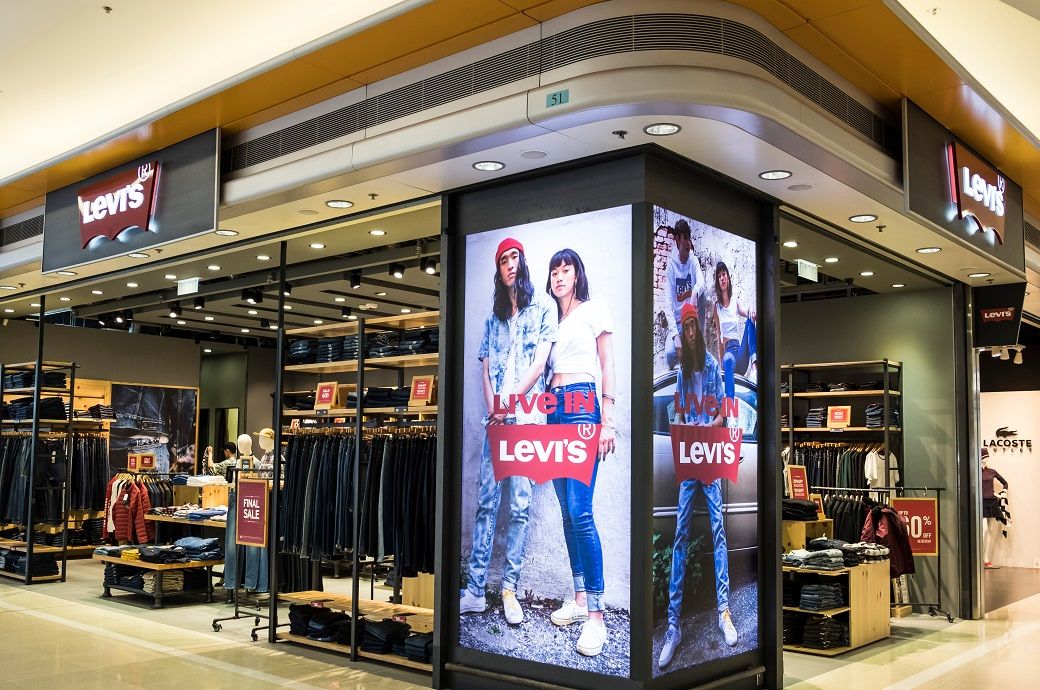
Operating margin improved sharply to 10.8 per cent from 4.4 per cent in FY24, while adjusted EBIT margin increased to 11.4 per cent from 10.7 per cent, marking the third consecutive year of margin expansion. The net income from continuing operations more than doubled to $502 million from $210 million, with adjusted net income rising to $537 million.
Levi Strauss & Co has delivered a strong FY25, with net revenues rising 4 per cent to $6.3 billion and organic growth of 7 per cent, alongside sharp margin expansion and higher profitability.
Q4 saw 5 per cent organic growth, led by Europe, Asia and DTC, which accounted for nearly half of revenues.
The company expects mid-single digit growth and further margin gains in FY26.
Diluted EPS from continuing operations increased to $1.26 from $0.52 in the previous year, while adjusted diluted EPS rose to $1.34 from $1.24. The company generated $530 million in operating cash flow and $308 million in adjusted free cash flow. The company returned $363 million to shareholders during the fiscal, up 26 per cent YoY, LS&Co said in a press release.
In the fourth quarter (Q4) ended November 30, 2025, the company reported net revenues of $1.8 billion, up 1 per cent on a reported basis and 5 per cent organically compared with Q4 FY24. Growth was broad-based, supported by strong momentum in Europe, Asia and Beyond Yoga, alongside high-single digit comparable growth in direct-to-consumer (DTC).
Europe recorded reported revenue growth of 8 per cent and organic growth of 10 per cent, while Asia delivered growth of 2 per cent reported and 4 per cent organically. In the Americas, revenues declined 4 per cent reported but increased 2 per cent organically, with the US business flat on an organic basis. Beyond Yoga continued to outperform, posting reported growth of 37 per cent and organic growth of 45 per cent.
DTC revenues increased 8 per cent on a reported basis and 10 per cent organically, driven by strength across all regions. E-commerce revenues rose 19 per cent reported and 22 per cent organically, with DTC accounting for 49 per cent of total quarterly revenues. Wholesale revenues declined 5 per cent reported and were flat organically.
Operating margin in the quarter was stable at 11.9 per cent, while adjusted EBIT margin declined to 12.1 per cent from 13.9 per cent a year earlier due to tariff-related pressure on gross margins and higher adjusted SG&A expenses. Gross margin stood at 60.8 per cent versus 61.8 per cent in Q4 FY24. Net income from continuing operations was $160 million, with diluted EPS of $0.4 and adjusted diluted EPS of $0.41.
“Over the past few years, we’ve taken bold steps towards becoming a DTC-first, head-to-toe denim lifestyle brand,” said Michelle Gass, president and CEO of Levi Strauss & Co. “We are well on our way toward realising our strategic ambitions. We have narrowed our focus, improved operational execution and built greater agility across the organisation. As a result, we’ve elevated the Levi’s brand and delivered faster growth and higher profitability as reflected by our Q4 and full year 2025 results. While we still have important work ahead, the company is at an inflection point—emerging as a stronger, more resilient global business ready to define the next chapter of LS&Co.”
“We are sustaining our momentum, delivering 5 per cent organic growth in the fourth quarter on top of 8 per cent growth in the prior year. Our success in denim lifestyle has enabled us to expand our addressable market, positioning us for mid-single digit growth in 2026 and beyond,” said Harmit Singh, chief financial and growth officer of Levi Strauss & Co. “Our disciplined approach to converting growth into profitability has improved adjusted EBIT margin again in 2025 for the third year in a row, and we are on track to expand margins further as we strive toward 15 per cent. Our confidence in this trajectory is reflected in a new $200 million ASR program.”
Looking ahead, the company expects mid-single digit revenue growth in fiscal 2026 alongside further adjusted EBIT margin expansion, supported by continued DTC momentum, disciplined cost management and ongoing brand strength, added the release.
Fibre2Fashion News Desk (SG)
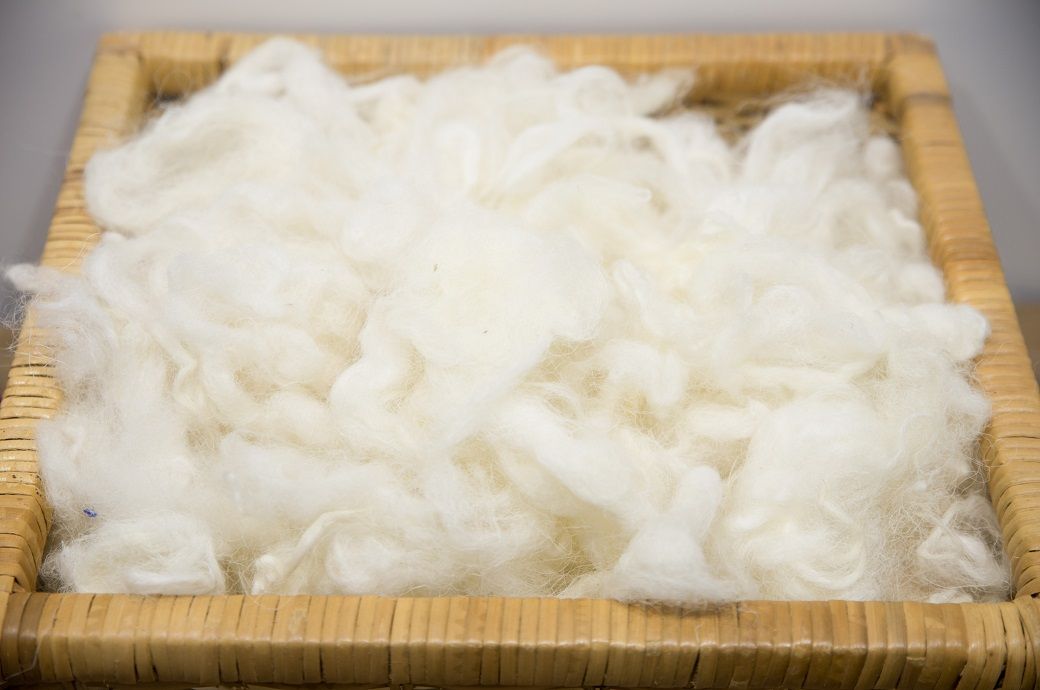
Australia’s wool market eased in AUD terms this week, driven mainly by currency strength rather than weaker demand.
The EMI fell to 1,665 ac/kg, but USD prices rose, with the EMI reaching its highest level since July 2019.
Merino prices softened, cardings firmed, and clearance rates stayed healthy.
A strong offering of 40,480 bales is due next week.
Source link


Philippines revises Q3 2025 GDP growth down to 3.9%

New Income Tax Act 2025 to come into effect from April 1, key reliefs announced in Budget 2026

Budget 2026 Live Updates: TCS On Overseas Tour Packages Slashed To 2%; TDS On Education LRS Eased

-
 Business1 week ago
Success Story: This IITian Failed 17 Times Before Building A ₹40,000 Crore Giant
-

 Fashion1 week ago
South Korea tilts sourcing towards China as apparel imports shift
-

 Sports5 days ago
PSL 11: Local players’ category renewals unveiled ahead of auction
-

 Sports1 week ago
Wanted Olympian-turned-fugitive Ryan Wedding in custody, sources say
-

 Entertainment1 week ago
Three dead after suicide blast targets peace committee leader’s home in DI Khan
-

 Tech1 week ago
Strap One of Our Favorite Action Cameras to Your Helmet or a Floaty
-

 Tech1 week ago
This Mega Snowstorm Will Be a Test for the US Supply Chain
-

 Sports1 week ago
Storylines shaping the 2025-26 men’s college basketball season