

Tech
UK Navy deters Russian submarines near critical undersea cables | Computer Weekly


The Royal Navy has deterred Russian submarines identified in the vicinity of undersea cables and other critical under water infrastructure.
A Russian attack submarine and specialist submarines from Russian’s Main Directorate for Deep-Sea Research (Gugi), were involved in the operation.
The vessels were designed to survey undersea infrastructure during peacetime and to sabotage it in conflict, defence secretary John Healey said today.
The Ministry of Defence said that it would not confirm the nature of the cables in the vicinity of the Russian submarines.
But Healey said that undersea communications cables were essential for digital communications that underpin international trade.
“Subsea fiber optic cables are essential for all digital communications, with over 99% of international data, including voice calls and internet data, travelling through undersea cables. This underpins global banking, trade and communications,” he added.
The incident follows concerns raised by MPs and peers that internet and communications cables linking the UK are vulnerable to sabotage attempts.
Distraction operation
British aircraft and warships identified and tracked a Russian Akula attack submarine entering international waters north of the UK several weeks ago.
The Royal Navy deployed a Type 23 frigate and Merlin helicopters to monitor the attack submarine near British territorial waters.
The submarine was intended as a distraction from operations by Russian undersea naval units from Gugi operating near critical undersea infrastructure elsewhere.
The UK worked with Norway and other allies to monitor the Russian deep sea underwater research vessels.
“Our aircraft flew over 450 hours. Our frigate covered several thousand nautical miles. 500 British personnel were involved in the response,” said Healey.
“To President Putin, I say this: we see you, we see your activity over our cables and pipelines. And you should know that any attempt to damage them will not be tolerated, and will have serious consequences”.
The Gugi units and the Akula class submarine retreated back home having failed to complete their operation in secrecy, the Ministry of Defence said.
Russian spy ship Yantar gathered intelligence
The UK has seen a 30% increase in Russian vessels threatening UK waters over the last two years, according to the Ministry of Defence.
The Russian spy ship Yantar, was tracked by a warship and RAF P8 planes after it tested British defences last year.
The ship was observed in January 2025 “gathering intelligence and mapping the UK’s critical underwater infrastructure”.
In returned to British UK waters in November, when it was tracked by a Royal Navy Frigate and RAF planes.
MPs say UK needs to do more
A cross-party group of MPs and peers warned last year that the UK has “been too timid” in defending the undersea internet cable network from potential attacks by Russia.
The UK is a global hub for internet traffic, and almost entirely reliant on subsea cables to exchange data with other countries.
It has about 62 subsea cables, roughly 50 of which are thought to be active, linking it to rest of the world. They provide resilience if some are deliberately or accidentally damaged. Additional cables run through the Channel Tunnel.
Threats increasing
Healey said that the UK’s undersea network is highly resilient but that threats were increasing.
He said that UK was investing £100 million in P8 submarine hunting aircraft and had launched the Atlantic Bastion programme, which is funding the development of anti-submarine sensing technology.
The UK has signed the Luna House agreement with Norway, to protect critical infrastructure in the North Sea, through a joint fleet of ships.
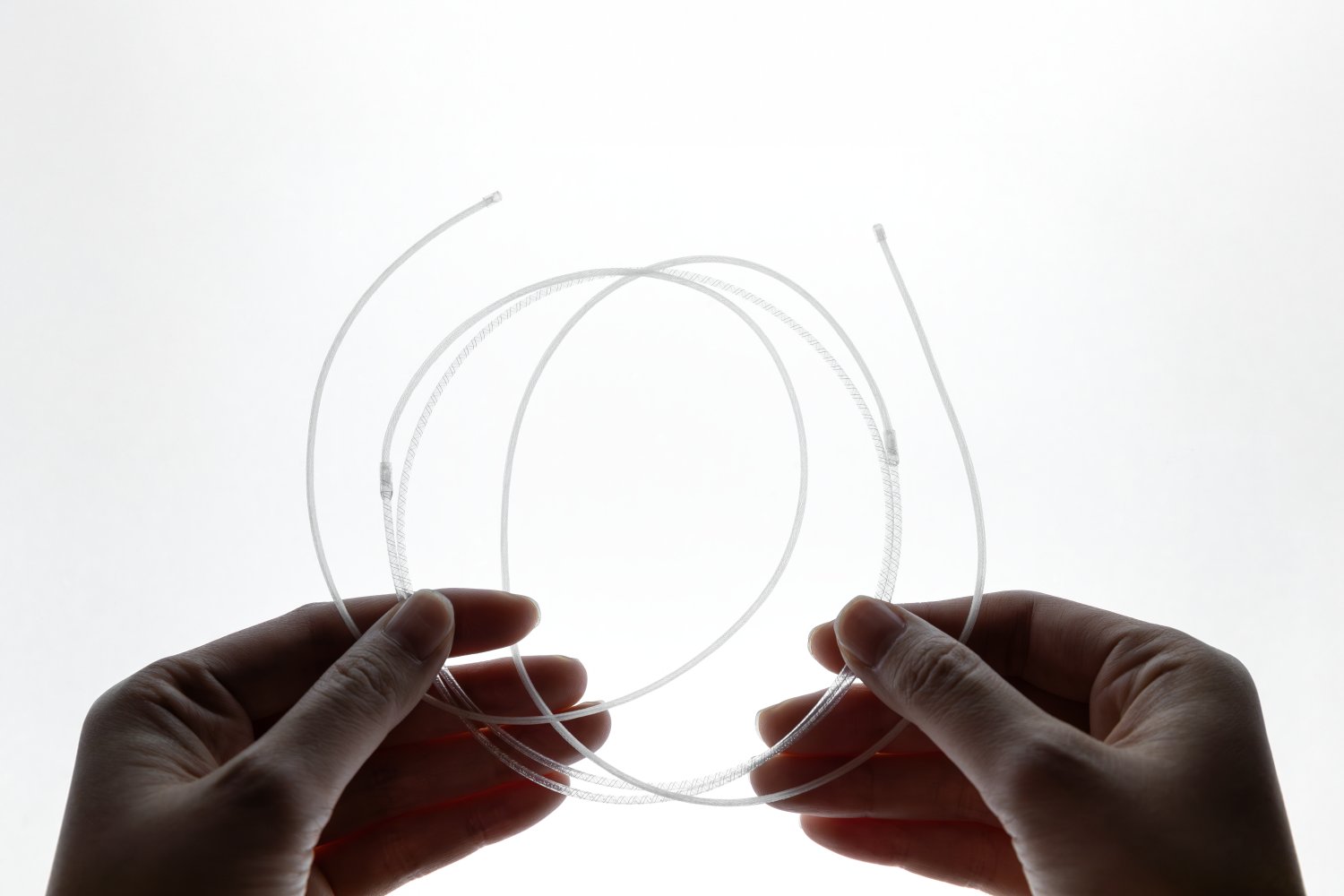
Muscles are remarkably effective systems for generating controlled force, and engineers developing hardware for robots or prosthetics have long struggled to create analogs that can approach their unique combination of strength, rapid response, scalability, and control. But now, researchers at the MIT Media Lab and Politecnico di Bari in Italy have developed artificial muscle fibers that come closer to matching many of these qualities.
Like the fibers that bundle together to form biological muscles, these fibers can be arranged in different configurations to meet the demands of a given task. Unlike conventional robotic actuation systems, they are compliant enough to interface comfortably with the human body and operate silently without motors, external pumps, or other bulky supporting hardware.
The new electrofluidic fiber muscles — electrically driven actuators built in fiber format — are described in a recent paper published in Science Robotics. The work is led by Media Lab PhD candidate Ozgun Kilic Afsar; Vito Cacucciolo, a professor at the Politecnico di Bari; and four co-authors.
The new system brings together two technologies, Afsar explains. One is a fluidically driven artificial muscle known as a thin McKibben actuator, and the other is a miniaturized solid-state pump based on electrohydrodynamics (EHD), which can generate pressure inside a sealed fluid compartment without moving parts or an external fluid supply.
Until now, most fluid-driven soft actuators have relied on external “heavy, bulky, oftentimes noisy hydraulic infrastructure,” Afsar says, “which makes them difficult to integrate into systems where mobility or compact, lightweight design is important.” This has created a fundamental bottleneck in the practical use of fluidic actuators in real-world applications.
The key to breaking through that bottleneck was the use of integrated pumps based on electrohydrodynamic principles. These millimeter-scale, electrically driven pumps generate pressure and flow by injecting charge into a dielectric fluid, creating ions that drag the fluid along with them. Weighing just a few grams each and not much thicker than a toothpick, they can be fabricated continuously and scaled easily. “We integrated these fiber pumps into a closed fluidic circuit with the thin McKibben actuators,” Afsar says, noting that this was not a simple task given the different dynamics of the two components.
A key design strategy was to pair these fibers in what are known as antagonistic configurations. Cacucciolo explains that this is where “one muscle contracts while another elongates,” as when you bend your arm and your biceps contract while your triceps stretch. In their system, a millimeter-scale fiber pump sits between two similarly scaled McKibben actuators, driving fluid into one actuator to contract it while simultaneously relaxing the other.
“This is very much reminiscent of how biological muscles are configured and organized,” Afsar says. “We didn’t choose this configuration simply for the sake of biomimicry, but because we needed a way to store the fluid within the muscle design.” The need for an external reservoir open to the atmosphere has been one of the main factors limiting the practical use of EHD pumps in robotic systems outside the lab. By pairing two McKibben fibers in line, with a fiber pump between them to form a closed circuit, the team eliminated that need entirely.
Another key finding was that the muscle fibers needed to be pre-pressurized, rather than simply filled. “There is a minimum internal system pressure that the system can tolerate,” Afsar says, “below which the pump can degrade or temporarily stop working.” This happens because of cavitation, in which vapor bubbles form when the pressure at the pump inlet drops below the vapor pressure of the liquid, eventually leading to dielectric breakdown.
To prevent cavitation, they applied a “bias” pressure from the outset so that the pressure at the fiber pump inlet never falls below the liquid’s vapor pressure. The magnitude of this bias pressure can be adjusted depending on the application. “To achieve the maximum contraction the muscle can generate, we found there is a specific bias pressure range that is optimal,” she says. “If you want to configure the system for faster response, you might increase that bias pressure, though with some reduction in maximum contraction.”
Cacucciolo adds that most of today’s robotic limbs and hands are built around electric servo motors, whose configuration differs fundamentally from that of natural muscles. Servo motors generate rotational motion on a shaft that must be converted into linear movement, whereas muscle fibers naturally contract and extend linearly, as do these electrofluidic fibers.
“Most robotic arms and humanoid robots are designed around the servo motors that drive them,” he says. “That creates integration constraints, because servo motors are hard to package densely and tend to concentrate mass near the joints they drive. By contrast, artificial muscles in fiber form can be packed tightly inside a robot or exoskeleton and distributed throughout the structure, rather than concentrated near a joint.”
These electrofluidic muscles may be especially useful for wearable applications, such as exoskeletons that help a person lift heavier loads or assistive devices that restore or augment dexterity. But the underlying principles could also apply more broadly. “Our findings extend to fluid-driven robotic systems in general,” Cacucciolo says. “Wherever fluidic actuators are used, or where engineers want to replace external pumps with internal ones, these design principles could apply across a wide range of fluid-driven robotic systems.”
This work “presents a major advancement in fiber-format soft actuation,” which “addresses several long-standing hurdles in the field, particularly regarding portability and power density,” says Herbert Shea, a professor in the Soft Transducers Laboratory at Ecole Polytechnique Federale de Lausanne in Switzerland, who was not associated with this research. “The lack of moving parts in the pump makes these muscles silent, a major advantage for prosthetic devices and assistive clothing,” he says.
Shea adds that “this high-quality and rigorous work bridges the gap between fundamental fluid dynamics and practical robotic applications. The authors provide a complete system-level solution — characterizing the individual components, developing a predictive physical model, and validating it through a range of demonstrators.”
In addition to Afsar and Cacucciolo, the team also included Gabriele Pupillo and Gennaro Vitucci at Politecnico di Bari and Wedyan Babatain and Professor Hiroshi Ishii at the MIT Media Lab. The work was supported by the European Research Council and the Media Lab’s multi-sponsored consortium.

Candace Owens spent years building a pro-MAGA audience by supporting President Donald Trump. Now, she’s calling for his removal from office.
Over the past few months, right-wing media figures like Owens have broken with Trump on a number of issues, including the Epstein files and the administration’s intervention in Venezuela. But the fracturing among the MAGA media coalition appears to have reached the point of no return after the president’s threats to annihilate “a whole civilization” in Iran this week.
“The 25th amendment needs to be invoked,” Owens wrote Tuesday on X. “He is a genocidal lunatic. Our Congress and military need to intervene. We are beyond madness.”
Owens is one of several right-wing media figures calling for Trump’s removal. Former congressperson Marjorie Taylor Greene also called for invoking the 25th Amendment, referring to Trump’s actions in Iran as “evil and madness.” Alex Jones urged Trump’s ouster on his InfoWars program on Tuesday, asking a guest “how do we 25th amendment his ass?” On an episode of Joe Rogan’s podcast last week, comedian Theo Von, who hosted Trump on his own show in 2024, called the US and Israel “fucking terrorists.” “It is vile on every level,” former Fox News pundit Tucker Carlson said during his show on Monday, referring to Trump’s recent Truth Social posts about Iran. The red-pill streamer Sneako wrote, “I miss Joe Biden” on X last week.
This pushback from major right-wing figures has fractured the MAGA media coalition even further; seemingly in response, a handful of pro-Trump stalwarts have called on the Justice Department to investigate American influencers for taking foreign money without disclosing it. The conservative activist Laura Loomer called posts from Owens “the most obvious foreign influence operation ever” before urging a DOJ investigation on Tuesday.
“The DOJ can investigate me all they want, Larry—they won’t find a thing,” Candace Owens posted in reply to Loomer on Wednesday.
Jack Posobiec, a prominent Pizzagate conspiracy theory promoter, echoed Loomer’s calls for an investigation. Benny Johnson, a former Turning Point USA contributor, wrote on X that he would “welcome” an investigation. (In 2024, the Justice Department alleged that Tenet Media, an online media company that produced shows for Johnson and other high-profile influencers, was largely funded by Russian state-backed news network RT. Johnson, whom the US government did not accuse of wrongdoing, issued a statement at the time denying awareness of the alleged Russian influence scheme and portraying himself as a victim.)
Throughout Trump’s second term in office, the administration has frequently worked with creators to push its messaging online. Last fall, the Pentagon revoked press credentials from mainstream outlets, replacing them with creators like Loomer and Cam Higby. While many of these creators have attended recent Pentagon press briefings, the White House hasn’t seemingly been in touch on messaging about the war in Iran.
“There is/was none,” one source familiar with the Republican influencer pipeline tells WIRED about the administration not reaching out to creators about Iran. “The online right wasn’t supportive, and there wasn’t anything that was going to change that. The best they could hope for is silence.”

Within the app, you can add safe zones, more pets with Fi trackers, and other users who can also track and monitor the pet. There’s a Health tab where you can add and store things like vet records, receipts, and insurance information, and add vets to easily share your pet’s documents and get appointment reminders. You can also set up the Fi app on your Apple Watch to have even quicker access to monitor your pet’s location, activity, and safety (including Lost Mode) without needing a phone.
When you open the app, you’ll see a map with live tracking showing where your pet is currently, as well as a notification of the last time they were outside and where they were. With the latter, you can pull up stats like location timeline, showing where they were and when. If you dive into any day when the tracker left the home, it will recreate the route, following the path and calculating the distance the pet traveled.
There’s also health-monitoring data from activity and sleep tracking, which is most useful for an indoor-only pet like mine. Like other health-tracking collars, stats for sleep and activity aren’t 100 percent accurate, as the app uses GPS to track movement, categorizing “activity” when the animal is moving and “sleep” when the pet is still for a prolonged period. This means that if Basil was awake but stationary, the app may inaccurately categorize this as sleep.
Fi Mini App source Molly Higgins
In the Rest tab, you can see sleep metrics, including a daily summary of deep sleep, naps, and interruptions during nightly sleep. You can compare this over time, and the app notes how much more or less Basil slept than the night before. It also compares stats historically, by week, month, and year, so you can track trends and better understand your pet’s normal sleep schedule.
The Activity tab is similar, tracking activity by day, week, and month, noting in the day’s timeline when the pet was most active and for how long. This also compares activity to the day before. I liked looking at the weekly report, comparing days during the week to see which he was most active during and if any patterns in activity popped up.
For example, I noticed that his sleep-versus-activity schedule was similar to mine, except he was active between 4:45 and 6:30 am (while I was still asleep), because that’s when his automatic feeder goes off for breakfast and my roommate is getting ready to leave for work. He was most active in the evenings, when I feed him dinner, have dedicated playtime, and my roommates are home, so there’s more activity to keep him awake. Historical comparison is also a super helpful way to track whether your pet is sleeping more or becoming more lethargic—an early warning sign of a bigger health problem.
Not Without Its Quirks
Since my cat is indoor-only, I ran some experiments to track location, using GPS on both the Fi Mini tracker and my phone. I also had a friend take the tracker out without my phone nearby to see whether I’d get pinged that “Basil” had left the safe zone.
Although it is better than not being alerted at all, the Fi’s GPS has limitations (as did the Tractive tracker I tested). It needs a strong signal to communicate with cell towers for accurate location. If your phone is close to the smart collar (via Bluetooth), it uses that instead of the Fi’s GPS, making it more accurate and alerting quicker. If the pet gets loose and is out of range of your phone, it uses the collar’s cellular antenna (in this case, Verizon cell towers). But because the Fi’s antenna isn’t as strong as a phone’s, location accuracy is lower, and the connection can be very spotty, especially if your pet is in the country or on acreage where cell towers are farther away.


Olympic gold winner dismisses athletes’ negative comments on representing US: ‘I think we’re the best country’

OpenAI pauses UK investment deal over energy costs and regulation
[CinePlex360] Please moderate: “Sensex gains fo

-
 Business1 week ago
Jaguar Land Rover sees sales recover after cyber attack
-
Uncategorized7 days ago
[CinePlex360] Please moderate: “Trump signals p
-

 Entertainment6 days ago
Joe Jonas shares candid glimpse into parenthood with Sophie Turner
-

 Tech6 days ago
Our Favorite iPad Is $50 Off
-

 Fashion1 week ago
China’s Anta Sports posts record $11.62 bn revenue in 2025
-

 Politics6 days ago
Iran can sustain Strait of Hormuz closure for years, will cut US military logistics: Official
-

 Sports6 days ago
UConn Final Four run could trigger a $50M furniture giveaway for Massachusetts-based Jordan’s Furniture
-
 Business6 days ago
Video: Why Is the Labor Market Stuck?