

Fashion
UK non-food prices fall again but business rate change may drive inflation and cost jobs says BRC


Published
October 28, 2025
UK shop price inflation fell in the first week of October bringing some relief for hard-pressed consumers, the new BRC-NIQ Shop Price Monitor showed on Tuesday.
But the news came at the same time as a warning that UK retail jobs are at risk from potential tax rises.
First those inflation figures. Overall shop price inflation fell to 1% year on year this month. That’s lower than the 1.4% seen in September and the three-month average of 1.1%.
Specific non-food inflation was actually deflation as it has been for some time. And it accelerated as prices fell more than in September (-0.4% this time rather than -0.1%).
Helen Dickinson, chief executive of the BRC, said: “Overall shop price inflation slowed in October, driven by fierce competition among retailers and widespread discounting. Discounts came early to electricals and health & beauty, as retailers started promotions ahead of Black Friday month.
“The IMF recently warned that UK inflation will be the highest in the G7. With the Budget less than a month away, the Chancellor has an opportunity to relieve some of the pressures that are keeping the cost of essentials high.”
And that leads us on to the warning of potential job losses if the forthcoming Autumn Budget hammers retailers.
The British Retail Consortium (BRC) and UK Hospitality have raised concerns over plans to make superstores and other large businesses pay higher business rates.
They said hundreds of sites could close, potentially costing 120,000 jobs.
The changes are designed to give the government room to reduce the burden on smaller businesses and it has said they’ll mean a boost for city centres.
But owners of larger businesses have said it may do the opposite as some major ‘anchor’ sites — particularly large supermarkets and department stores — may close.
Helen Dickinson said ministers should agree to an exemption from higher business rates for retailers to “safeguard hundreds of anchor stores and the vital jobs they sustain”.
She explained that the proposed changes would also added to inflation: “Labour’s promised business rates reform must deliver a meaningful cut to retailers’ rates bills, and ensure that no store pays more. Rising employer National Insurance Contributions and a new packaging tax have directly contributed towards rising inflation, according to the Bank of England. Adding further taxes on retail businesses would inevitably keep inflation higher for longer.”
Copyright © 2025 FashionNetwork.com All rights reserved.
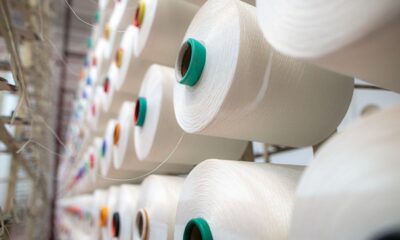



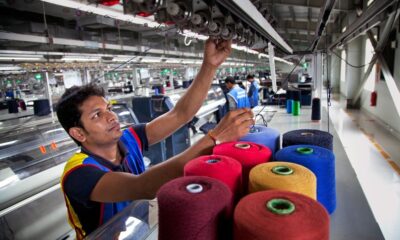





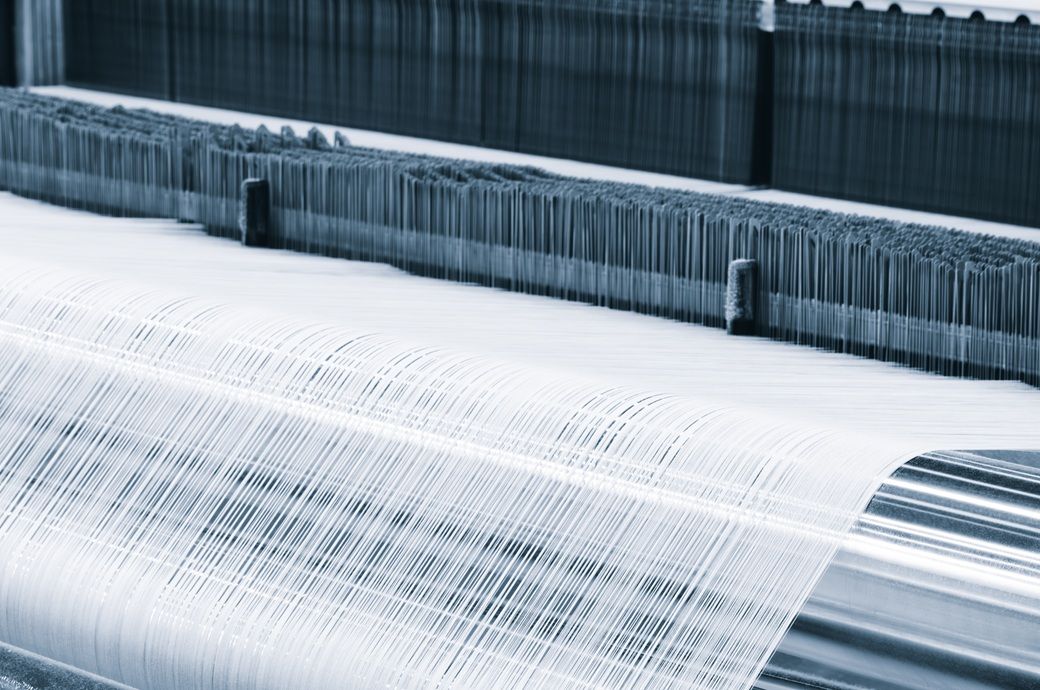
Stäubli will showcase innovative solutions designed to empower mills to produce the next generation of advanced fabrics.
Stäubli will showcase advanced weaving solutions at Techtextil 2026, highlighting technologies for high-performance technical textiles such as 3D composites and industrial fabrics.
Key exhibits include the MAGMA tying machine, TF series weaving systems, and UNIVAL Jacquard, enabling precision, efficiency, and flexibility for next-generation applications.
Stäubli will exhibit its trend-setting technologies at the Swiss Pavilion Booth B01.6 in Hall 12.0.
Technical Textiles: A market accelerating toward high-performance innovation
The global rise in demand for reinforcement fabrics, multilayer structures, 3D composites, and high value industrial textiles is reshaping manufacturing expectations. Reliable equipment, flexible weaving architectures, and precise material handling have become essential for weaving mills pursuing new applications and higher performance products. This expansion underscores the critical role of advanced weaving solutions in meeting evolving industry needs. Stäubli’s decades long know how in technical weaving positions the company as a key contributor to this transition.
Stäubli weaving systems are widely used to produce demanding technical fabrics — from lightweight reinforcement materials, OPW airbags, to filtration fabrics, medical textiles, and specialized industrial materials.
By combining cutting edge mechanical engineering, advanced electronic control, and long term customer support, Stäubli ensures stable performance and high fabric quality across all applications.
Stäubli Solutions to discover at Techtextil 2026
At this year’s edition, Stäubli will display its MAGMA Tying Machine, a robust and high efficiency solution specifically engineered to handle the increasingly diverse and demanding yarns used in today’s technical textile applications, including polypropylene tapes and other challenging filament structures. MAGMA delivers consistent tying quality while reducing the downtime traditionally associated with warp changes.
Stäubli will also present its TF series weaving machines, engineered for the production of advanced 3D, multilayer, and high performance fabrics using demanding materials such as carbon, glass, and aramid fibers.
- The TF20 offers high-speed capability and a double rapier option, increasing output for industries requiring lightweight composite reinforcements.
- The TF30 ensures gentle yarn handling while supporting highly sophisticated weave structures, making it ideal for aerospace grade and industrial textiles.
Part of our other solutions for technical textile, the UNIVAL 100 electronic Jacquard machine provides unparalleled flexibility for weaving complex and sophisticated technical fabrics. Featuring individually controlled harness cords and exceptional motion precision, the UNIVAL 100 is particularly suited for 3D weaving and the processing of demanding materials such as glass and carbon fibers.
The Jacquard machine LX 2494 is ideal for weaving technical fabrics on all types of weaving machines. Very robust and wear-resistant, it opens new avenues in heavy fabrics and is designed for many years of daily use with a minimum of maintenance. The Stäubli M6T 3-position module principle makes the machine particularly compact, and plays an important role in exploiting its performance potential.
Stäubli’s heavy dobbies deliver the power and precision required for weaving complex, high tension structures in technical and industrial fabrics. Designed for demanding applications, they ensure exceptional shedding accuracy, stable high speed performance, and long term mechanical reliability.
Discover Stäubli’s weaving technologies at Swiss Pavilion Booth B01.6 in Hall 12.0 during Techtexil 2026
Note: The headline, insights, and image of this press release may have been refined by the Fibre2Fashion staff; the rest of the content remains unchanged.
Fibre2Fashion News Desk (MS)
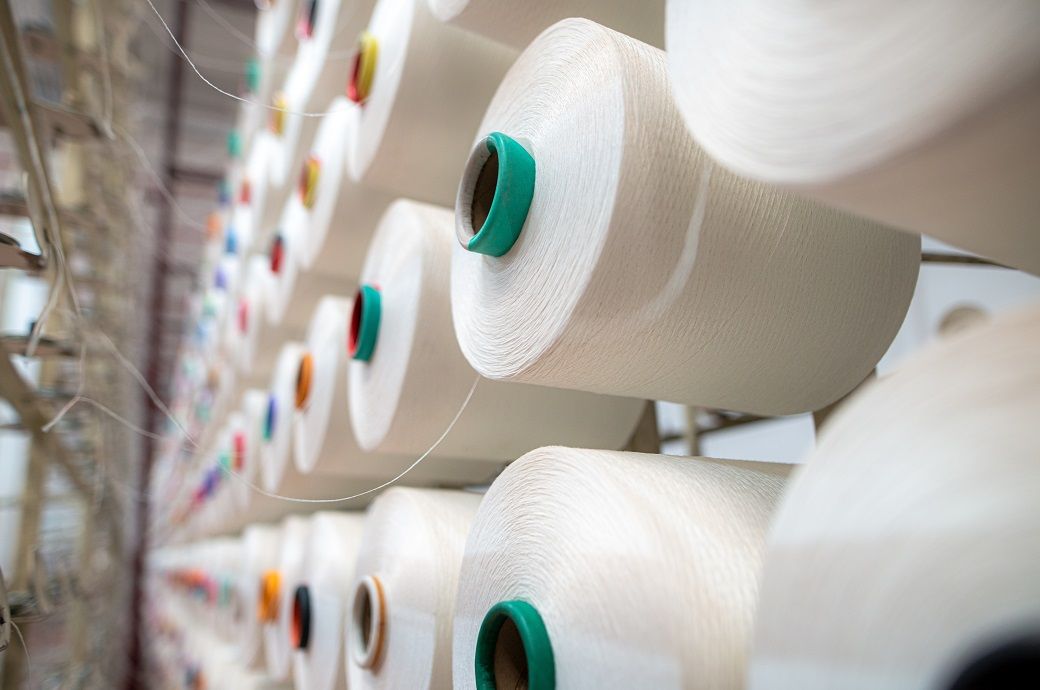
The investigation, initiated in March ****, covered the period from October **** to September **** and was based on a petition filed by Indorama India Private Limited. The authority found that dumped imports from the subject countries had caused material injury to the domestic industry, as per notification issued in this regard by the DGTR.
The product under consideration includes elastomeric filament yarn of all deniers, commonly known as spandex or elastane, widely used in stretch garments such as hosiery, activewear and innerwear. However, certain categories have been excluded, including coloured yarn (except black), elastomeric yarn on beam, LYCRA branded products, and yarn used in diapers.

The ten-year strategy is the result of almost a year of industry consultation led by the AFC and R.M.Williams, including 14 national consultations with manufacturers, brands, educators and policymakers across the country. More than 300 stakeholders contributed to the process, generating over 1,000 proposed initiatives and nearly 900 votes on strategic priorities to shape the sector’s long-term manufacturing future.
The Australian Fashion Council and R.M.Williams have launched the National Manufacturing Strategy for Australian Fashion and Textiles 2026–2036, a ten-year roadmap to rebuild Australia’s textile, clothing and footwear manufacturing.
Developed through national industry consultations, it aims to strengthen domestic capability, advanced manufacturing and fibre value chains.
The strategy comes at a critical time for the industry. With 97 per cent of Australia’s clothing and textile products manufactured offshore, the sector remains vulnerable to ongoing global supply disruptions and trade volatility. Rather than compete against high-volume offshore manufacturing markets, the strategy is focussed on closing structural gaps and accelerating advanced manufacturing to scale the sector’s comparative advantage, aiming to position Australia to compete globally in premium, technology-enabled and traceable production, built on the country’s natural fibre strengths, AFC said in a press release.
Independent modelling by RMIT University and RPS projects that full implementation of the Strategy’s co-ordinated policy platform will grow TCF manufacturing value added from $2.6 billion to $2.9 billion by 2030/31, delivering a cumulative $1.4 billion economic dividend over five years. The Strategy is also projected to create more than 1,000 new skilled jobs and $864 million in additional wages, with approximately half of those jobs are projected to be filled by women.
“This Strategy sets out a clear roadmap for rebuilding a globally competitive Australian fashion and textile manufacturing sector. Australia already has exceptional design talent, advanced manufacturing capability and globally recognised brands. With the right coordination across industry, skills and procurement policy, we have a real opportunity to strengthen sovereign capability, create skilled jobs and position Australia as a leader in premium manufacturing,” said Marianne Perkovic, executive chair, Australian Fashion Council.
“Australia is the world’s largest exporter of greasy wool and a globally significant cotton producer. Yet we export raw fibre and import finished goods at multiples of the original value. Re-establishing fibre processing and spinning capability restores the missing link in our value chain,” Samantha Delgos, general manager, Australian Fashion Council said.
“R.M.Williams has manufactured in Adelaide for more than 90 years. We employ skilled craftspeople, invest in apprentices and continue to modernise production while competing globally. What’s needed now is to activate a flywheel: demand enables investment in skills, skills enable advanced manufacturing, and technology allows Australian manufacturers to scale while maintaining quality,” Tara Moses, chief operating officer, R.M.Williams.
The strategy will be led by the Australian Fashion Council and its progress will be evaluated through a two-stage assessment framework.
The first stage, the Implementation Review (to 2029), will assess progress in establishing the key foundations of the strategy, including procurement reform, national capability mapping, skills recognition pilots, shared manufacturing infrastructure, and governance arrangements to co-ordinate delivery. The second stage, the Strategic Outcomes Review (to 2036), will evaluate long-term progress toward the strategy’s goal of building a competitive, technology-enabled, and domestically anchored manufacturing sector supported by a sustainable workforce pipeline and a globally recognised market position.
Fibre2Fashion News Desk (RR)


Stäubli to showcase advanced weaving solutions at Techtextil 2026

Israel launches new wave of strikes on Iran as crisis deepens

India may impose up to $2/kg anti-dumping duty on spandex yarn

Stock market crash today (March 12, 2026): Nifty50 opens below 23,600; BSE Sensex down over 900 points on continuing US-Iran war – The Times of India

UK’s Topshop unveils Tolu Coker capsule collection

US ignites Iran war, but Gulf Arab states pay the price | The Express Tribune

-
Business1 week ago
Stock market crash today (March 12, 2026): Nifty50 opens below 23,600; BSE Sensex down over 900 points on continuing US-Iran war – The Times of India
-
Business1 week ago
US ignites Iran war, but Gulf Arab states pay the price | The Express Tribune
-
 Fashion1 week ago
UK’s Topshop unveils Tolu Coker capsule collection
-

 Fashion1 week ago
India’s textile recycling market may reach $3.5 bn by 2030: Report
-
 Tech1 week ago
Meta Developed 4 New Chips to Power Its AI and Recommendation Systems
-
 Business1 week ago
8th Pay Commission: How Much Will Central Govt Employees’ Salaries Rise? What We Know So Far
-

 Sports1 week ago
Bangladesh crush Pakistan in ODI series opener | The Express Tribune
-

 Entertainment1 week ago
Ed Sheeran makes surprising Benny Blanco confession after hygiene uproar