

Fashion
UK non-food prices fall again but business rate change may drive inflation and cost jobs says BRC


Published
October 28, 2025
UK shop price inflation fell in the first week of October bringing some relief for hard-pressed consumers, the new BRC-NIQ Shop Price Monitor showed on Tuesday.
But the news came at the same time as a warning that UK retail jobs are at risk from potential tax rises.
First those inflation figures. Overall shop price inflation fell to 1% year on year this month. That’s lower than the 1.4% seen in September and the three-month average of 1.1%.
Specific non-food inflation was actually deflation as it has been for some time. And it accelerated as prices fell more than in September (-0.4% this time rather than -0.1%).
Helen Dickinson, chief executive of the BRC, said: “Overall shop price inflation slowed in October, driven by fierce competition among retailers and widespread discounting. Discounts came early to electricals and health & beauty, as retailers started promotions ahead of Black Friday month.
“The IMF recently warned that UK inflation will be the highest in the G7. With the Budget less than a month away, the Chancellor has an opportunity to relieve some of the pressures that are keeping the cost of essentials high.”
And that leads us on to the warning of potential job losses if the forthcoming Autumn Budget hammers retailers.
The British Retail Consortium (BRC) and UK Hospitality have raised concerns over plans to make superstores and other large businesses pay higher business rates.
They said hundreds of sites could close, potentially costing 120,000 jobs.
The changes are designed to give the government room to reduce the burden on smaller businesses and it has said they’ll mean a boost for city centres.
But owners of larger businesses have said it may do the opposite as some major ‘anchor’ sites — particularly large supermarkets and department stores — may close.
Helen Dickinson said ministers should agree to an exemption from higher business rates for retailers to “safeguard hundreds of anchor stores and the vital jobs they sustain”.
She explained that the proposed changes would also added to inflation: “Labour’s promised business rates reform must deliver a meaningful cut to retailers’ rates bills, and ensure that no store pays more. Rising employer National Insurance Contributions and a new packaging tax have directly contributed towards rising inflation, according to the Bank of England. Adding further taxes on retail businesses would inevitably keep inflation higher for longer.”
Copyright © 2025 FashionNetwork.com All rights reserved.












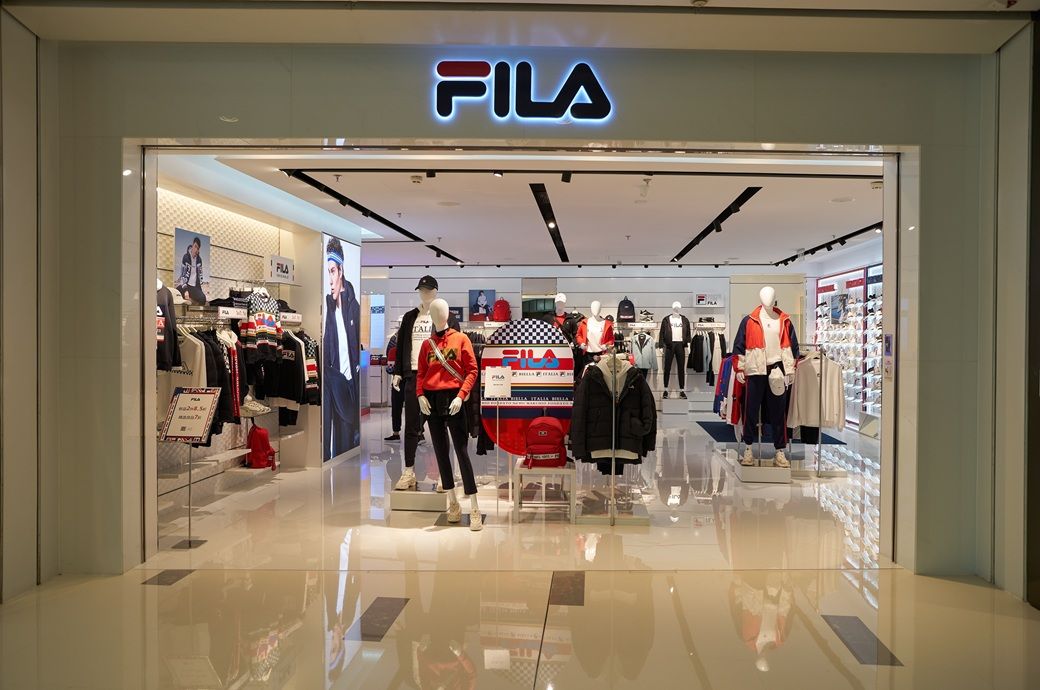
The Misto segment recorded annual revenue of KRW 829.6 billion, down 9.6 per cent YoY due to US restructuring and inventory clearance. However, operating profit rebounded to KRW 74.7 billion, signalling a strong turnaround, with the segment delivering its fourth consecutive quarter of profitability.
Misto Holdings has reported revenue of KRW 4.47 trillion (~$2.97 billion) in 2025, up 4.7 per cent YoY, with operating profit rising 31.6 per cent.
While the Misto segment declined, profitability improved.
Growth was driven by Greater China and steady Acushnet performance.
In Q4, revenue rose 6.3 per cent, led by Acushnet, while the company returned KRW 285.4 billion to shareholders.
The growth momentum was led by Greater China, which delivered triple-digit expansion in 2025 as the company scaled its presence through leading K-fashion brands such as Marithe+Francois Girbaud, Matin Kim, Rest and Recreation, and Raive. In Korea, Fila continued to benefit from stable demand in its footwear franchise models, Misto Holdings said in a press release.
The Acushnet segment maintained steady performance, supported by robust demand for golf equipment and premium positioning, contributing to overall earnings stability.
“2025 was a meaningful year in which we further clarified our identity as a global brand portfolio company following our corporate name change. Based on the expansion of our Greater China business, improved profitability in the Misto segment, and Acushnet’s solid growth, we strengthened the stability of our earnings. We will continue to enhance brand value, maintain profitability-focused management, and execute our shareholder return policy to support sustainable growth,” said Ho Yeon (Aaron) Lee, CFO of Misto Holdings.
Meanwhile, in the fourth quarter (Q4), revenue rose 6.3 per cent YoY to KRW 915.2 billion, supported by profitability-focused operations, restructuring of its US business, and continued growth at Acushnet despite macroeconomic uncertainty.
Acushnet remained a key contributor in Q4, with revenue increasing 10.9 per cent YoY to KRW 698.3 billion, driven by strong sales of Titleist T-Series irons and SM10 wedges, along with higher average selling prices for FootJoy golf shoes.
Misto Holdings also advanced its shareholder return strategy, returning approximately KRW 285.4 billion through dividends and share repurchases in 2025, achieving 57.1 per cent of its three-year target.
Fibre2Fashion News Desk (SG)

However, actual use of foreign direct investment (FDI) in the Chinese mainland declined during the same period, falling 5.7 percent year on year (YoY) to ¥161.45 billion ($23.43 billion), as mentioned in official ministry figures.
China established 8,631 new foreign-invested firms in the first two months of the year, up 14 per cent YoY, even as actual FDI inflows fell 5.7 per cent to ¥161.45 billion ($23.43 billion).
High-tech industries attracted ¥63.21 billion ($9.19 billion), rising 20.4 per cent and accounting for 39.2 per cent of total inflows, while investment from Canada and Switzerland surged sharply.
Sector-wise, FDI inflows totalled ¥47.52 ($6.90 billion) in manufacturing and ¥111.22 billion ($16.17 billion) in services, indicating continued dominance of the service sector in attracting foreign capital. High-tech industries remained a key growth area, drawing ¥63.21 billion ($9.19 billion) in investment, up 20.4 per cent year on year (YoY) and accounting for 39.2 percent of the national total.
In terms of source countries, investment from Canada and Switzerland recorded strong gains, surging 210 per cent and 41.3 per cent respectively compared with the same period last year, highlighting a shift in the composition of foreign capital entering the Chinese market.
Fibre2Fashion News Desk (JP)

In 2023, 73 per cent of APAC CEOs were optimistic about global economic prospects; however, it was down to 64 per cent in 2025. Globally, only 68 per cent of CEOs remain upbeat about this—the lowest level seen in four years.
APAC CEOs reported much more optimism in 2025 about the growth prospects of their own economies over the next three years, while confidence in global economic prospects dropped, KPMG said.
Optimism about their own country’s prospects was the highest in Australia and lowest in India last year.
About four-fifths of APAC CEOs also saw substantial growth opportunities for their organisations and industries.
Optimism about their own country’s prospects was the highest in Australia (90 per cent) and lowest in India (71 per cent) last year, a KPMG release said citing its latest annual ‘APAC CEO Outlook’.
The declining confidence of APAC CEOs in the global landscape also reflects ongoing uncertainty and volatility that has plagued the global markets, stemming from an evolving geopolitical landscape, persistent supply chain constraints and intensifying scrutiny on sustainability, KPMG noted.
Furthermore, about 80 per cent of APAC CEOs also saw substantial growth opportunities for their organisations and industries, in line with the global average.
In fact, in 2025, executives appear more certain that their companies are on an upward trajectory compared to the previous year: 61 per cent of respondents expect earnings to increase by more than 2.5 per cent this year, compared to just 52 per cent in 2024.
CEOs in Japan (76 per cent) are particularly optimistic about their earnings outlook compared to global and regional peers, reflecting its solid domestic demand and stable GDP performance.
This positivity is driving many in APAC to continue investing in their businesses, with executives noting that there is strong appetite for increased hiring (92 per cent) and mergers and acquisitions (87 per cent) over the next three years, and a substantial number (82 per cent) of APAC CEOs expecting to spend more than 10 per cent of their budgets on artificial intelligence (AI) in the next 12 months.
This clearly indicates that subdued global outlook has not dampened optimism around companies’ prospects in APAC, KPMG remarked.
Confidence in the growth prospects of the global economy is lowest among Chinese companies (58 per cent). This likely reflects, in part, the impacts of an uncertain tariff environment. Strained relations with its main export partner and uncertainty around global demand are likely some areas of concern among firms in China.
Global trade risks topped the minds of APAC CEOs last year, especially as geopolitical tensions and trade realignments dominated headlines. These trends have persisted in 2025, with supply chain resilience remaining a top three driver of organisational decision-making in the short term.
However, the landscape is shifting with the arrival of emerging technologies like generative AI. AI integration is the top issue driving APAC executives’ short-term decision-making, a notable contrast with global peers who are more focused on cybersecurity issues and supply chain resilience, KPMG added.
Fibre2Fashion News Desk (DS)


South Korea’s Misto Holdings’ 2025 profit jumps 31.6% on steady growth

Australia and EU agree sweeping trade deal in face of global uncertainty

How Jaxon Smith-Njigba’s contract extension impacts Seahawks

-

 Entertainment1 week ago
Strategic oil stocks to be released ‘immediately’ in Asia and Oceania: IEA
-

 Tech1 week ago
Early Deals From the Amazon Spring Sale That Passed Our BS Test
-
 Business1 week ago
New Income Tax Act 2025 To Take Effect From April 1: 10 Key Changes That Will Affect Your Money
-
 Business1 week ago
Stocks To Watch: Tata Motors, IndiGo, Jindal Stainless, GMR Airports, Hindalco, And Others
-

 Sports1 week ago
Transfer rumors, news: Real Madrid open to Camavinga exit, as Premier League clubs circle
-
 Business1 week ago
UK looking at all options to secure Strait of Hormuz, says Ed Miliband
-
 Business7 days ago
Stocks and pound rise as US rate call approaches
-

 Tech6 days ago
Justice Department Says Anthropic Can’t Be Trusted With Warfighting Systems