

Tech
UK targets ‘bulletproof’ services that hosted ransomware gangs | Computer Weekly


The UK’s National Crime Agency and partners from the Anglophone Five Eyes intelligence alliance have fired several shots across the bows of so-called ‘bulletproof’ hosting services Media Land and ML Cloud that shielded their customers, including ransomware gangs such as Black Basta, Evil Corp and LockBit, from detection.
The two organisations are alleged to be part of a Russia-based operation run by an individual named as Alexander Volosovik (aka Yalishanda), who is described as a “critical enabler” of global cyber crime.
They are accused of supporting large-scale ransomware campaigns and other malware operations, leading to financial losses, operational disruption and reputational damage for ordinary businesses all over the world.
The NCA said the actions complemented its strategy of targeting the ransomware ecosystem’s key enablers who facilitate criminal activity and lower the barrier to entry for cyber criminals.
“Bulletproof hosting is a key component of the cyber crime ecosystem, providing a digital safe haven for cyber criminals that can appear resistant to law enforcement takedown activity,” said NCA deputy director Paul Foster, head of the National Cyber Crime Unit.
“Services like Media Land … are critical enablers for cyber criminals so sanctions like today’s against Media Land will inhibit their ability to plan, launch and monetise criminal schemes.
“This action will assist in law enforcement’s pursuit of nullifying the ‘bulletproof’ shield provided by illicit hosting services, helping to degrade the cybercrime ecosystem that nefarious actors depend on.”
Volosovik and two associates have been sanctioned by the Foreign, Commonwealth and Development Office (FCDO) in the UK, the US Department of the Treasury’s Office of Foreign Assets Control (OFAC), and Australia’s Department for Foreign Affairs and Trade (DFAT).
The other two individuals were named by the US as Kirill Zatolokin, who was allegedly responsible for collecting payments and liaising with other cyber criminals, and Yulia Pankova, who allegedly provided legal and financial support to the operation.
“These so-called bulletproof hosting service providers like Media Land provide cybercriminals essential services to aid them in attacking businesses in the United States and in allied countries,” said John Hurley, under secretary of the Treasury for Terrorism and Financial Intelligence.
“Today’s trilateral action with Australia and the UK, in coordination with law enforcement partners, demonstrates our collective commitment to combatting cyber crime and protecting our citizens.”
Maintaining pressure
At the same time, the US authorities are continuing their pursuit of another bulletproof service Aeza, which was sanctioned at the beginning of July.
Since then, said OFAC, the service’s leadership has embarked on a major rebrand focused on removing connections between Aeza and its technical infrastructure. However, with watchful eyes on them, this appears to have been in vain.
The US has now imposed sanctions on two individuals, Maksim Vladimirovich Makarov, the newly-designated director of Aeza, and Ilya Vladislavovich Zakirov, who is accused of helping set up new front companies and payment methods to obfuscate Aeza’s work.
It has also designated three companies over links to Aeza. Two of them, Smart Digital Ideas DOO and Datavice MCHJ are based in Serbia and Uzbekistan and have allegedly been used to evade sanctions on Russia and run technical infrastructure that is not linked to the Aeza name.
The third, however, is a UK-based company named by as Hypercore Ltd, which the US said was formed earlier in 2025 with the intent of being used to move Aeza’s IP infrastructure and evade sanctions.

If you’re an esteemed Android user like me, and you felt left out of yesterday’s deal on the AirPods Pro 3, I’ve got you covered today with an even bigger discount on the Pixel Buds Pro 2. Both Amazon and Best Buy have the hazel color marked down from $229 to $180, a $49 discount on Google’s most upgraded wireless earbuds.
-
Photograph: Julian Chokkattu
-
-


The first change you’ll notice from the previous generation Pixel Buds Pro is that the newer model is much lighter, and the buds are 27 percent smaller. As a result, these are an excellent choice for anyone with small ears, and they stay put super well. Reviewer Parker Hall “had no problem doing hours of tree pruning and going on long sweaty runs in Portland’s early fall heat wave.”
With some help from top-notch physical sound isolation, the active noise-canceling on these is just as good as Apple’s and even goes toe-to-toe with big hitters like Bose and Sony. The transparency mode works just as well, too, with a wider range and clearer audio than a lot of other headphones offer. When it’s time to actually turn up the tunes, you can enjoy a wide, natural soundstage that has excellent detail in the midrange and clear, sparkling treble.
The Gemini integration, unfortunately, leaves a bit to be desired. It’s not the smoothest experience, particularly when asking multiple questions, and the Pixel Buds Pro 2 aren’t offering anything that other earbuds can’t do. Apple’s live translations and heart rate monitors are more useful features, but if you’re on Android, you’re locked out of them anyway.
If you’re interested in upgrading your earbud game, and you already have a Pixel, you can grab the Pixel Buds Pro 2 in hazel for $180 from either Amazon or Best Buy. If that color doesn’t suit you, I also spotted lesser discounts on the peony color for $189, or the porcelain color for $210. For anyone who isn’t already sold on the Pixel Buds Pro 2, make sure to swing by our guide to the best wireless earbuds, with picks for both Apple and Android owners.
Tech
‘Uncanny Valley’: Pentagon vs. ‘Woke’ Anthropic, Agentic vs. Mimetic, and Trump vs. State of the Union

Guys, before we go to break, there’s something very near and dear to my heart that WIRED wrote about this week. It’s something I love even more than biathlon. It is undersea internet cables.
Leah Feiger: I love when you talk about this. I think that the first time you brought this up to me was approximately one week into your tenure as executive editor, and you’re like, “Leah, do you know what I love?” and it’s undersea internet cables.
Brian Barrett: Yeah. I was like, “Number one, undersea internet cables. Number two, my children. Number three …” that was sort of the gist of it. That’s how I always introduce myself. I want to take everybody back to December 14th, 1988. The top movie in theaters is Twins starring Arnold Schwarzenegger and Danny DeVito.
Zoë Schiffer: Legitimately never heard of it.
Leah Feiger: Wait, Zoë. What?
Brian Barrett: What? Anyway, Arnold is agentic and Danny DeVito’s mimetic. The top song—
Zoë Schiffer: Now I get it.
Brian Barrett: —the top song is “Look Away” by Chicago. Now that, I also am not—I don’t remember that one at all. And the first undersea fiber optic cable connecting the United States, UK and France went live. This was the day that the internet went global, which is crazy—
Zoë Schiffer: That is crazy.
Brian Barrett: —that it was relatively recent. The reason we’re writing about it now is that that original cable, which is called TAT-8, is being pulled up. It’s out of commission. It’s old, it’s decrepit, so I identify, and it’s being pulled up and put out to pasture because the technology’s gotten better. But in this great feature that we published, it is a look at how this changed the world basically, and how we take for granted—but the reason I am so into undersea cable stories is because it’s so easy to forget that the internet is a physical thing and that the maintenance of those things is really what makes all this connectivity happen. So yeah, TAT-8. Any other fond memories of TAT-8? Or, no. What did you guys think reading this feature?
Zoë Schiffer: Well, famously we were not alive in 1988.
Leah Feiger: Yeah. Sorry, Brian. You’re older than us. Just a reminder.
Brian Barrett: Hurts.
Zoë Schiffer: But the part of this story that I wanted to talk about, which felt like a real intersection of both of your interests was the myth of the shark attacks.
Brian Barrett: Oh, yeah.
Leah Feiger: OK. So to back up a little bit, these cables, at the very beginning, when they were put in, Brian would be able to talk about this way more because he’s kind of a freak about cables if you haven’t realized already. These cables would sometimes have unexplained damage, and looking back on it years later, engineers figured out that this kind of happens, that if you are putting cables underseas, there will be wind, there will be changes, things will get moved around. Of course, there will be damages, but that is not how they felt at the time. These engineers assumed that it was sharks, that sharks were biting their cables, that they were destroying the internet. The cables were reinforced with all these protective layers, all of these things, because they were like, “Oh, my God, the sharks are quite literally ending all of this for us.” But this article goes into great detail of how they figured out it wasn’t the sharks, and by thinking that it was the sharks, it actually helped make all of this technology that much better and stronger, but the sharks were innocent, you guys. The sharks were innocent.
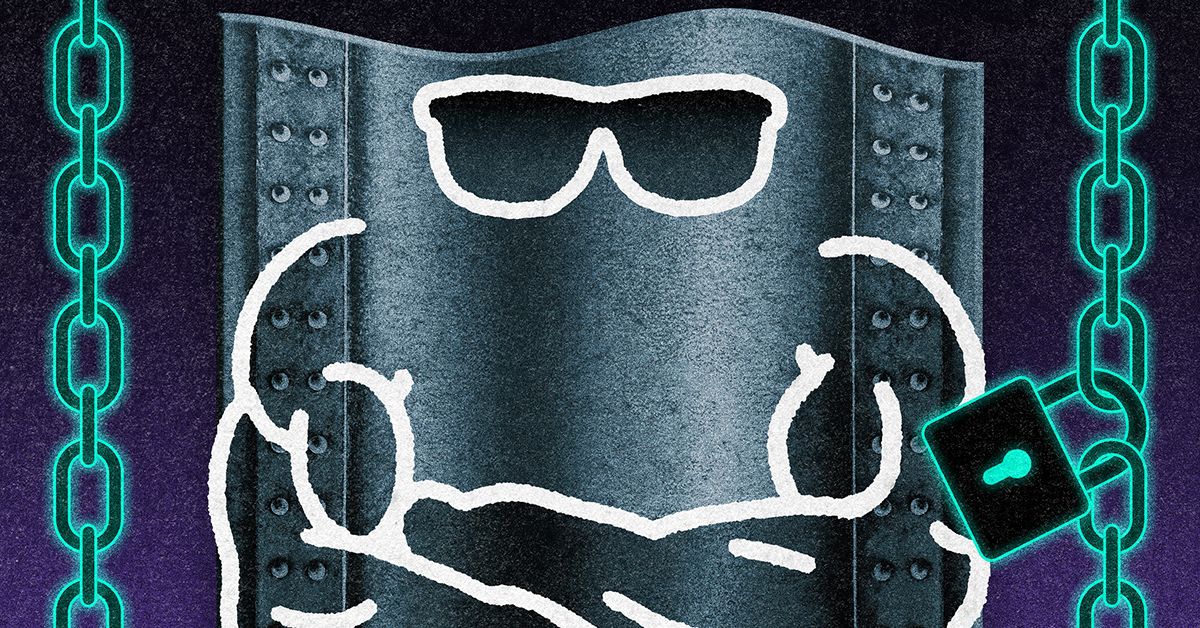
AI agents like OpenClaw have recently exploded in popularity precisely because they can take the reins of your digital life. Whether you want a personalized morning news digest, a proxy that can fight with your cable company’s customer service, or a to-do list auditor that will do some tasks for you and prod you to resolve the rest, agentic assistants are built to access your digital accounts and carry out your commands. This is helpful—but has also caused a lot of chaos. The bots are out there mass-deleting emails they’ve been instructed to preserve, writing hit pieces over perceived snubs, and launching phishing attacks against their owners.
Watching the pandemonium unfold in recent weeks, longtime security engineer and researcher Niels Provos decided to try something new. Today he is launching an open source, secure AI assistant called IronCurtain designed to add a critical layer of control. Instead of the agent directly interacting with the user’s systems and accounts, it runs in an isolated virtual machine. And its ability to take any action is mediated by a policy—you could even think of it as a constitution—that the owner writes to govern the system. Crucially, IronCurtain is also designed to receive these overarching policies in plain English and then runs them through a multistep process that uses a large language model (LLM) to convert the natural language into an enforceable security policy.
“Services like OpenClaw are at peak hype right now, but my hope is that there’s an opportunity to say, ‘Well, this is probably not how we want to do it,’” Provos says. “Instead, let’s develop something that still gives you very high utility, but is not going to go into these completely uncharted, sometimes destructive, paths.”
IronCurtain’s ability to take intuitive, straightforward statements and turn them into enforceable, deterministic—or predictable—red lines is vital, Provos says, because LLMs are famously “stochastic” and probabilistic. In other words, they don’t necessarily always generate the same content or give the same information in response to the same prompt. This creates challenges for AI guardrails, because AI systems can evolve over time such that they revise how they interpret a control or constraint mechanism, which can result in rogue activity.
An IronCurtain policy, Provos says, could be as simple as: “The agent may read all my email. It may send email to people in my contacts without asking. For anyone else, ask me first. Never delete anything permanently.”
IronCurtain takes these instructions, turns them into an enforceable policy, and then mediates between the assistant agent in the virtual machine and what’s known as the model context protocol server that gives LLMs access to data and other digital services to carry out tasks. Being able to constrain an agent this way adds an important component of access control that web platforms like email providers don’t currently offer because they weren’t built for the scenario where both a human owner and AI agent bots are all using one account.
Provos notes that IronCurtain is designed to refine and improve each user’s “constitution” over time as the system encounters edge cases and asks for human input about how to proceed. The system, which is model-independent and can be used with any LLM, is also designed to maintain an audit log of all policy decisions over time.
IronCurtain is a research prototype, not a consumer product, and Provos hopes that people will contribute to the project to explore and help it evolve. Dino Dai Zovi, a well-known cybersecurity researcher who has been experimenting with early versions of IronCurtain, says that the conceptual approach the project takes aligns with his own intuition about how agentic AI needs to be constrained.


Artemi Panarin gifts Los Angeles Kings mascot Rolex for No. 72 jersey

We Gave These Android-Ready Earbuds a 9/10, and They’re Just $180

Netflix ditches deal for Warner Bros. Discovery after Paramount’s offer is deemed superior

-
 Tech1 week ago
A $10K Bounty Awaits Anyone Who Can Hack Ring Cameras to Stop Sharing Data With Amazon
-

 Fashion6 days ago
ICE cotton ticks higher on crude oil rally
-
 Business6 days ago
US Top Court Blocks Trump’s Tariff Orders: Does It Mean Zero Duties For Indian Goods?
-
 Business6 days ago
Eye-popping rise in one year: Betting on just gold and silver for long-term wealth creation? Think again! – The Times of India
-

 Tech1 week ago
Donald Trump Jr.’s Private DC Club Has Mysterious Ties to an Ex-Cop With a Controversial Past
-

 Entertainment5 days ago
Viral monkey Punch makes IKEA toy global sensation: Here’s what it costs
-

 Sports6 days ago
Brett Favre blasts NFL for no longer appealing to ‘true’ fans: ‘There’s been a slight shift’
-

 Entertainment6 days ago
The White Lotus” creator Mike White reflects on his time on “Survivor